Motion Seal Sample With File Under
Description
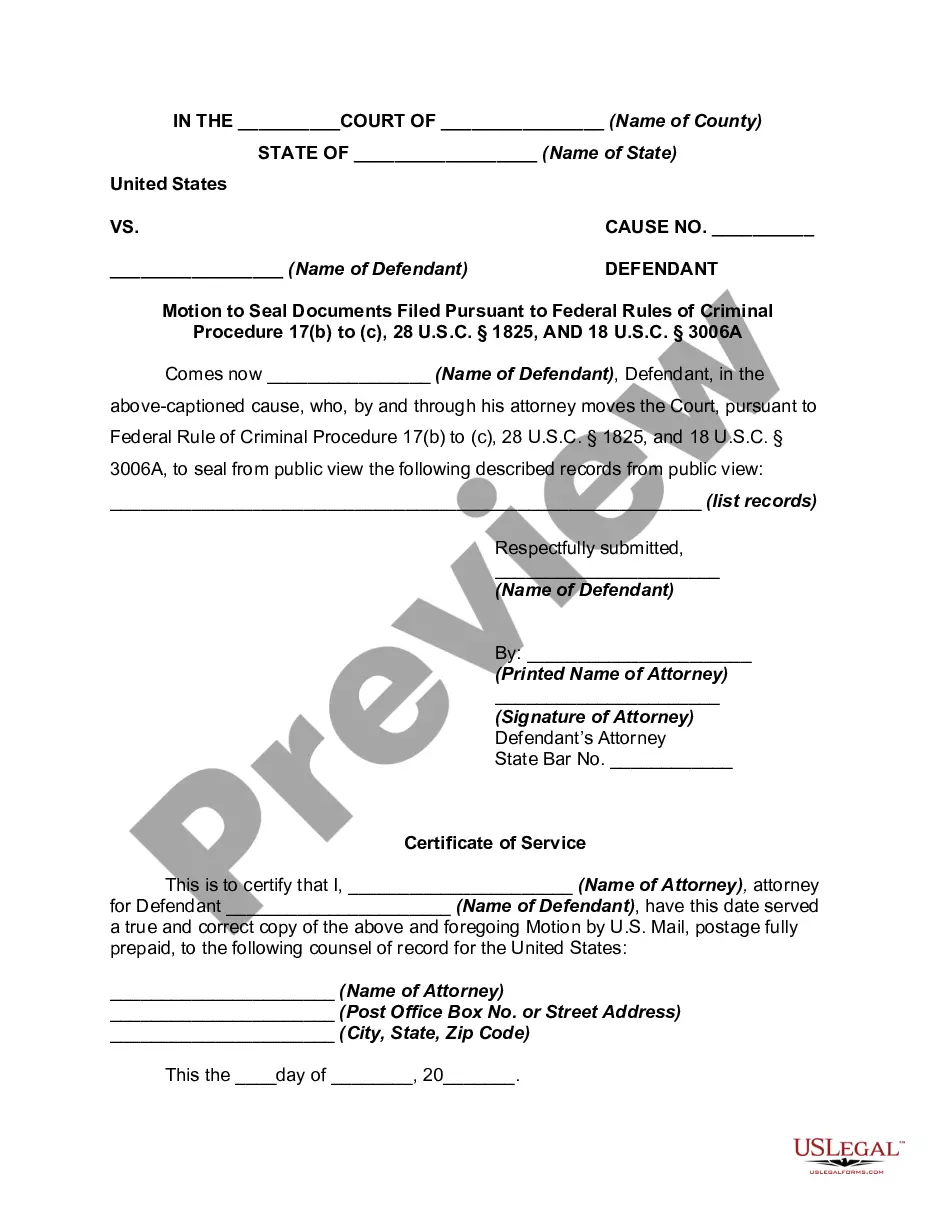
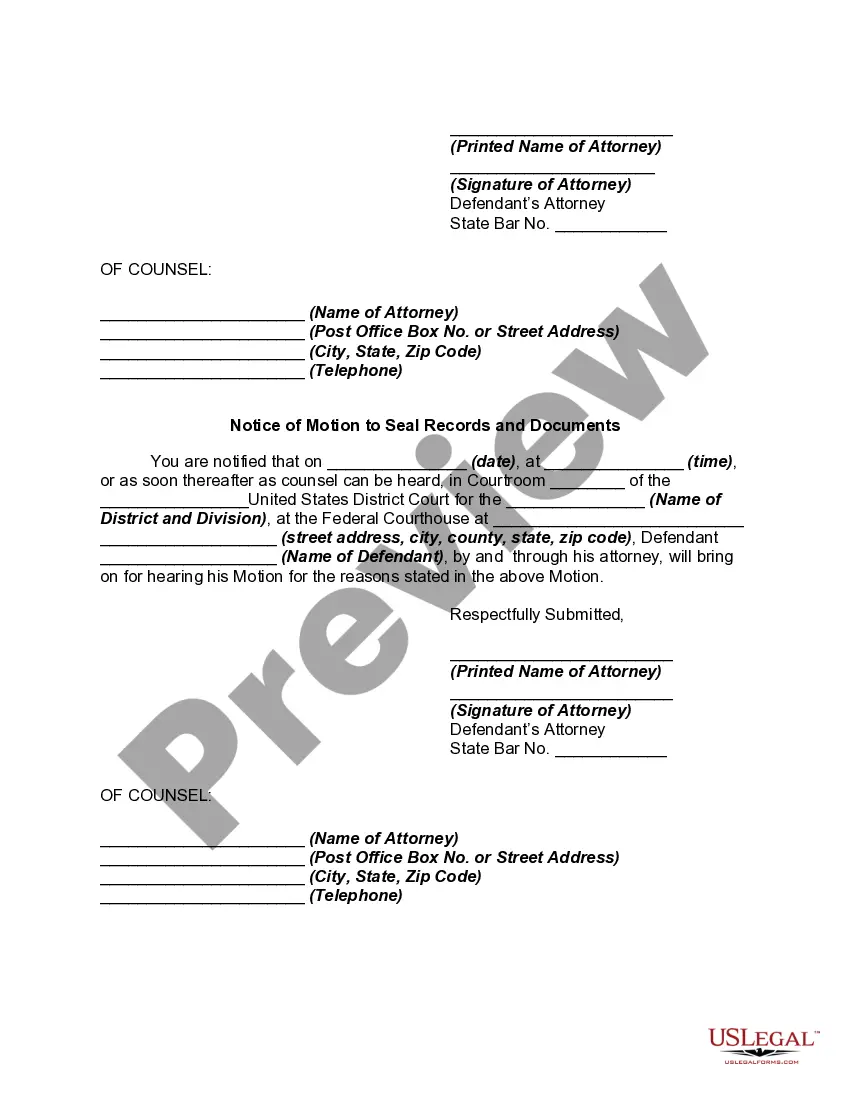
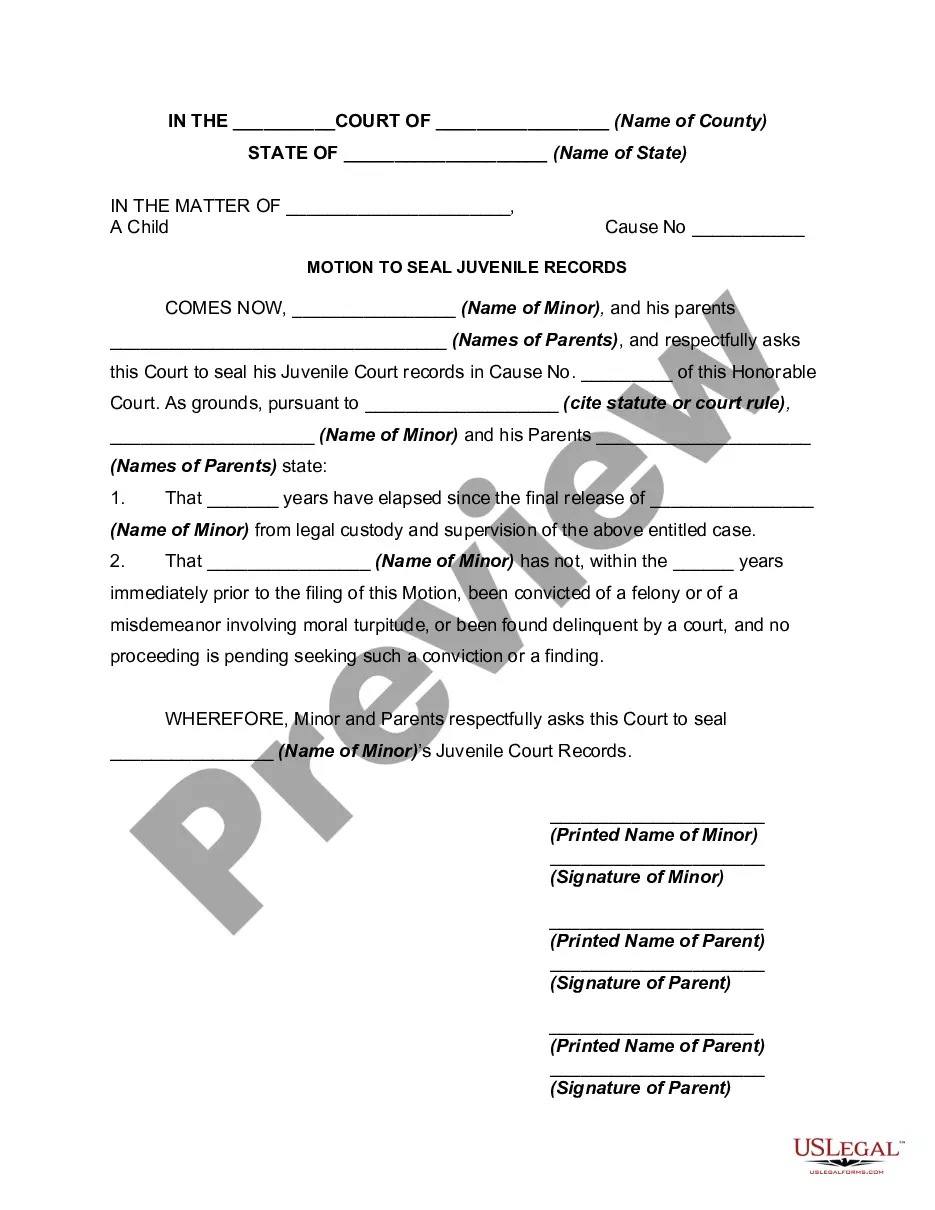
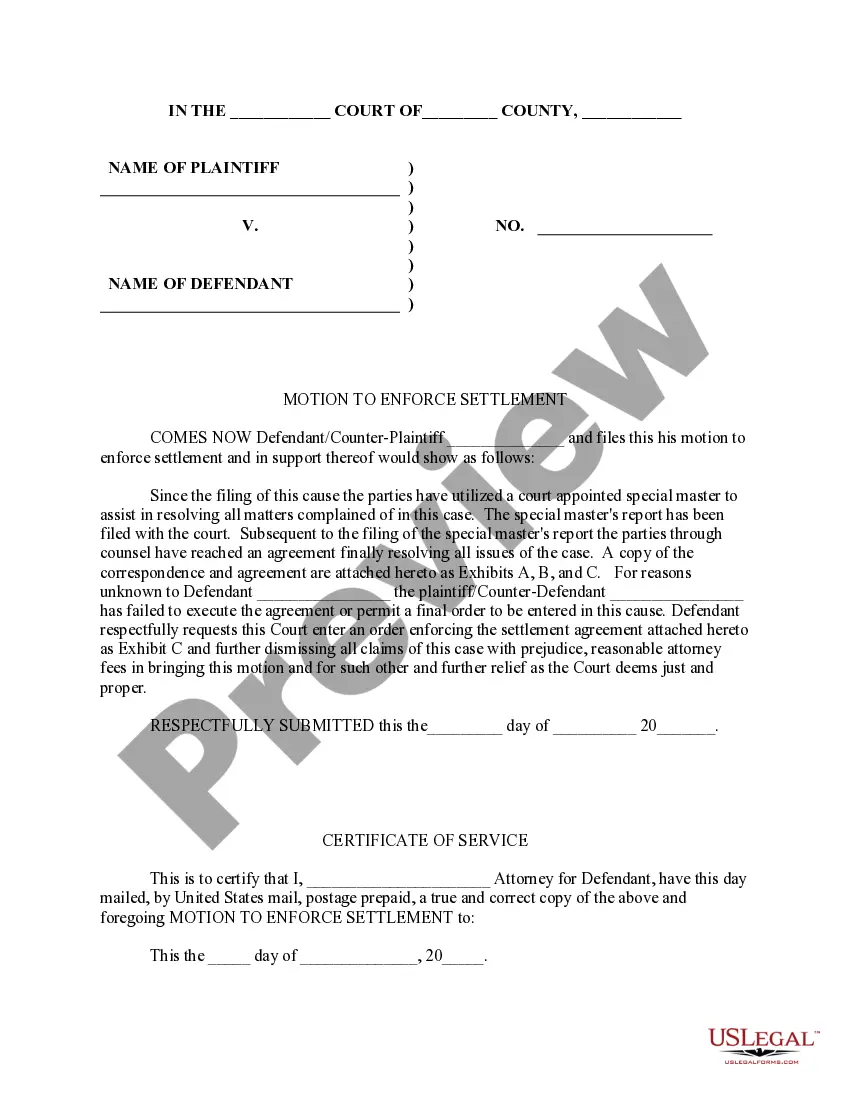


How to fill out Motion To Seal Records And Documents?
Regardless of whether it is for corporate reasons or personal affairs, everyone must navigate legal matters at some stage in their life.
Filling out legal documents necessitates meticulous care, starting from selecting the correct form sample.
- For example, if you select an incorrect version of the Motion Seal Sample With File Under, it will be rejected once you submit it.
- Thus, it's essential to have a reliable source of legal documents such as US Legal Forms.
- If you need to obtain a Motion Seal Sample With File Under template, follow these straightforward steps.
- Acquire the template you require by using the search bar or browsing the catalog.
- Review the form’s description to ensure it aligns with your situation, state, and locality.
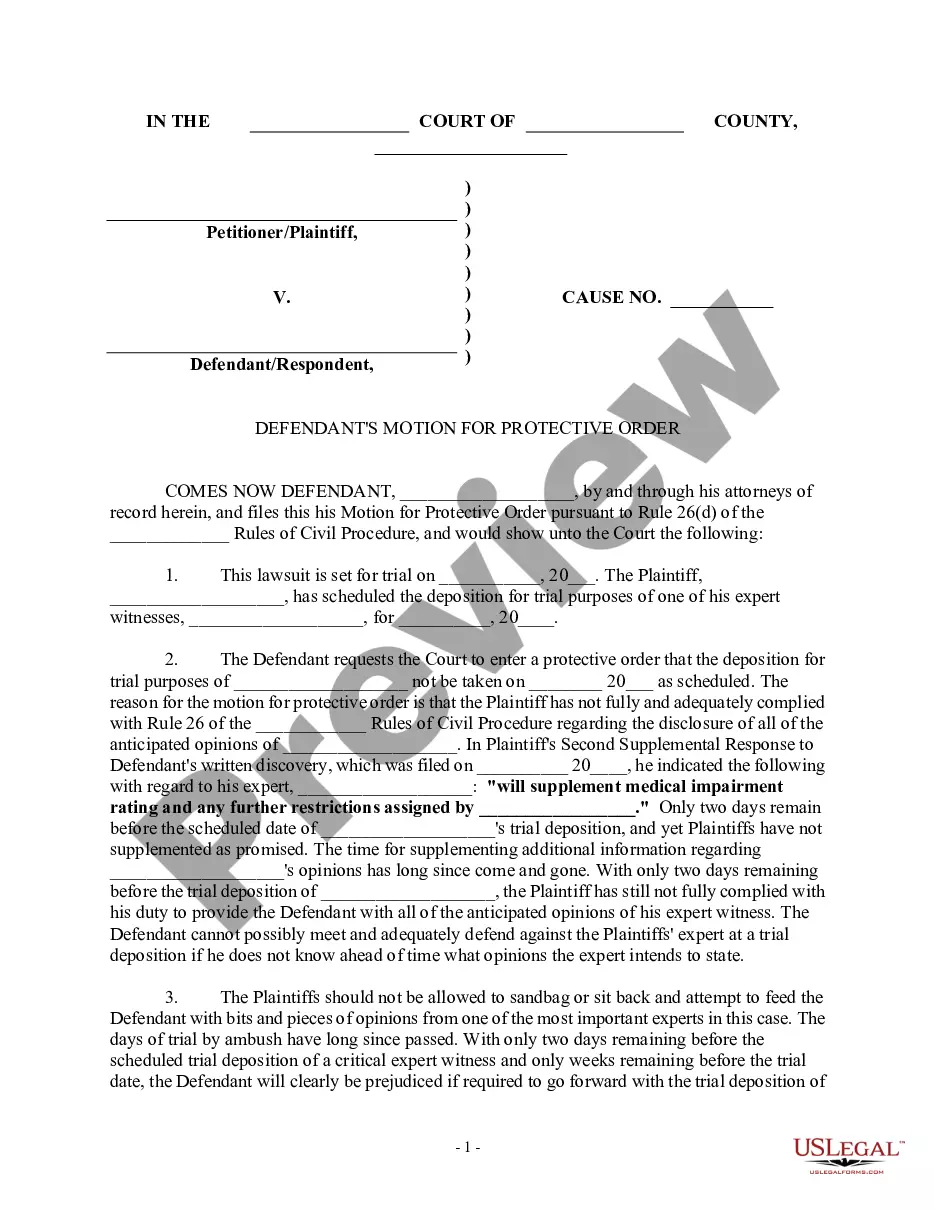
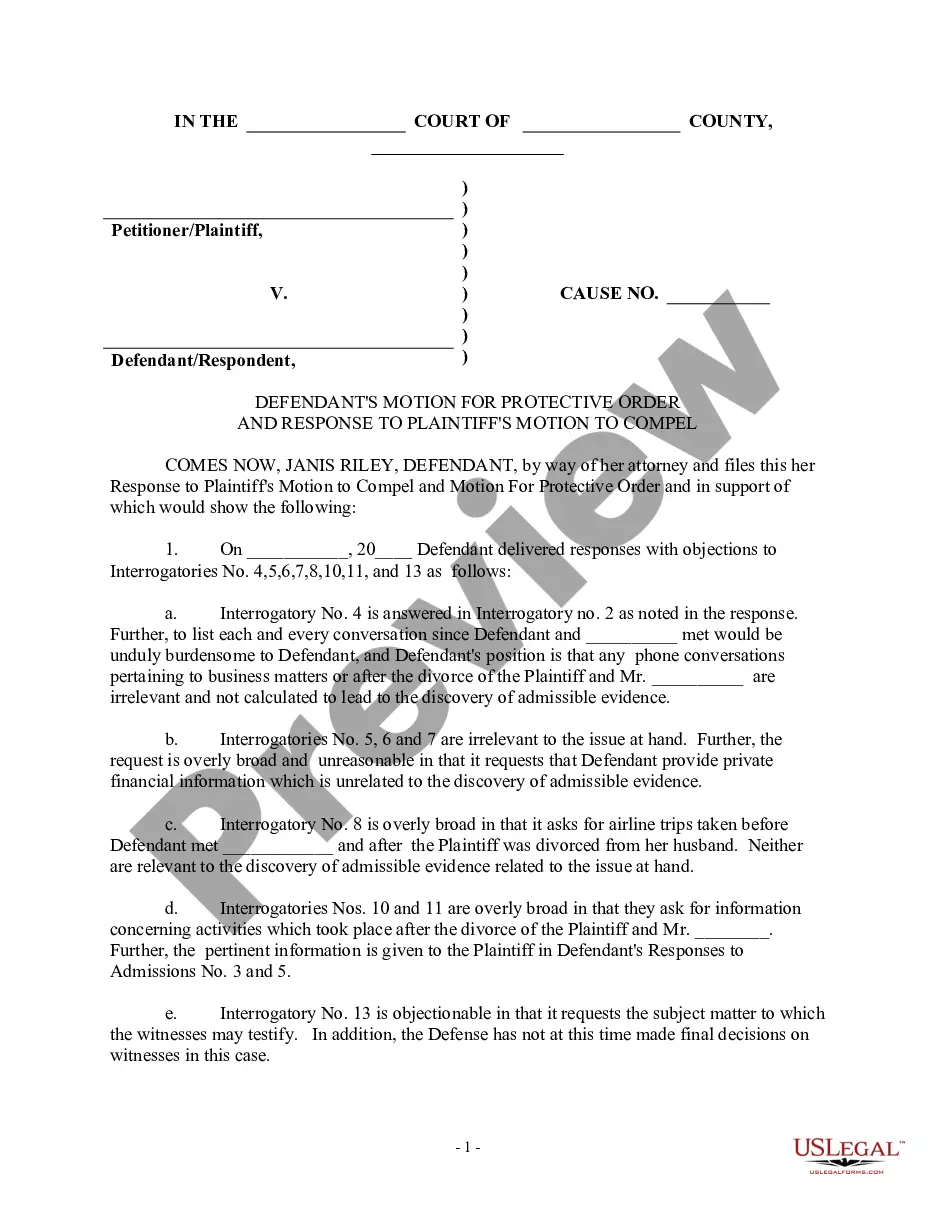
- Click on the form’s preview to examine it.
- If it is the wrong document, return to the search function to locate the Motion Seal Sample With File Under template you need.
- Download the file once it satisfies your requirements.
- If you possess a US Legal Forms account, simply click Log in to access previously saved templates in My documents.
- If you don’t have an account yet, you can acquire the form by clicking Buy now.
- Select the appropriate pricing option.
- Fill out the account registration form.
- Choose your payment method: either a credit card or PayPal account.
- Select the file format you desire and download the Motion Seal Sample With File Under.
- Once downloaded, you can complete the form using editing software or print it out and fill it in manually.
- With an extensive US Legal Forms collection available, you won’t need to waste time searching for the right template online.
- Utilize the library’s user-friendly navigation to find the appropriate template for any circumstance.
Form popularity
FAQ
Filing under seal is a procedure allowing sensitive or confidential information to be filed with a court without becoming a matter of public record. The court generally must give permission for the material to remain under seal.
A party requesting that a record be filed under seal must file a motion or an application for an order sealing the record. The motion or application must be accompanied by a memorandum and a declaration containing facts sufficient to justify the sealing.
A Motion to Seal is filed when you are requesting that a document you file with the court be kept confidential. You may be requesting that a portion of your pleading be kept confidential or you may be requesting that an entire document be kept confidential.
To submit a civil complaint for filing under seal, present the motion for leave to file under seal (See LR 79.3(b)), complaint, and all subsequent filings to the Clerk's Office on paper. (A case filed pursuant to the False Claims Act 31, U.S.C. § 3730(b) does not require a motion for leave to file under seal.)
The seal is used to execute a legal document or guarantee the document's authenticity. A seal is unique to a sealer and is used by government agencies, corporations and notaries public to show that the document is validly executed, acknowledged or witnessed.