Section For Tenant Holding Over
Description

Get your form ready online
Our built-in tools help you complete, sign, share, and store your documents in one place.
Make edits, fill in missing information, and update formatting in US Legal Forms—just like you would in MS Word.
Download a copy, print it, send it by email, or mail it via USPS—whatever works best for your next step.
Sign and collect signatures with our SignNow integration. Send to multiple recipients, set reminders, and more. Go Premium to unlock E-Sign.
If this form requires notarization, complete it online through a secure video call—no need to meet a notary in person or wait for an appointment.
We protect your documents and personal data by following strict security and privacy standards.

Make edits, fill in missing information, and update formatting in US Legal Forms—just like you would in MS Word.

Download a copy, print it, send it by email, or mail it via USPS—whatever works best for your next step.

Sign and collect signatures with our SignNow integration. Send to multiple recipients, set reminders, and more. Go Premium to unlock E-Sign.

If this form requires notarization, complete it online through a secure video call—no need to meet a notary in person or wait for an appointment.

We protect your documents and personal data by following strict security and privacy standards.
Looking for another form?

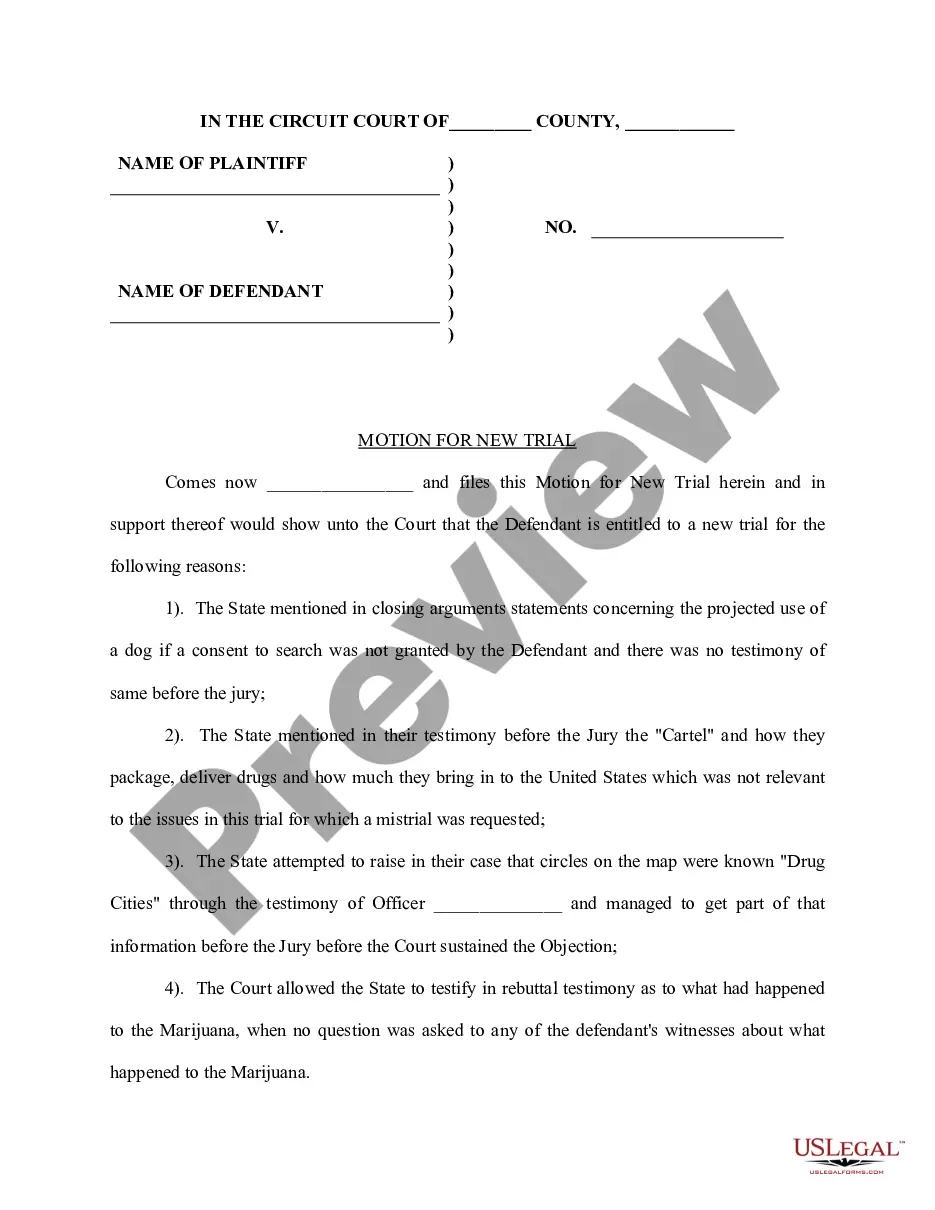





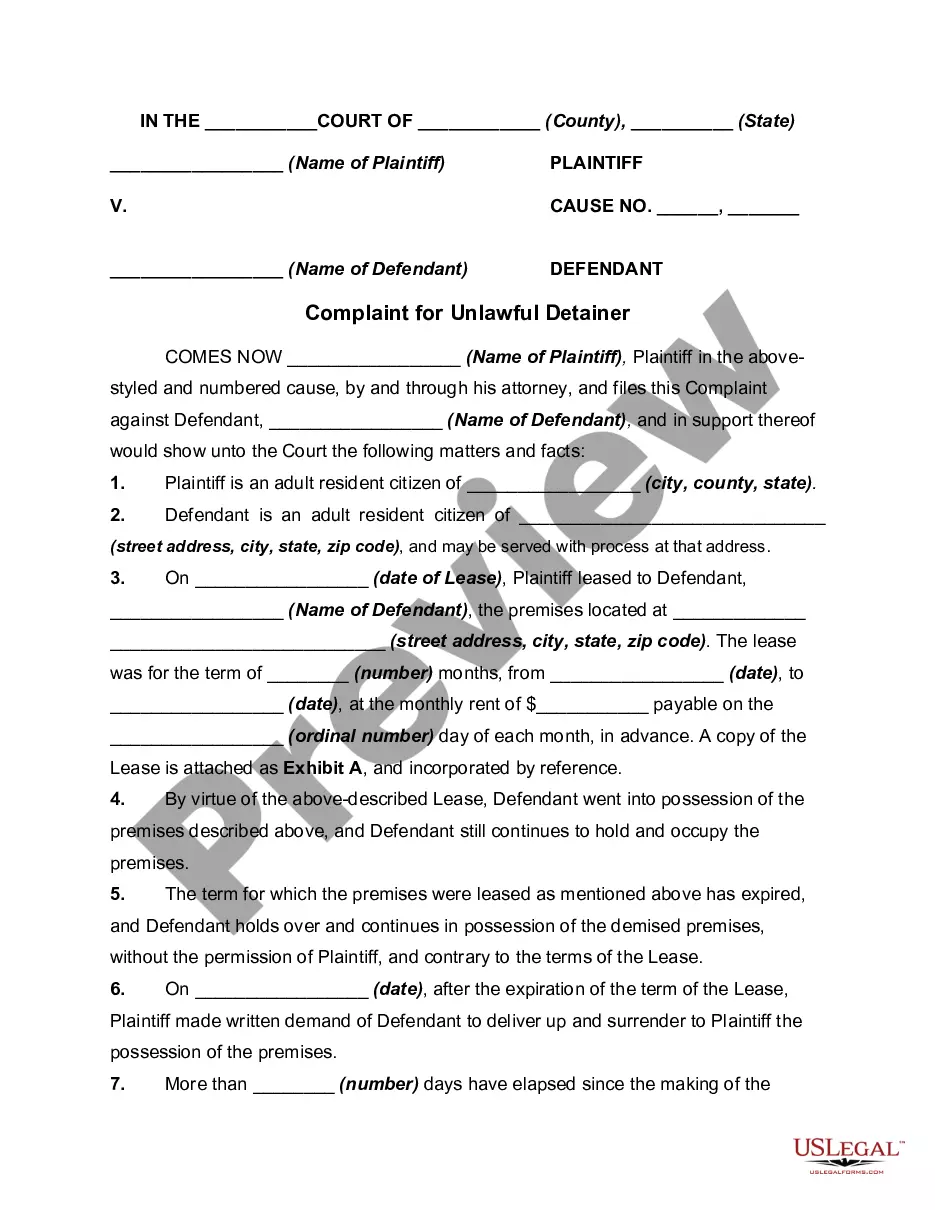
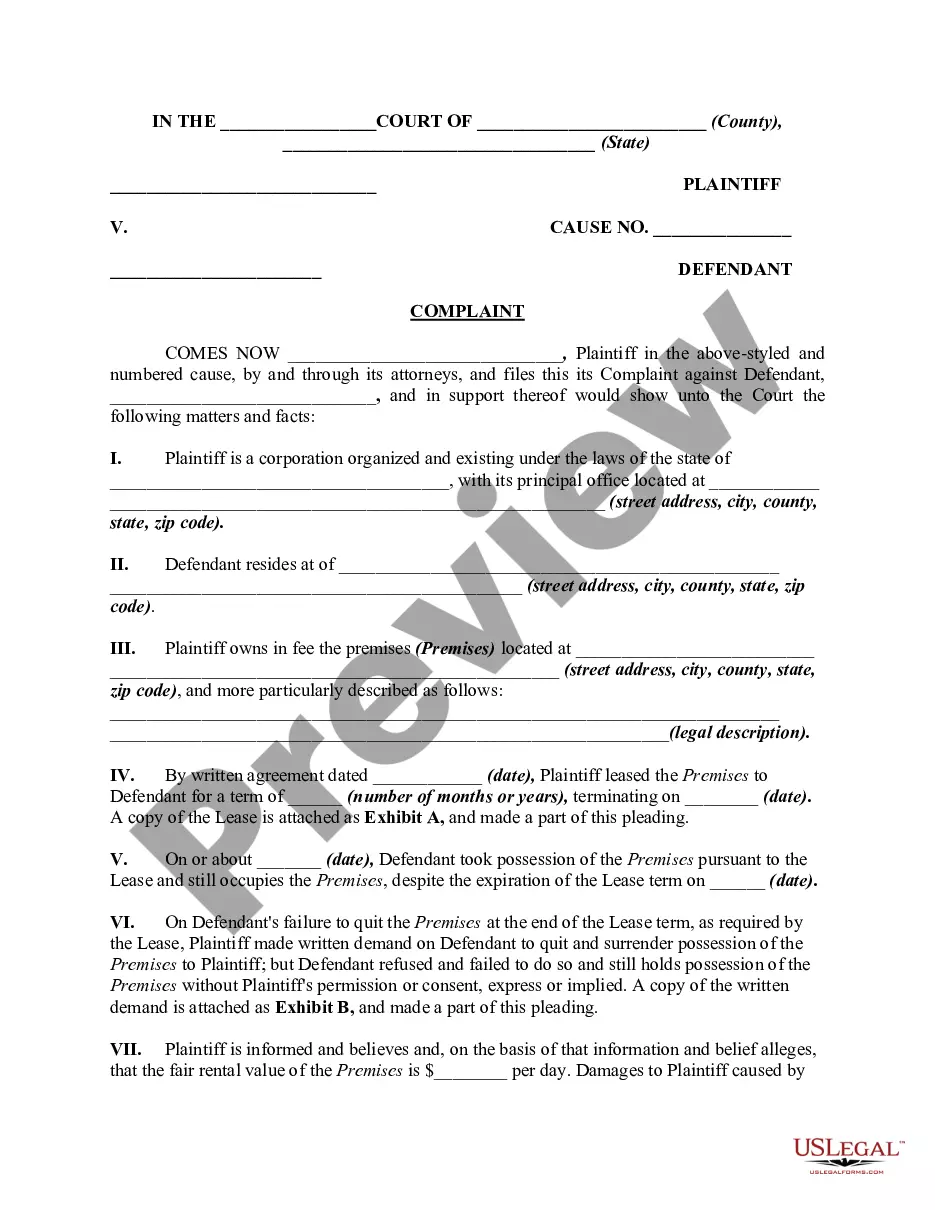
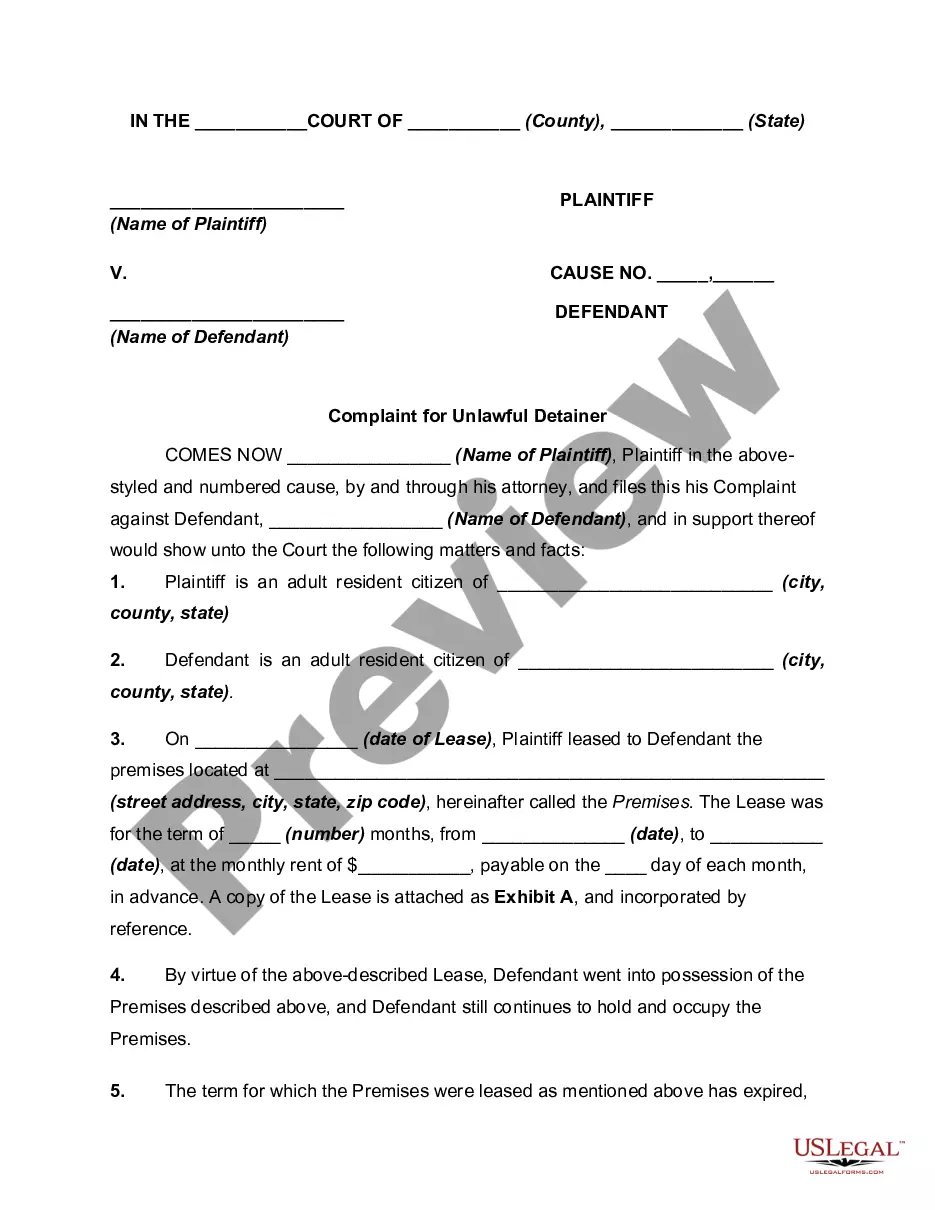
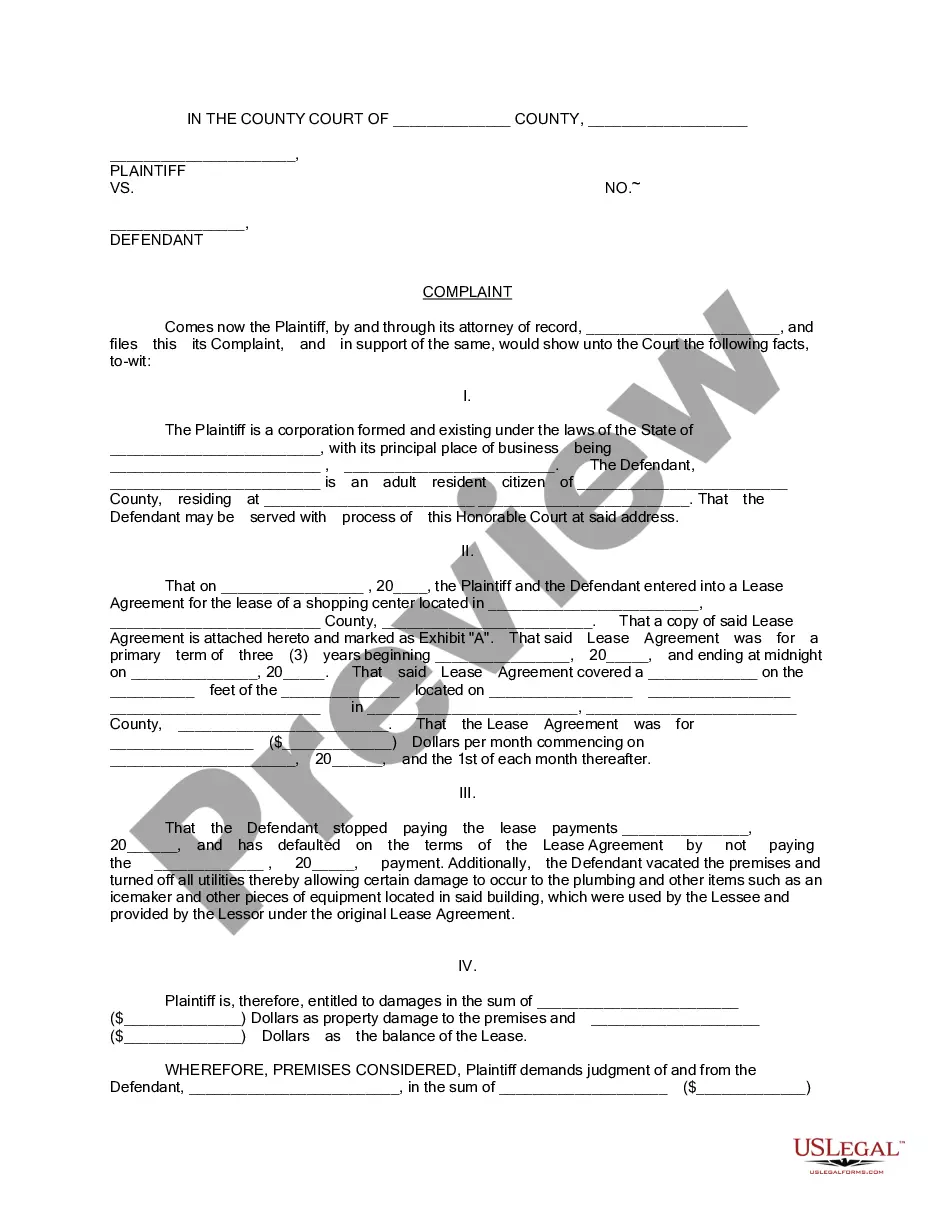
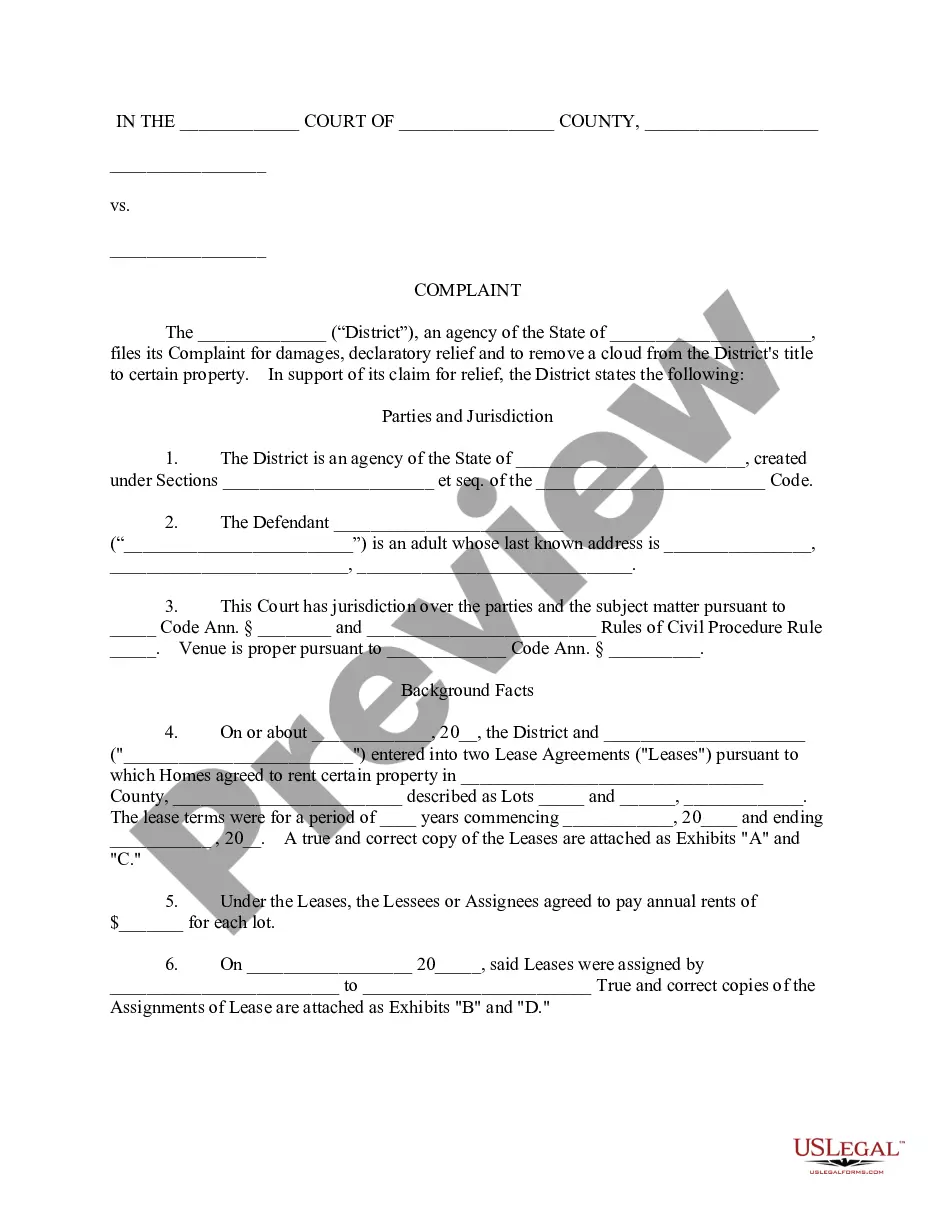
How to fill out Complaint For Unlawful Detainer - Tenant Holding Over After Expiration Of Term?
Whether for commercial aims or personal issues, everyone has to confront legal circumstances at some stage in their existence.
Completing legal paperwork requires meticulous care, starting from selecting the appropriate form template.
With an extensive US Legal Forms library available, you do not need to waste time searching for the right sample online. Utilize the library's straightforward navigation to find the correct template for any circumstance.
- Obtain the form you require by using the search box or catalog browsing.
- Review the form’s details to ensure it aligns with your situation, state, and locality.
- Click on the form’s preview to view it.
- If it is the incorrect document, return to the search function to locate the Section For Tenant Holding Over sample you need.
- Download the file when it fulfills your criteria.
- If you have a US Legal Forms account, click Log in to access previously saved templates in My documents.
- If you don’t possess an account yet, you can acquire the form by clicking Buy now.
- Select the appropriate pricing choice.
- Complete the account registration form.
- Choose your payment method: use a credit card or PayPal account.
- Select the document format you prefer and download the Section For Tenant Holding Over.
- Once it is saved, you can fill out the form using editing software or print it and complete it by hand.
Form popularity
FAQ
It comprises the benefits and advantages conferred on a tenant by any statute. Statutory tenancy is distinct from the tenancy by holding over in the sense that the former is more specific. In case of the statutory tenancy, the terms of the rights of a tenant who retains possession by holding over is defined by statute.
The expression "holding over" is used in the sense of retaining possession1. A distinction should be drawn between a tenant continuing in possession after the determination of the lease, without the consent of the landlord and a tenant doing so with the landlord's consent.
What constitutes lawful tenancy by holding over? ing to Section 116 of the Transfer of Property Act 1882, the following conditions would result in tenancy by holding over: After the lease granted to the lessee is determined, the lessee or under-lessee of the property retains possession.
Holding over stands equivalent to the retention of possession after determination of lease, but with the consent of the landlord-whereas, on similar circumstances if the possession is without the consent of the landlord then the same stands out to be a tenant at sufferance.
In view of the concluding words of s. 116 of the Transfer of Property Act a lease holding over is in a better position than a tenant-at-will. The assent of the landlord to the continuance of possession after the determination of the tenancy will create a new tenancy.