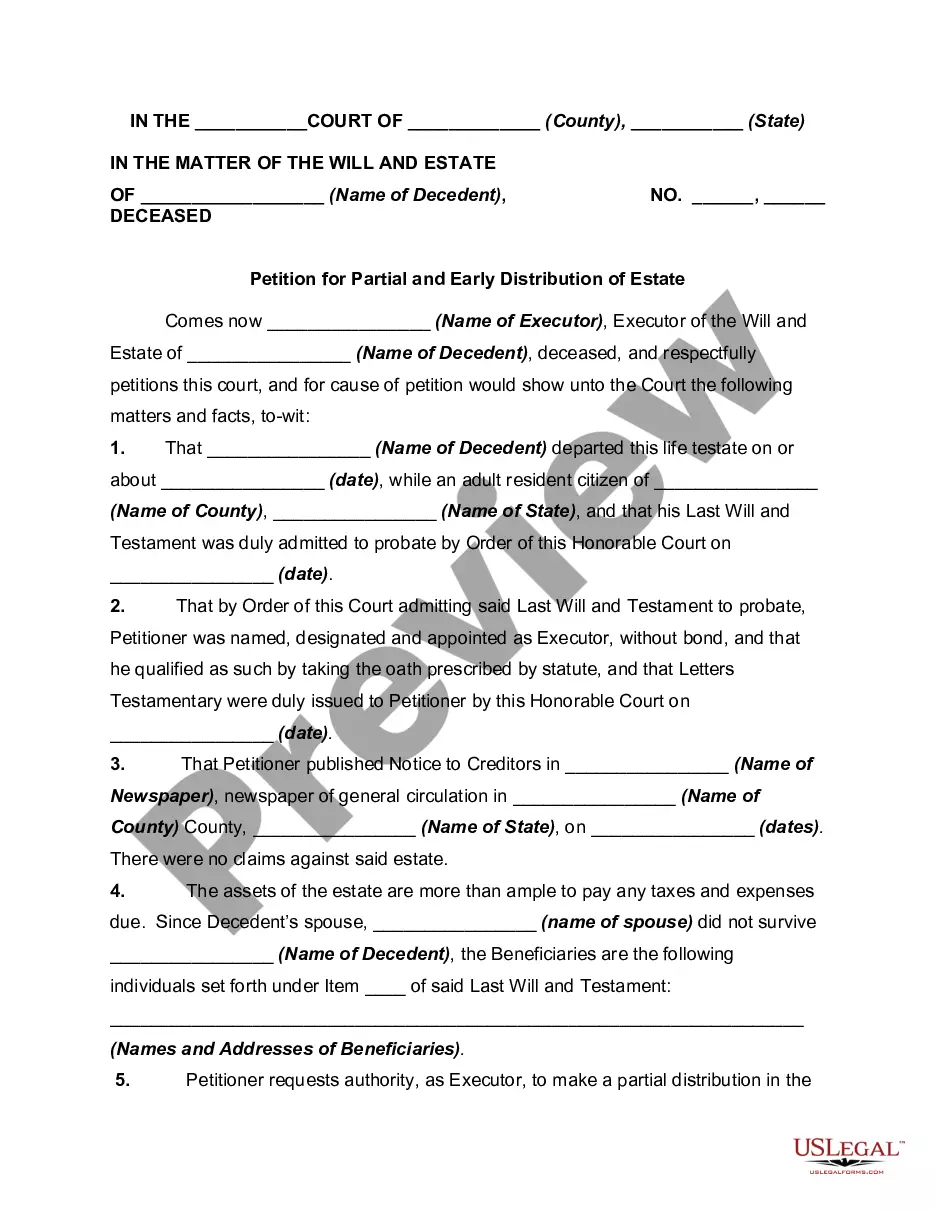
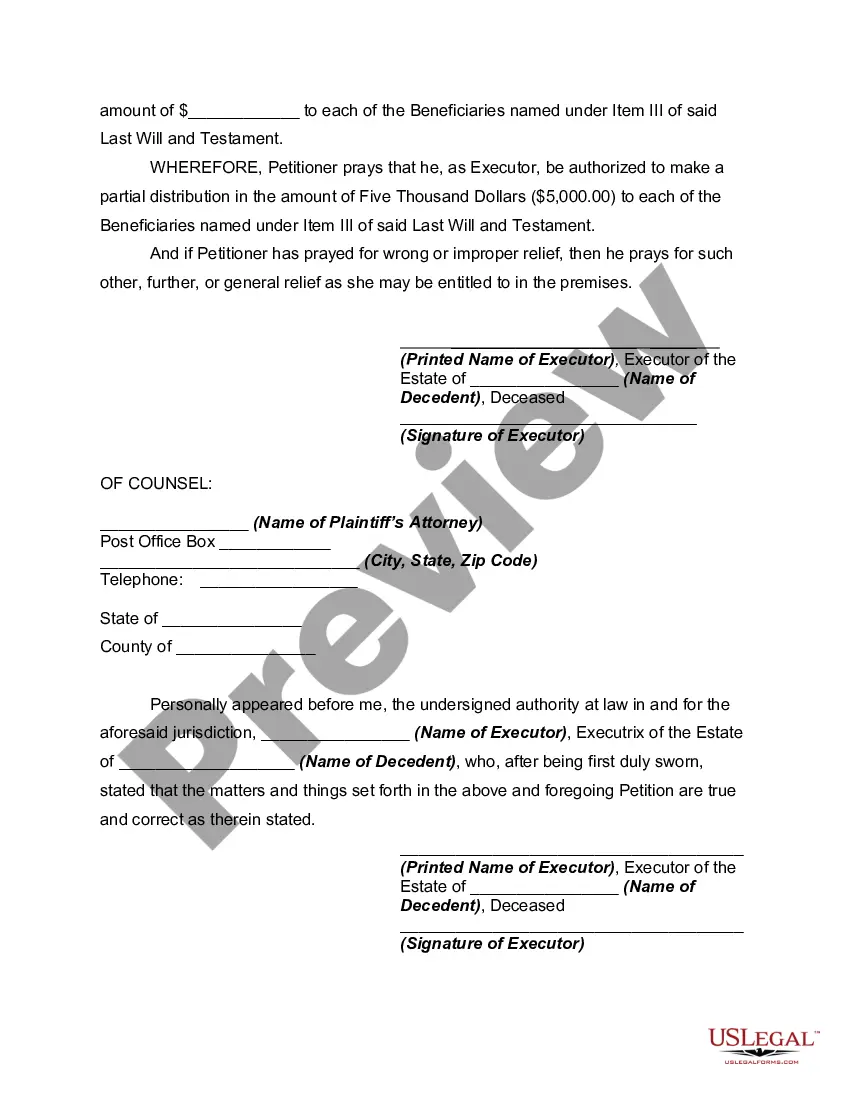
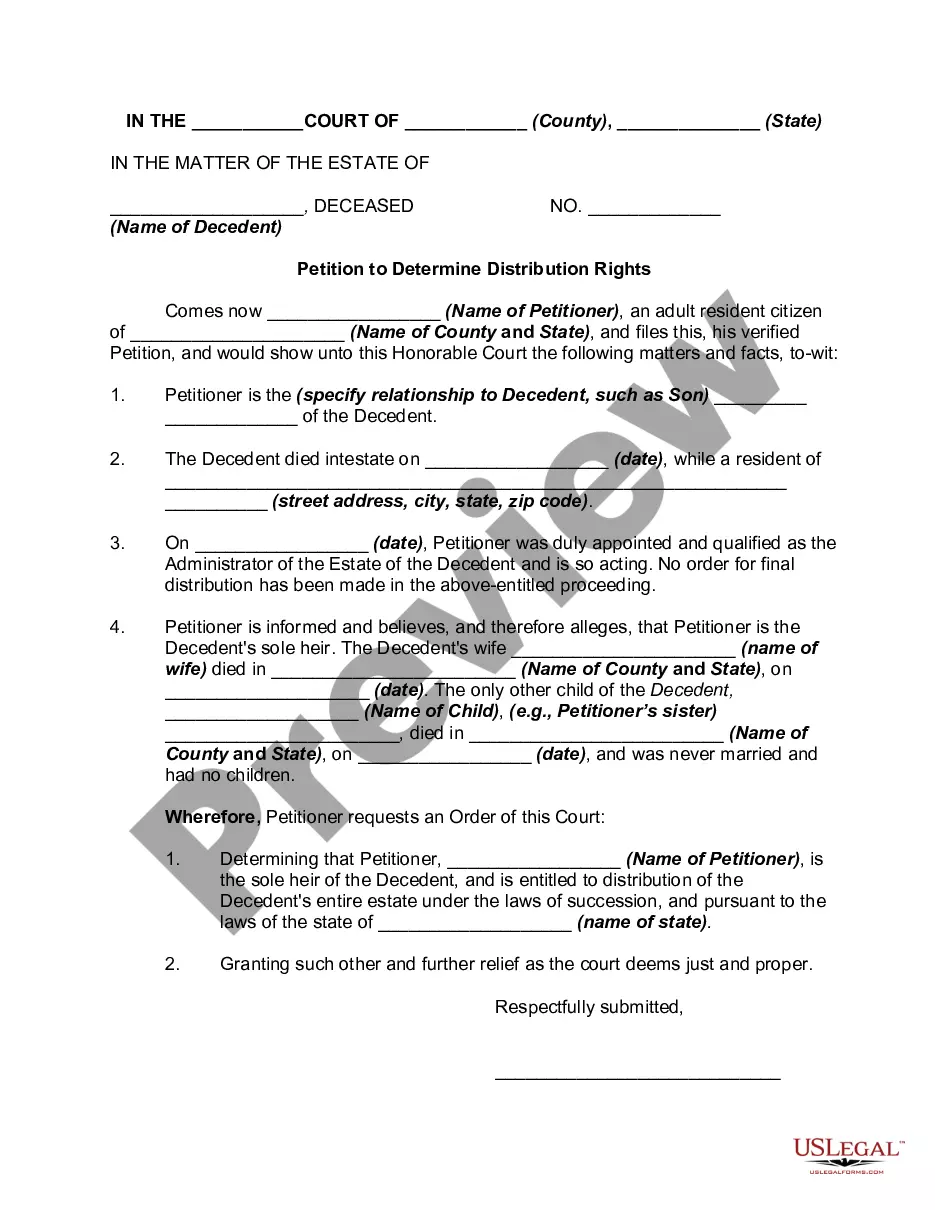
Partial Distribution Of Estate Form With Beneficiaries
Description
Get your form ready online
Our built-in tools help you complete, sign, share, and store your documents in one place.
Make edits, fill in missing information, and update formatting in US Legal Forms—just like you would in MS Word.
Download a copy, print it, send it by email, or mail it via USPS—whatever works best for your next step.
Sign and collect signatures with our SignNow integration. Send to multiple recipients, set reminders, and more. Go Premium to unlock E-Sign.
If this form requires notarization, complete it online through a secure video call—no need to meet a notary in person or wait for an appointment.
We protect your documents and personal data by following strict security and privacy standards.

Make edits, fill in missing information, and update formatting in US Legal Forms—just like you would in MS Word.

Download a copy, print it, send it by email, or mail it via USPS—whatever works best for your next step.

Sign and collect signatures with our SignNow integration. Send to multiple recipients, set reminders, and more. Go Premium to unlock E-Sign.

If this form requires notarization, complete it online through a secure video call—no need to meet a notary in person or wait for an appointment.

We protect your documents and personal data by following strict security and privacy standards.
Looking for another form?
How to fill out Petition For Partial And Early Distribution Of Estate?
The Partial Distribution Of Estate Document With Beneficiaries presented on this site is a versatile legal template prepared by expert lawyers adhering to federal and local laws.
For over 25 years, US Legal Forms has delivered individuals, organizations, and legal experts with more than 85,000 validated, state-specific forms for any business or personal occasion. It’s the quickest, simplest, and most dependable method to acquire the documents you require, as the service ensures bank-level data protection and anti-malware measures.
Complete and sign the documents. Print out the template to manually finish it. Alternatively, utilize an online multifunctional PDF editor to efficiently and accurately complete and sign your form with a legally-binding electronic signature. Download your documents again. Use the same document again whenever necessary. Open the My documents section in your account to redownload any previously saved forms. Register for US Legal Forms to have verified legal templates for every life situation at your fingertips.
- Search for the document you need and examine it.
- Scan through the file you searched and preview or check the form description to confirm it meets your requirements. If it doesn’t, utilize the search feature to find the correct one. Click Buy Now when you’ve found the template you require.
- Register and Log In.
- Select the pricing plan that best suits you and create an account. Use PayPal or a credit card to make a swift payment. If you already have an account, Log In and verify your subscription to proceed.
- Receive the editable template.
- Choose the format you prefer for your Partial Distribution Of Estate Document With Beneficiaries (PDF, Word, RTF) and save the sample on your device.
Form popularity
FAQ
When dealing with items from a deceased estate, start by inventorying all possessions. Decide whether to keep, sell, donate, or discard items in accordance with the deceased's wishes and state laws. A partial distribution of estate form with beneficiaries can facilitate the decision-making process, outlining how items will be handled. This ensures that all heirs understand their options and feel involved in the process.
The best way to sell items from an estate is to assess their value and choose the right selling method. Options include online auctions, estate sales, or working with a professional appraiser to maximize profits. Using a partial distribution of estate form with beneficiaries can help ensure transparency and agreement on which items are for sale and their expected values. Keeping beneficiaries informed throughout this process can maintain trust and goodwill.
Reporting estate distributions to the IRS involves detailing any taxable income passed on to beneficiaries. Executors should ensure to provide beneficiaries with the appropriate tax documents and file IRS Form 1041 for the estate. When using a partial distribution of estate form with beneficiaries, it is essential to keep accurate records of all items distributed, as these will aid in tax reporting. This clarity helps both the executor and the beneficiaries prepare for their tax responsibilities.
The best way to distribute estate assets is to follow the deceased's wishes as outlined in their will. If no will exists, state laws determine distribution. Utilizing a partial distribution of estate form with beneficiaries can streamline the process, ensuring that each heir receives their rightful share. Additionally, this method can help resolve conflicts and promote transparency throughout the distribution process.
To divide estate items fairly, start by creating a comprehensive list of all assets. Communicate openly with beneficiaries to understand their preferences and feelings about certain items. Using a partial distribution of estate form with beneficiaries can simplify the process, ensuring everyone has clarity and agrees on the distribution plan. This approach encourages fairness and fosters better relationships among heirs.
An example of an inheritance letter for a beneficiary includes a formal greeting, followed by a statement declaring the intent to distribute the estate. You should reference the partial distribution of estate form with beneficiaries to clarify the details of the inheritance. Clearly list the items or amounts being passed to the beneficiary, and conclude with a note of support as they navigate this transition. Remember to sign and date the letter for authenticity.
To write an estate distribution letter, begin by clearly stating your relationship to the deceased and your role in the estate process. Next, outline the specific distributions being made, referencing the partial distribution of estate form with beneficiaries as needed. Ensure that you include the names of all beneficiaries and the amounts or items they will receive. This document should be signed and dated to maintain its validity.
You can indeed make a partial distribution of an estate, provided it is executed according to legal guidelines. This allows beneficiaries to access a portion of their inheritance while the estate is still being settled. It's crucial to confirm that every distribution reflects the decedent's wishes and any outstanding obligations of the estate. To streamline this process, consider using a Partial distribution of estate form with beneficiaries for accurate documentation.
Yes, you can perform a partial distribution of an estate before all claims have been settled. This method allows beneficiaries to receive part of their inheritance, making it easier for them to manage their financial needs. However, it's important to ensure that the distributions comply with state laws and the will's stipulations. Using a Partial distribution of estate form with beneficiaries can provide clarity and legal backing for such distributions.
To distribute items from an estate, start by creating a detailed inventory of all items and their estimated values. You can then identify beneficiaries and designate specific items to them according to the will's instructions. It's best to communicate openly with beneficiaries, allowing them to express preferences if applicable. The Partial distribution of estate form with beneficiaries can assist in documenting and organizing these distributions effectively.