Filing Probate Estate With No Assets
Description
Get your form ready online
Our built-in tools help you complete, sign, share, and store your documents in one place.
Make edits, fill in missing information, and update formatting in US Legal Forms—just like you would in MS Word.
Download a copy, print it, send it by email, or mail it via USPS—whatever works best for your next step.
Sign and collect signatures with our SignNow integration. Send to multiple recipients, set reminders, and more. Go Premium to unlock E-Sign.
If this form requires notarization, complete it online through a secure video call—no need to meet a notary in person or wait for an appointment.
We protect your documents and personal data by following strict security and privacy standards.

Make edits, fill in missing information, and update formatting in US Legal Forms—just like you would in MS Word.

Download a copy, print it, send it by email, or mail it via USPS—whatever works best for your next step.

Sign and collect signatures with our SignNow integration. Send to multiple recipients, set reminders, and more. Go Premium to unlock E-Sign.

If this form requires notarization, complete it online through a secure video call—no need to meet a notary in person or wait for an appointment.

We protect your documents and personal data by following strict security and privacy standards.
Looking for another form?



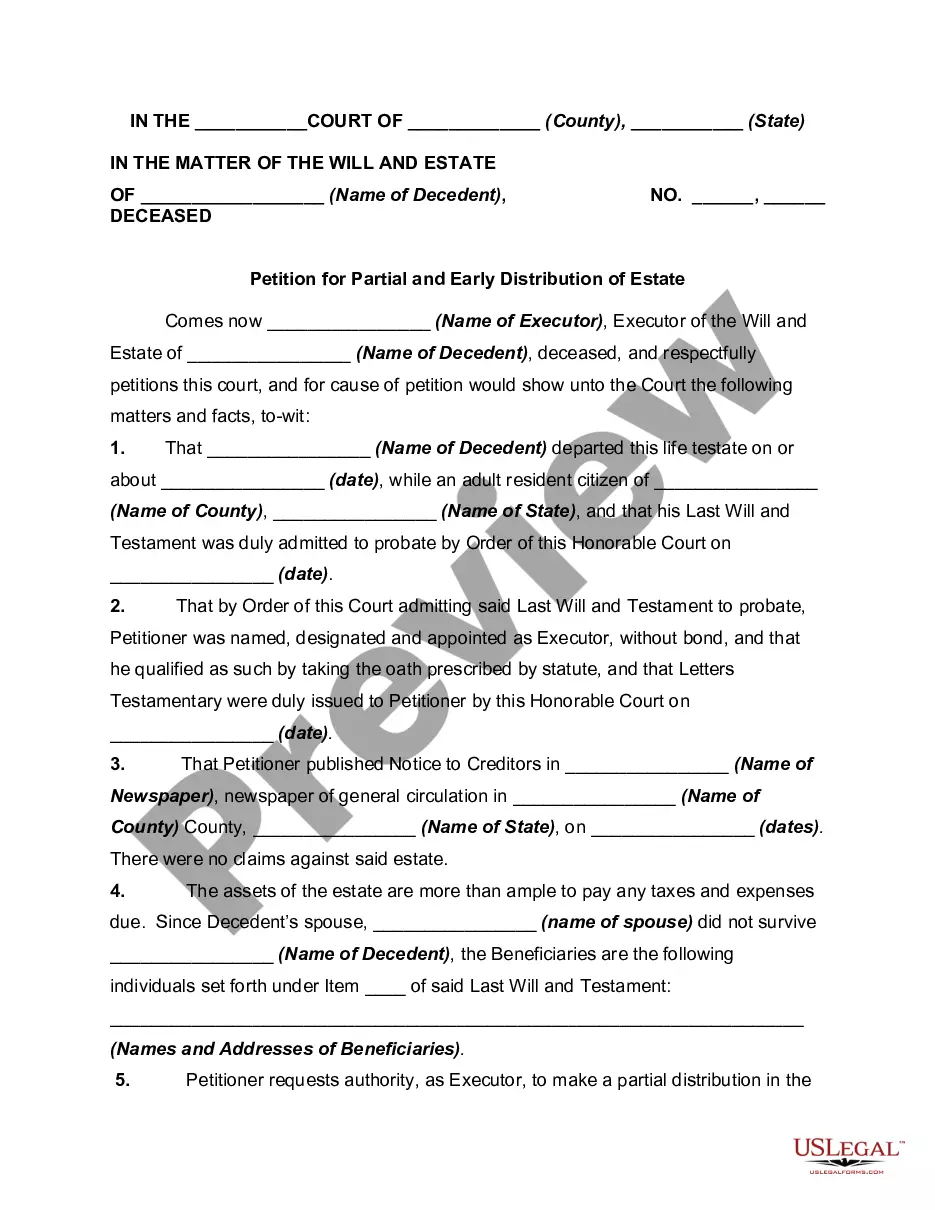
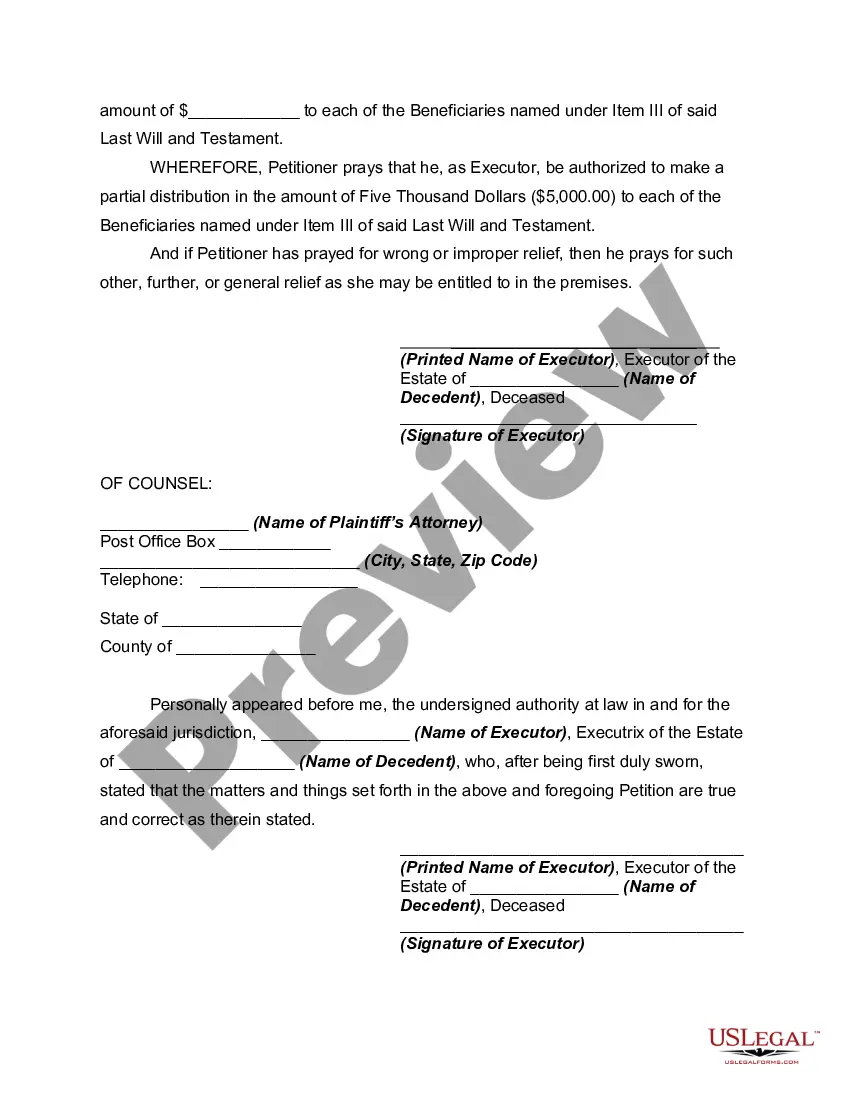
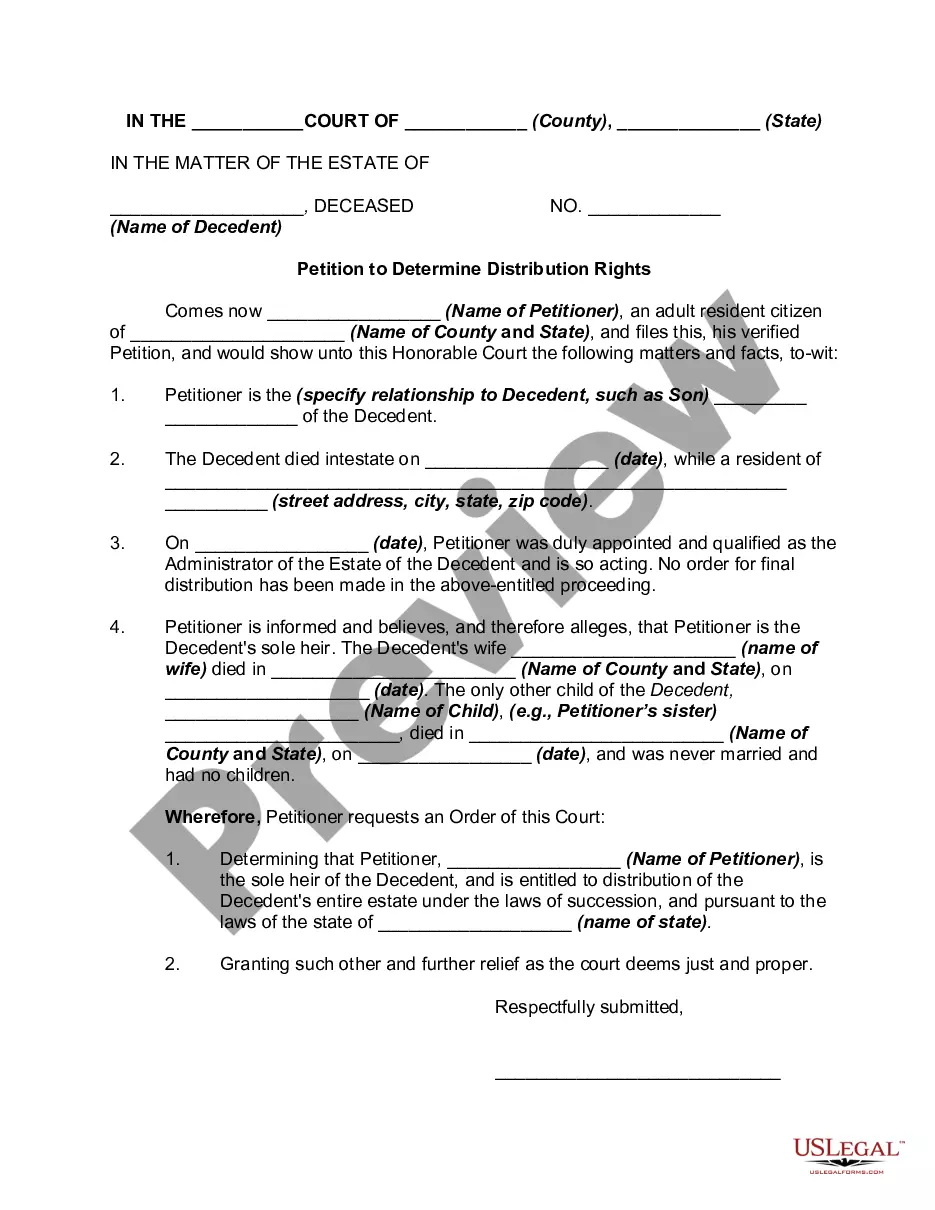
How to fill out Petition For Partial And Early Distribution Of Estate?
Regardless of whether it's for corporate needs or personal affairs, everyone must confront legal issues at some point in their lives.
Completing legal paperwork requires meticulous focus, starting with selecting the correct form template.
With a vast US Legal Forms catalog available, you will never need to waste time searching for the correct sample on the web. Take advantage of the library’s user-friendly navigation to find the suitable template for any situation.
- For example, if you choose an incorrect variant of the Filing Probate Estate With No Assets, it will be declined upon submission.
- Thus, it is crucial to find a reliable source of legal documents like US Legal Forms.
- If you need to acquire a Filing Probate Estate With No Assets template, adhere to these straightforward steps.
- Locate the sample you require by using the search box or catalog navigation.
- Review the form’s description to ensure it aligns with your circumstances, state, and locality.
- Click on the form’s preview to inspect it.
- If it is the wrong document, return to the search function to locate the Filing Probate Estate With No Assets sample you need.
- Download the template when it satisfies your criteria.
- If you possess a US Legal Forms account, click Log in to access previously saved documents in My documents.
- If you don't have an account yet, you can download the form by clicking Buy now.
- Choose the appropriate pricing option.
- Complete the account registration form.
- Select your payment method: you can utilize a credit card or PayPal account.
- Choose the document format you prefer and download the Filing Probate Estate With No Assets.
- Once it is saved, you can fill out the form using editing software or print it and finish it by hand.
Form popularity
FAQ
The probate procedure is expensive, drawn-out, and intrusive. The costs associated with the court, legal counsel, personal representatives, bonds, and accounting all add up and can create a much bigger ordeal than expected.
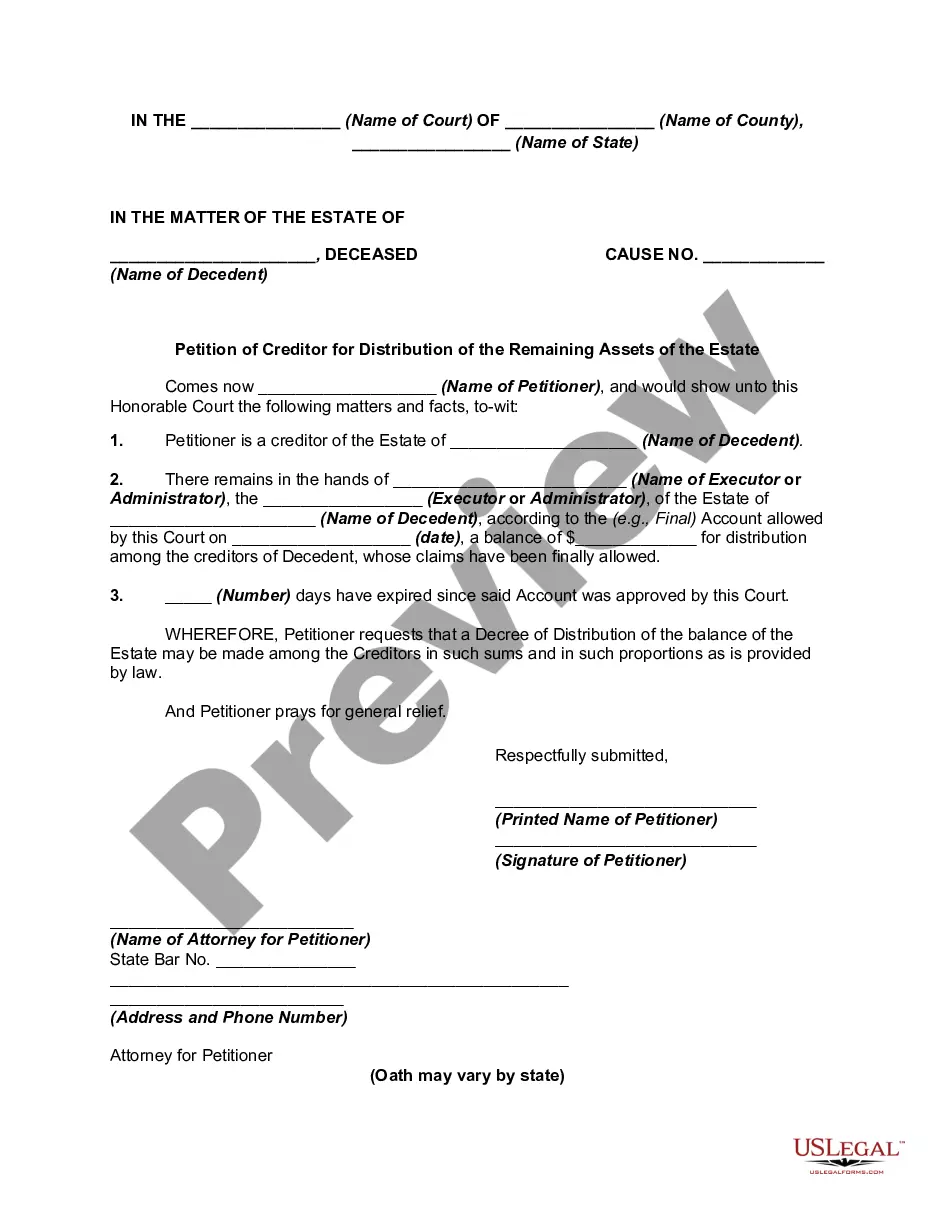
If the estate is insolvent and there aren't enough assets to cover the liabilities, the court will determine which creditors have priority for payment.
This can include vehicles, land, houses, bank accounts, investment accounts, stocks, bonds, and business interests. If your name is the only name listed on the deed, title, or account, then the items won't pass on to your beneficiaries without going through the probate process first.
One of the most common ways to avoid probate is to create a living trust. Through a living trust, the person writing the trust (grantor) must "fund the trust" by putting the assets they choose into it. The grantor retains control over the trust's property until their death or incapacitation.
Probate assets include: Real estate, vehicles, and other titled assets owned solely by the deceased person or as a tenant in common with someone else. Tenants in common don't have survivorship rights. The owners can bequeath their share of the property to someone else.