Executor Petition Estate For Sale By Owner
Description
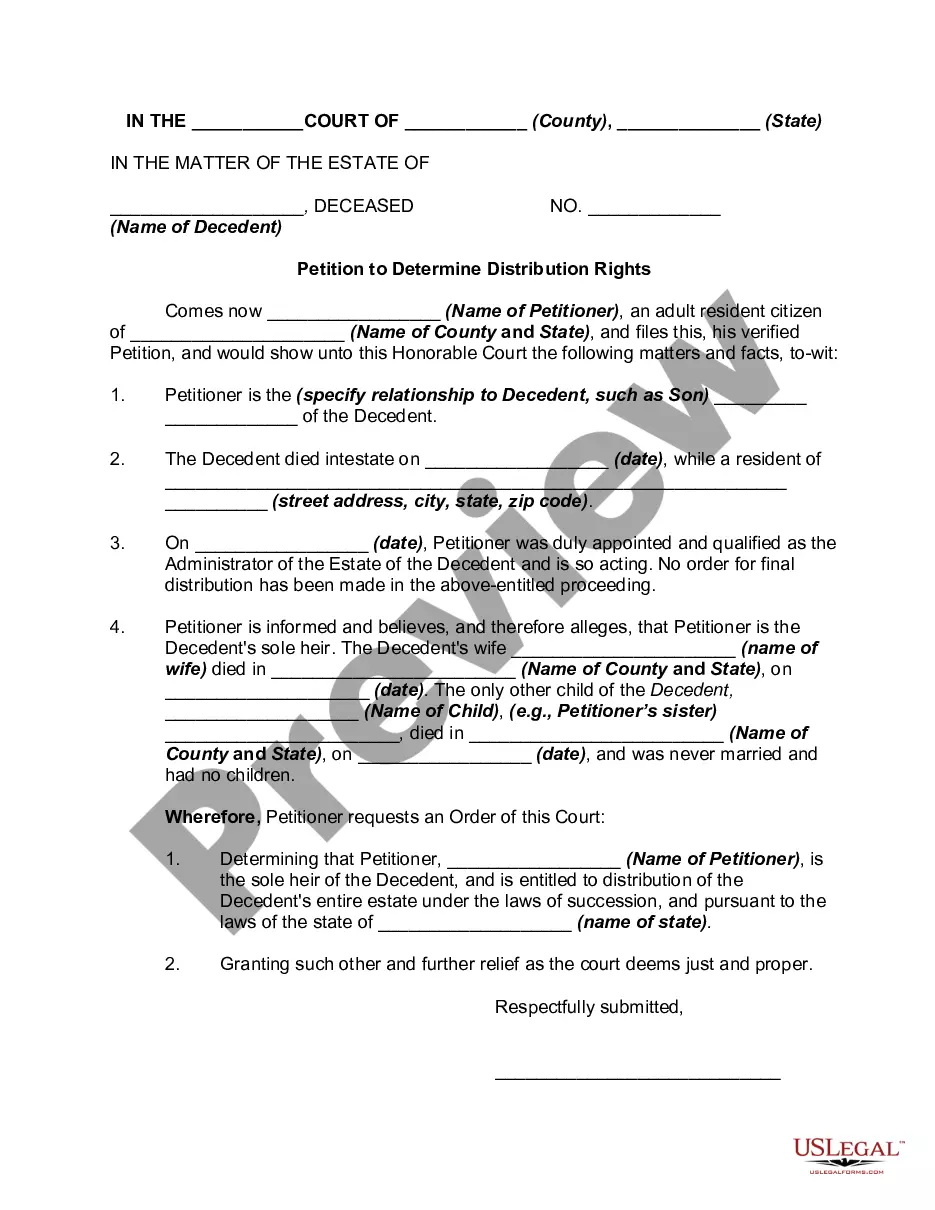
Get your form ready online
Our built-in tools help you complete, sign, share, and store your documents in one place.
Make edits, fill in missing information, and update formatting in US Legal Forms—just like you would in MS Word.
Download a copy, print it, send it by email, or mail it via USPS—whatever works best for your next step.
Sign and collect signatures with our SignNow integration. Send to multiple recipients, set reminders, and more. Go Premium to unlock E-Sign.
If this form requires notarization, complete it online through a secure video call—no need to meet a notary in person or wait for an appointment.
We protect your documents and personal data by following strict security and privacy standards.

Make edits, fill in missing information, and update formatting in US Legal Forms—just like you would in MS Word.

Download a copy, print it, send it by email, or mail it via USPS—whatever works best for your next step.

Sign and collect signatures with our SignNow integration. Send to multiple recipients, set reminders, and more. Go Premium to unlock E-Sign.

If this form requires notarization, complete it online through a secure video call—no need to meet a notary in person or wait for an appointment.

We protect your documents and personal data by following strict security and privacy standards.
Looking for another form?










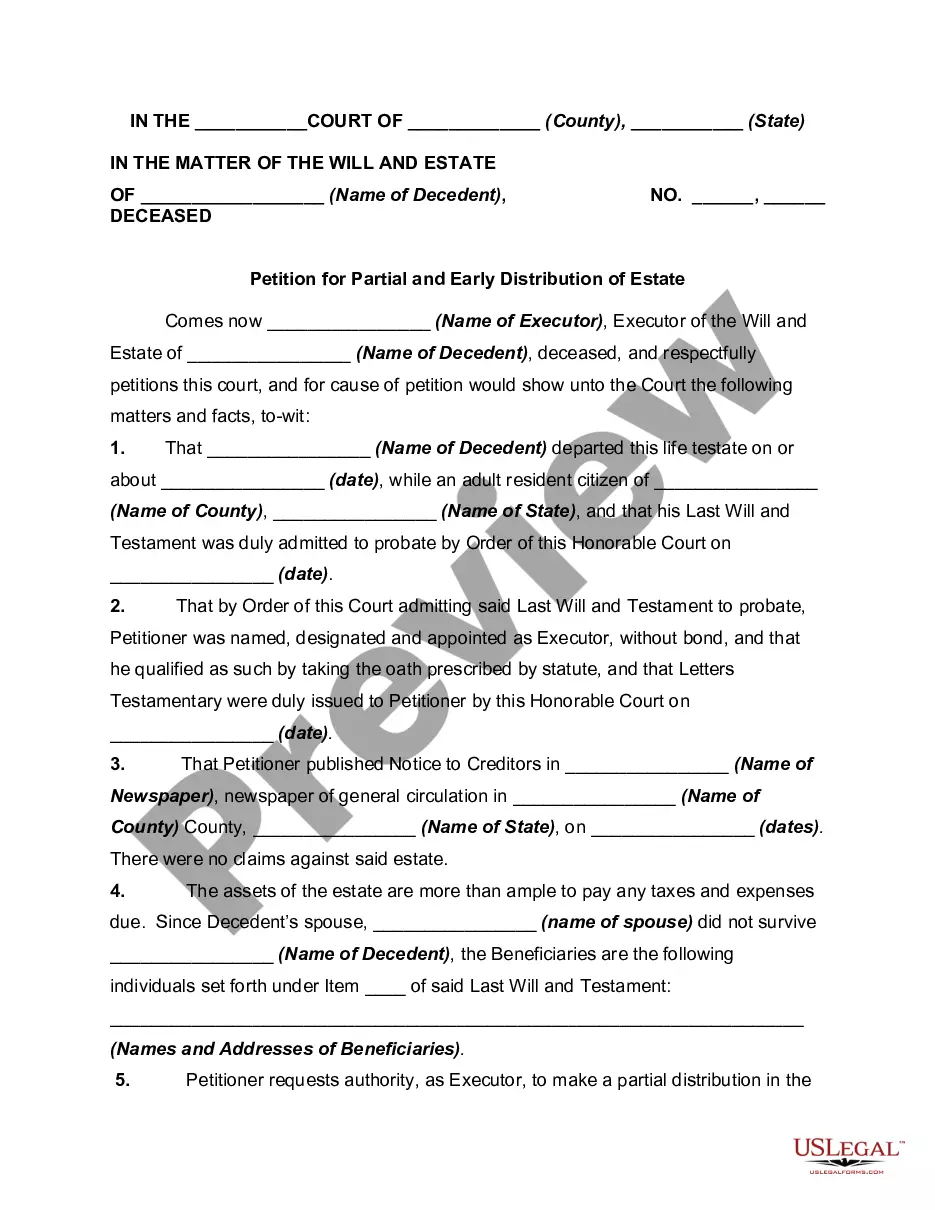
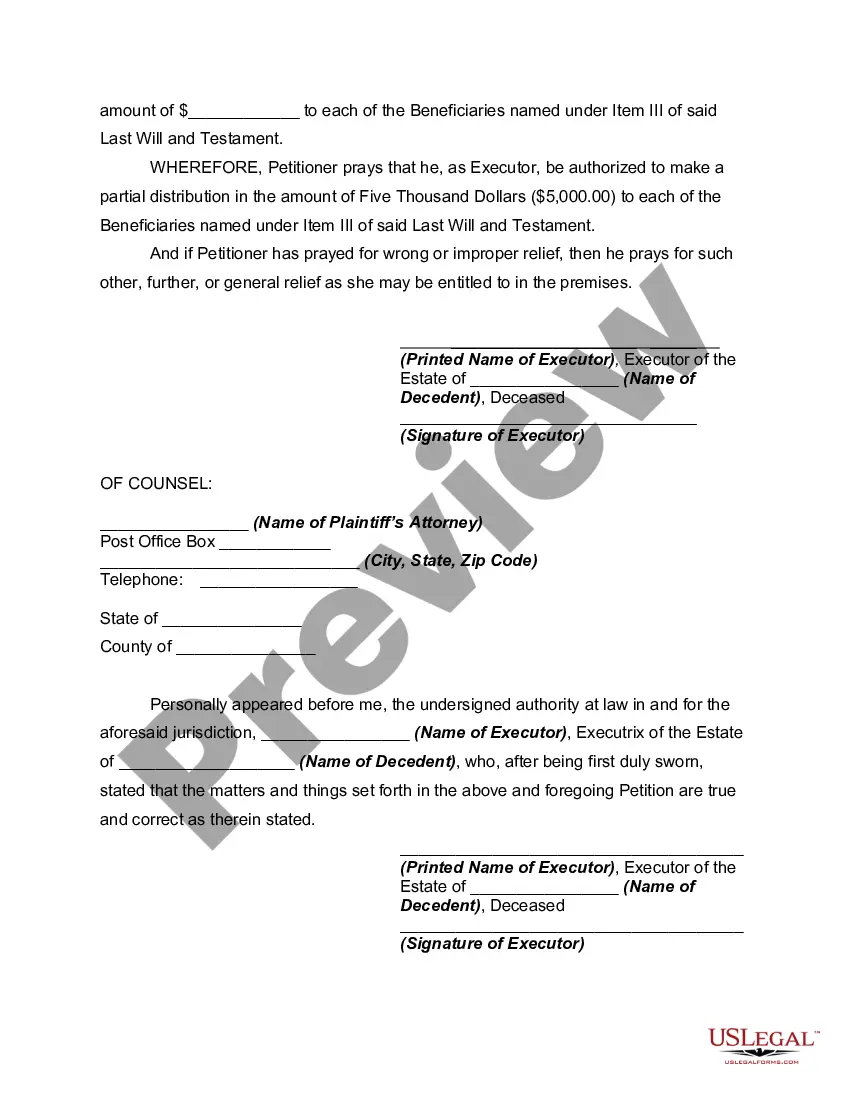
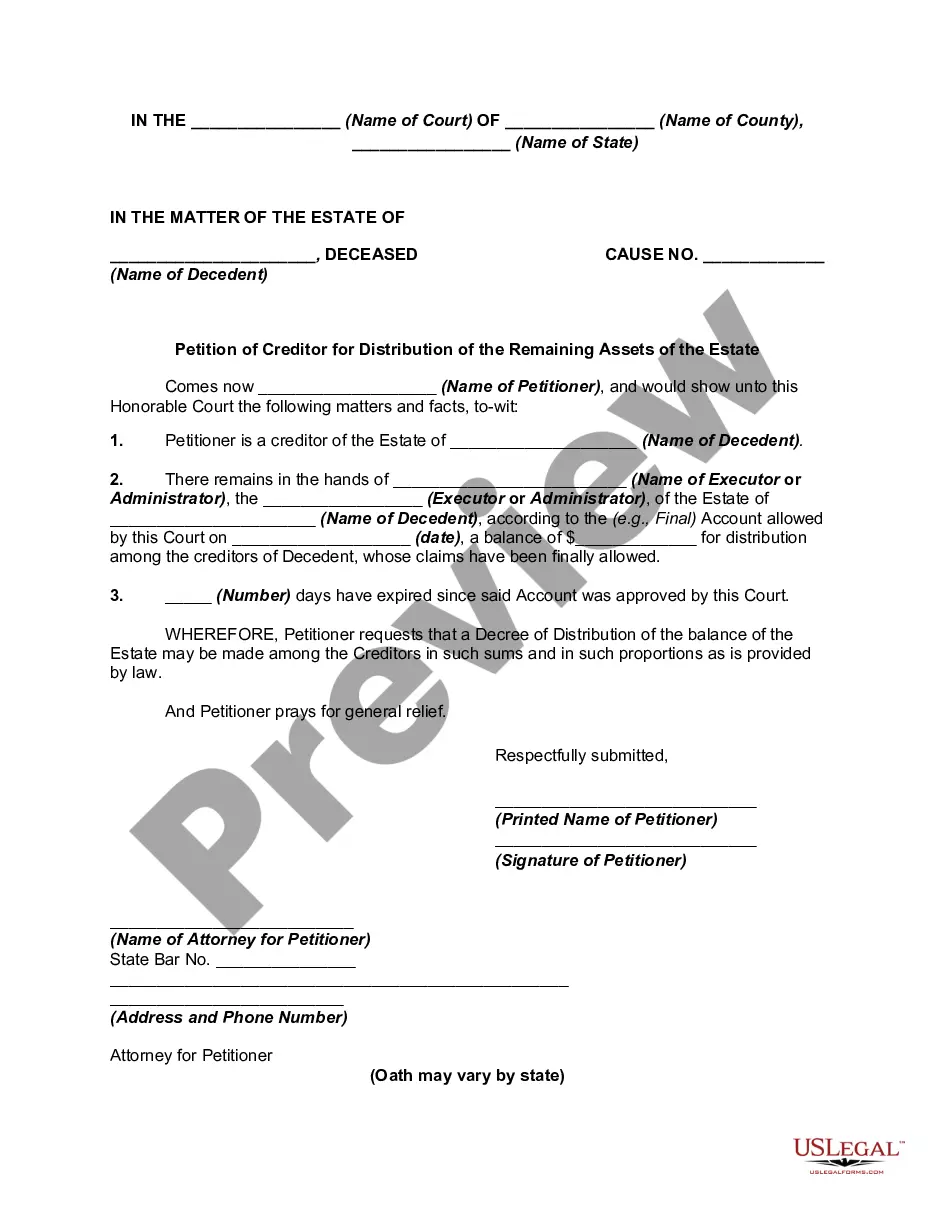
How to fill out Petition For Partial And Early Distribution Of Estate?
Creating legal documents from the ground up can occasionally be intimidating.
Certain instances may require extensive research and significant financial investment.
If you’re looking for a more straightforward and economical method for drafting Executor Petition Estate For Sale By Owner or any other forms without unnecessary complications, US Legal Forms is always available to assist you.
Our online catalog featuring over 85,000 current legal documents encompasses nearly every aspect of your financial, legal, and personal affairs. With just a few clicks, you can swiftly access templates compliant with state and county regulations, meticulously prepared by our legal experts.
US Legal Forms has an impeccable reputation and more than 25 years of experience. Join us today and make form completion an easy and efficient process!
- Utilize our service whenever you need dependable and trustworthy solutions to easily locate and download the Executor Petition Estate For Sale By Owner.
- If you’re familiar with our website and have already created an account, simply Log In to your profile, find the form, and download it or retrieve it later in the My documents section.
- Not registered yet? No worries. It only takes a few minutes to sign up and browse the catalog.
- However, before directly downloading the Executor Petition Estate For Sale By Owner, consider these suggestions.
- Examine the document preview and descriptions to ensure you are viewing the correct document.
Form popularity
FAQ
The 3-year rule for a deceased estate underlines the importance of settling an estate within that time frame to avoid potential legal complications. If the estate is not resolved, beneficiaries may face issues with taxes and inheritances. Executors should take decisive steps, including filing the executor petition estate for sale by owner, to ensure timely resolution and distribution.
In Canada, an executor can sell estate property without all beneficiaries' consent, although it is generally advisable to obtain their agreement. The executor has a fiduciary duty to act in the best interest of all beneficiaries. Utilizing a streamlined process, like an executor petition estate for sale by owner, can facilitate timely sales while adhering to legal requirements.
Some of the many tasks the executor needs to handle include: investing any significant surplus cash until the estate is finalized, helping to set up any trusts set out in the Will, cancelling CPP or QPP and other government benefits, handling the transfer of employment, health, pension and retiree benefits and ...
The executor has authority from the county probate court to act in this role, but that doesn't necessarily mean that the executor has the final say on all decisions regarding the estate. In fact, they're are instead tasked with simply following the guidelines set forth by the will and other estate planning documents.
If you have a trust and funded it with most of your assets during your lifetime, your successor Trustee will have comparatively more power than your Executor. ?Attorney-in-Fact,? ?Executor? and ?Trustee? are designations for distinct roles in the estate planning process, each with specific powers and limitations.
An executor of an estate helps file paperwork, close accounts, distribute assets of the deceased, deal with probate and any court filings and navigate family dynamics. Some of the tasks include: Locating critical documents, like the will, any trusts, deeds, vehicle titles, etc. Obtaining death certificates.
This includes life insurance policies, bank accounts, and investment or retirement accounts that require you to name a beneficiary. The proceeds are paid out directly to your named beneficiary when you pass away without having to pass through probate.