Estate For Probate
Description
Get your form ready online
Our built-in tools help you complete, sign, share, and store your documents in one place.
Make edits, fill in missing information, and update formatting in US Legal Forms—just like you would in MS Word.
Download a copy, print it, send it by email, or mail it via USPS—whatever works best for your next step.
Sign and collect signatures with our SignNow integration. Send to multiple recipients, set reminders, and more. Go Premium to unlock E-Sign.
If this form requires notarization, complete it online through a secure video call—no need to meet a notary in person or wait for an appointment.
We protect your documents and personal data by following strict security and privacy standards.

Make edits, fill in missing information, and update formatting in US Legal Forms—just like you would in MS Word.

Download a copy, print it, send it by email, or mail it via USPS—whatever works best for your next step.

Sign and collect signatures with our SignNow integration. Send to multiple recipients, set reminders, and more. Go Premium to unlock E-Sign.

If this form requires notarization, complete it online through a secure video call—no need to meet a notary in person or wait for an appointment.

We protect your documents and personal data by following strict security and privacy standards.
Looking for another form?
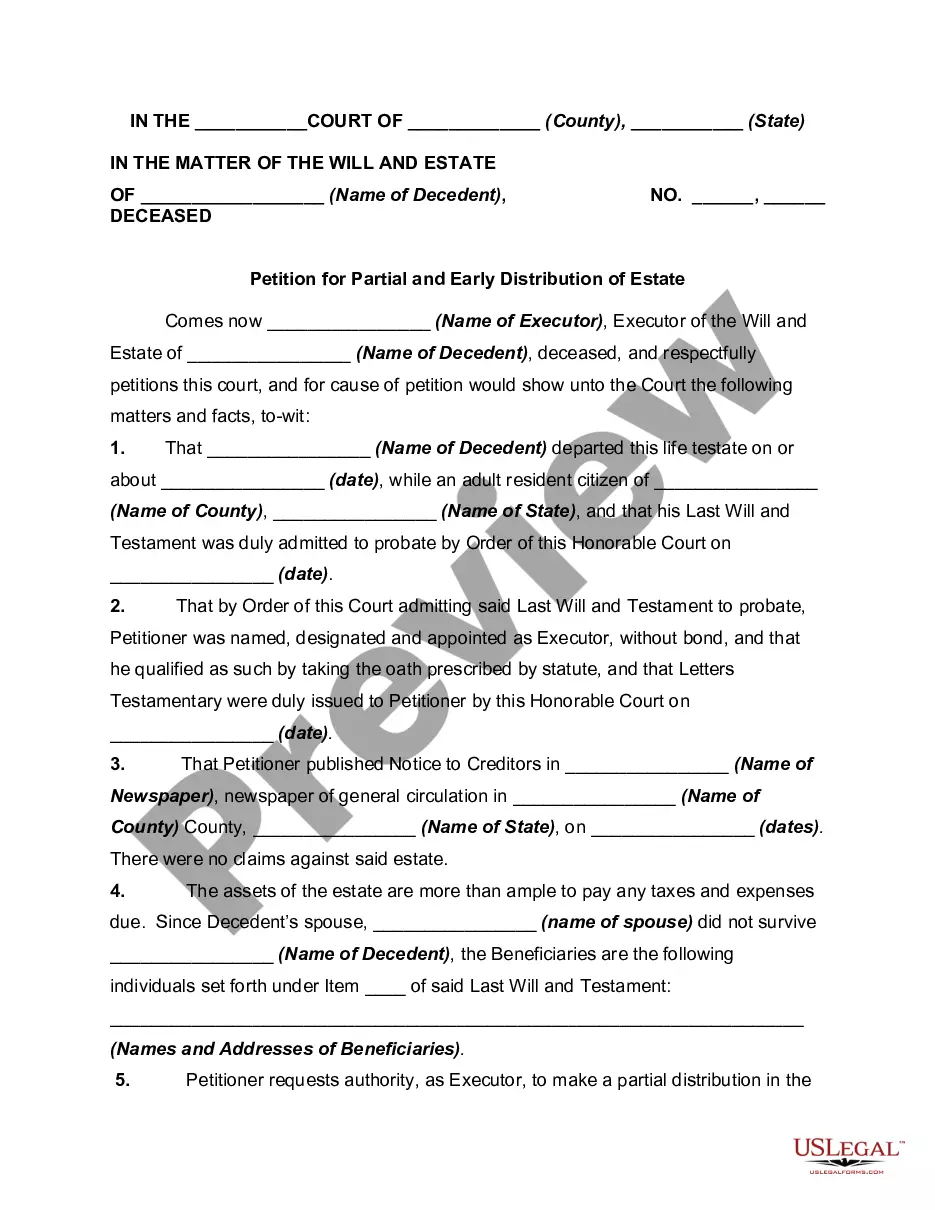
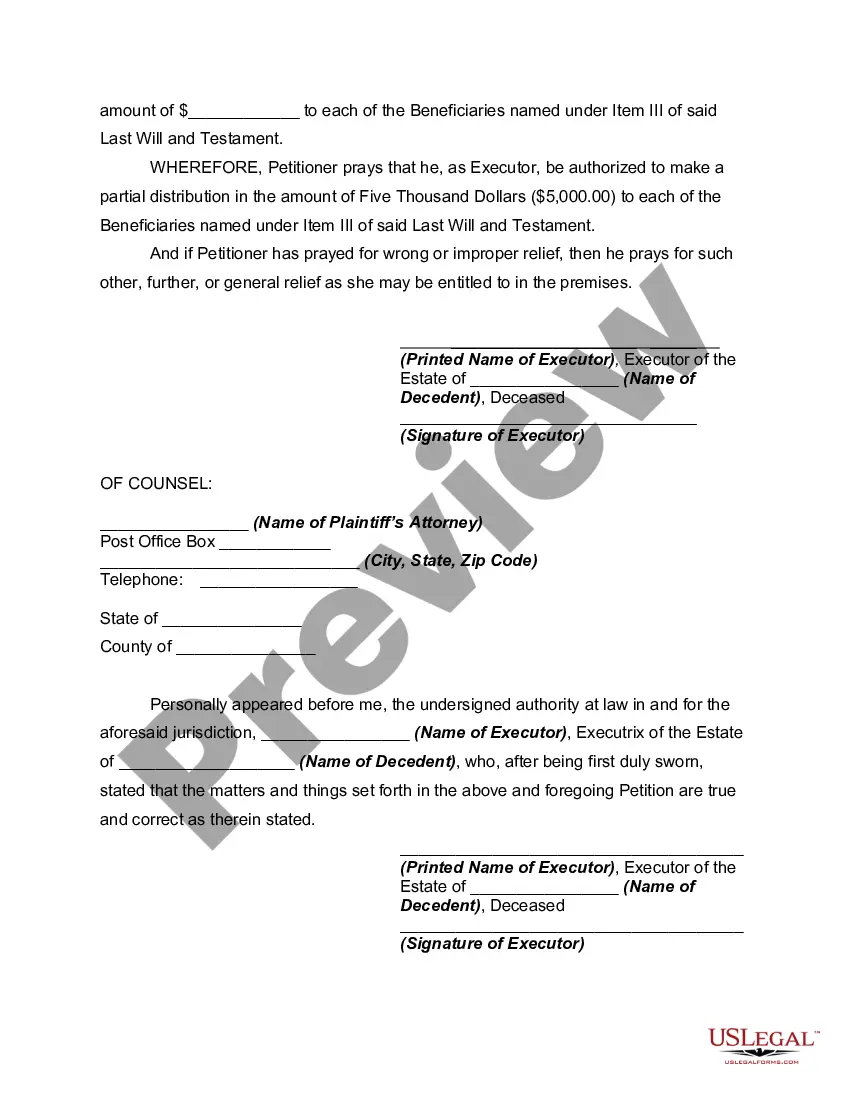
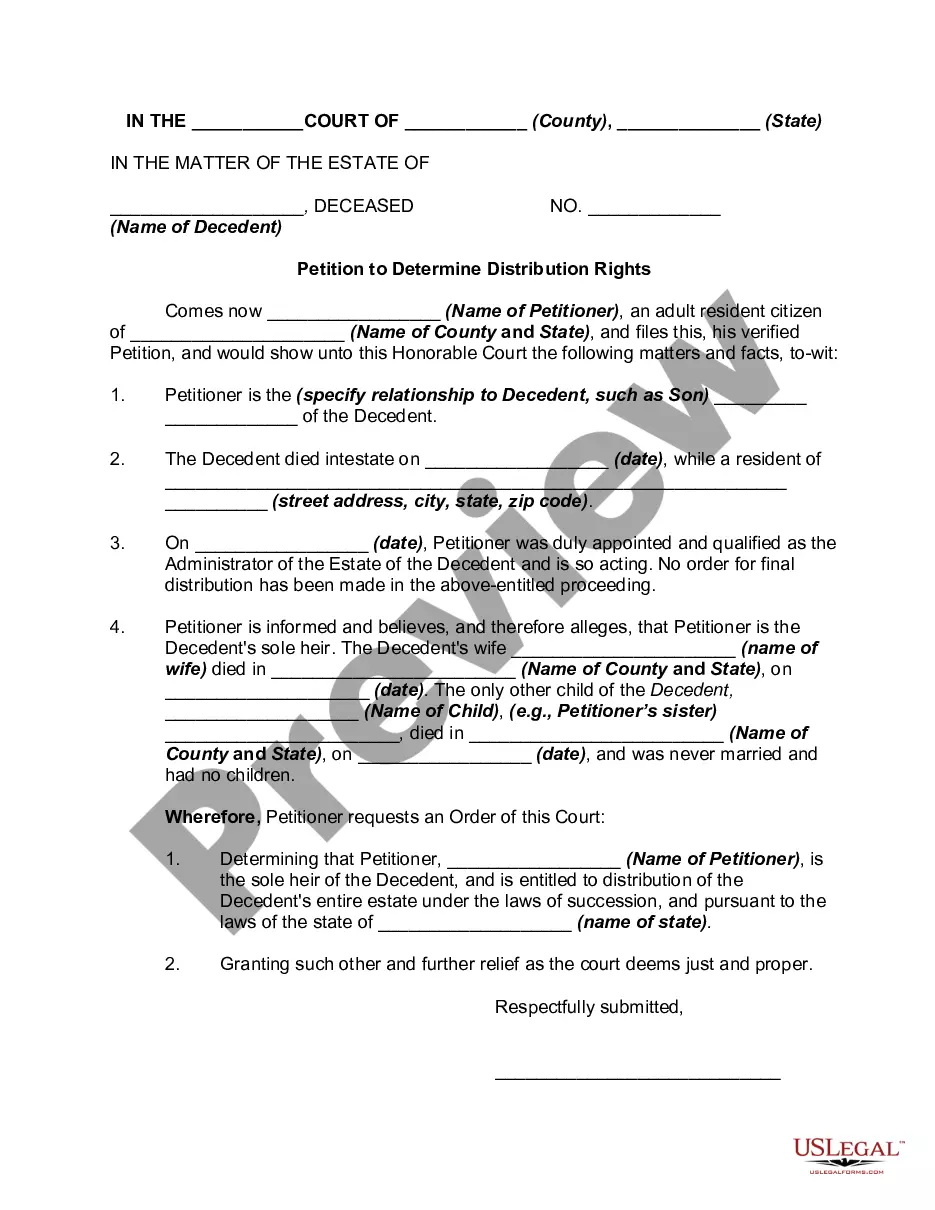
How to fill out Petition For Partial And Early Distribution Of Estate?
- If you have a US Legal Forms account, start by [logging in](https://www.us Check your subscription status to ensure it is active.
- For new users, begin by exploring the extensive online library. Review the preview modes and descriptions of the estate for probate forms available.
- If you need a different template, utilize the Search tab to find a form that meets your local jurisdiction requirements.
- Once you locate the correct document, select the Buy Now option and choose your preferred subscription plan, creating an account to access the library for your selected forms.
- Proceed with your purchase by entering your payment details using your credit card or PayPal account.
- After completing your purchase, download the form and save it on your device for easy access and editing. You can always retrieve it later from the My Forms section of your profile at [My Forms](https://www.us
Obtaining your estate for probate forms through US Legal Forms is streamlined and user-friendly. The extensive resources available not only save time but also ensure that your documents are precise and compliant with legal standards.
Ready to simplify your legal documentation process? Start using US Legal Forms today and gain quick access to the forms you need!
Form popularity
FAQ
A probate attorney typically requires several documents to begin the probate process. These may include the original will, death certificate, and a list of the deceased's assets and liabilities, along with identification for the executor. Providing these documents helps streamline the process of settling the estate for probate and ensures all relevant information is available for proper legal proceedings. With the right documents in hand, the attorney can effectively guide you through the steps ahead.
In Rhode Island, you must file for probate within one year of the person's death. This one-year timeframe is essential to ensure that the estate for probate is addressed promptly and responsibly. Delaying probate may result in legal complications or missed opportunities to settle the estate efficiently. Therefore, it's best to initiate the process as soon as possible to comply with state laws.
While it is possible to navigate probate in Rhode Island without legal assistance, hiring a lawyer is highly recommended. An experienced attorney can guide you through the complexities of the probate process, ensuring the estate for probate is handled correctly and efficiently. They help with paperwork, provide valuable legal advice, and can represent your interests in court if necessary. Overall, having a lawyer can alleviate stress and provide peace of mind.
To avoid probate in Rhode Island, consider creating a living trust to hold your assets during your lifetime. This legal structure allows you to bypass the probate process upon your death, ensuring a smoother transition of your estate for probate. Additionally, establishing joint ownership with rights of survivorship or naming beneficiaries on accounts can also help avoid probate. Overall, proper estate planning is key to minimizing probate complications.
No, probate and estate are not the same. An estate refers to all the assets and liabilities of a deceased person, while probate is the legal process that oversees the distribution of those assets. Probate validates a will, pays off debts, and ensures proper asset distribution according to the law. When planning your estate for probate, knowing this distinction can help you navigate the process more effectively.
Several asset types do not go through probate, such as life insurance policies, retirement accounts, and properties held in joint tenancy. These assets generally pass directly to designated beneficiaries upon death. This can significantly simplify the process for families and save time and legal fees associated with probate. Understanding these assets can help you better prepare your estate for probate.
Typically, an estate enters probate within a few weeks to a few months after a person passes away. The exact timing can depend on state laws and the complexity of the estate. In many cases, executors will file for probate shortly after funeral arrangements. This quick action helps ensure that the estate for probate is managed efficiently, and assets are distributed promptly.
The size of an estate that triggers probate can vary by state law. Generally, estates with significant assets, often valued above a certain threshold, must go through probate. This is usually calculated based on the total value of real estate, bank accounts, and other property. Understanding your state’s specific rules can clarify whether your estate for probate requires court supervision.
Many individuals seek to avoid probate because it can be a lengthy and costly process. Probate often exposes an estate to public scrutiny, which some prefer to protect their family’s privacy. Additionally, bypassing probate can expedite the distribution of assets, allowing heirs to receive their inheritances without delay. Choosing alternatives, such as trusts, can streamline the management of an estate for probate.
An estate refers to all the assets, property, and liabilities a person leaves behind after death, while probate is the legal process of administering that estate. Probate involves validating a will, paying off debts, and distributing assets to beneficiaries. Recognizing the distinction between an estate and probate can help you better prepare for the complexities involved in managing an estate for probate.