Estate Distribution Form For A Corporation
Description
Get your form ready online
Our built-in tools help you complete, sign, share, and store your documents in one place.
Make edits, fill in missing information, and update formatting in US Legal Forms—just like you would in MS Word.
Download a copy, print it, send it by email, or mail it via USPS—whatever works best for your next step.
Sign and collect signatures with our SignNow integration. Send to multiple recipients, set reminders, and more. Go Premium to unlock E-Sign.
If this form requires notarization, complete it online through a secure video call—no need to meet a notary in person or wait for an appointment.
We protect your documents and personal data by following strict security and privacy standards.

Make edits, fill in missing information, and update formatting in US Legal Forms—just like you would in MS Word.

Download a copy, print it, send it by email, or mail it via USPS—whatever works best for your next step.

Sign and collect signatures with our SignNow integration. Send to multiple recipients, set reminders, and more. Go Premium to unlock E-Sign.

If this form requires notarization, complete it online through a secure video call—no need to meet a notary in person or wait for an appointment.

We protect your documents and personal data by following strict security and privacy standards.
Looking for another form?



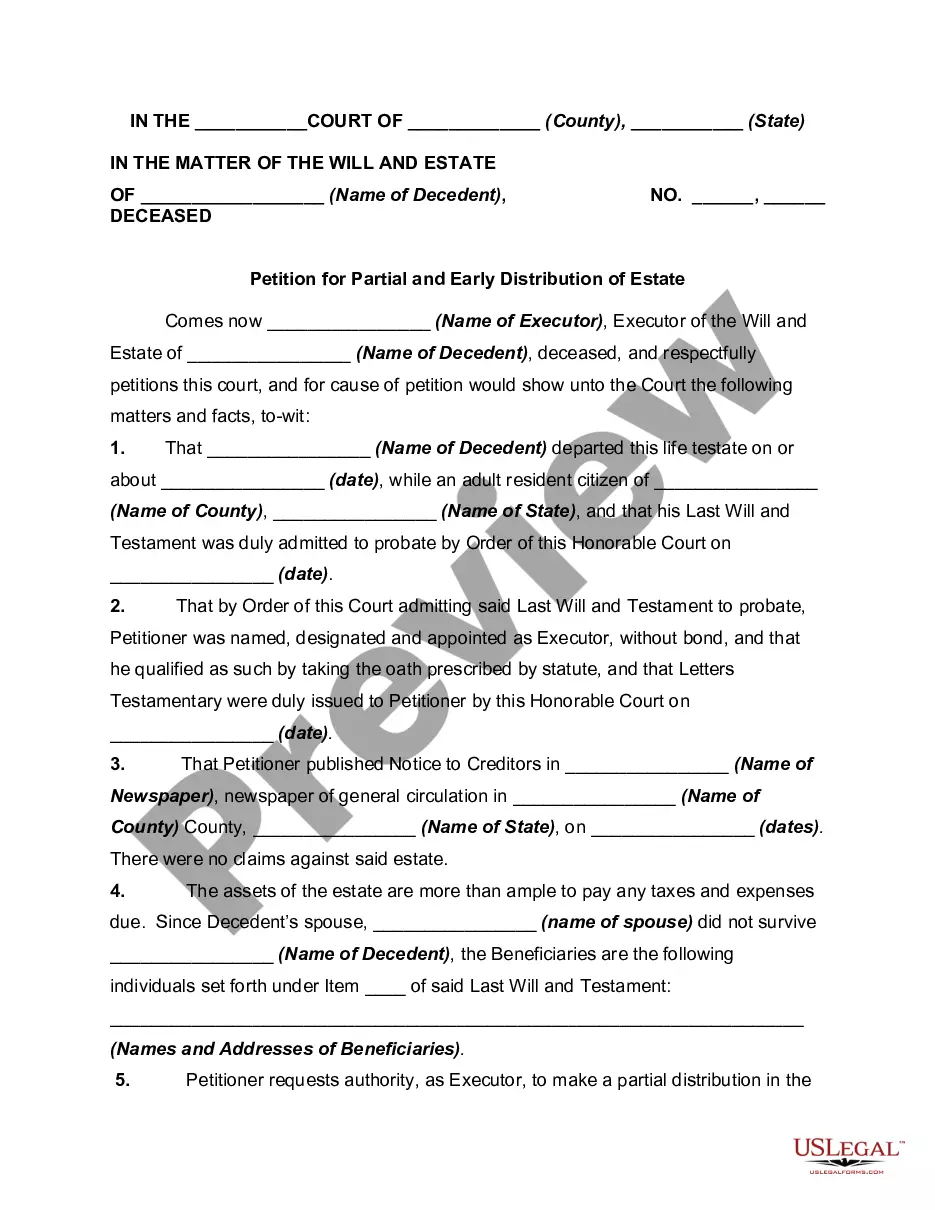
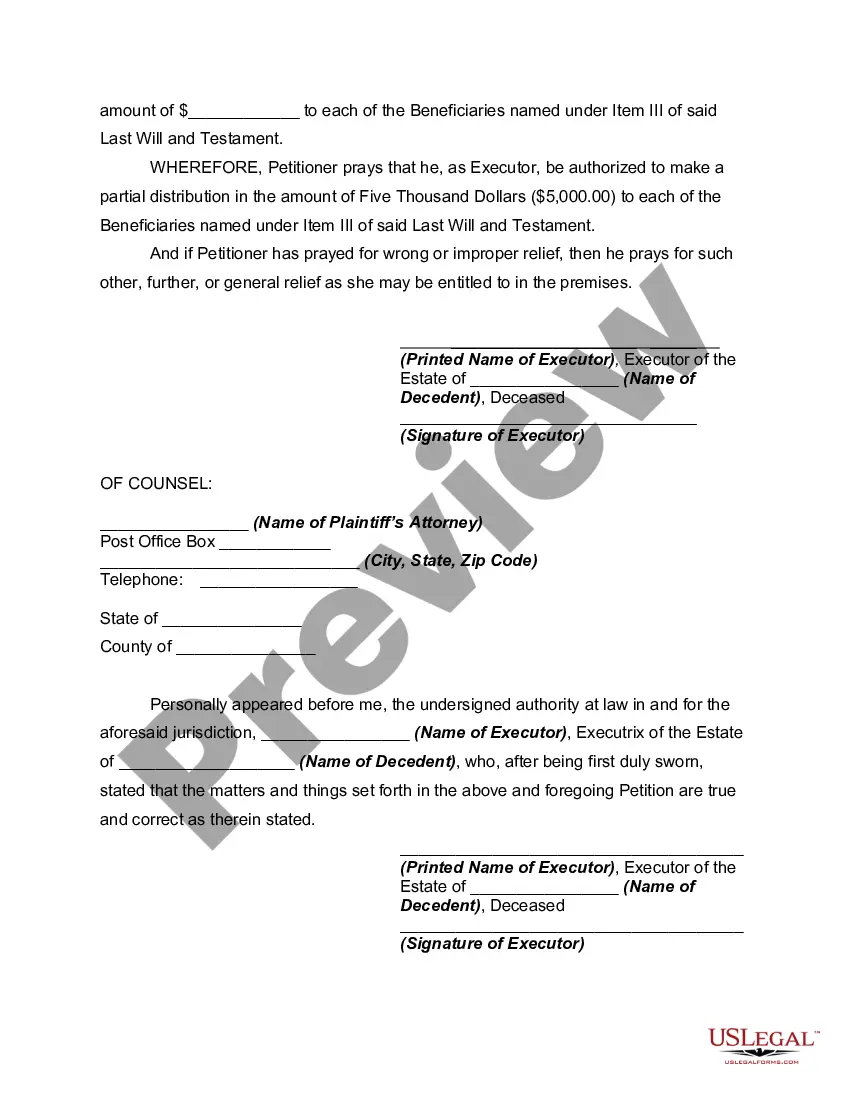
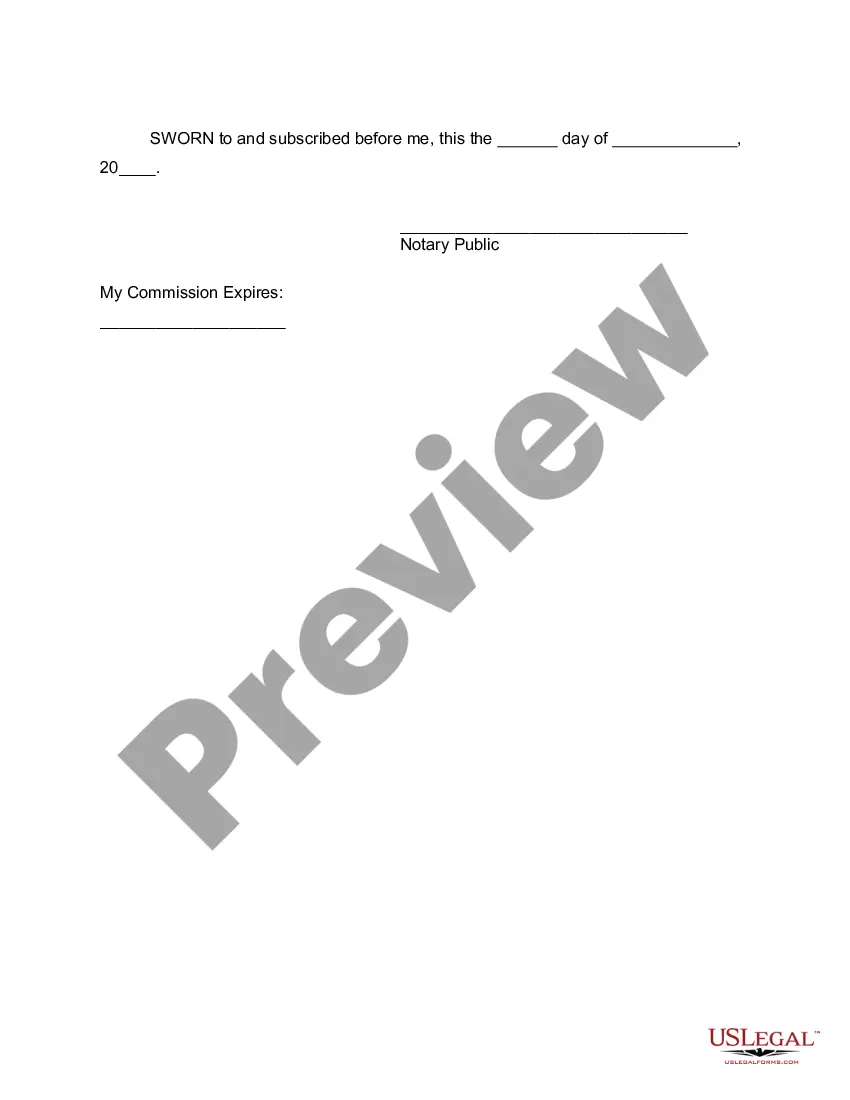
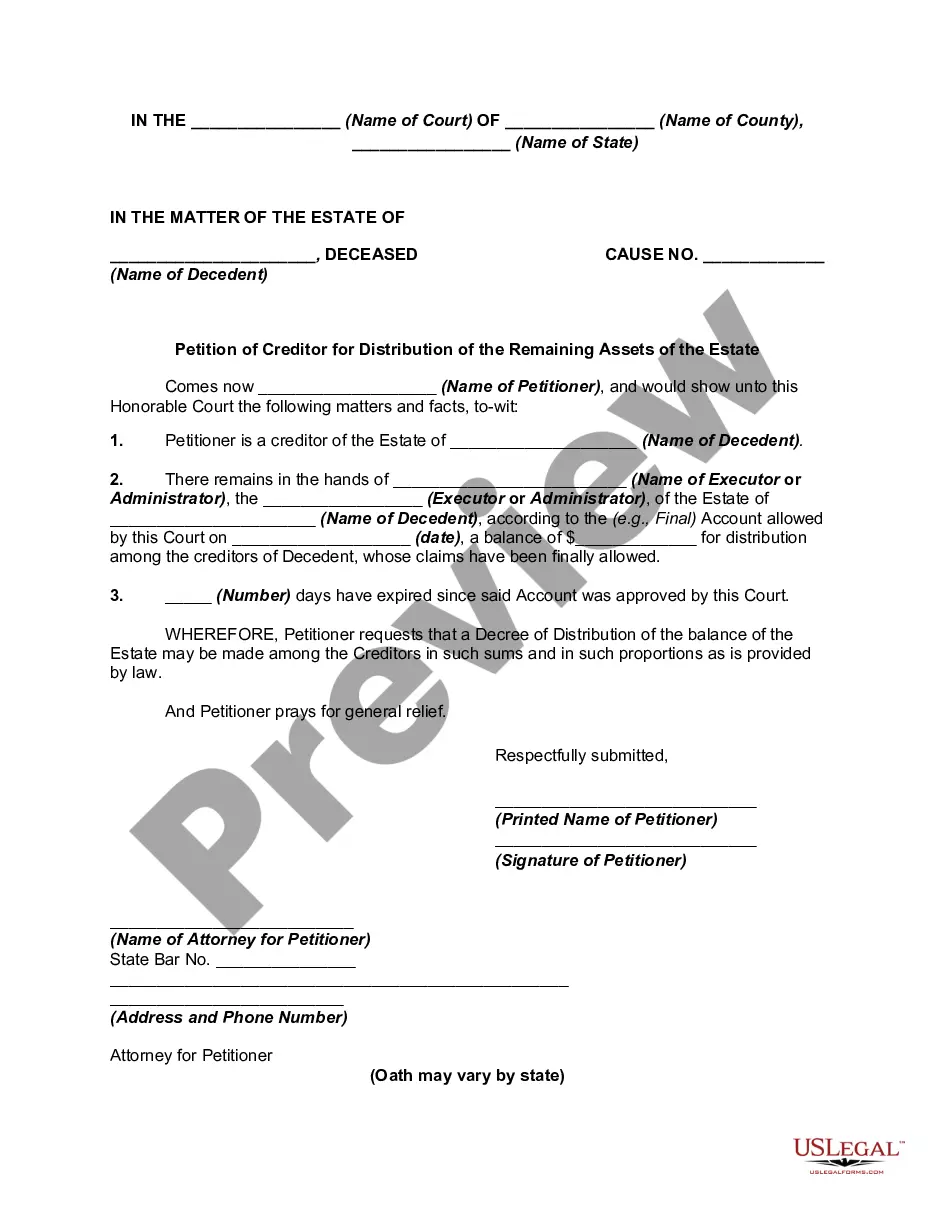
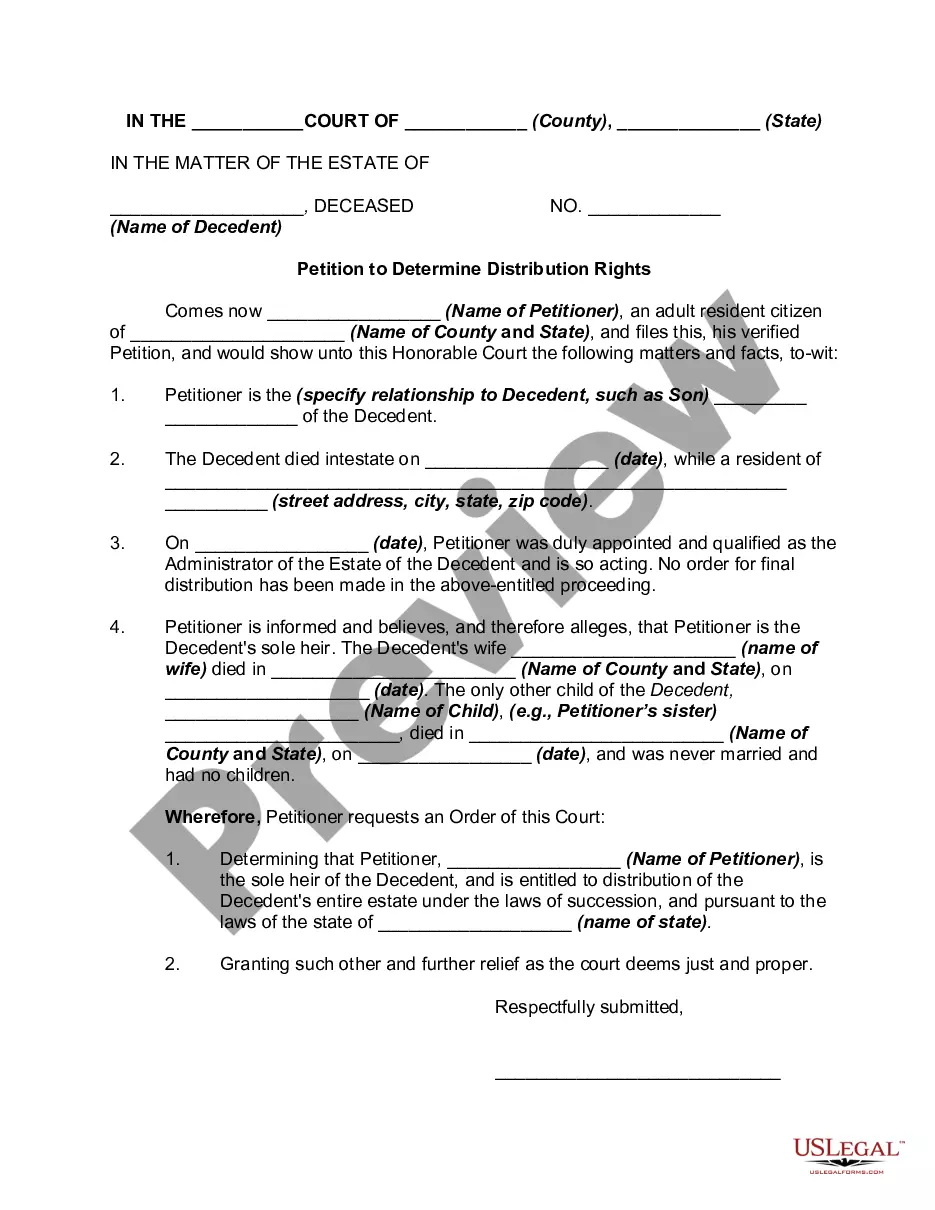
How to fill out Petition For Partial And Early Distribution Of Estate?
- Log in to your US Legal Forms account if you're an existing user and download the desired form template by clicking the Download button. Ensure your subscription is active; otherwise, renew it per your chosen plan.
- For first-time users, start by reviewing the Preview mode and form description to confirm that the form meets your needs and aligns with local jurisdiction requirements.
- If necessary, use the Search tab to find alternate templates to ensure you're selecting the correct document.
- Once you find the appropriate form, click the Buy Now button and select your subscription plan to register for an account.
- Complete your purchase by entering your credit card information or using your PayPal account for the transaction.
- Finally, download the form to your device for completion, accessible anytime via the My Forms section in your profile.
In conclusion, US Legal Forms simplifies the legal documentation process with its extensive library and expert support, enabling users to create precise and compliant documents easily.
Ready to get started? Visit US Legal Forms today to access the estate distribution form for your corporation!
Form popularity
FAQ
An estate tax return is triggered when the gross estate exceeds the federal estate tax exemption limit. Various factors, such as real estate, investments, and other assets, contribute to this calculation. Completing the estate distribution form for a corporation can assist in determining if an estate tax return is required, facilitating proper compliance with tax laws.
Form 1041 is the income tax return for estates and trusts, while Form 706 is the estate tax return used when the estate exceeds a certain value. Understanding the distinctions between these forms is crucial for effective estate planning. Properly completing the estate distribution form for a corporation ensures that all necessary tax forms are filed accurately.
The IRS typically takes six to eight weeks to process a form 1310. However, processing times can vary based on the complexity of the return. Being organized with the estate distribution form for a corporation can help ensure that everything required for the 1310 is accurate and complete, potentially reducing delays.
Form 1310 allows a person to claim a refund on a deceased person's tax return. This form is essential when the deceased is entitled to a refund, and it provides the necessary information for processing the refund. Completing this along with the estate distribution form for a corporation helps streamline the inheritance process.
Form 709 is used for reporting gifts and includes any taxable gifts given during the year. In contrast, Form 706 pertains to the estate tax return for estates that exceed a specified value. Both forms are critical in estate planning, and understanding them can help clarify your financial responsibilities as you complete the estate distribution form for a corporation.
The IRS form 1310 is required when someone is filing a tax return for a deceased person. Generally, you must file this form if you are claiming a tax refund on behalf of the deceased. Utilizing an estate distribution form for a corporation simplifies this process and can help ensure compliance with IRS regulations.
Typically, the tax refund of a deceased person goes to the estate. If the deceased had a surviving spouse, they often receive the refund. Therefore, it is essential to complete the estate distribution form for a corporation accurately to ensure that all tax matters are settled appropriately.
Filing a 1041 with no income is generally unnecessary unless there are specific financial events or obligations attached to the estate. An estate distribution form for a corporation can help outline any requirements and clarify your situation further. Speaking with a tax professional can provide insights into whether any exemptions apply based on your estate’s unique circumstances.
Filling out Form 56 requires entering basic information about the estate, including the fiduciary's name and contact details. Additionally, you'll need to indicate the type of tax obligations involved. By utilizing an estate distribution form for a corporation, you can create a streamlined process that ensures all necessary information is included accurately. Don’t hesitate to seek assistance if you encounter difficulties.
The exemption for Form 1041 depends on the type of income the estate generates and its total income. For example, estates producing less than $600 in gross income typically do not need to file. Understanding the specifics of the estate distribution form for a corporation can clarify potential filing exemptions. Always ensure you have the latest information or guidance from a tax professional.