Pretrial Diversion For Dwi
Description
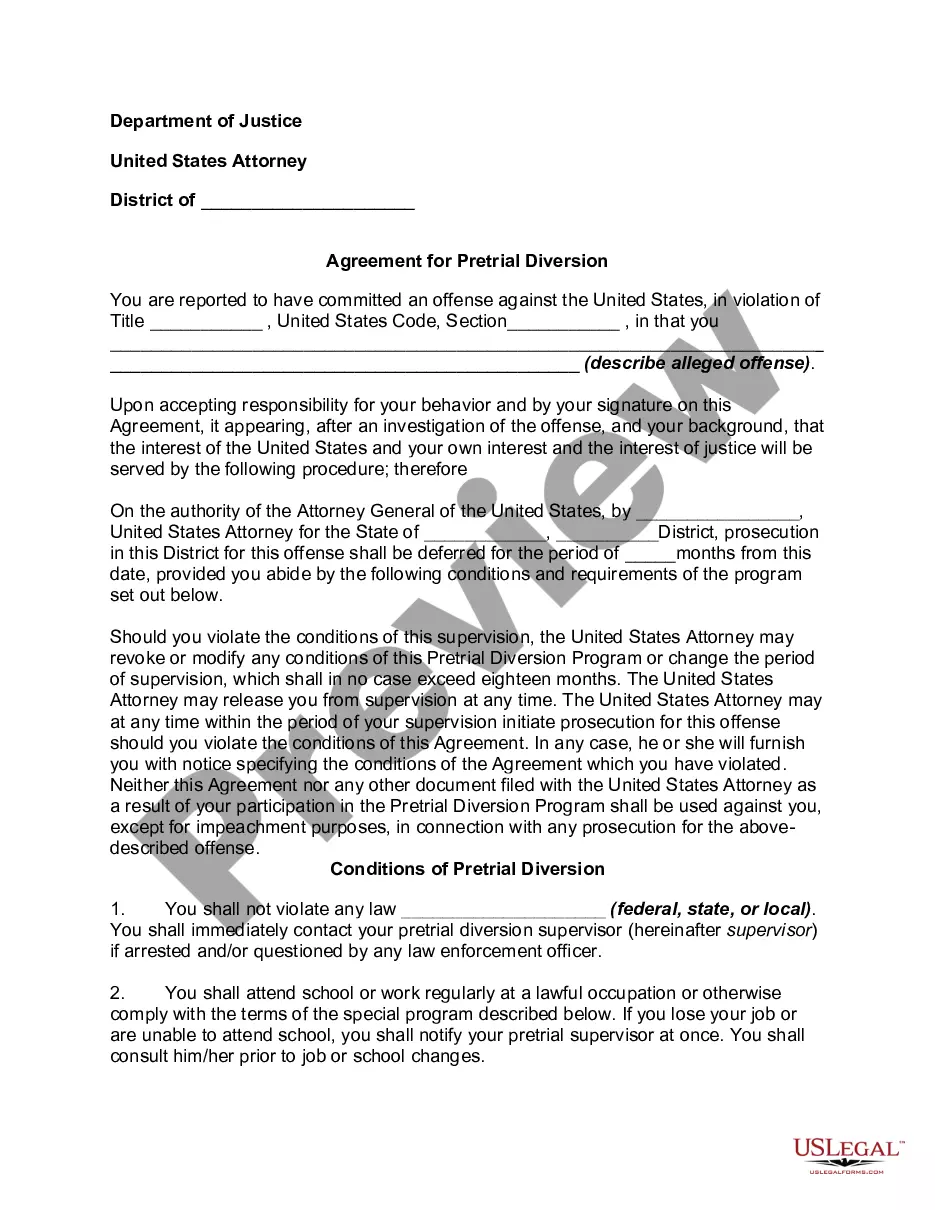
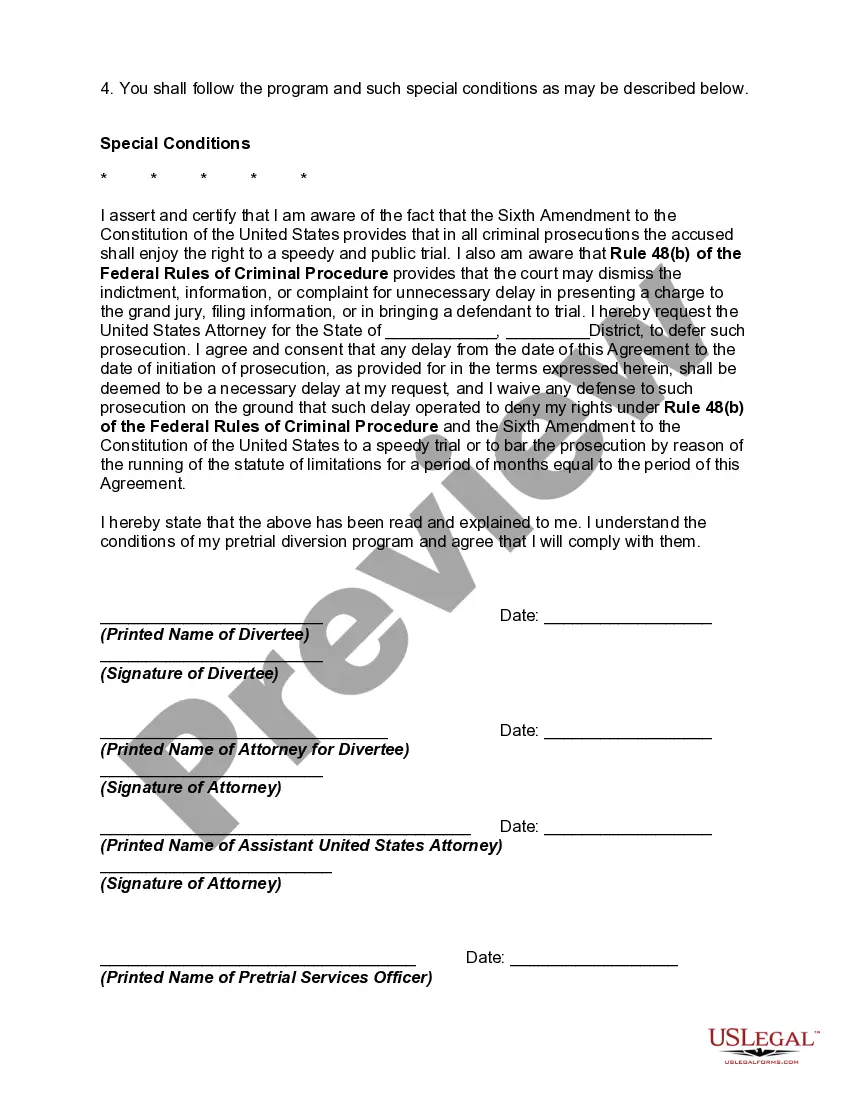
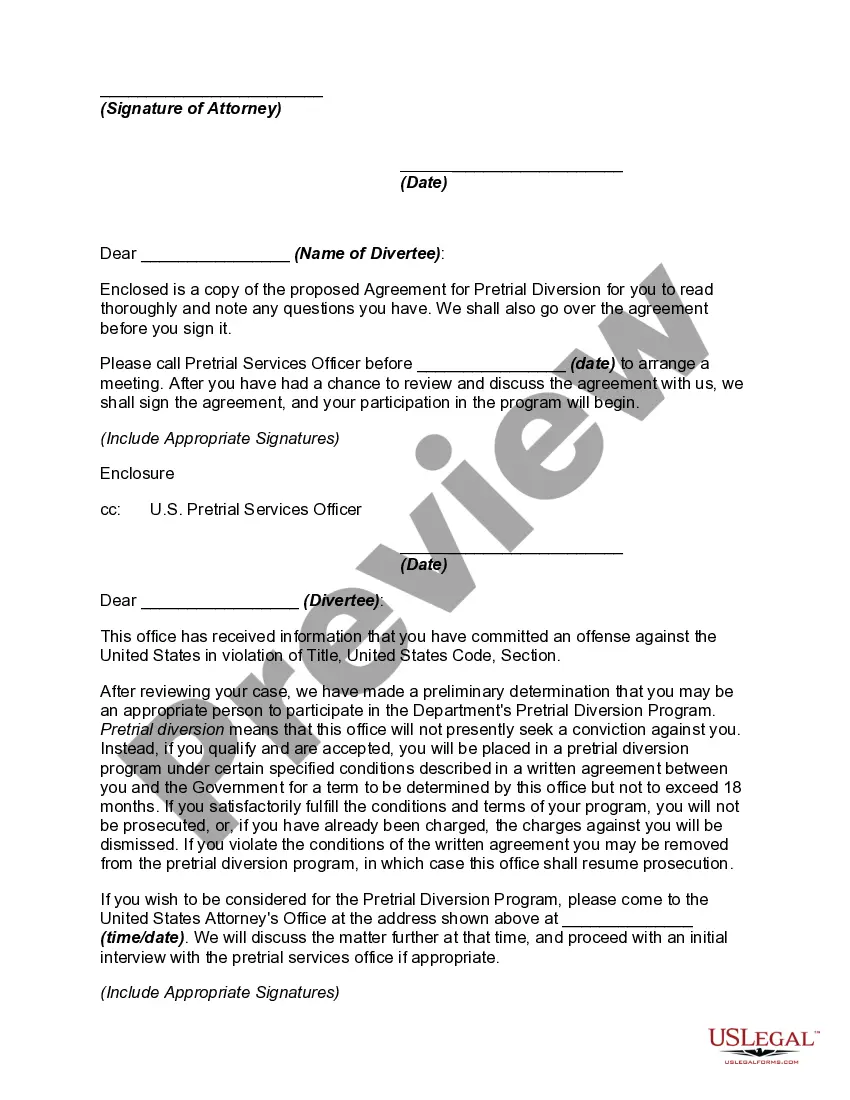
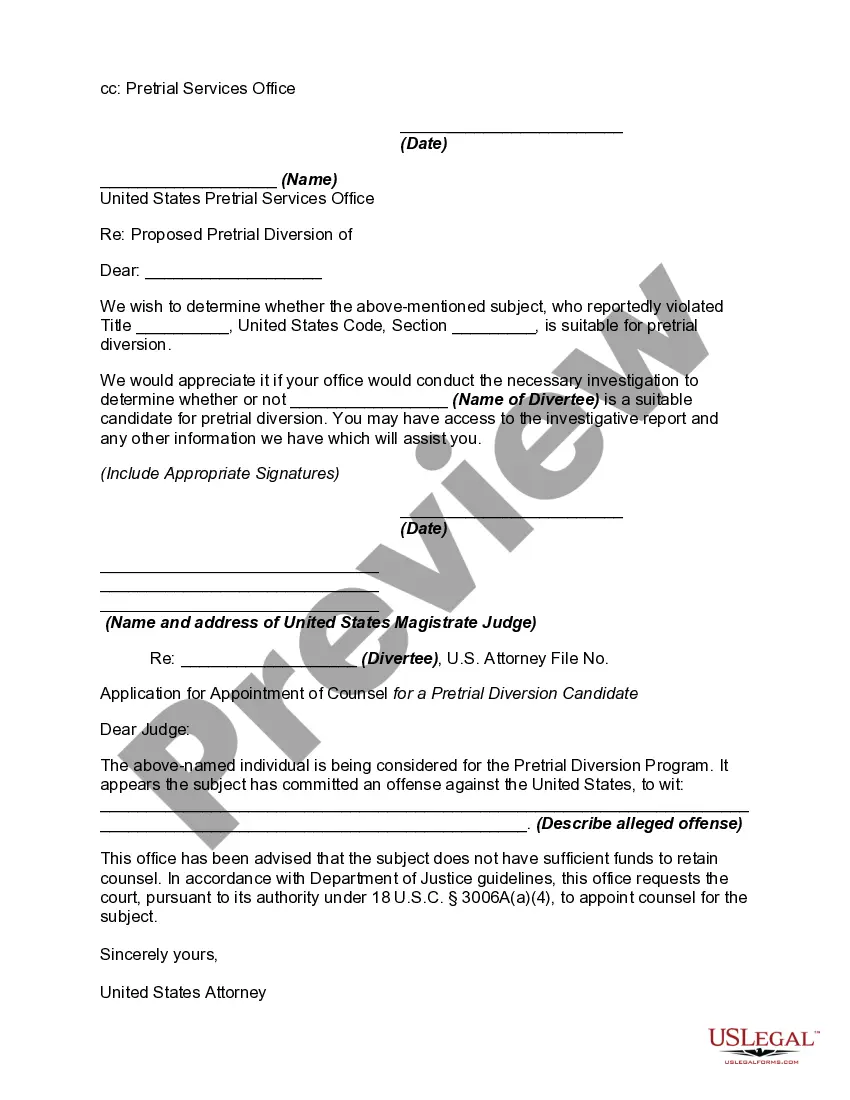

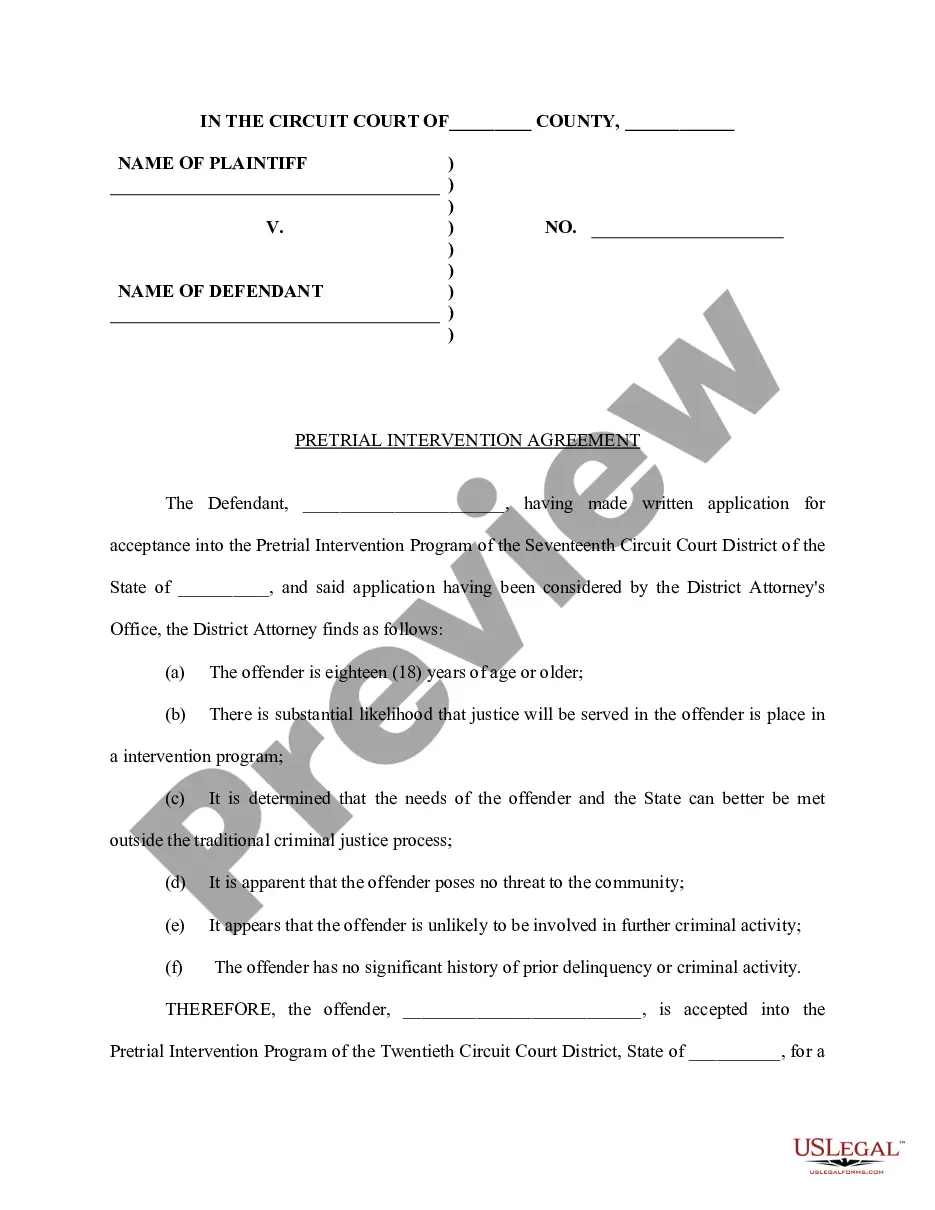





How to fill out Agreement For Pretrial Diversion?
Whether for corporate reasons or personal matters, everyone must deal with legal issues at some point during their lifetime.
Completing legal documents requires meticulous focus, starting with selecting the correct form template.
With an extensive US Legal Forms collection available, you will never have to waste time searching for the suitable template online. Utilize the library’s straightforward navigation to find the appropriate form for any circumstance.
- Locate the sample you require via the search bar or catalog browsing.
- Review the form's details to confirm it aligns with your circumstances, state, and area.
- Click on the form’s preview to examine it.
- If it is not the correct document, return to the search option to find the Pretrial Diversion For Dwi sample that you are looking for.
- Obtain the file if it suits your requirements.
- If you already possess a US Legal Forms account, simply click Log in to access previously stored files in My documents.
- If you do not have an account registered yet, you may download the form by clicking Buy now.
- Select the relevant pricing choice.
- Fill out the account registration form.
- Choose your payment option: you can utilize a credit card or PayPal account.
- Select the file format you prefer and download the Pretrial Diversion For Dwi.
- After it is saved, you can complete the form using editing software or print it out and finish it by hand.
Form popularity
FAQ
DWI pretrial intervention is a legal program aimed at first-time offenders to help them avoid conviction. This program often includes educational courses, counseling, and community service, focusing on behavior change. By successfully completing the requirements, participants can have their charges dismissed, which provides an opportunity for a fresh start without the burden of a criminal record.
Pretrial diversion programs can come with certain downsides. Participants may face strict guidelines and extensive requirements, leading to additional stress. Furthermore, a lack of completion can result in reinstated charges, meaning individuals should carefully consider their ability to meet all program obligations.
For a first-time DUI offender, the most likely outcome is participation in a pretrial diversion for DWI program, assuming no aggravating factors. Courts typically offer this option to those who show the potential for rehabilitation. Successful completion of the program generally leads to dismissal of charges, allowing individuals to move past this incident without a criminal record.
While pretrial diversion programs offer an opportunity to avoid a conviction, they do have some disadvantages. Participants may need to complete multiple requirements, which can be time-consuming and burdensome. Additionally, successfully completing the program usually requires a financial investment that can be challenging for some individuals.
The pretrial intervention program for DWI in Texas allows qualifying individuals to avoid a criminal conviction. By completing the program's requirements, participants can have their charges dismissed upon successful completion. This program typically includes educational classes, community service, and sometimes counseling, focusing on substance use awareness and personal responsibility.
The Pretrial Intervention (PTI) program in Texas generally lasts between six months to two years, depending on the specifics of the case. The duration may vary based on individual progress and compliance with program requirements. During this time, participants engage in counseling and community service, aiming to demonstrate their commitment to avoiding future offenses.
Individuals who have no prior criminal history and committed a non-violent offense, like a DWI, are often considered for pretrial diversion for DWI. Courts are more likely to grant this opportunity to those who demonstrate responsibility and a commitment to change. Additionally, factors such as the circumstances surrounding the DUI incident and community ties can influence eligibility.
The major drawback of pretrial diversion for DWI lies in the potential for inadequate support during the program. Many individuals enter these programs without sufficient guidance or resources, which can hinder their success. Without a structured support system, participants may not achieve the desired outcomes, which could reinforce negative behaviors instead of correcting them. Utilizing platforms like US Legal Forms can help individuals prepare better and navigate the complexities of pretrial diversion for DWI.
In the context of pretrial diversion for DWI, two significant issues arise. First, there can be inconsistencies in program quality, leading to varying outcomes for participants. Second, some defendants may struggle with compliance, which can result in program termination and the potential reinstatement of charges. Addressing these challenges is essential to enhance the effectiveness of pretrial diversion for DWI.
Pretrial diversion for DWI can come with certain drawbacks. One major concern is that participants might not fully engage with the program, viewing it as a quick fix rather than a chance for real change. Additionally, some individuals may face stigmas related to admitting they needed help, which can affect their personal and professional lives. Understanding these downsides is crucial when considering pretrial diversion for DWI.