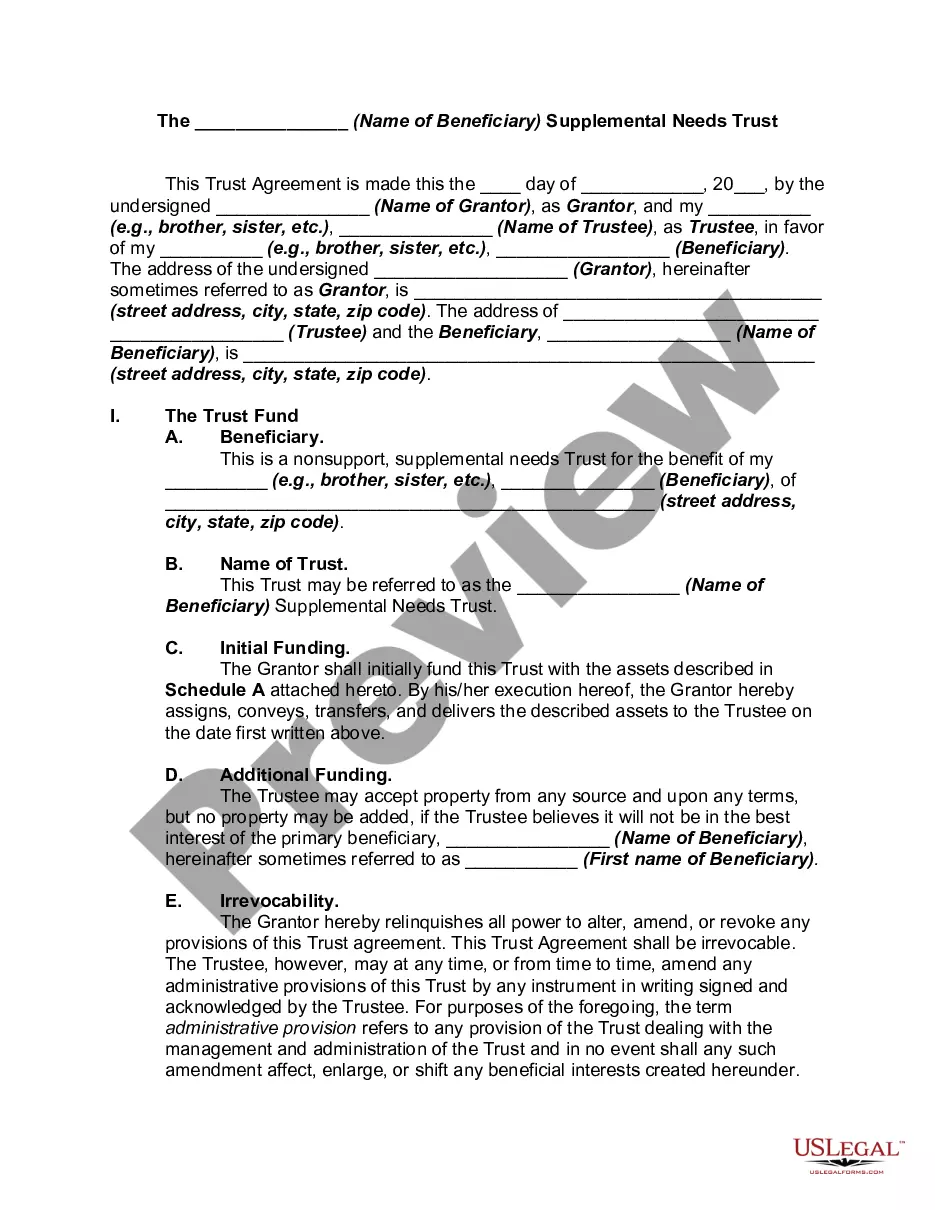
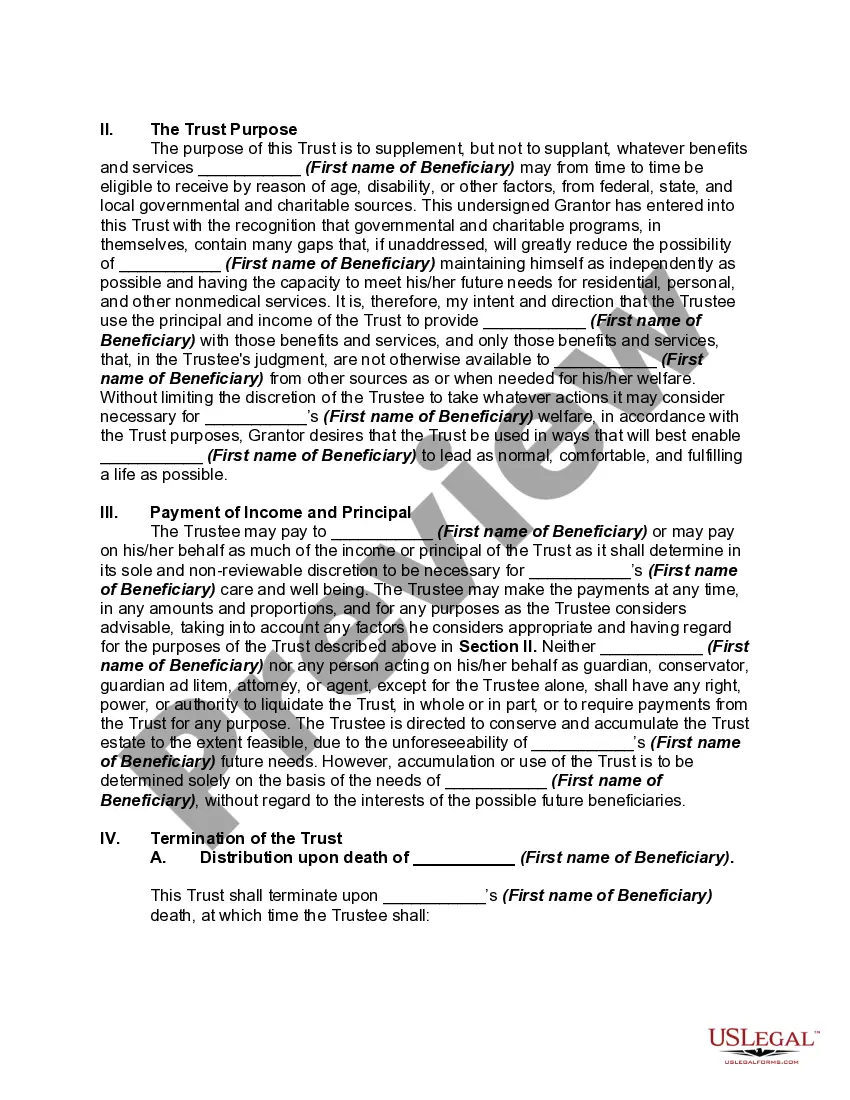
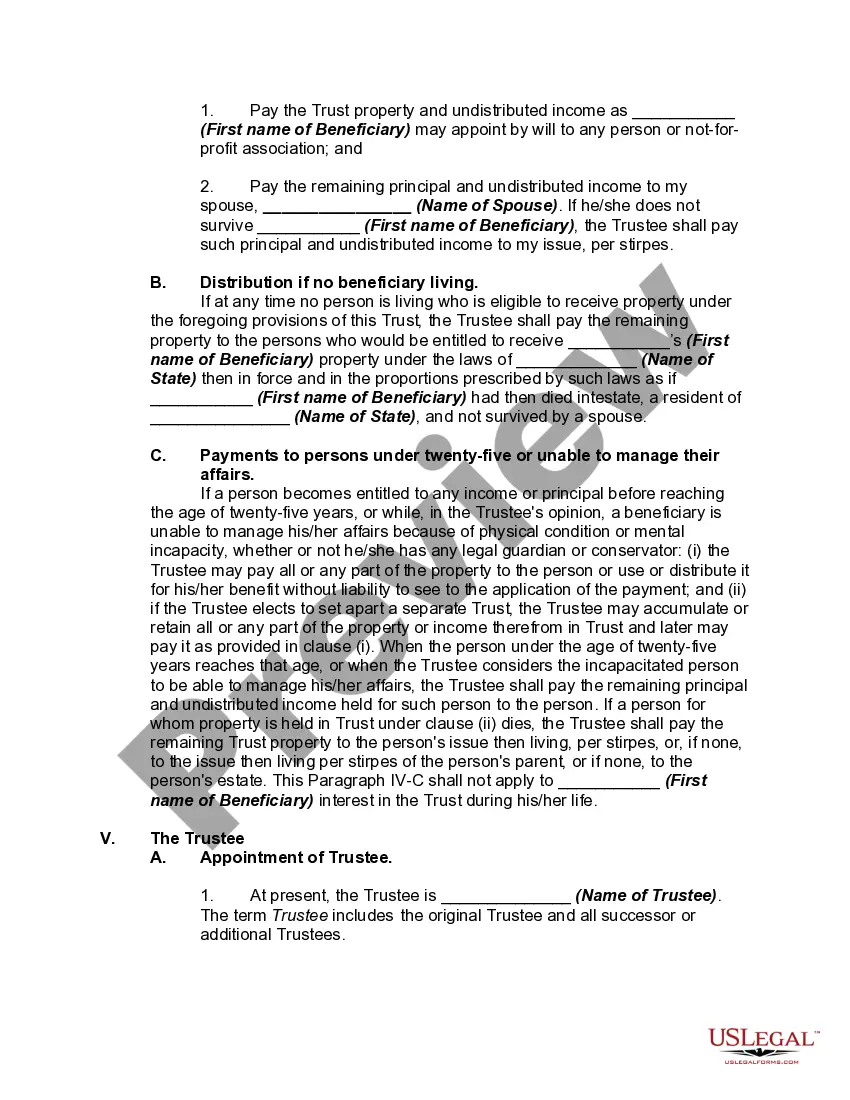
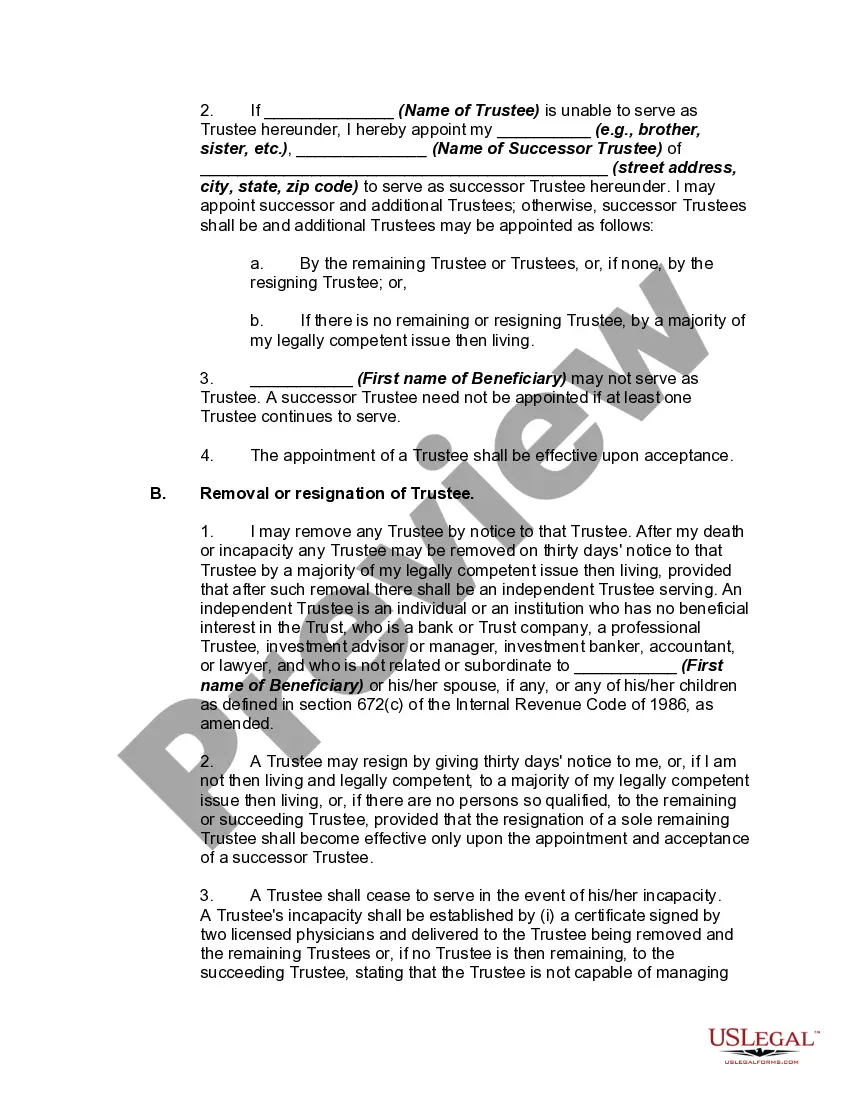
Special Needs Trust Requirements With No Assets
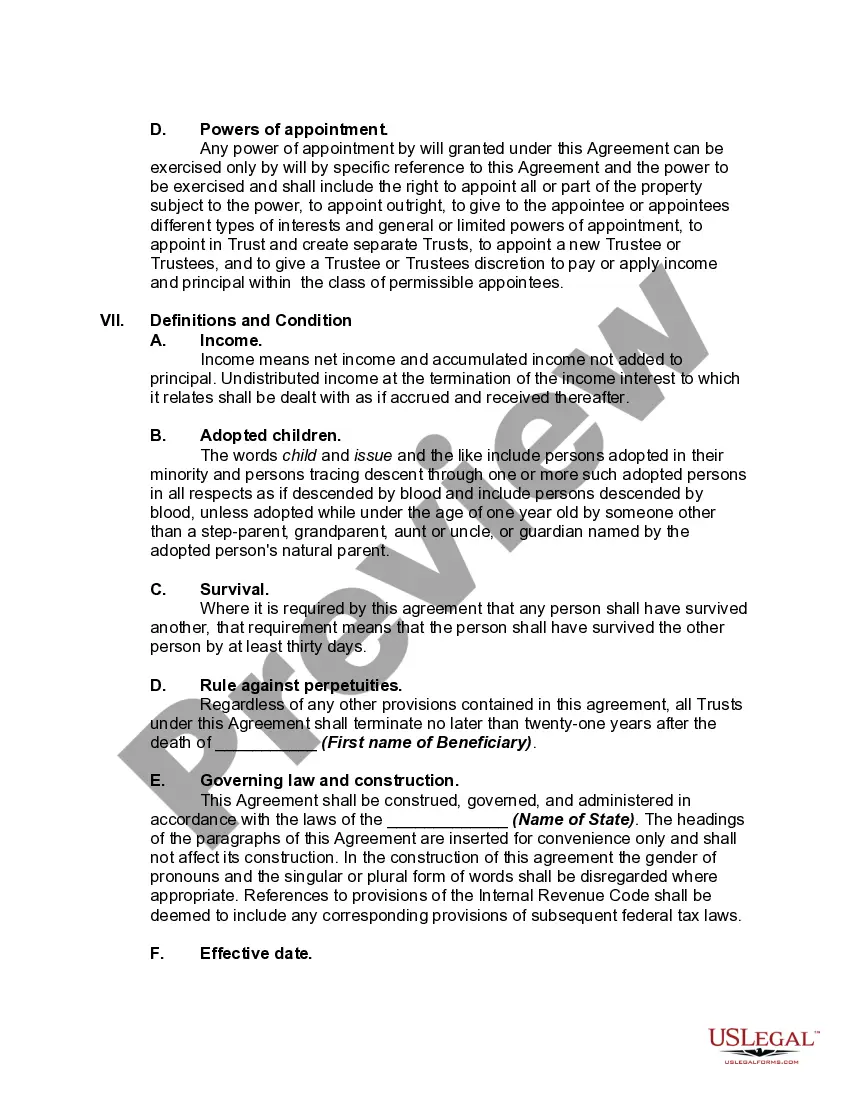
Description



Get your form ready online
Our built-in tools help you complete, sign, share, and store your documents in one place.
Make edits, fill in missing information, and update formatting in US Legal Forms—just like you would in MS Word.
Download a copy, print it, send it by email, or mail it via USPS—whatever works best for your next step.
Sign and collect signatures with our SignNow integration. Send to multiple recipients, set reminders, and more. Go Premium to unlock E-Sign.
If this form requires notarization, complete it online through a secure video call—no need to meet a notary in person or wait for an appointment.
We protect your documents and personal data by following strict security and privacy standards.

Make edits, fill in missing information, and update formatting in US Legal Forms—just like you would in MS Word.

Download a copy, print it, send it by email, or mail it via USPS—whatever works best for your next step.

Sign and collect signatures with our SignNow integration. Send to multiple recipients, set reminders, and more. Go Premium to unlock E-Sign.

If this form requires notarization, complete it online through a secure video call—no need to meet a notary in person or wait for an appointment.

We protect your documents and personal data by following strict security and privacy standards.
Looking for another form?

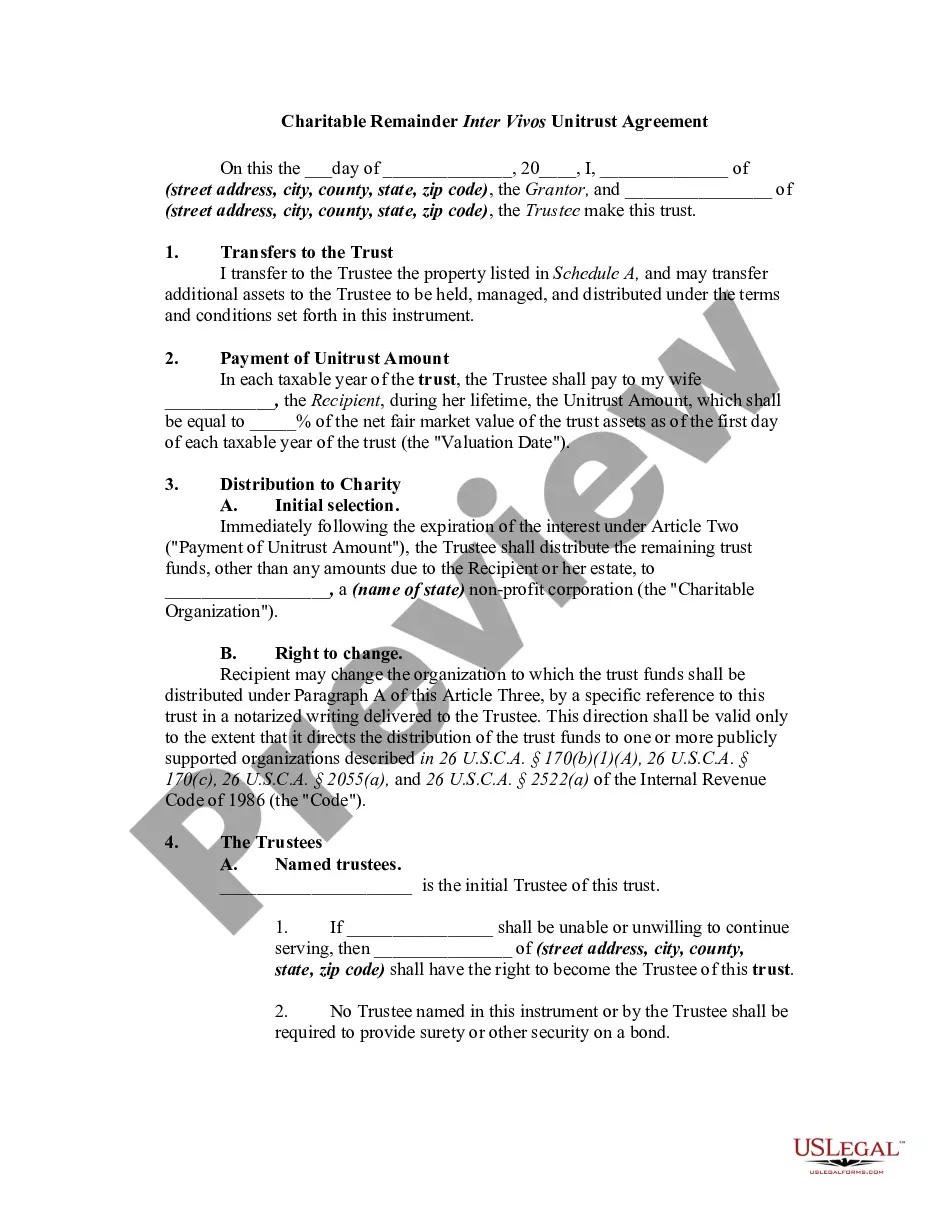
How to fill out Supplemental Needs Trust For Third Party - Disabled Beneficiary?
Legal administration can be exasperating, even for seasoned professionals.
When you are searching for Special Needs Trust Requirements With No Assets and lack the opportunity to dedicate towards finding the correct and current version, the procedures can be taxing.
US Legal Forms accommodates any requirements you may possess, ranging from personal to organizational paperwork, all in one location.
Utilize cutting-edge tools to fulfill and manage your Special Needs Trust Requirements With No Assets.
Here are the steps to follow after locating the form you need: Validate that this is the correct form by previewing it and reviewing its description. Ensure that the template is approved in your state or county. Click Buy Now when you are ready. Choose a monthly subscription plan. Select your desired format, and Download, complete, eSign, print, and send your document. Take advantage of the US Legal Forms online library, supported by 25 years of experience and trustworthiness. Upgrade your daily document management to a seamless and user-friendly process today.
- Access a resource hub of articles, guides, and materials pertinent to your circumstances and needs.
- Save time and energy searching for the documents you require, and leverage US Legal Forms’ sophisticated search and Review tool to obtain Special Needs Trust Requirements With No Assets.
- If you have a monthly subscription, Log In for your US Legal Forms account, search for the form, and acquire it.
- Check your My documents tab to discover the documents you previously downloaded and manage your folders as you wish.
- If this is your first experience with US Legal Forms, establish a free account and gain unrestricted access to all the benefits of the library.
- A comprehensive online form repository can be a revolutionary tool for anyone wishing to manage these matters efficiently.
- US Legal Forms stands as a frontrunner in online legal documents, boasting over 85,000 state-specific legal forms accessible at any time.
- With US Legal Forms, you can access state- or county-specific legal and business documents.
Form popularity
FAQ
The main benefit of a spendthrift trust is that it can protect your assets from a potentially unreliable beneficiary. It safeguards your estate without taking the beneficiary's inheritance from them. In addition to asset protection, spendthrift trusts can help protect your beneficiaries from creditors.
The pros of a spendthrift trust are that it can prevent creditors and lawsuits from attaching to the beneficiary's assets and provide a steady income stream. The downside is that it can be expensive to set up and maintain, and the beneficiary may be able to challenge the trust's spendthrift provisions in court.
The income beneficiary is the surviving spouse who wants you to make significant distributions to him or her and invest trust assets in his or her business. The remainder beneficiaries want less income to go the surviving spouse and do not want a risky investment to be made in the business of the income beneficiary.
What is a Spendthrift Trust? A spendthrift trust is a type of trust that limits your beneficiary's access to assets. Instead of receiving their inheritance all at once, the funds are released incrementally. It serves as a protection mechanism against bad spending habits, as well as creditors.
Pooled trusts give people with disabilities a way to access vital health benefits while utilizing the excess funds they deposit into the trust to pay for items and services not covered by those benefits. In ance with Federal statute, first party pooled trust accounts close upon the death of the beneficiary.