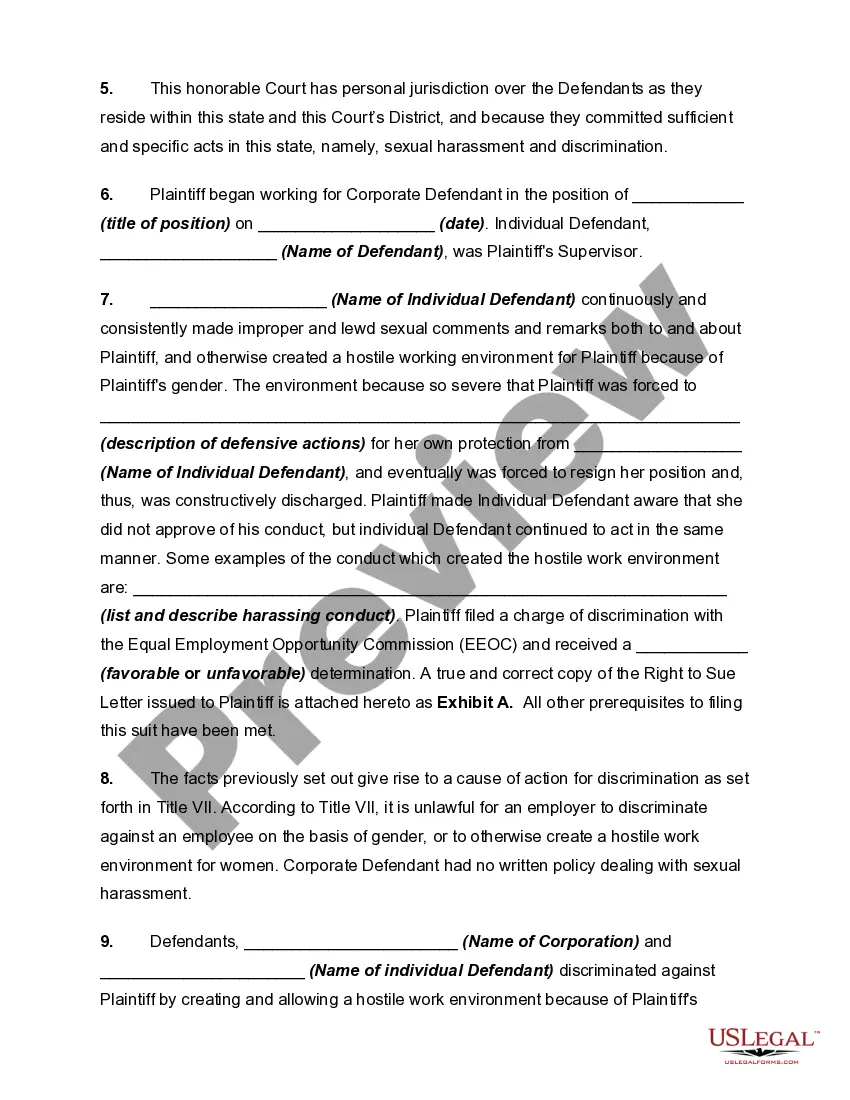
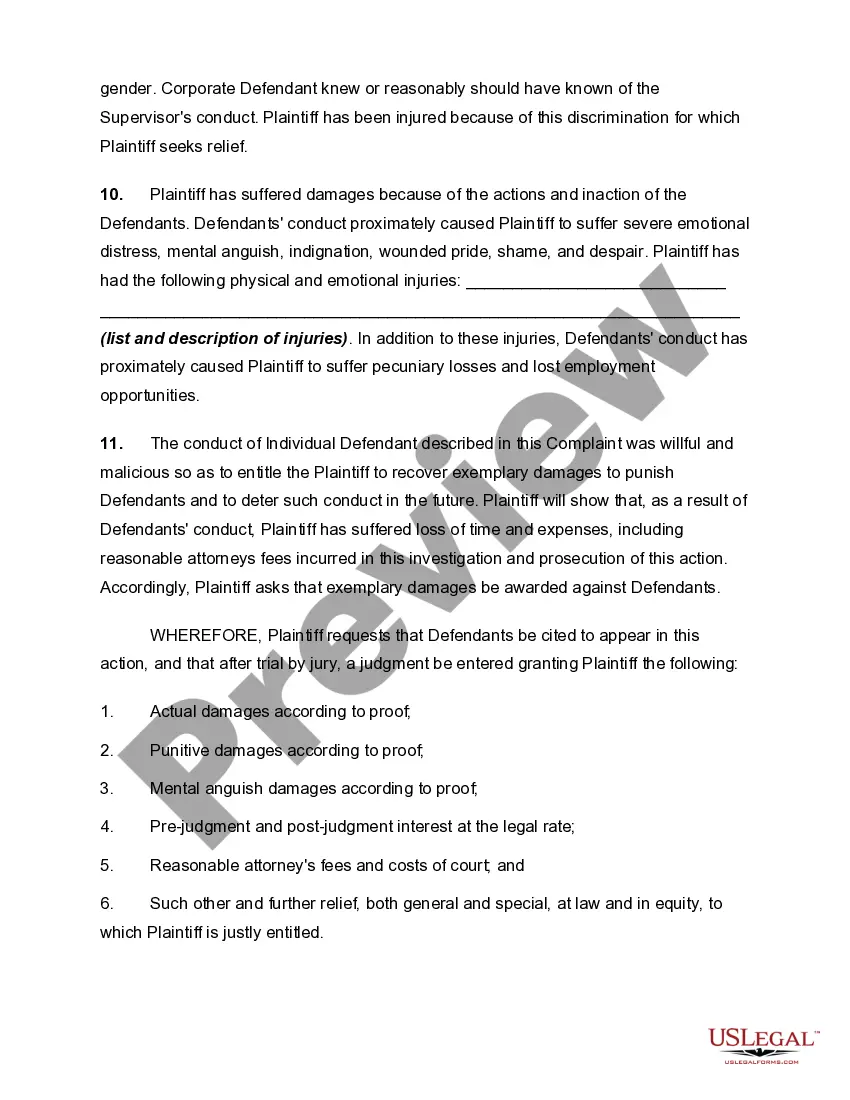
Discrimination In Work Environment
Description



Get your form ready online
Our built-in tools help you complete, sign, share, and store your documents in one place.
Make edits, fill in missing information, and update formatting in US Legal Forms—just like you would in MS Word.
Download a copy, print it, send it by email, or mail it via USPS—whatever works best for your next step.
Sign and collect signatures with our SignNow integration. Send to multiple recipients, set reminders, and more. Go Premium to unlock E-Sign.
If this form requires notarization, complete it online through a secure video call—no need to meet a notary in person or wait for an appointment.
We protect your documents and personal data by following strict security and privacy standards.

Make edits, fill in missing information, and update formatting in US Legal Forms—just like you would in MS Word.

Download a copy, print it, send it by email, or mail it via USPS—whatever works best for your next step.

Sign and collect signatures with our SignNow integration. Send to multiple recipients, set reminders, and more. Go Premium to unlock E-Sign.

If this form requires notarization, complete it online through a secure video call—no need to meet a notary in person or wait for an appointment.

We protect your documents and personal data by following strict security and privacy standards.
Looking for another form?





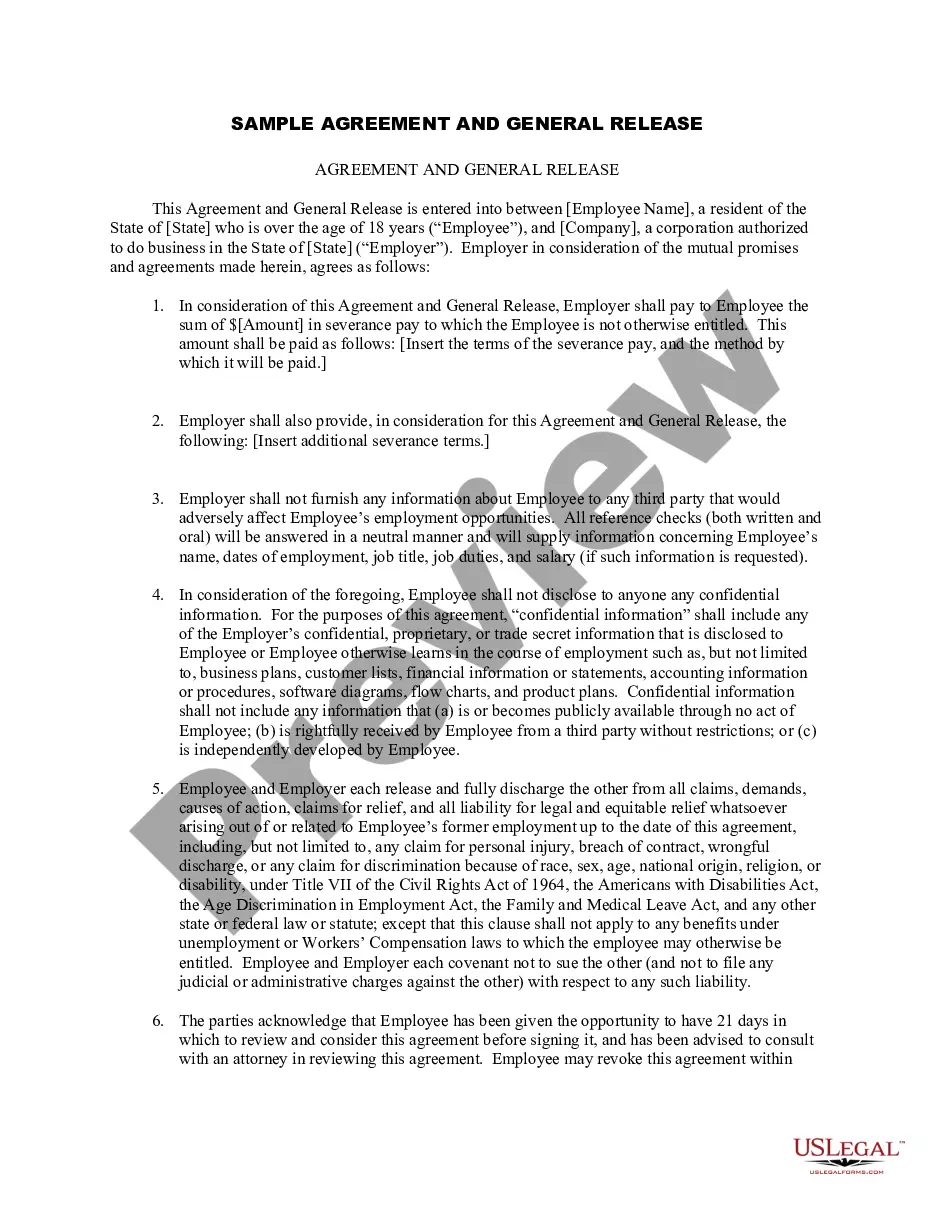
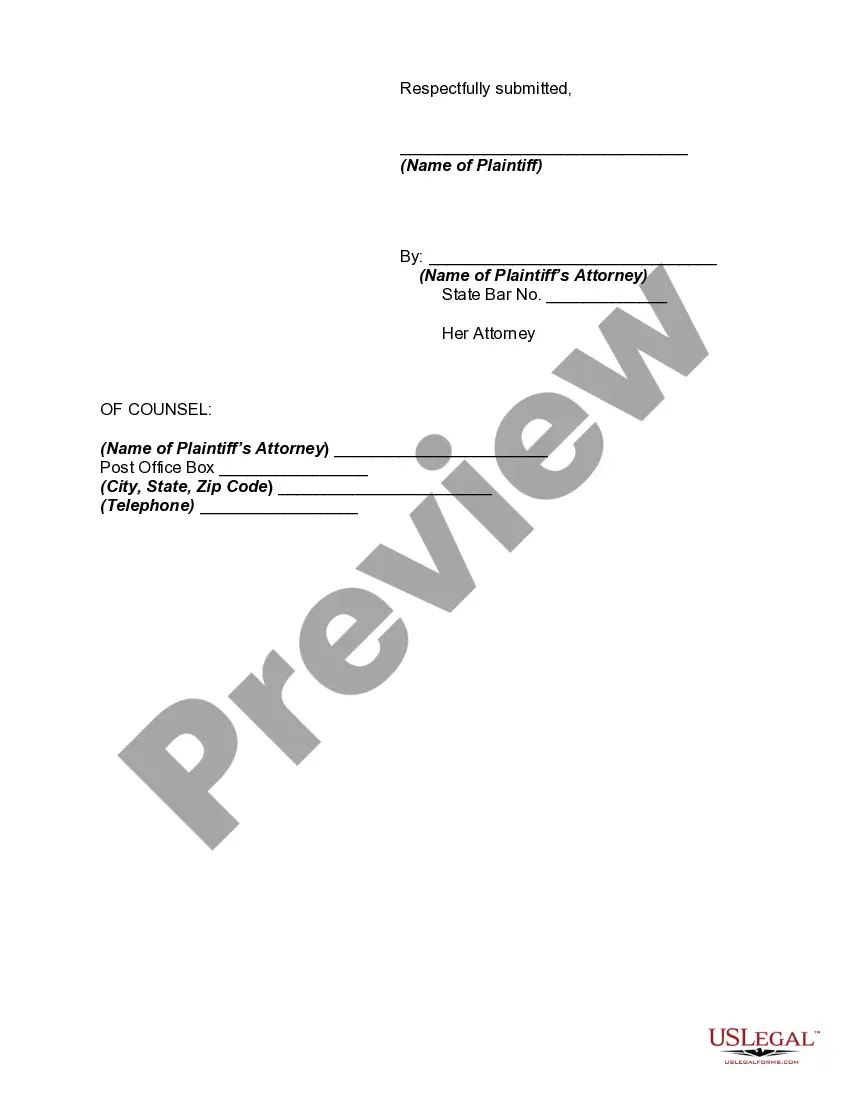
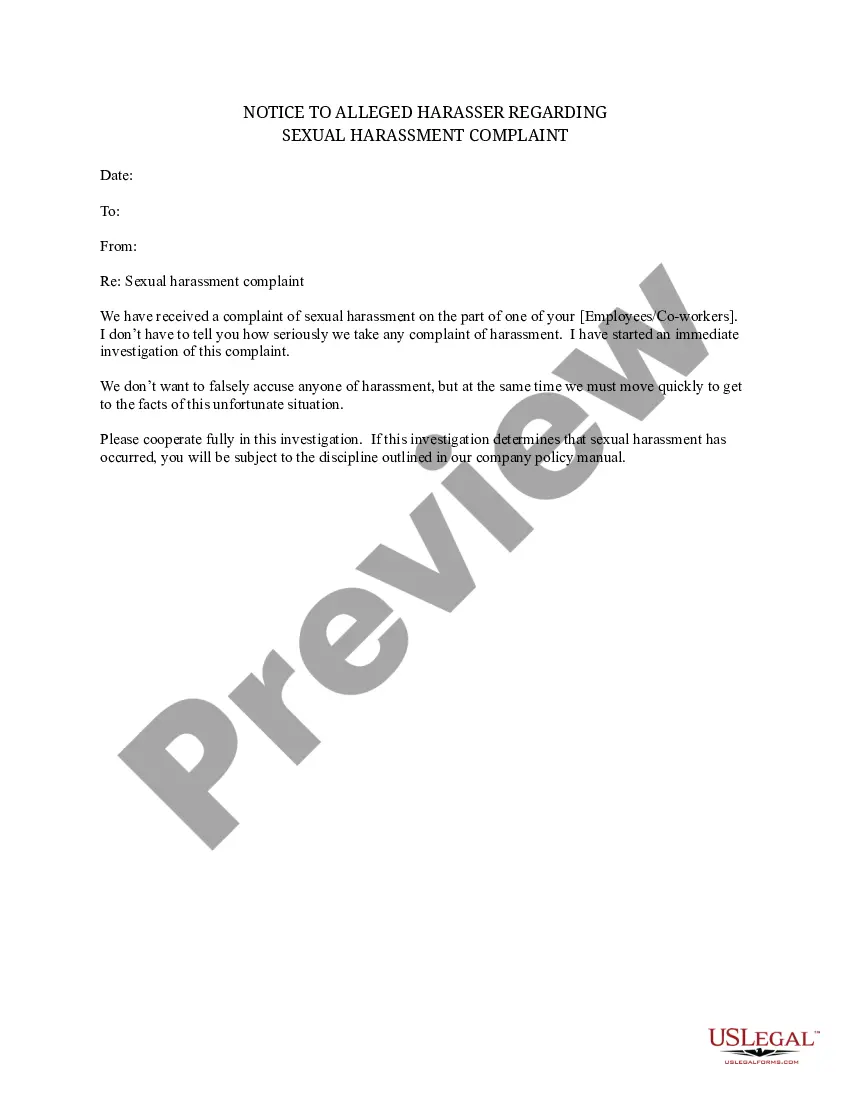
How to fill out Complaint For Discrimination In Employment Based On Sex - Sexual Harassment And A Hostile Work Environment?
It’s widely acknowledged that becoming a legal authority cannot happen in a day, nor can one swiftly learn how to effectively craft Discrimination In Work Environment documents without possessing a specialized set of competencies.
Assembling legal documents is a lengthy process necessitating particular education and expertise. So why not entrust the development of the Discrimination In Work Environment to the professionals.
With US Legal Forms, one of the most extensive legal document collections, you can discover everything from court filings to templates for internal business communication.
If you require a different template, start your search again.
Set up a complimentary account and select a subscription plan to procure the form. Click Buy now. Once the payment is completed, you can download the Discrimination In Work Environment, complete it, print it, and send it via mail to the specified individuals or entities.
- We understand how crucial compliance and observance of federal and state regulations are.
- That’s why, on our site, all documents are region-specific and current.
- Begin by visiting our website to obtain the form you require in just minutes.
- Find the document you need using the search bar located at the top of the page.
- Preview it (if this option is available) and review the accompanying description to confirm whether Discrimination In Work Environment is what you seek.
Form popularity
FAQ
Getting Consent to Run a Credit Report Step 1 ? Explain the Purpose to the Individual. ... Step 2 ? Completing the Form. ... Step 3 ? Obtaining a Real Signature. ... Step 4 ? Run the Credit Report. ... Step 5 ? Review and Give a Copy to the Consenter (if asked)
Congress passed the Fair Credit Reporting Act requiring CRAs to provide correct and complete information to businesses to use in evaluating your applications for credit, employment or insurance. Credit reports are only provided to those with a legitimate business need.
The Fair Credit Reporting Act (FCRA) , 15 U.S.C. § 1681 et seq., governs access to consumer credit report records and promotes accuracy, fairness, and the privacy of personal information assembled by Credit Reporting Agencies (CRAs).
The Act (Title VI of the Consumer Credit Protection Act) protects information collected by consumer reporting agencies such as credit bureaus, medical information companies and tenant screening services. Information in a consumer report cannot be provided to anyone who does not have a purpose specified in the Act.
A consent form is a document signed by persons of interest to confirm that they agree with an activity that will happen and that they are aware of the risks or costs that may come with it.
The Fair Credit Reporting Act (FCRA) is a federal law that helps to ensure the accuracy, fairness and privacy of the information in consumer credit bureau files. The law regulates the way credit reporting agencies can collect, access, use and share the data they collect in your consumer reports.
Common violations of the FCRA include: Creditors give reporting agencies inaccurate financial information about you. Reporting agencies mixing up one person's information with another's because of similar (or same) name or social security number. Agencies fail to follow guidelines for handling disputes.
Federal Legislative Activity in 2023 Amend Section 604(c) of the FCRA to address the treatment of pre-screening report requests. Section 604(c) governs the furnishing of reports in connection with credit or insurance transactions that are not initiated by the consumer. [1]