Discrimination For Gender Identity
Description



Get your form ready online
Our built-in tools help you complete, sign, share, and store your documents in one place.
Make edits, fill in missing information, and update formatting in US Legal Forms—just like you would in MS Word.
Download a copy, print it, send it by email, or mail it via USPS—whatever works best for your next step.
Sign and collect signatures with our SignNow integration. Send to multiple recipients, set reminders, and more. Go Premium to unlock E-Sign.
If this form requires notarization, complete it online through a secure video call—no need to meet a notary in person or wait for an appointment.
We protect your documents and personal data by following strict security and privacy standards.

Make edits, fill in missing information, and update formatting in US Legal Forms—just like you would in MS Word.

Download a copy, print it, send it by email, or mail it via USPS—whatever works best for your next step.

Sign and collect signatures with our SignNow integration. Send to multiple recipients, set reminders, and more. Go Premium to unlock E-Sign.

If this form requires notarization, complete it online through a secure video call—no need to meet a notary in person or wait for an appointment.

We protect your documents and personal data by following strict security and privacy standards.
Looking for another form?



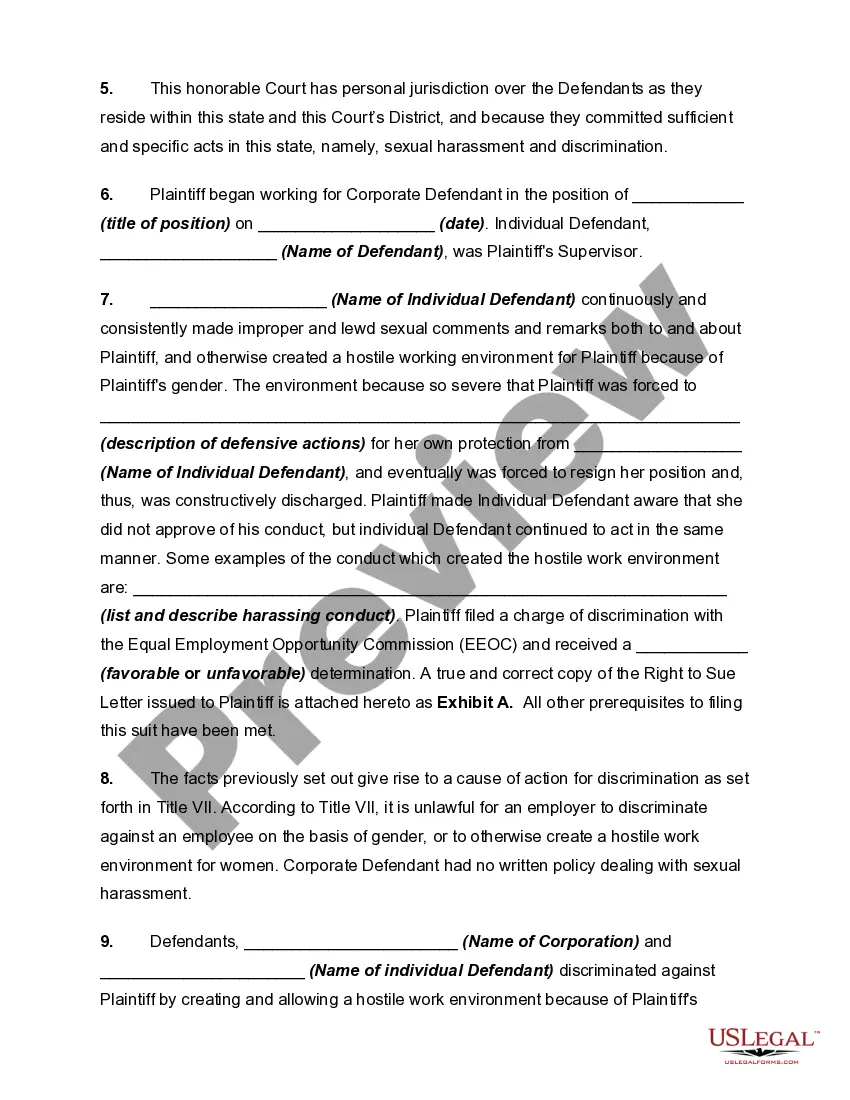
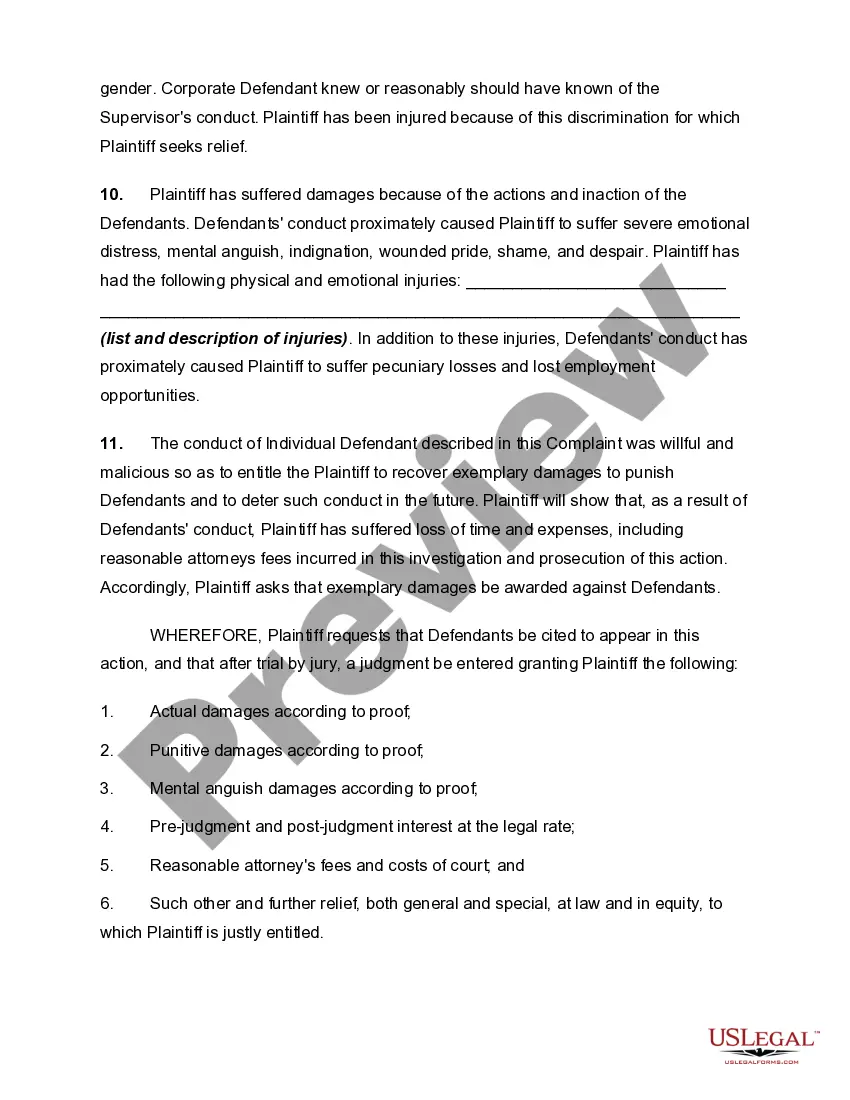
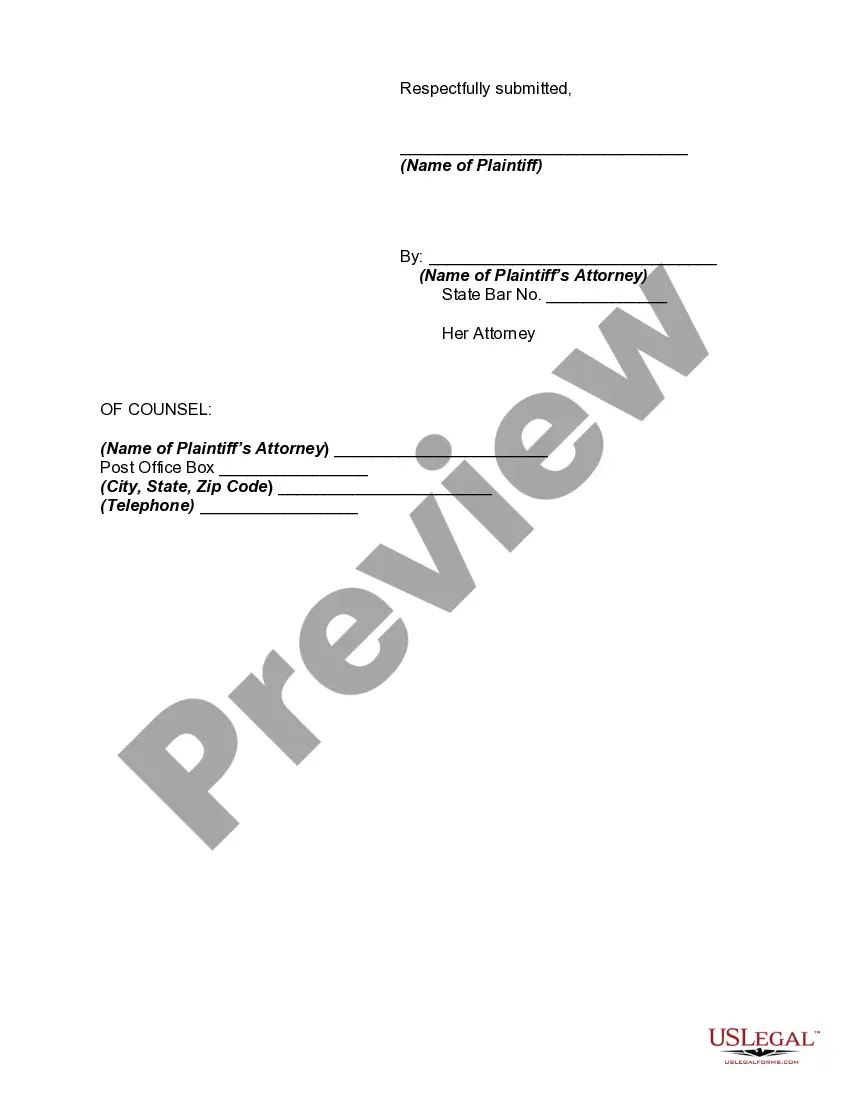
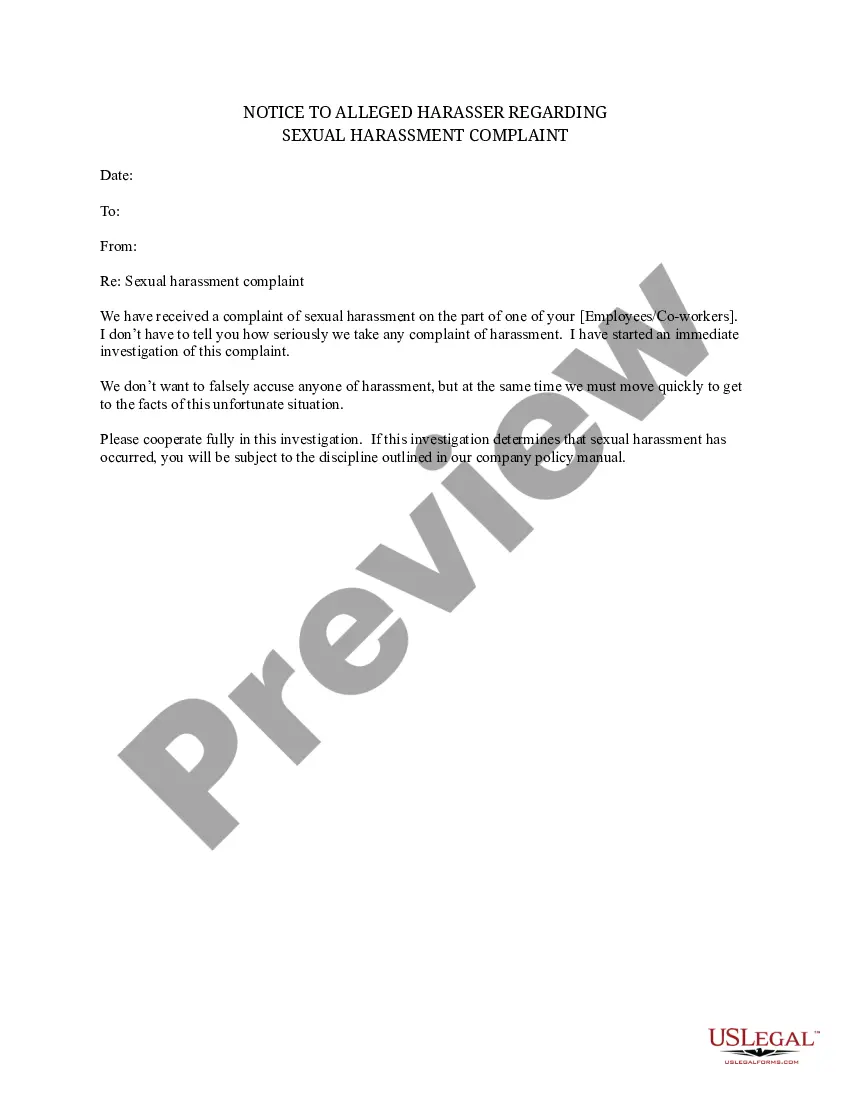
How to fill out Complaint For Discrimination In Employment Based On Sex - Sexual Harassment And A Hostile Work Environment?
Finding a reliable resource to obtain the most up-to-date and pertinent legal templates is a significant part of managing bureaucracy.
Identifying the correct legal documents requires accuracy and thoroughness, which is why it is vital to obtain samples of Discrimination For Gender Identity solely from trustworthy sources, such as US Legal Forms. An incorrect template will squander your time and delay the issue at hand.
Eliminate the hassle associated with your legal paperwork. Explore the vast collection of US Legal Forms where you can discover legal templates, check their relevance to your situation, and download them immediately.
- Utilize the library navigation or search bar to find your document.
- Review the form’s description to determine if it meets the specifications of your state and region.
- View the form preview, if available, to confirm that the template is indeed the one you need.
- Return to the search and seek the suitable document if the Discrimination For Gender Identity form does not meet your requirements.
- If you are confident about the form’s suitability, download it.
- If you are a registered user, click Log in to verify your identity and access your chosen templates in My documents.
- If you do not have an account yet, click Buy now to acquire the form.
- Choose the pricing option that aligns with your needs.
- Proceed to the registration to complete your purchase.
- Conclude your transaction by selecting a payment method (credit card or PayPal).
- Choose the file format for downloading the Discrimination For Gender Identity form.
- Once you have the document on your device, you can edit it using the editor or print it to fill out manually.
Form popularity
FAQ
To show gender discrimination, document specific incidents where unfair treatment occurred based on gender identity. Gather evidence such as records of conversations, performance reviews, or instances where others faced similar discrimination. By compiling this information, you can illustrate how systematic biases affect individuals in specific contexts. Resources, like US Legal Forms, can assist you in preparing a formal acknowledgment of such discrimination.
Gender identity discrimination may be illustrated by a situation where an employee is bullied or ostracized for expressing their true gender identity. This can occur in formal workplace environments or educational settings, adversely affecting an individual's well-being. Such behaviors not only violate personal rights but also create a hostile atmosphere. Addressing such discrimination for gender identity is essential in promoting inclusivity.
Proving gender discrimination requires establishing a pattern of unfavorable treatment based on gender identity. Gather documentation that showcases any inconsistent treatment compared to your peers. Additionally, connect your experiences to overarching policies or societal norms regarding discrimination for gender identity. This approach helps create a compelling case to support your claims.
Demonstrating discrimination for gender identity often involves collecting evidence. This may include emails, witness statements, or any formal complaints made to your employer or institution. Documenting instances where you or others faced unfair treatment can strengthen your case. When presenting your findings, clarity and context are essential to highlight the impact of the discrimination.
To write a discrimination claim for gender identity, start by clearly stating the facts surrounding the situation. Include details such as when and where the discrimination occurred, and describe how it directly affected you. Be sure to reference any relevant policies or laws that support your claim. Utilizing resources from platforms like US Legal Forms can help ensure your claim is comprehensive and well-structured.
Discrimination against gender identity occurs when individuals are treated unfairly or harassed because of their gender identity. This can manifest in various ways, such as denial of job opportunities, hostile work environments, or unequal treatment in workplace policies. Understanding that discrimination for gender identity is illegal is crucial, and platforms like uslegalforms can guide you in addressing and resolving such issues.
Direct evidence of gender discrimination can include explicit statements or actions that indicate bias based on gender identity. Examples might be derogatory comments made by supervisors or policies that openly disadvantage one gender. Having clear instances of discriminatory behavior can significantly bolster your claim of discrimination for gender identity.
Proving gender discrimination involves gathering strong, factual evidence of unfair treatment due to your gender identity. Keep records of any incidents, including dates, times, and individuals involved. Combining this documentation with other witnesses’ accounts can provide a more compelling argument regarding the discrimination for gender identity you faced.
To prove you have experienced gender discrimination, compile concrete evidence demonstrating how you have been treated differently compared to others. This may involve collecting performance reviews, emails, or messages that highlight inconsistencies in treatment. Additionally, using testimonials from colleagues can help showcase the discrimination for gender identity you experienced.
To prove unfair treatment at work, gather specific examples of your experiences that make you feel targeted. Document any patterns, such as unfair performance evaluations, reduced work opportunities, or negative comments about your gender identity. Additionally, collecting evidence from coworkers who may have witnessed the discrimination for gender identity can strengthen your case.