Discrimination Based On Language
Description



Get your form ready online
Our built-in tools help you complete, sign, share, and store your documents in one place.
Make edits, fill in missing information, and update formatting in US Legal Forms—just like you would in MS Word.
Download a copy, print it, send it by email, or mail it via USPS—whatever works best for your next step.
Sign and collect signatures with our SignNow integration. Send to multiple recipients, set reminders, and more. Go Premium to unlock E-Sign.
If this form requires notarization, complete it online through a secure video call—no need to meet a notary in person or wait for an appointment.
We protect your documents and personal data by following strict security and privacy standards.

Make edits, fill in missing information, and update formatting in US Legal Forms—just like you would in MS Word.

Download a copy, print it, send it by email, or mail it via USPS—whatever works best for your next step.

Sign and collect signatures with our SignNow integration. Send to multiple recipients, set reminders, and more. Go Premium to unlock E-Sign.

If this form requires notarization, complete it online through a secure video call—no need to meet a notary in person or wait for an appointment.

We protect your documents and personal data by following strict security and privacy standards.
Looking for another form?
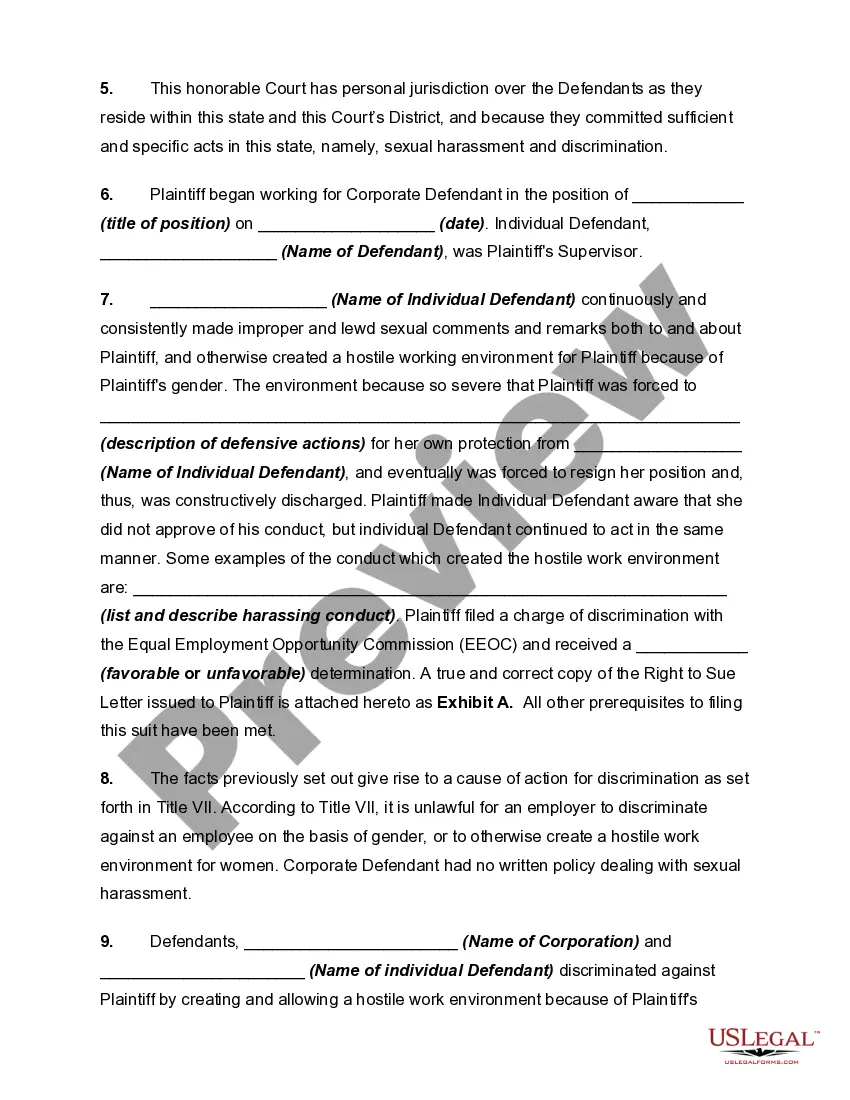
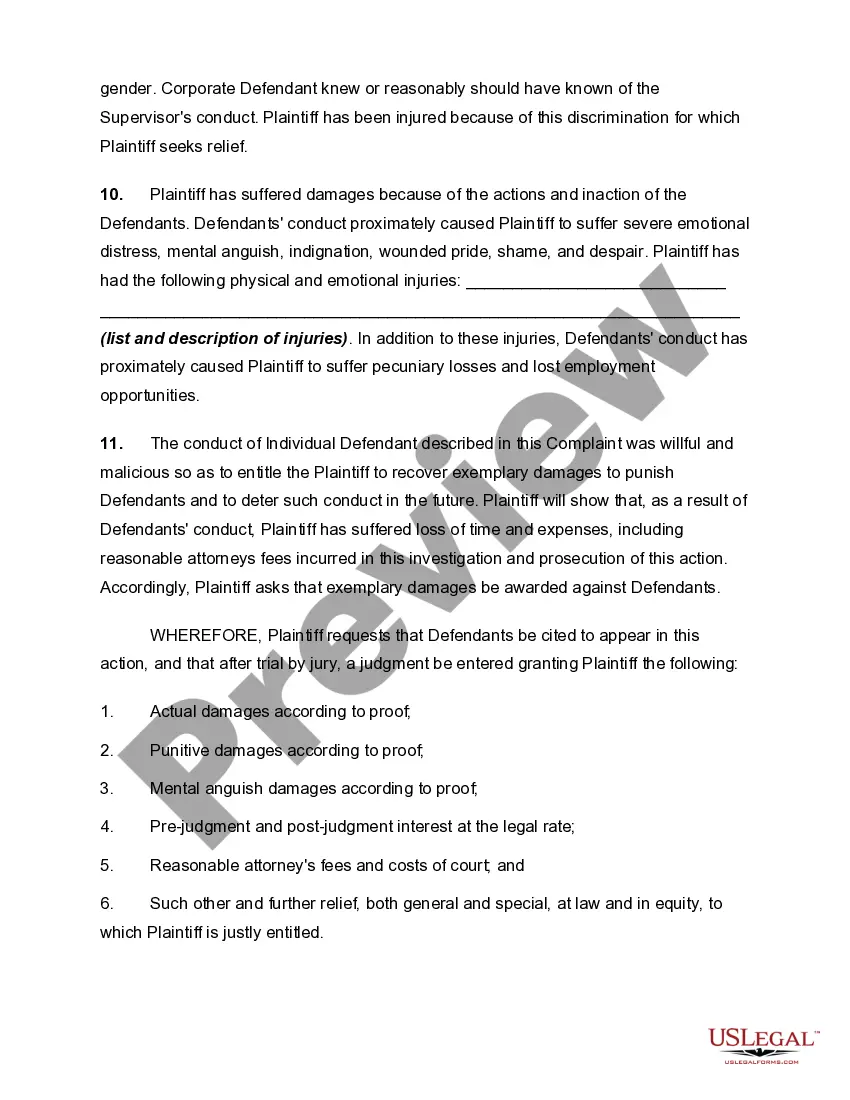
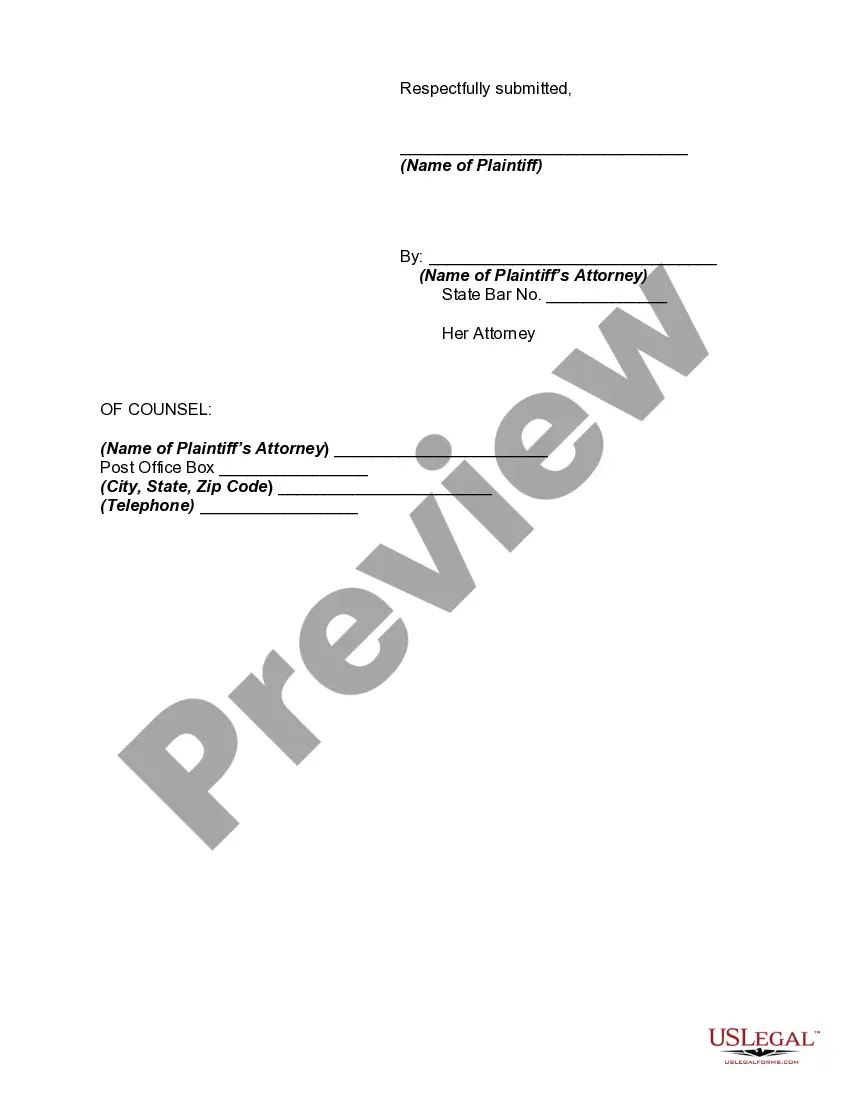
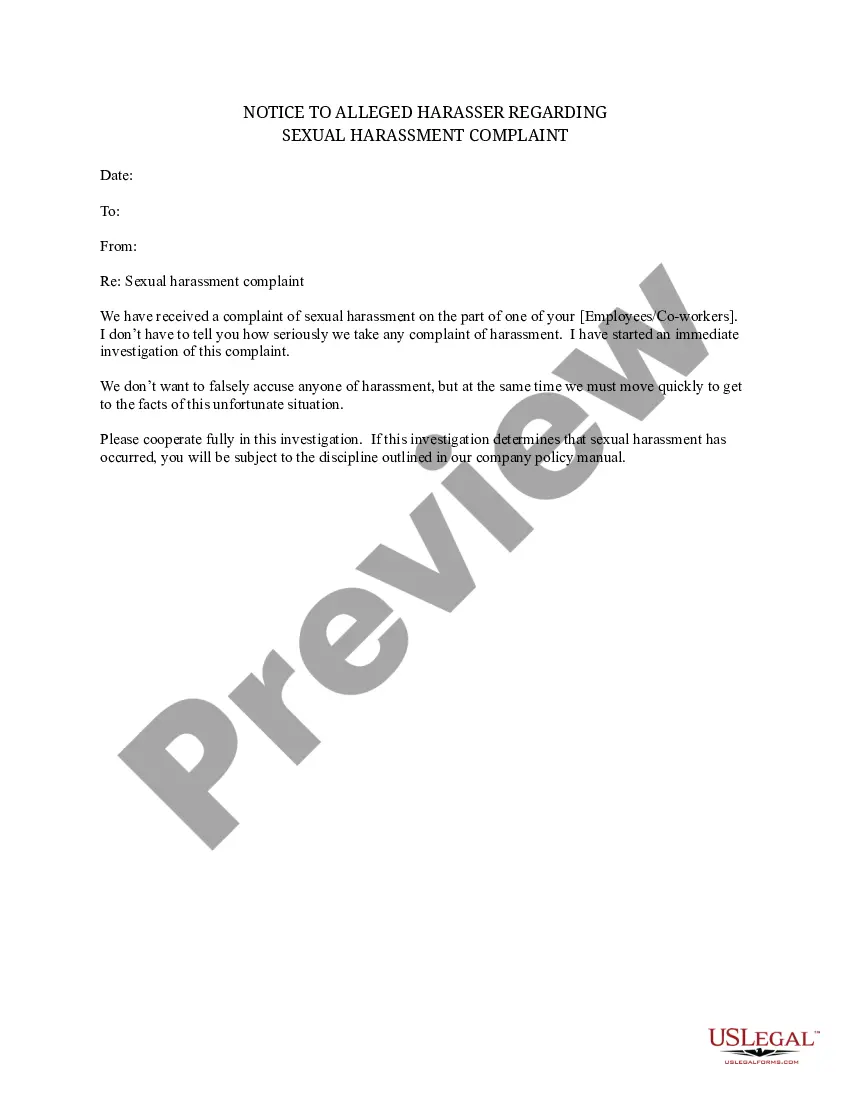
How to fill out Complaint For Discrimination In Employment Based On Sex - Sexual Harassment And A Hostile Work Environment?
It’s clear that you cannot become a legal expert instantly, nor can you understand how to swiftly prepare Discrimination Based On Language without a specific set of competencies.
Developing legal documents is a lengthy procedure that demands a certain level of education and expertise.
So why not entrust the preparation of the Discrimination Based On Language to the experts.
Preview it (if this option is available) and review the supporting description to ascertain whether Discrimination Based On Language is what you’re seeking.
Create a free account and choose a subscription plan to purchase the template.
- With US Legal Forms, one of the most extensive legal document repositories, you can discover anything from court documents to templates for in-office correspondence.
- We recognize how crucial compliance and adherence to federal and state laws and regulations are.
- That’s why, on our site, all forms are location-specific and current.
- Here’s how to begin with our website and obtain the form you require in just a few minutes.
- Locate the form you need using the search bar at the top of the page.
Form popularity
FAQ
Language discrimination falls under a class of unlawful discrimination known as national origin discrimination. Barring exceptions, it is illegal to prefer one language over another. Language discrimination does not include discriminations based on a person's appearance.
One example of discrimination is suggesting a person's accent is ?too difficult? to understand. Another example of linguistic discrimination is when a person does not take the time to learn the proper pronunciation of someone else's name.
Top Tips for Challenging Discriminatory Language Ask questions. ... Challenge the language, not the person. ... Mention how it makes you feel. ... Help them understand. ... Upstander assembly. ... Banter vs. ... Diversity Day. ... Reporting Tools.
Be sure to include: The time, date, and location where the discrimination occurred. The names of all the people who were involved, and their role. The names of all people who witnessed or overheard the discrimination, and what you believe those people saw or heard. A detailed account of everything that happened.
Language discrimination occurs when a person is treated differently because of her native language or other characteristics of her language skills. For example, an employee may be experiencing language discrimination if the workplace has a ?speak-English-only? policy but her primary language is one other than English.