Damages In Lease
Description
Get your form ready online
Our built-in tools help you complete, sign, share, and store your documents in one place.
Make edits, fill in missing information, and update formatting in US Legal Forms—just like you would in MS Word.
Download a copy, print it, send it by email, or mail it via USPS—whatever works best for your next step.
Sign and collect signatures with our SignNow integration. Send to multiple recipients, set reminders, and more. Go Premium to unlock E-Sign.
If this form requires notarization, complete it online through a secure video call—no need to meet a notary in person or wait for an appointment.
We protect your documents and personal data by following strict security and privacy standards.

Make edits, fill in missing information, and update formatting in US Legal Forms—just like you would in MS Word.

Download a copy, print it, send it by email, or mail it via USPS—whatever works best for your next step.

Sign and collect signatures with our SignNow integration. Send to multiple recipients, set reminders, and more. Go Premium to unlock E-Sign.

If this form requires notarization, complete it online through a secure video call—no need to meet a notary in person or wait for an appointment.

We protect your documents and personal data by following strict security and privacy standards.
Looking for another form?






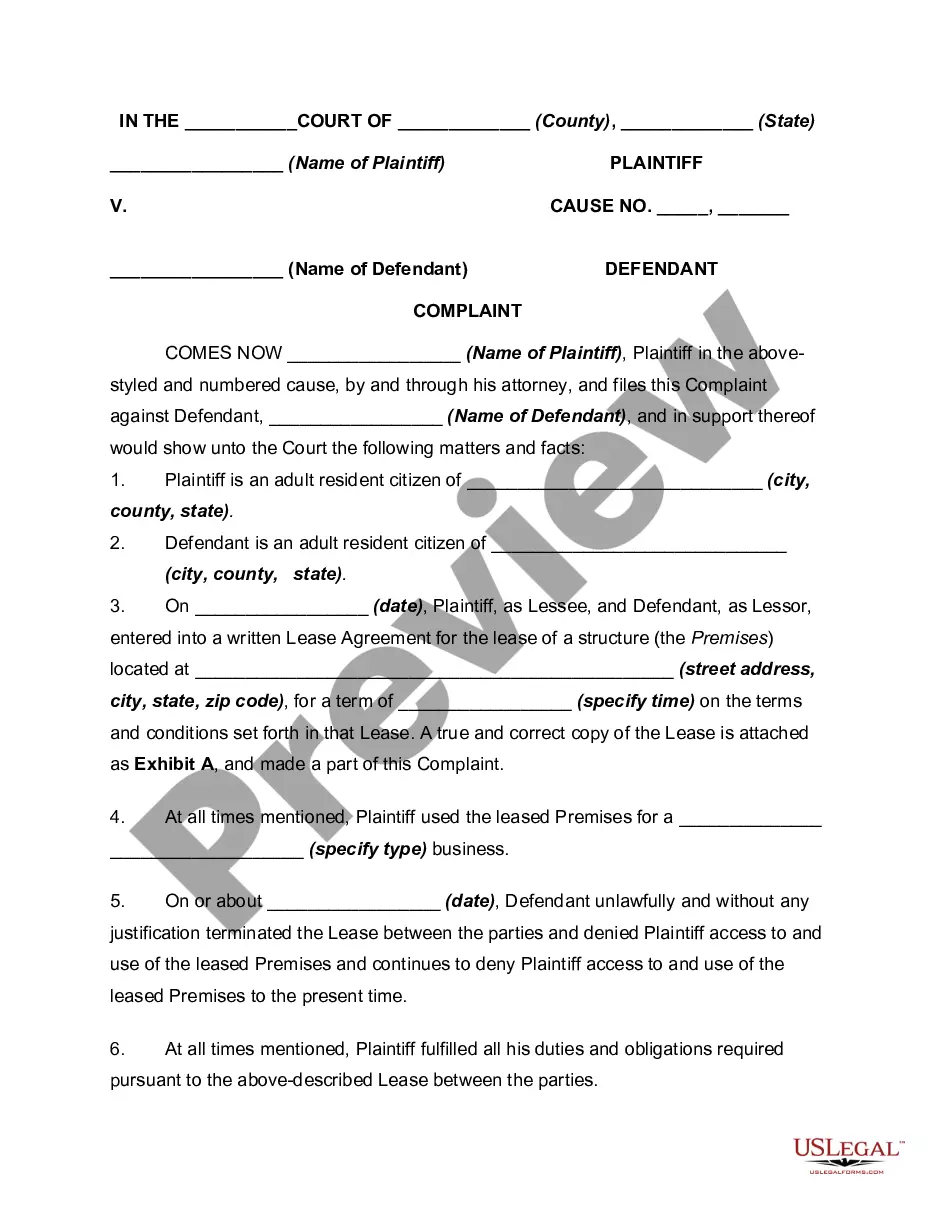
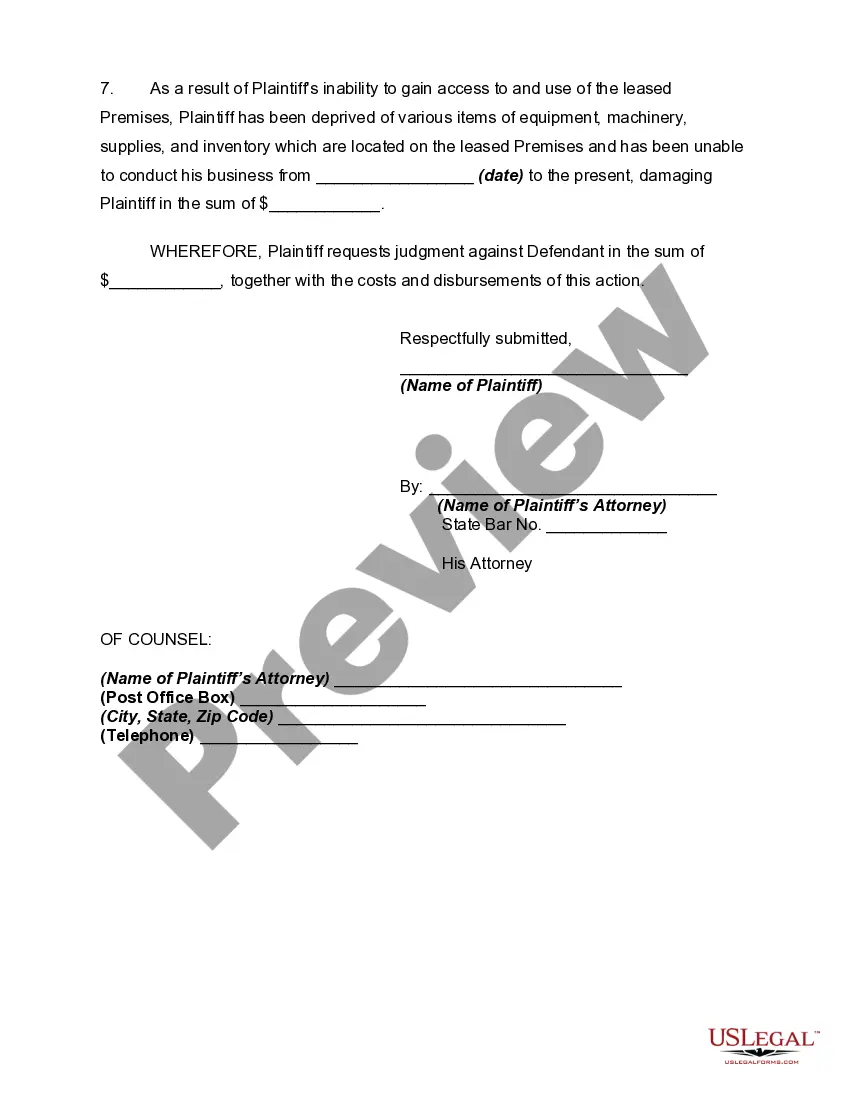
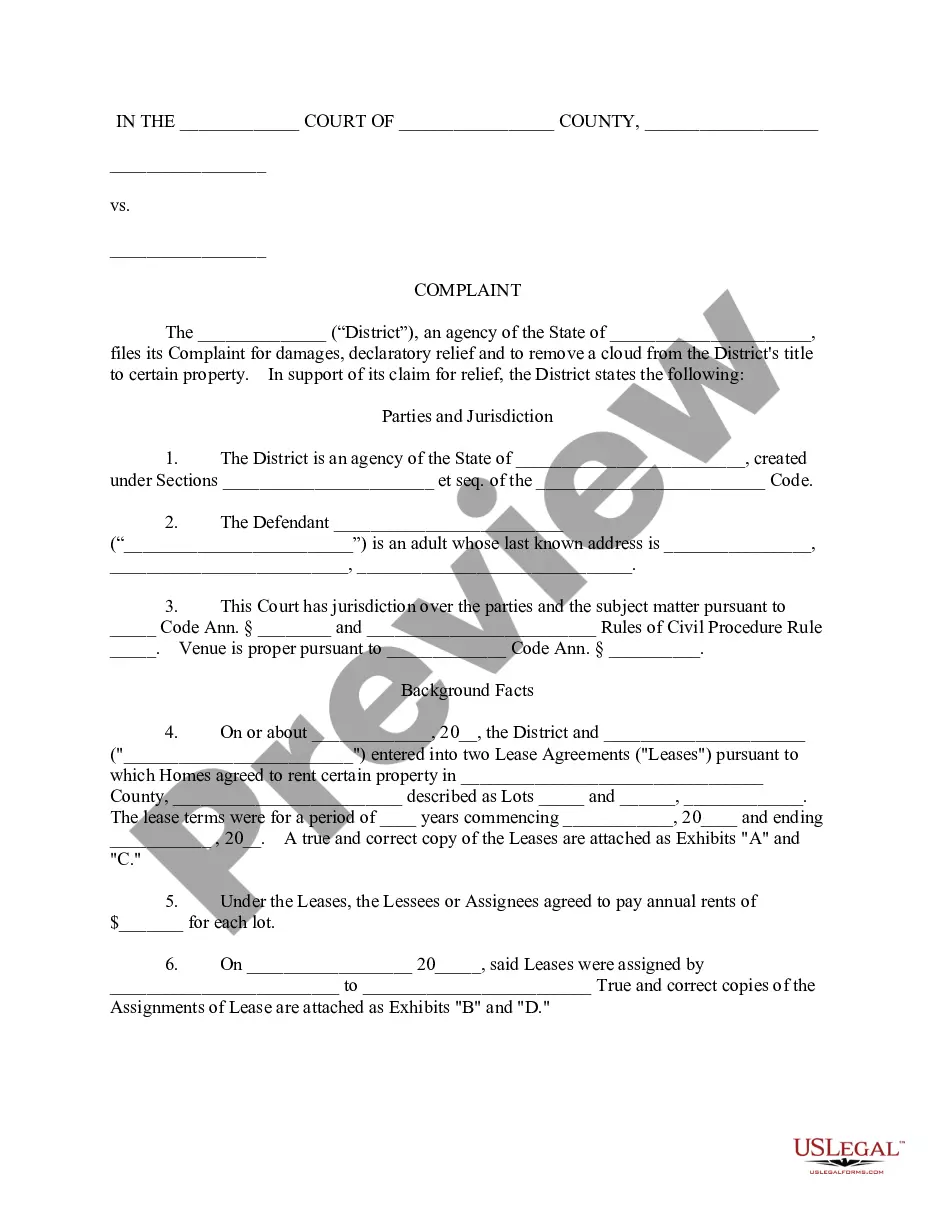
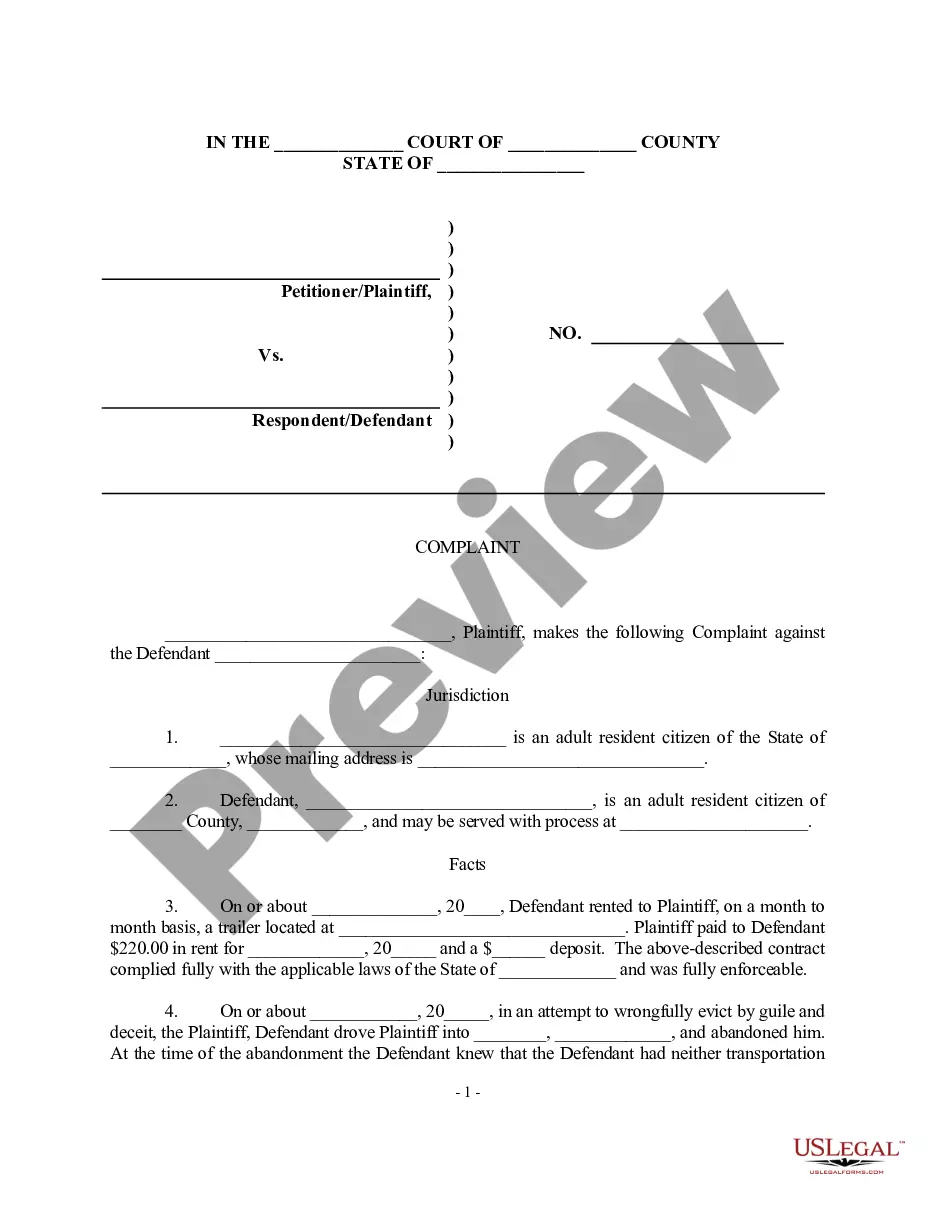
How to fill out Complaint - Damages For Wrongful Termination Of Lease?
Handling legal documentation and processes can be a lengthy addition to your whole day.
Damages In Lease and similar forms typically necessitate that you search for them and comprehend how to fill them out properly.
For this reason, if you are managing financial, legal, or personal issues, utilizing a complete and convenient online directory of forms available will be extremely beneficial.
US Legal Forms is the leading online resource for legal templates, showcasing over 85,000 state-specific forms along with resources that will assist you in completing your documents with ease.
Is it your first time using US Legal Forms? Register and establish your account in mere minutes, and you will have access to the form directory and Damages In Lease. Then, follow these steps to complete your form: Ensure you have identified the correct form using the Preview feature and reviewing the form description. Select Buy Now when ready, and choose the subscription plan that works for you. Click Download then fill out, sign, and print the form. US Legal Forms boasts 25 years of experience helping clients manage their legal documents. Acquire the form you require today and streamline any process effortlessly.
- Explore the collection of pertinent documents available to you with a single click.
- US Legal Forms provides you with forms that are state- and county-specific that can be downloaded at any time.
- Protect your document management procedures by employing a high-quality service that allows you to prepare any form within minutes with no additional or concealed fees.
- Simply Log In to your account, find Damages In Lease, and download it immediately in the My documents section.
- You can also retrieve previously saved forms.
Form popularity
FAQ
Red flags in a lease agreement often include vague terms, unclear deposit requirements, or clauses that seem one-sided. It's important to look for sections that might limit a tenant's rights, such as excessive fees or strict conditions on maintenance. By recognizing these warning signs, you can negotiate better terms before entering a lease. Utilizing trusted tools like uslegalforms can help identify and rectify these potential issues in lease agreements.
Tenants are generally liable for damages in lease agreements if they result from their actions or neglect. This liability usually includes any repairs needed beyond normal wear and tear. To protect both parties, a detailed lease documenting the property’s condition at move-in is beneficial. Using platforms like uslegalforms can aid in creating these essential documents to avoid disputes.
Typically, tenants are held responsible for damages in lease agreements that exceed normal wear and tear. If a tenant causes damage, they might forfeit their security deposit or face additional charges. It's essential for landlords to document any incidents and maintain clear communication with tenants regarding their liabilities. Comprehensive lease agreements can help define these financial responsibilities upfront.
Landlords typically are not responsible for damage to a tenant’s property that arises from the tenant’s actions or negligence. However, if the damage results from a landlord's failure to maintain the property, they may be held liable. When addressing damages in lease agreements, clear terms about responsibilities can prevent misunderstandings. Consider consulting legal resources to draft leases that clearly outline these responsibilities.
Billing a tenant for damages involves a careful assessment and clear documentation. First, itemize the specific damages in lease, noting the associated costs for each repair or replacement. Then, provide the tenant with a detailed invoice, including photos and descriptions when possible, to support your claims. Platforms like USLegalForms can help you create a professional invoice and ensure your billing approach follows the right legal guidelines.
When considering breaking a lease, personal circumstances often come into play. A common excuse involves a significant change in job location or health issues that affect your housing situation. In cases like these, you might invoke the concept of damages in lease, as landlords are typically more understanding when faced with life-altering events. Remember, it's crucial to communicate clearly with your landlord and document your situation.
Colorado statute defines normal wear and tear as ?deterioration which occurs, based upon the use for which the rental unit is intended, without negligence, carelessness, accident, or abuse of the premises or equipment or chattels by the tenant or members of his household, or their invitees or guests.? Unfortunately, ...
The landlord may not charge you for normal wear and tear on the premises and may only charge for actual abnormal damage.
What is Normal Wear and Tear? Georgia landlord-tenant laws define normal wear and tear as: ?damage resulting from the normal use of the rented premises by a tenant.? In other words, normal wear and tear is the ?normal depreciation? of a property.
This letter is to notify you of damages to the property at (address) ________________________ that occurred during the time you occupied it, from (move-in date)_____________ to (move-out date)______________. To repair the below damages, $ _____________ will be withheld from your $____________ security deposit.