Appeal Process For Magistrates Court
Description
Get your form ready online
Our built-in tools help you complete, sign, share, and store your documents in one place.
Make edits, fill in missing information, and update formatting in US Legal Forms—just like you would in MS Word.
Download a copy, print it, send it by email, or mail it via USPS—whatever works best for your next step.
Sign and collect signatures with our SignNow integration. Send to multiple recipients, set reminders, and more. Go Premium to unlock E-Sign.
If this form requires notarization, complete it online through a secure video call—no need to meet a notary in person or wait for an appointment.
We protect your documents and personal data by following strict security and privacy standards.

Make edits, fill in missing information, and update formatting in US Legal Forms—just like you would in MS Word.

Download a copy, print it, send it by email, or mail it via USPS—whatever works best for your next step.

Sign and collect signatures with our SignNow integration. Send to multiple recipients, set reminders, and more. Go Premium to unlock E-Sign.

If this form requires notarization, complete it online through a secure video call—no need to meet a notary in person or wait for an appointment.

We protect your documents and personal data by following strict security and privacy standards.
Looking for another form?



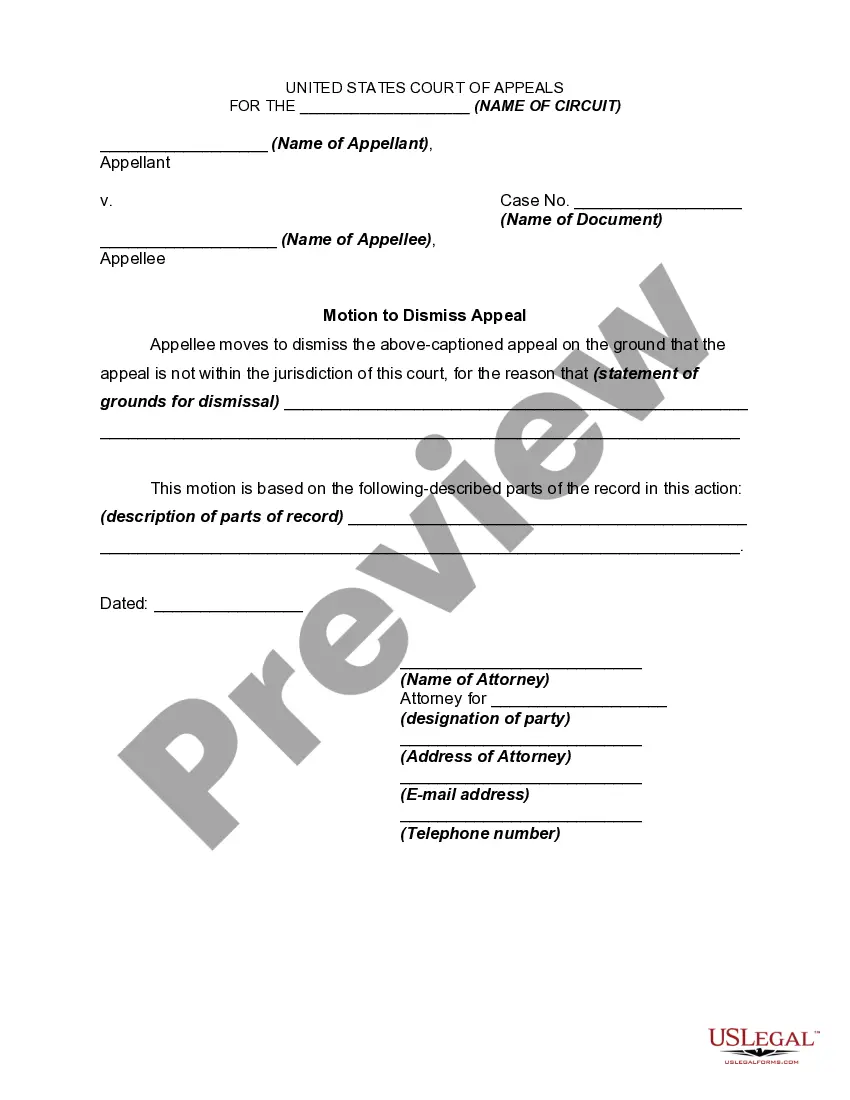
How to fill out Motion To Dismiss Appeal - Not Within Jurisdiction Of Court?
- If you're an existing user, log in to your account and download the necessary form template. Confirm that your subscription is active; renew it if needed.
- For first-time users, start by browsing the legal forms library. Check the form's preview and description to ensure it meets your specific needs and conforms to your local jurisdiction.
- If your initial choice isn't suitable, utilize the Search function to find a different form that aligns with your requirements.
- Once you identify the appropriate document, click the 'Buy Now' button and select your desired subscription plan. You will need to create an account to access all resources.
- Proceed with your purchase by entering your payment information or using PayPal for a quick transaction.
- After completing your purchase, download the form directly to your device, and remember you can access it at any time in the My Forms section of your profile.
US Legal Forms not only simplifies the document retrieval process but also offers access to over 85,000 legal forms, making it one of the most comprehensive resources available. Additionally, users benefit from consultation with premium legal experts to ensure all documents are completed correctly.
In conclusion, utilizing US Legal Forms can make navigating the appeal process for magistrates court much easier. Streamline your legal documentation today! Visit US Legal Forms to get started.
Form popularity
FAQ
The most common ground for appeal in the appeal process for magistrates court involves legal errors made during the initial trial. These errors can include incorrect application of the law, improper admission of evidence, or a lack of substantial evidence to support the ruling. Understanding these grounds can greatly enhance your chances of a successful appeal. Consider leveraging US Legal Forms for templates that cover common issues in appeals.
A strong appeal in the appeal process for magistrates court is built on clear arguments and substantial evidence. You must identify specific legal errors in the original ruling and demonstrate how these errors affected the outcome of your case. Presenting thorough documentation and using a well-structured argument will strengthen your position. Utilizing resources like US Legal Forms can help you effectively organize your appeal.
To initiate the appeal process for magistrates court, you must gather essential documents and evidence related to your case. You typically need the original court decision, relevant case files, and any additional paperwork that supports your claim. Additionally, it's important to submit your appeal within the specified time limit set by the court. Using platforms like US Legal Forms can simplify this process by providing templates and guidance for filing.
To appeal a court case, you must follow the structured appeal process for magistrates court, which begins with filing a notice of appeal. This notice must be submitted to the appropriate higher court within the designated timeframe after the original judgment. You will then need to prepare the record of the proceedings, and submit any necessary briefs that outline your legal arguments. Consulting with a legal expert will help you navigate these requirements effectively.
Section 142 of the Magistrates Court Act outlines the procedures pertaining to the appeal process for magistrates court. This section specifies how parties can challenge decisions, the timelines for filing appeals, and the requirements for submitting documentation. Understanding this section is essential for anyone considering an appeal, as it provides the legal framework that governs these proceedings.
Yes, a default judgment can be appealed in Georgia during the appeal process for magistrates court. However, it is critical to act promptly, as there are specific timeframes within which you must file your appeal. To increase your chances of success, you may need to demonstrate that you had a valid reason for not responding to the initial claim and that the judgment was unjust.
The most common reason for seeking an appeal in the appeal process for magistrates court is a claim of legal error during the trial. This can include improper rulings by the magistrate, issues with the admissibility of evidence, or failure to follow legal procedures. By identifying these mistakes, you can argue that the outcome of the case may have been different had these errors not occurred.
The odds of winning an appeal in the appeal process for magistrates court can vary significantly based on the case's circumstances and the evidence presented. Generally, appeals are considered on the basis of legal mistakes made during the trial rather than reevaluating the facts. Statistically, many appeals do not result in a reversal of the original decision; thus, seeking legal counsel to assess your situation can be highly beneficial.
To initiate the appeal process for magistrates court, you must first file a notice of appeal to the higher court. This notice should clearly state your intention to appeal the decision issued by the magistrates court. Additionally, you will need to prepare a record of the trial proceedings, as this is essential for the appellate court's review. It's important to adhere to the specific deadlines and guidelines set forth by the court to avoid complications.
Good grounds for an appeal in a magistrates court typically include violations of legal rights, procedural errors, or new evidence that emerged post-trial. By clearly articulating these grounds, you can establish a strong basis for your case. It’s important to align your reasoning with established legal principles to maximize your chances of a successful appeal.