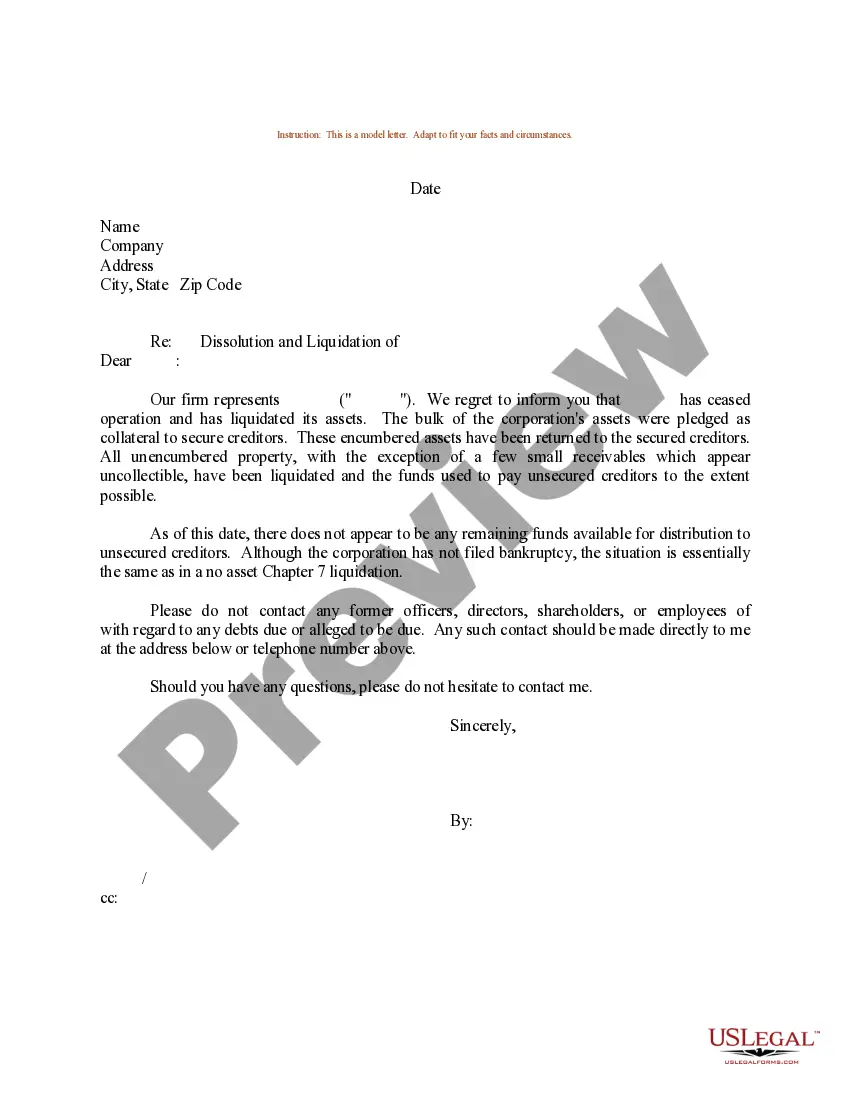
Resolution To Dissolve Corporation Sample
Description
Get your form ready online
Our built-in tools help you complete, sign, share, and store your documents in one place.
Make edits, fill in missing information, and update formatting in US Legal Forms—just like you would in MS Word.
Download a copy, print it, send it by email, or mail it via USPS—whatever works best for your next step.
Sign and collect signatures with our SignNow integration. Send to multiple recipients, set reminders, and more. Go Premium to unlock E-Sign.
If this form requires notarization, complete it online through a secure video call—no need to meet a notary in person or wait for an appointment.
We protect your documents and personal data by following strict security and privacy standards.

Make edits, fill in missing information, and update formatting in US Legal Forms—just like you would in MS Word.

Download a copy, print it, send it by email, or mail it via USPS—whatever works best for your next step.

Sign and collect signatures with our SignNow integration. Send to multiple recipients, set reminders, and more. Go Premium to unlock E-Sign.

If this form requires notarization, complete it online through a secure video call—no need to meet a notary in person or wait for an appointment.

We protect your documents and personal data by following strict security and privacy standards.
Looking for another form?
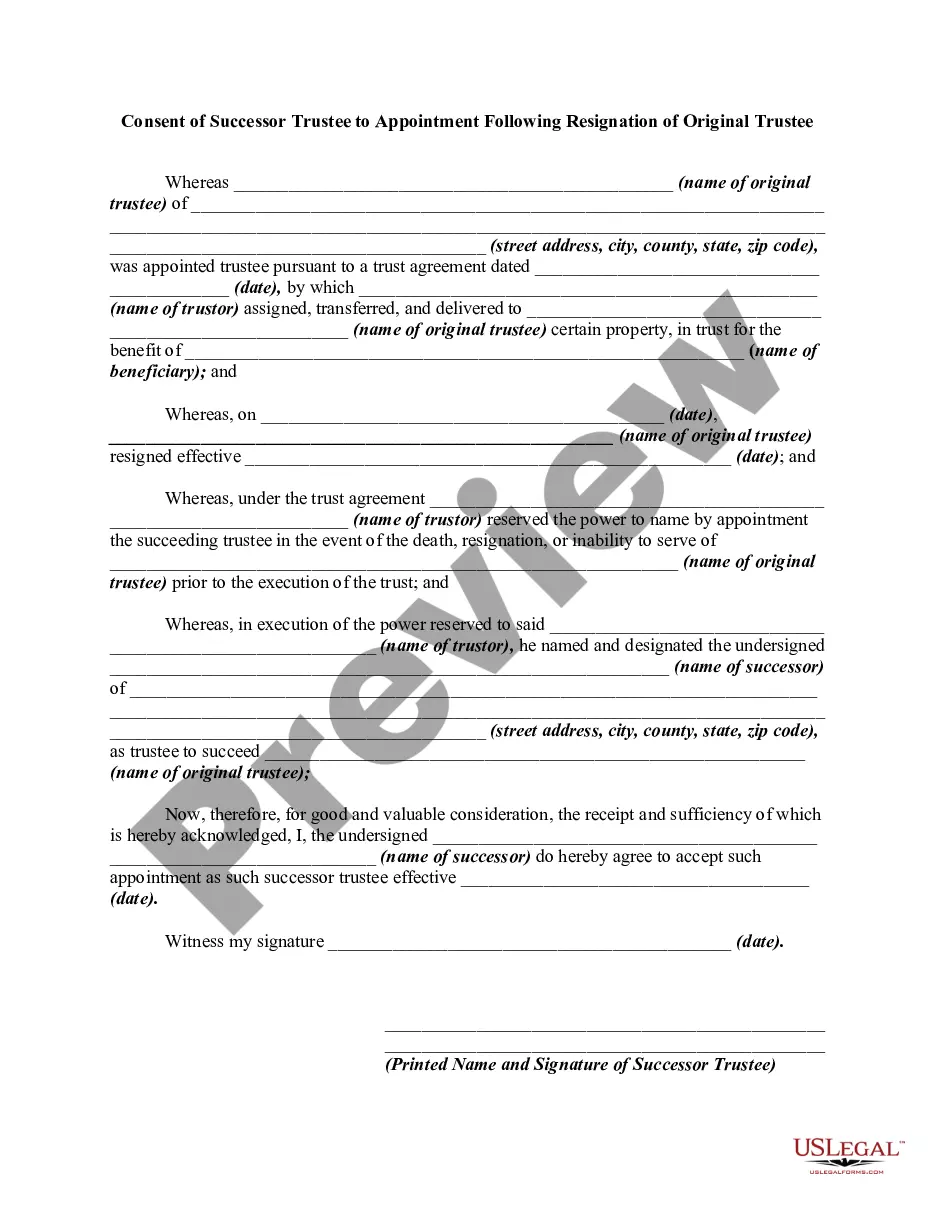
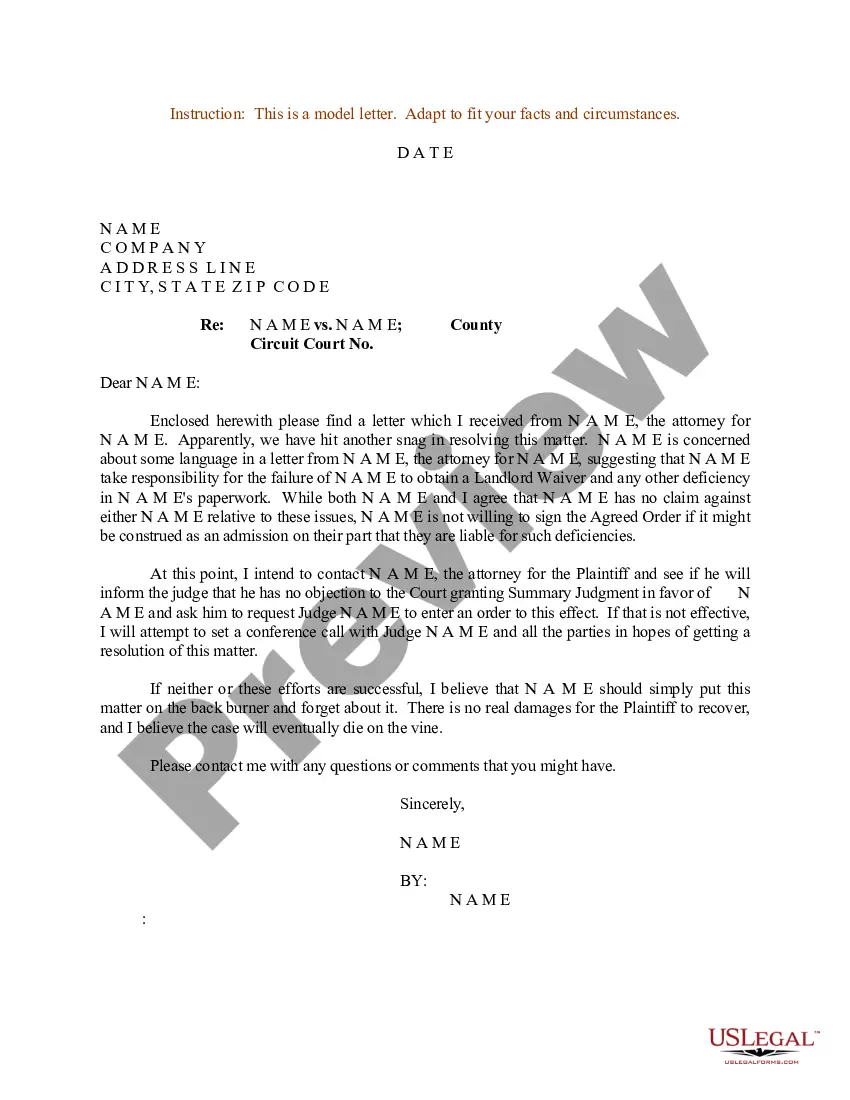
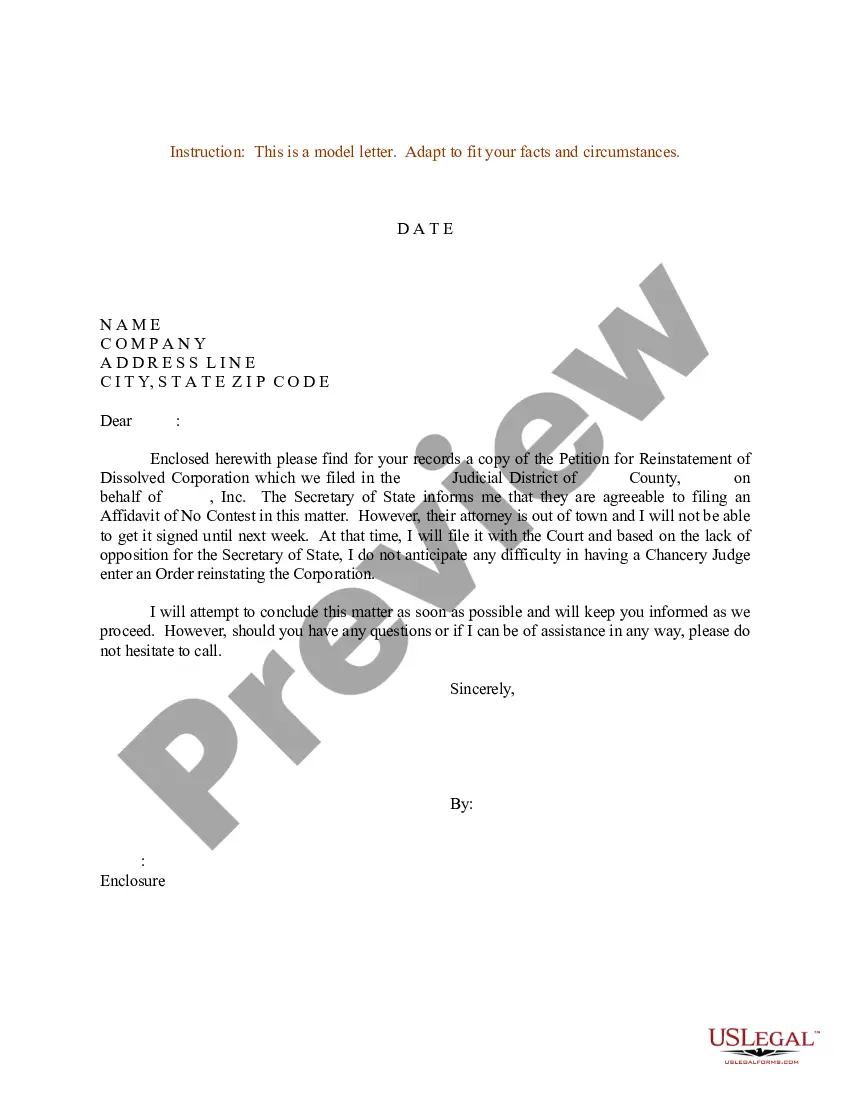
How to fill out Sample Letter For Dissolution And Liquidation?
Whether for corporate objectives or for personal matters, everyone must confront legal issues at some stage in their life.
Filling out legal paperwork requires careful consideration, starting with selecting the correct form template.
With an extensive US Legal Forms catalog available, you do not need to waste time searching for the right template across the web. Utilize the library’s easy navigation to find the correct template for any circumstance.
- Locate the template you need using the search bar or catalog navigation.
- Review the form’s details to ensure it aligns with your circumstances, state, and locality.
- Click on the form’s preview to scrutinize it.
- If it is the incorrect form, return to the search feature to locate the Resolution To Dissolve Corporation Sample you need.
- Obtain the template if it satisfies your requirements.
- If you already have a US Legal Forms account, simply click Log in to access previously stored documents in My documents.
- If you do not have an account yet, you can download the form by clicking Buy now.
- Choose the appropriate pricing option.
- Complete the account registration form.
- Select your payment option: you may use a credit card or PayPal account.
- Choose the document format you desire and download the Resolution To Dissolve Corporation Sample.
- Once it is saved, you can fill out the form using editing software or print it and complete it manually.
Form popularity
FAQ
7 Steps for Writing a Resolution Put the date and resolution number at the top. ... Give the resolution a title that relates to the decision. ... Use formal language. ... Continue writing out each critical statement. ... Wrap up the heart of the resolution in the last statement.
Examples of corporate resolutions include the adoption of new bylaws, the approval of changes in the board members, determining what board members have access to certain finances, such as bank accounts, deciding upon mergers and acquisitions, and deciding executive compensation.
Corporate resolution examples include everything from authorizations for financial transactions and mergers to partnership approval, adoption of new bylaws, and executive compensation decisions.
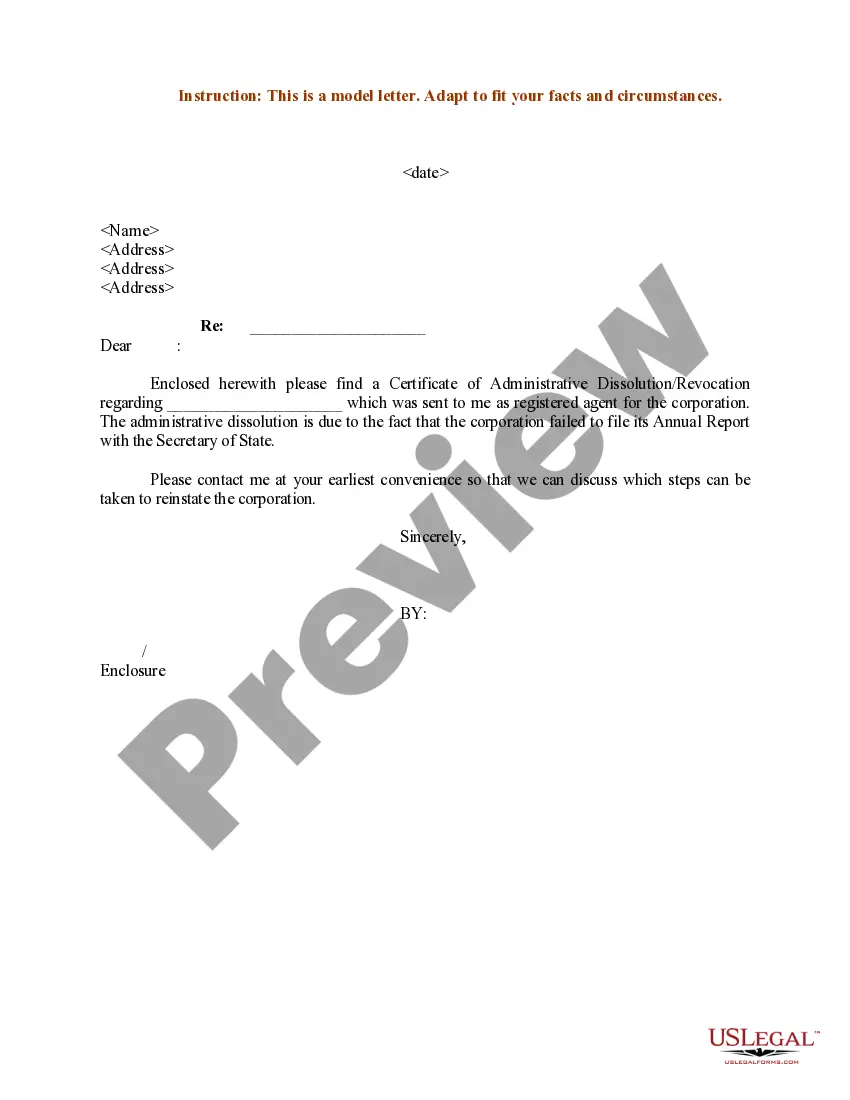
Although the content will vary, certain elements should be included in every letter of dissolution. These include: The name of the recipient and the name of the person sending the letter. The purpose of the letter, including the relationship to be terminated and the date of termination, stated in the first paragraph.
Typically, the dissolution process is as follows: The dissolution is initiated by a resolution by the board of directors who submit it at a meeting of the shareholders. The shareholders each vote and if the resolution is approved, the directors have the authorization to proceed with the dissolution process.