Tier Exception Letter Sample For Job
Description
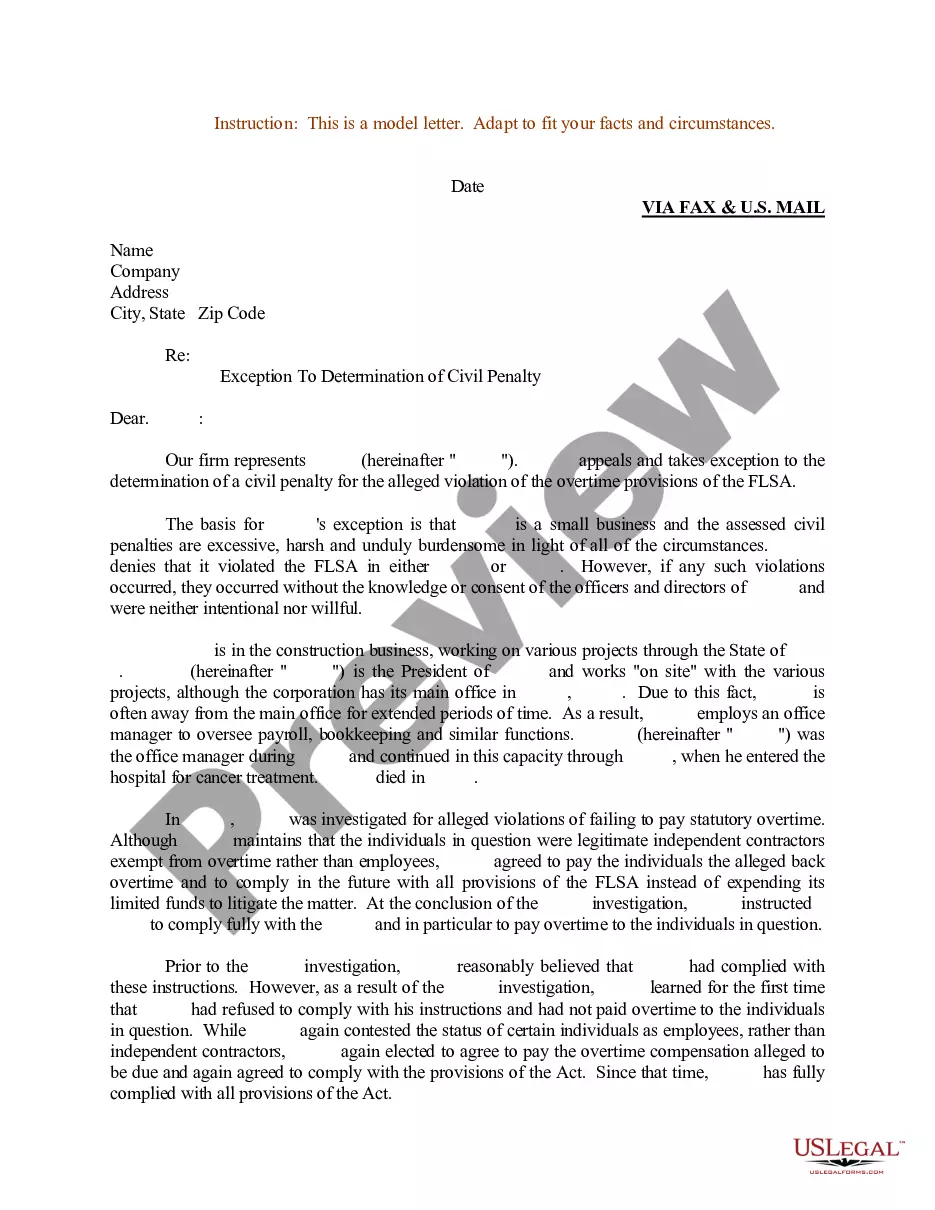
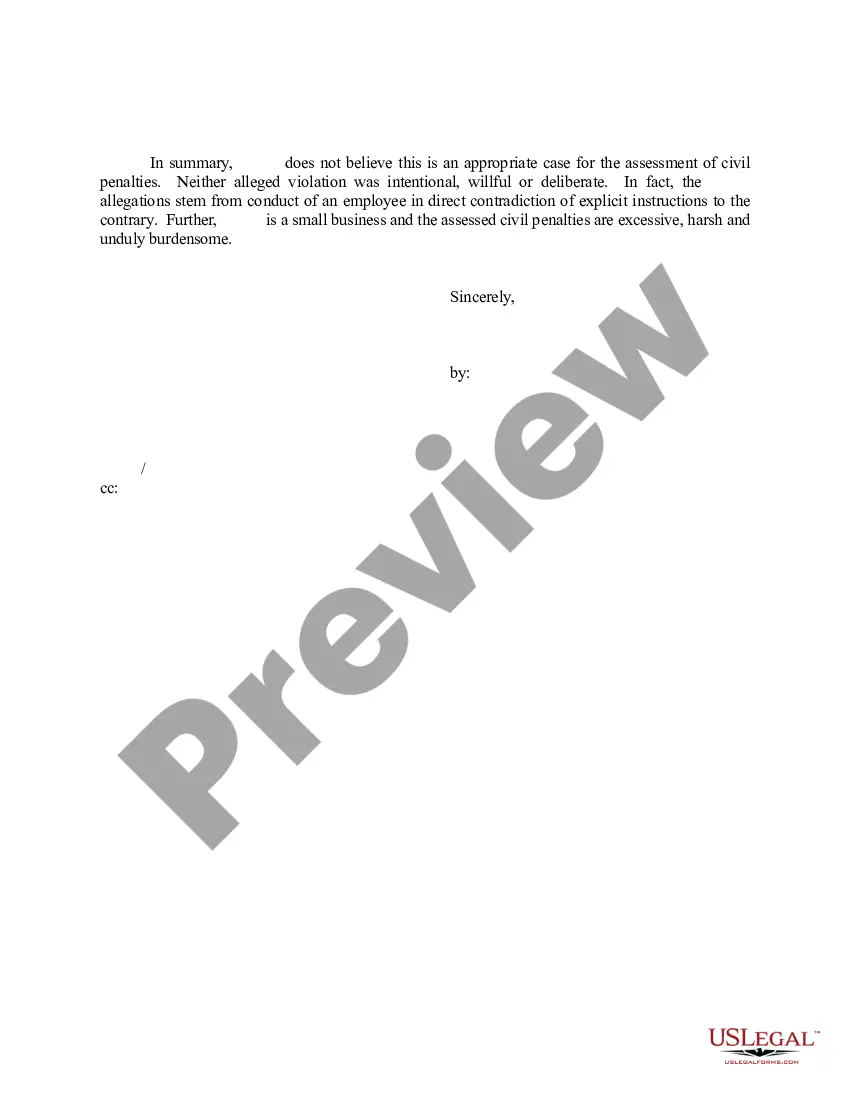
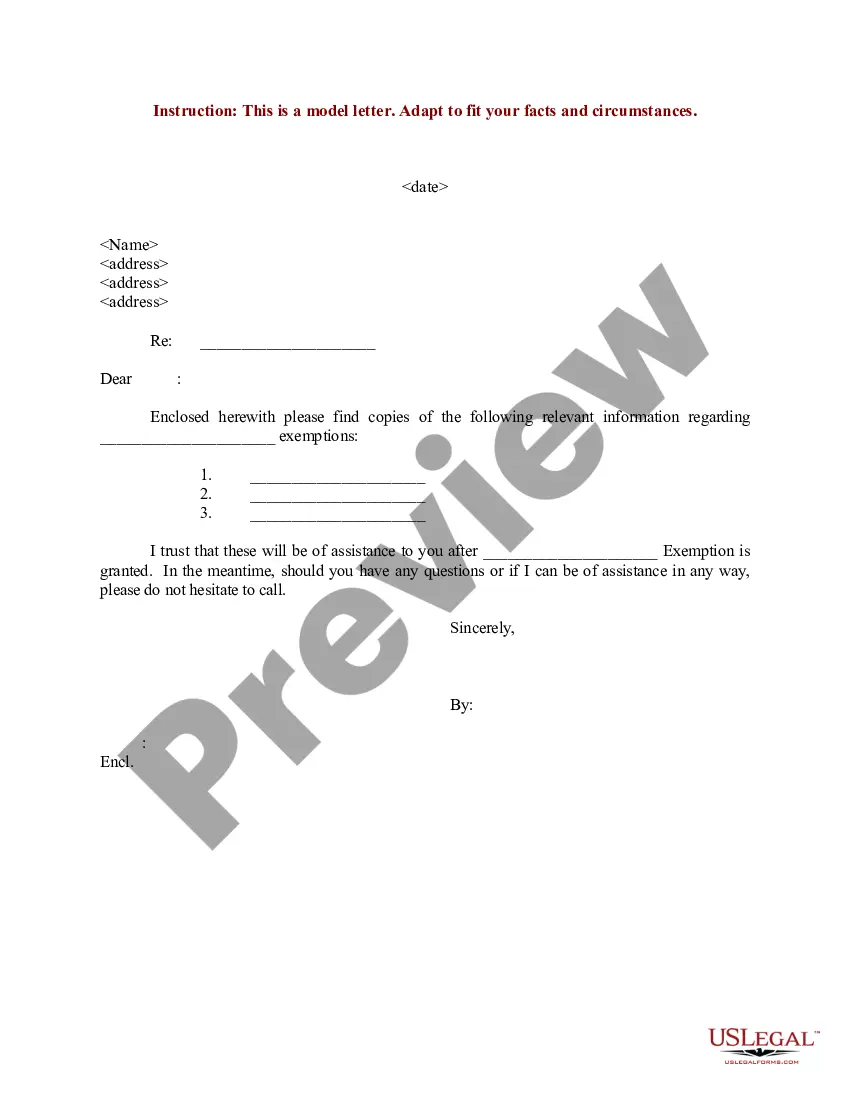
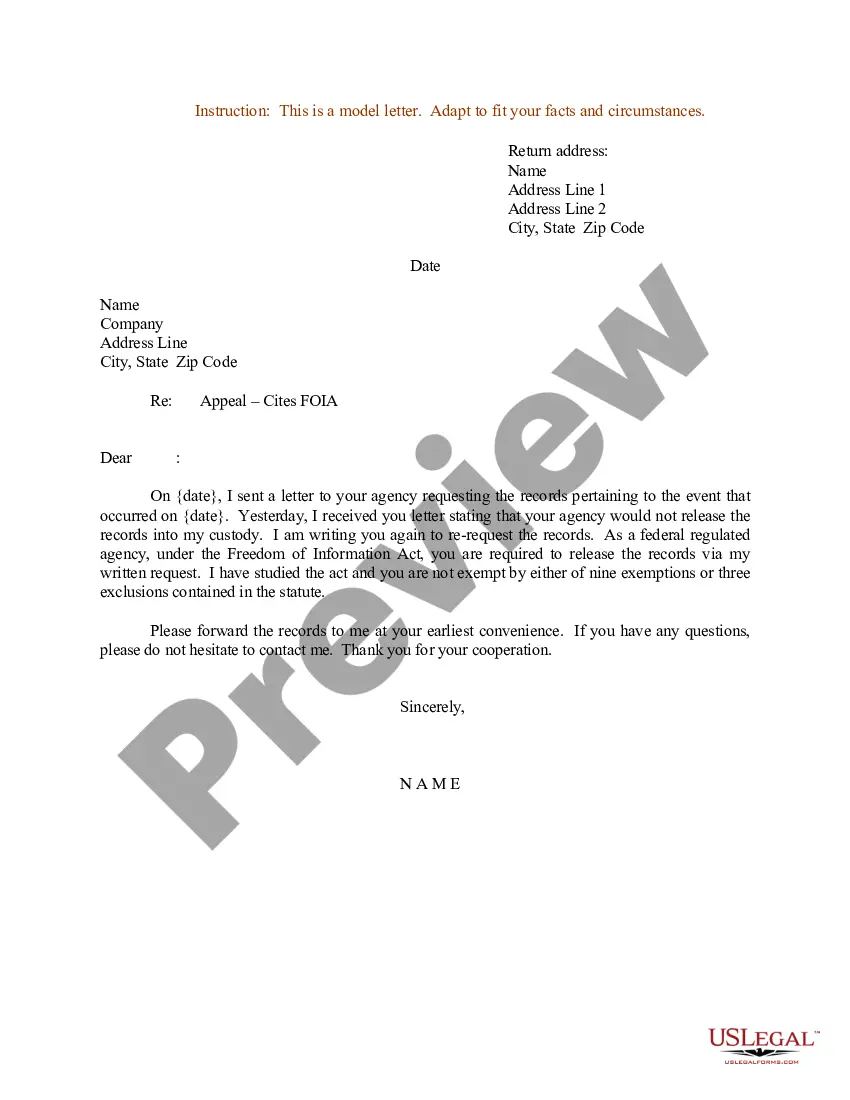
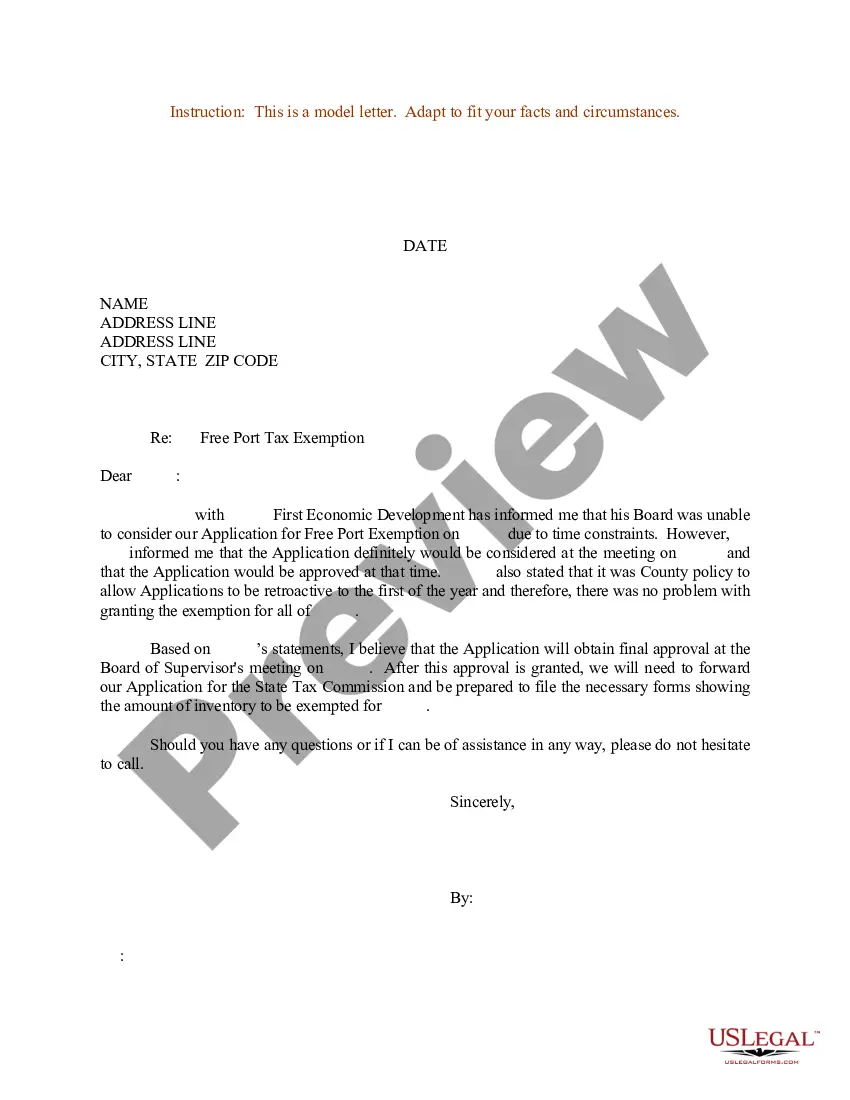
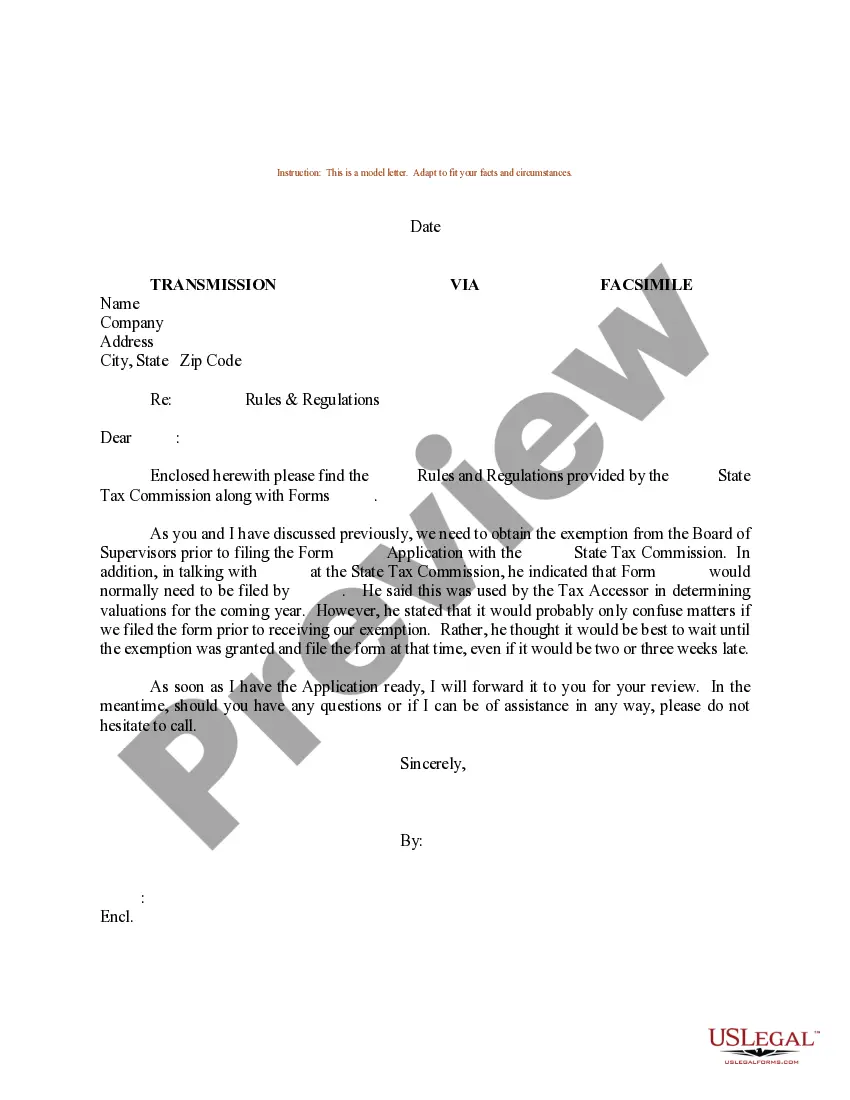
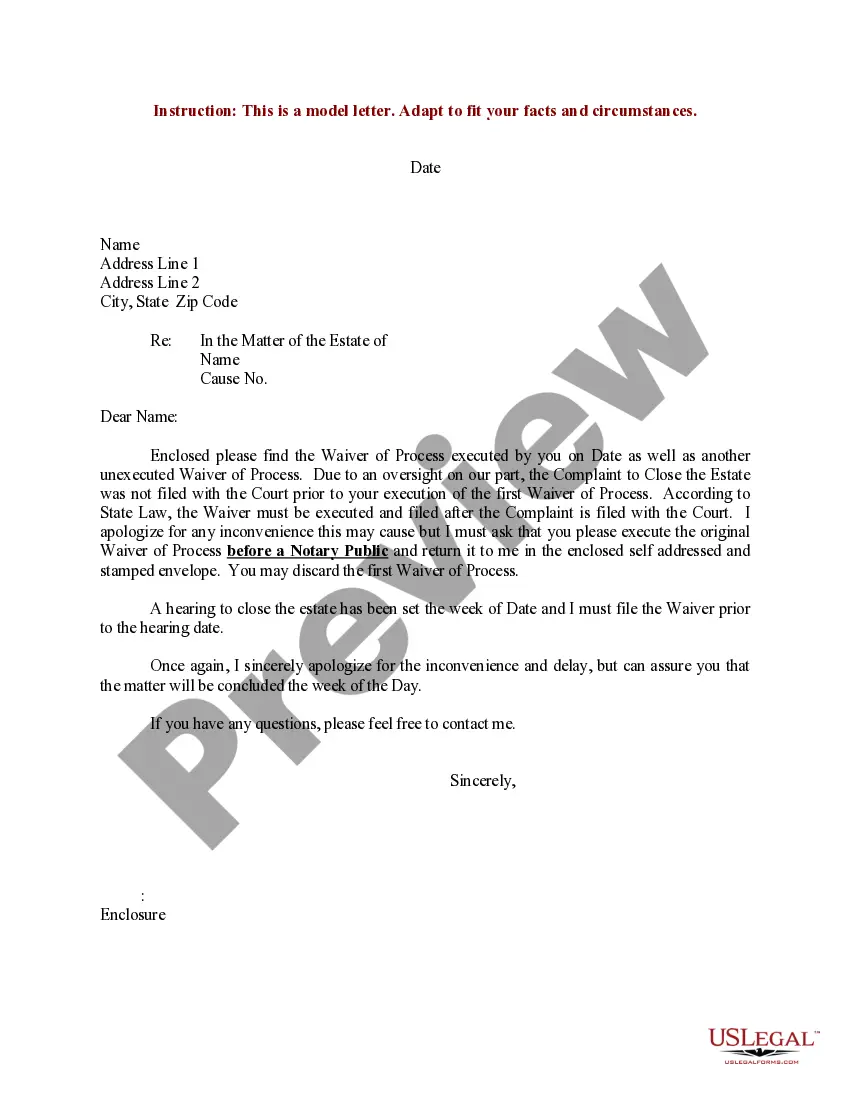
How to fill out Sample Letter For Exception To Determination Of Civil Penalty?
It’s common knowledge that one cannot become a legal expert instantly, nor is it feasible to swiftly learn how to prepare a Tier Exception Letter Sample For Job without a specialized education.
Assembling legal documents is a lengthy process that necessitates specific training and expertise. Therefore, why not entrust the formulation of the Tier Exception Letter Sample For Job to the experts.
With US Legal Forms, one of the most extensive collections of legal templates, you have access to everything from courtroom documents to templates for internal communications.
You can re-access your documents from the My documents section at any time. If you’re a current customer, you can simply Log In to find and download the template from the same section.
Regardless of the reason for your documents—be it financial, legal, or personal—our website has you covered. Give US Legal Forms a try now!
- Locate the required form using the search bar at the top of the webpage.
- View it (if this feature is available) and read the accompanying description to ascertain if the Tier Exception Letter Sample For Job meets your needs.
- Restart your search if you require a different document.
- Sign up for a free account and select a subscription option to acquire the template.
- Click Buy now. After the purchase is finalized, you can obtain the Tier Exception Letter Sample For Job, fill it out, print it, and send it or mail it to the appropriate parties or organizations.
Form popularity
FAQ
When writing your request be sure to include the required information: Paragraph 1: What are you requesting? Paragraph 1: Why you are requesting the exception. Paragraph 2: Provide details on the circumstances that should be considered. Paragraph 3: What is your desired outcome?
I am writing on behalf of my patient, [PATIENT NAME], to [REQUEST PRIOR AUTHORZATION/DOCUMENT MEDICAL NECESSITY] for treatment with [INSERT PRODUCT]. The [PATIENT NAME] has a diagnosis of [DIAGNOSIS] and needs treatment with [INSERT PRODUCT], and that [INSERT PRODUCT] is medically necessary for [him/her] as prescribed.
EXCEPTION LETTER means the Division's first correspondence with a petitioner after the Division's initial review of a filed petition, which letter indicates whether or not the petition is incomplete.
A letter of medical necessity is typically written by your healthcare provider and includes your diagnosis and duration of the treatment. It should also include the reason why the treatment, product, or service is needed. A letter of medical necessity does not guarantee that your expense will be approved.
A tiering exception is a type of exception request through the Part D appeal process. You can request lower cost-sharing for a prescription on a higher tier if you show that similar drugs on the formulary at lower tiers are ineffective or harmful for you.