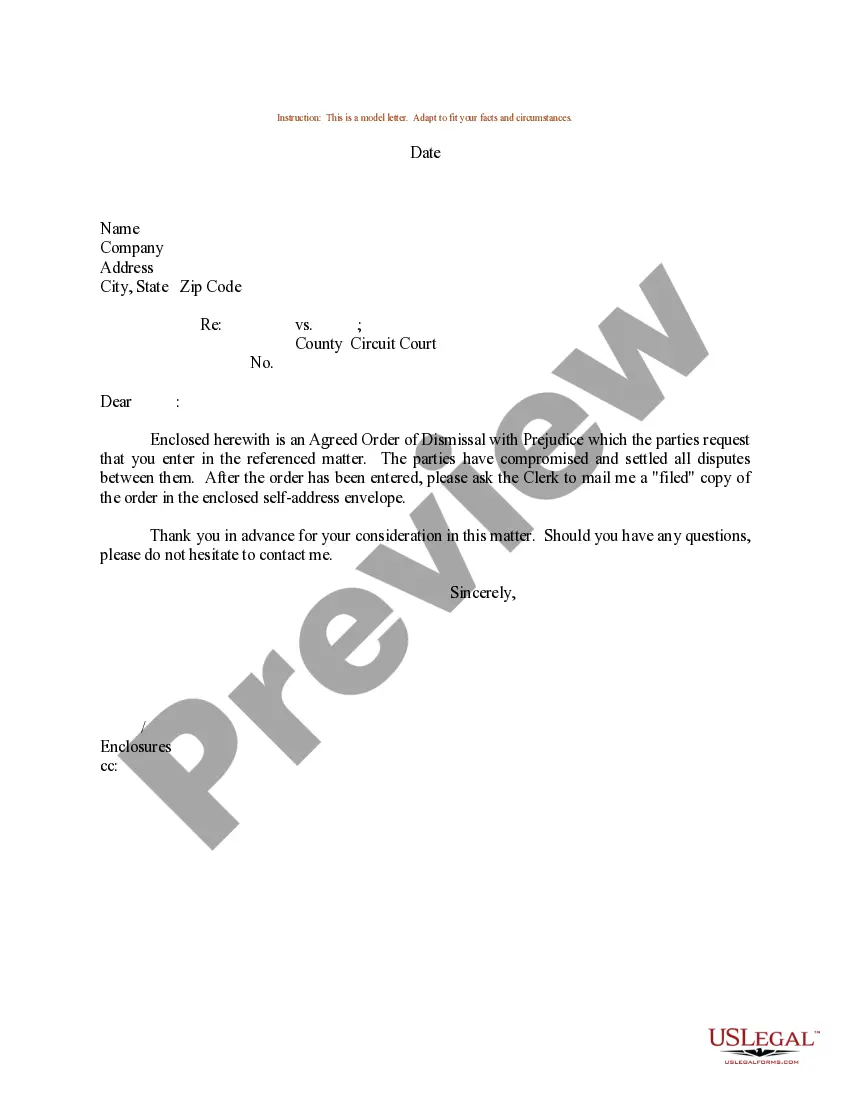
Compromise Agreement For Payment Of Debt
Description
Get your form ready online
Our built-in tools help you complete, sign, share, and store your documents in one place.
Make edits, fill in missing information, and update formatting in US Legal Forms—just like you would in MS Word.
Download a copy, print it, send it by email, or mail it via USPS—whatever works best for your next step.
Sign and collect signatures with our SignNow integration. Send to multiple recipients, set reminders, and more. Go Premium to unlock E-Sign.
If this form requires notarization, complete it online through a secure video call—no need to meet a notary in person or wait for an appointment.
We protect your documents and personal data by following strict security and privacy standards.

Make edits, fill in missing information, and update formatting in US Legal Forms—just like you would in MS Word.

Download a copy, print it, send it by email, or mail it via USPS—whatever works best for your next step.

Sign and collect signatures with our SignNow integration. Send to multiple recipients, set reminders, and more. Go Premium to unlock E-Sign.

If this form requires notarization, complete it online through a secure video call—no need to meet a notary in person or wait for an appointment.

We protect your documents and personal data by following strict security and privacy standards.
Looking for another form?
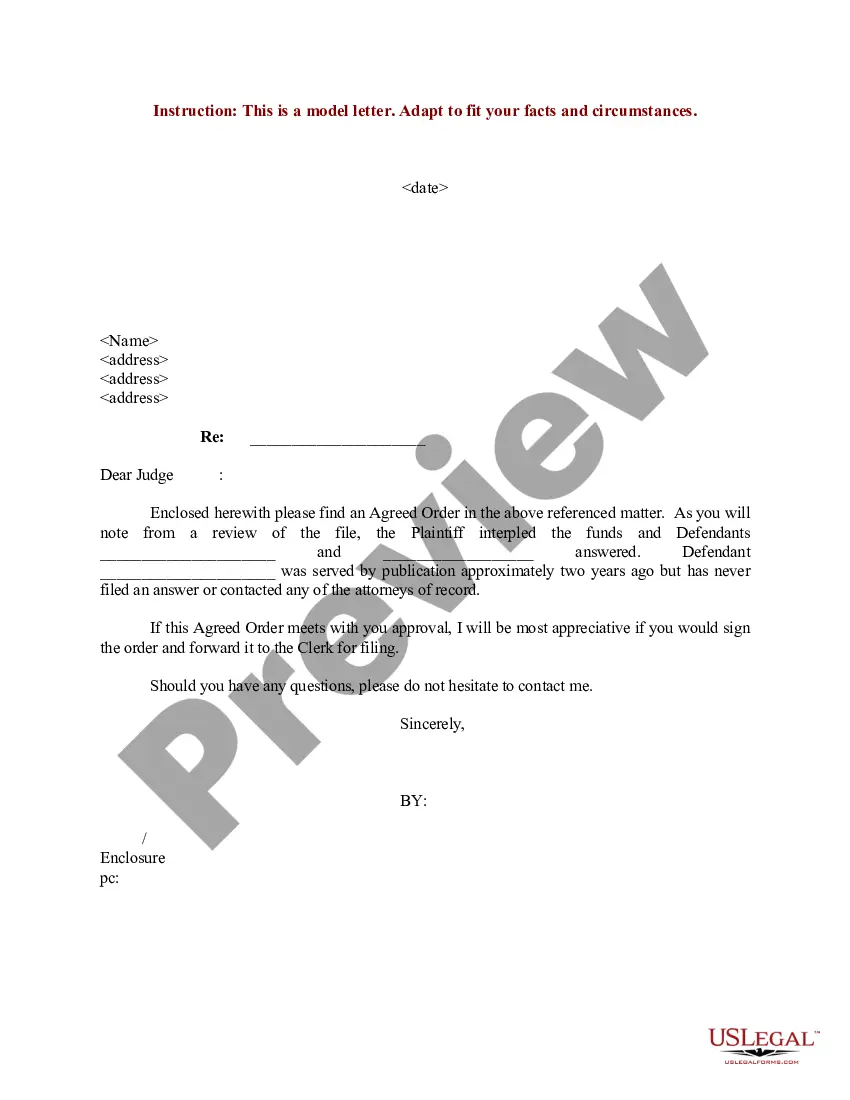
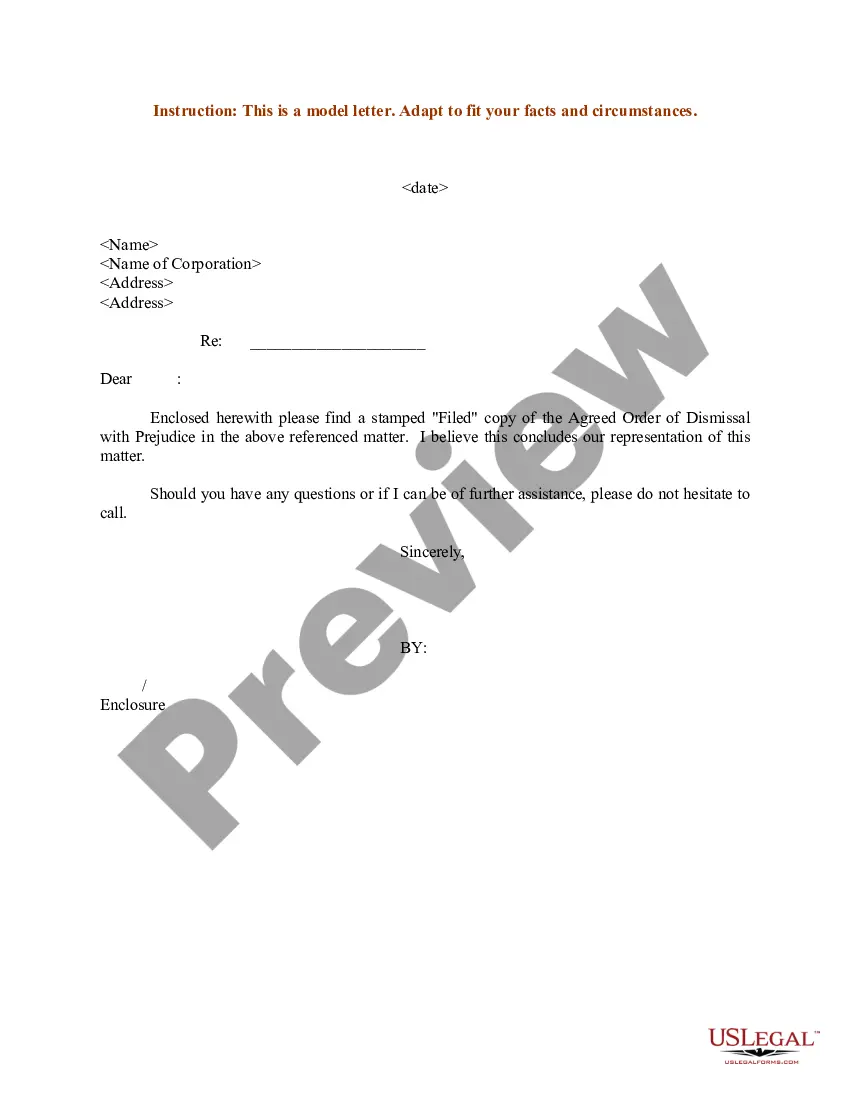
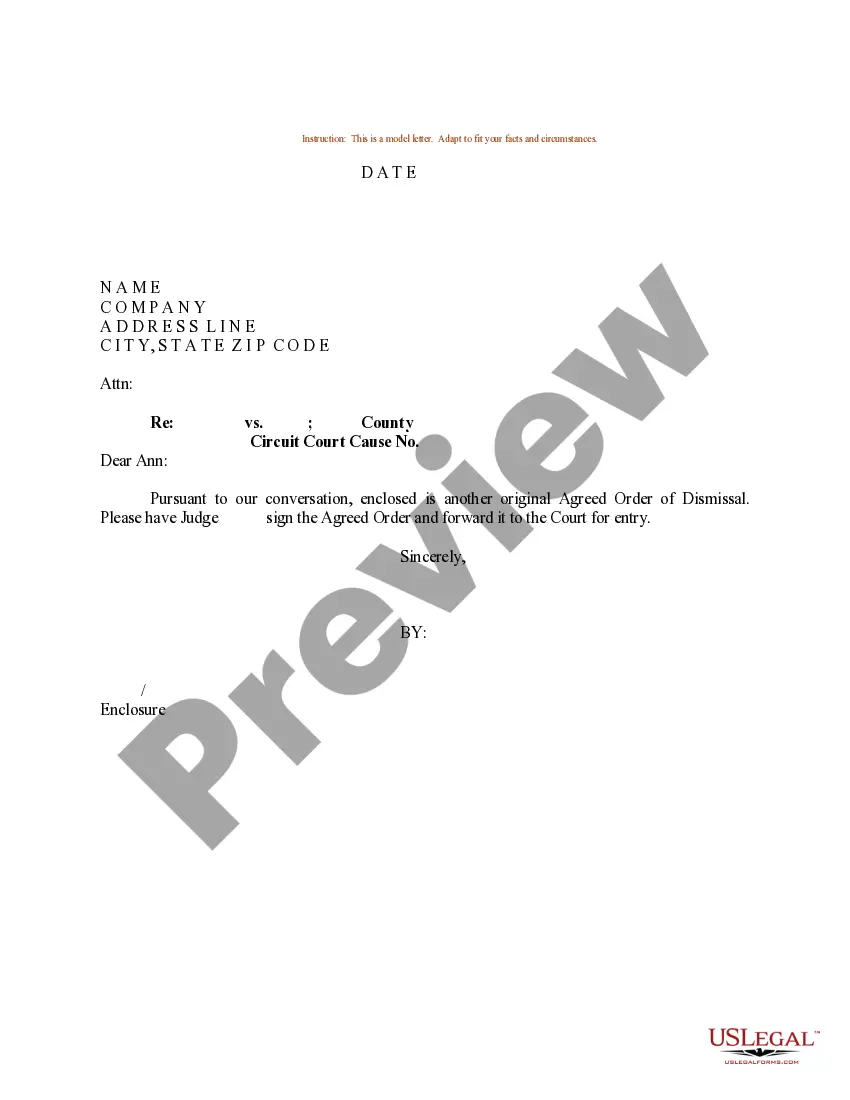
How to fill out Sample Letter For Agreed Order Of Dismissal With Prejudice - Compromise And Settlement Of Disputes?
Creating legal documents from the ground up can frequently be daunting.
Certain cases may require extensive investigation and considerable financial expenditure.
If you’re seeking a simpler and more affordable method of generating a Compromise Agreement For Payment Of Debt or any other documents without excessive hassle, US Legal Forms is readily available to assist you.
Our digital library of over 85,000 current legal forms encompasses nearly every facet of your financial, legal, and personal situations.
Examine the document preview and descriptions to confirm that you have located the document you need.
- With just a few clicks, you can swiftly access state- and county-specific templates meticulously designed by our legal professionals.
- Utilize our platform whenever you require a dependable and trustworthy service to effortlessly find and download the Compromise Agreement For Payment Of Debt.
- If you're familiar with our site and have previously registered with us, just Log In to your account, find the template, and download it or retrieve it at any moment in the My documents section.
- Not signed up yet? No problem. It takes minimal time to create an account and browse the catalog.
- However, before proceeding to download the Compromise Agreement For Payment Of Debt, consider these suggestions.
Form popularity
FAQ
When negotiating a debt settlement, it's crucial to express your intent clearly. Start by stating your financial situation and your desire to reach a compromise agreement for payment of debt. You should mention any challenges you face in making full payments, and be open about what you can afford. This approach can create a more open dialogue and lead to a mutually beneficial agreement.
Settling a debt at 20% of the total owed can be challenging, but it is not impossible. Some debt collectors may agree to this lower percentage, especially if they believe it is a better option than pursuing further collection efforts. A well-crafted compromise agreement for payment of debt can help communicate your situation effectively, increasing the chances of acceptance from the collector.
A reasonable offer to settle a debt is usually determined based on your financial ability and the amount owed. Many creditors are willing to accept a lump sum that is notably lower than the total debt, often between 30% and 50%. Using a compromise agreement for payment of debt can help structure your offer in a way that appeals to creditors, facilitating a smoother negotiation process.
A good debt settlement percentage typically falls between 40% and 60% of the total debt balance. However, each situation is unique, and what works for one person may not be ideal for another. Utilizing a compromise agreement for payment of debt can help tailor your offer and reach a settlement that is realistic for your financial situation.
When considering a percentage to offer for settling a debt, it generally ranges between 30% to 70% of the total amount owed. Your offer can be influenced by various factors, including how long the debt has been outstanding and the creditor's policies. A compromise agreement for payment of debt can be an effective way to propose this settlement, ensuring both parties reach a favorable outcome.
Compromising a debt means that a debtor reaches an agreement with the creditor to settle the outstanding amount for less than what is originally owed. This type of arrangement is often formalized through a compromise agreement for payment of debt. It allows you to repay some of your debt while freeing yourself from further obligations, making it a useful option for those struggling with financial hardship.
Typically, a debt becomes uncollectible after a period defined by the statute of limitations, which varies by state. Generally, this period ranges from three to ten years, depending on the type of debt. Once this time frame has passed, creditors lose the legal right to enforce the debt, making a compromise agreement for payment of debt an advantageous option. Platforms like US Legal Forms offer resources that can guide you through understanding your specific situation.
The 777 rule is a guideline used by debt collectors to determine the best course of action regarding the collection of debts. This rule often outlines when a debt can be written off, factoring in various durations, such as the time since the last payment was made. Understanding this rule is essential, especially when considering a compromise agreement for payment of debt. For more detailed guidance, consulting legal resources or professionals can be beneficial.
Yes, you can submit a compromise agreement for payment of debt even if you currently have a payment plan in place. However, it’s important to note that a compromise may require you to demonstrate your inability to meet your original debt obligations. The offer allows you to settle your debts for less than what you owe. To explore this option further, you might consider using platforms like US Legal Forms to help you navigate the process.
To write a debt settlement agreement, start with a title indicating it as a settlement document. Include the names and details of both parties, specify the total debt amount, and outline the terms of the settlement. By clearly defining these elements, you create a solid compromise agreement for payment of debt that protects both your rights and your creditor's.