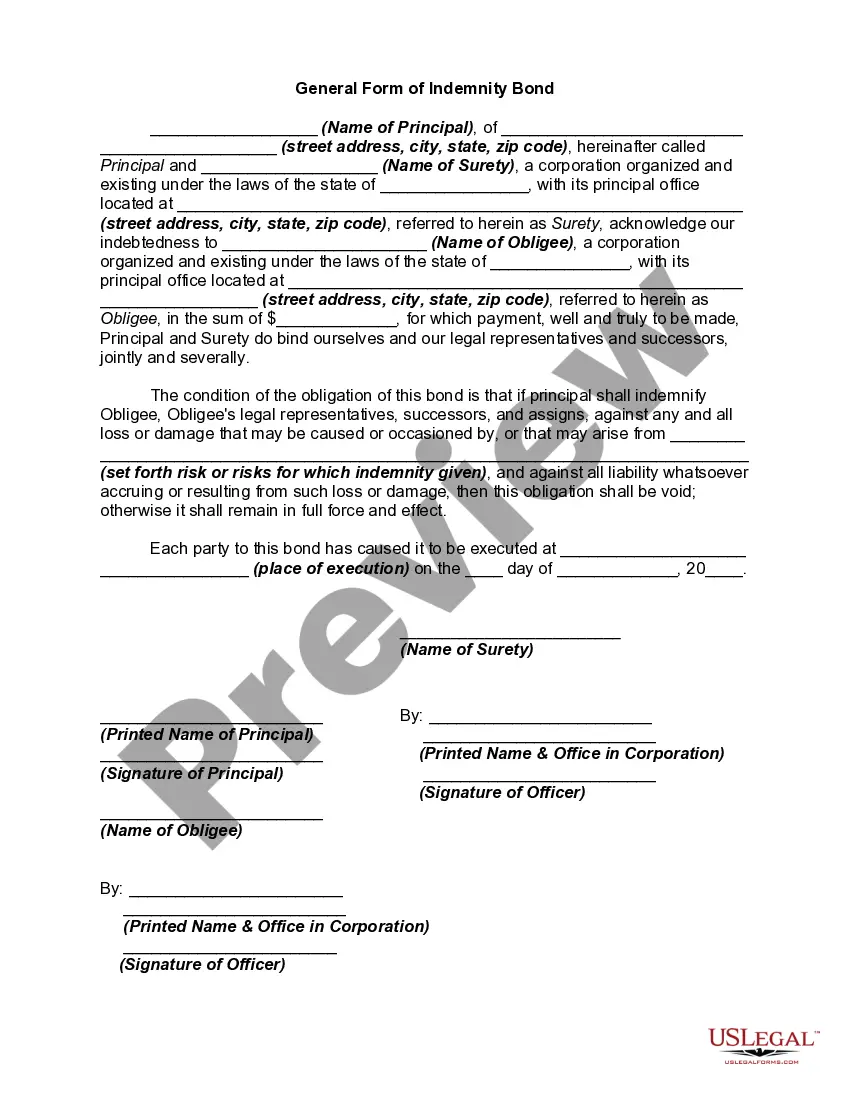
Indemnity Bond For Succession Certificate
Description
Get your form ready online
Our built-in tools help you complete, sign, share, and store your documents in one place.
Make edits, fill in missing information, and update formatting in US Legal Forms—just like you would in MS Word.
Download a copy, print it, send it by email, or mail it via USPS—whatever works best for your next step.
Sign and collect signatures with our SignNow integration. Send to multiple recipients, set reminders, and more. Go Premium to unlock E-Sign.
If this form requires notarization, complete it online through a secure video call—no need to meet a notary in person or wait for an appointment.
We protect your documents and personal data by following strict security and privacy standards.

Make edits, fill in missing information, and update formatting in US Legal Forms—just like you would in MS Word.

Download a copy, print it, send it by email, or mail it via USPS—whatever works best for your next step.

Sign and collect signatures with our SignNow integration. Send to multiple recipients, set reminders, and more. Go Premium to unlock E-Sign.

If this form requires notarization, complete it online through a secure video call—no need to meet a notary in person or wait for an appointment.

We protect your documents and personal data by following strict security and privacy standards.
Looking for another form?


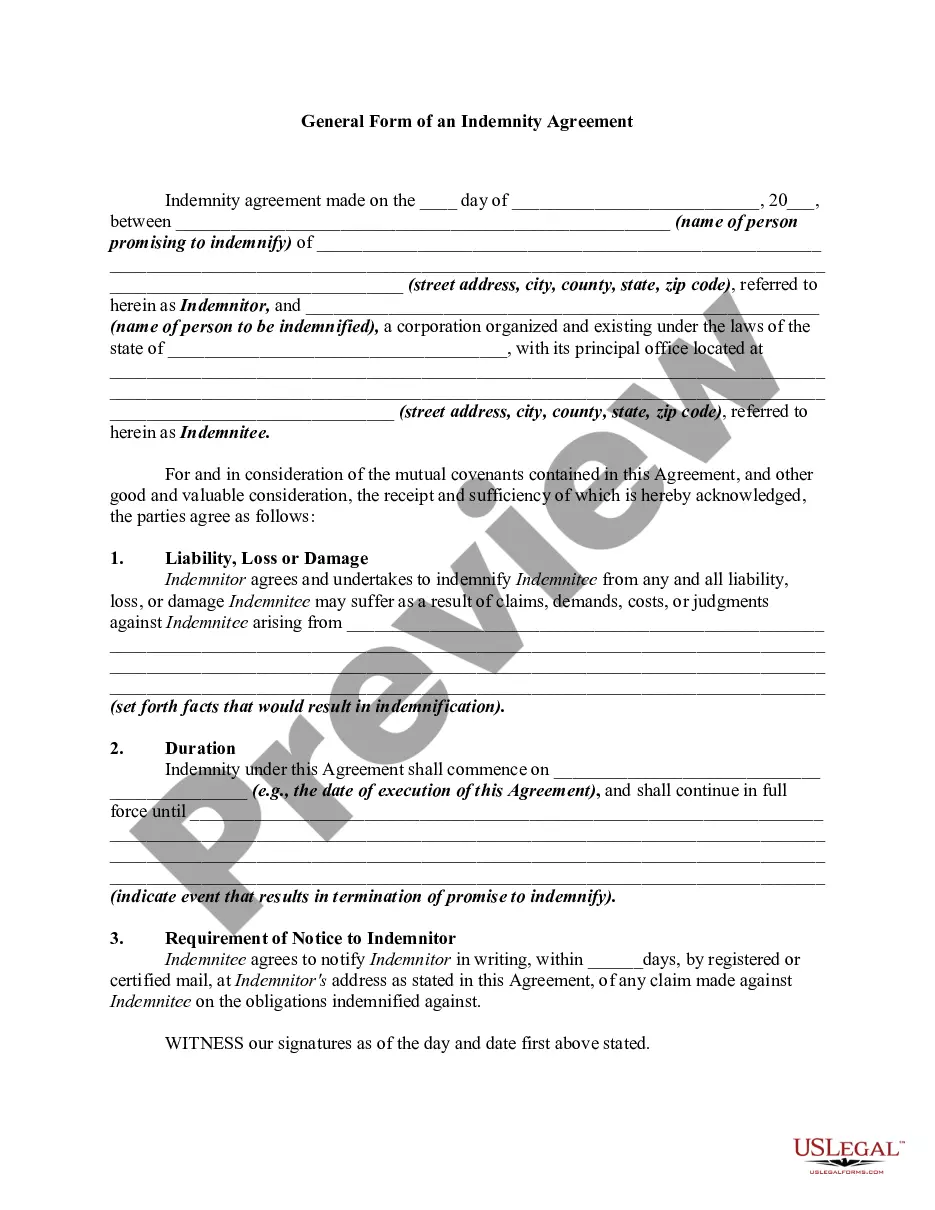
How to fill out General Form Of Indemnity Bond?
Whether for professional objectives or for personal reasons, everyone must confront legal circumstances at some point in their lives.
Completing legal forms requires meticulous focus, starting with selecting the appropriate template. For instance, if you select an incorrect version of an Indemnity Bond For Succession Certificate, it will be rejected once submitted.
With a comprehensive US Legal Forms catalog available, you won't need to waste time searching for the appropriate sample across the internet. Utilize the library’s user-friendly navigation to find the right template for any occasion.
- Obtain the sample you require using the search box or catalog navigation.
- Review the form’s details to ensure it aligns with your case, state, and county.
- Click on the form’s preview to examine it.
- If it is not the correct document, return to the search function to locate the Indemnity Bond For Succession Certificate sample you need.
- Acquire the template if it meets your requirements.
- If you have a US Legal Forms account, simply click Log in to access previously saved templates in My documents.
- If you do not yet have an account, you can download the form by clicking Buy now.
- Choose the appropriate pricing option.
- Complete the account registration form.
- Select your payment method: either a credit card or PayPal account.
- Choose the desired file format and download the Indemnity Bond For Succession Certificate.
- Once saved, you can fill out the form using editing software or print it and complete it by hand.
Form popularity
FAQ
An indemnity bond in a share certificate context serves a similar protective role. It ensures that the holder of shares is safeguarded against any financial loss resulting from disputes or errors related to share ownership. When paired with a succession certificate, an indemnity bond can provide peace of mind for shareholders and heirs alike, ensuring that all transactions are secure.
An example of an indemnity bond could be one executed by an heir while applying for a succession certificate. This bond would state that they will indemnify the court and other beneficiaries against any claims that may arise from the estate. By utilizing an indemnity bond for succession certificate, you effectively protect everyone’s interests during the inheritance process.
The primary purpose of an indemnity bond for a succession certificate is to protect the interests of the involved parties. It acts as a safeguard against any potential losses or damages that may arise during the distribution of an estate. By using such a bond, you can ensure a smoother succession process, providing security for both heirs and the estate.
To create an indemnity bond for succession certificate purposes, begin by identifying the parties involved and what liabilities the bond will cover. You then draft the bond's terms, specifying the conditions under which the bond would be invoked. It's beneficial to use templates available on platforms like USLegalForms, which can simplify the process and ensure compliance with legal standards.
Creating an indemnity bond for a succession certificate involves several key steps. First, you need to draft the bond to clearly outline the obligations of the parties involved. Then, it is advisable to consult with a legal professional to ensure it meets all necessary legal requirements. Finally, you must have the bond signed and notarized to make it enforceable.
Filling out an indemnity form involves providing clear and precise information regarding the parties involved and the obligations they are undertaking. For an indemnity bond for a succession certificate, detail the assets of the estate and any liabilities. After completing the form, verify all information for accuracy and ensure it meets legal standards.
To fill out an indemnity bond form, start by selecting the appropriate template that suits your needs, especially one tailored for an indemnity bond for a succession certificate. Clearly input your personal details, describe the duty or obligation, and include any relevant conditions. Finally, remember to sign the document in the presence of a notary if required.
The purpose of the indemnity form is to provide a legal assurance that one party will compensate another for specific losses or damages. When related to an indemnity bond for a succession certificate, it protects the estate and the heirs from potential claims arising from the transfer of assets. This form instills confidence and stability during a sensitive time.
An example of an indemnity is a scenario where a person agrees to reimburse another for any loss or damage arising from a specific transaction. In the context of an indemnity bond for a succession certificate, this might involve protecting heirs from claims against the estate. This ensures that beneficiaries can receive their rightful inheritance without potential legal issues.
To fill in an indemnity form for an indemnity bond for a succession certificate, start by gathering all necessary information, such as the names of the parties involved and details of the estate. Then, provide a clear description of the obligation being secured. Ensure you read the form carefully to include any required signatures and dates.