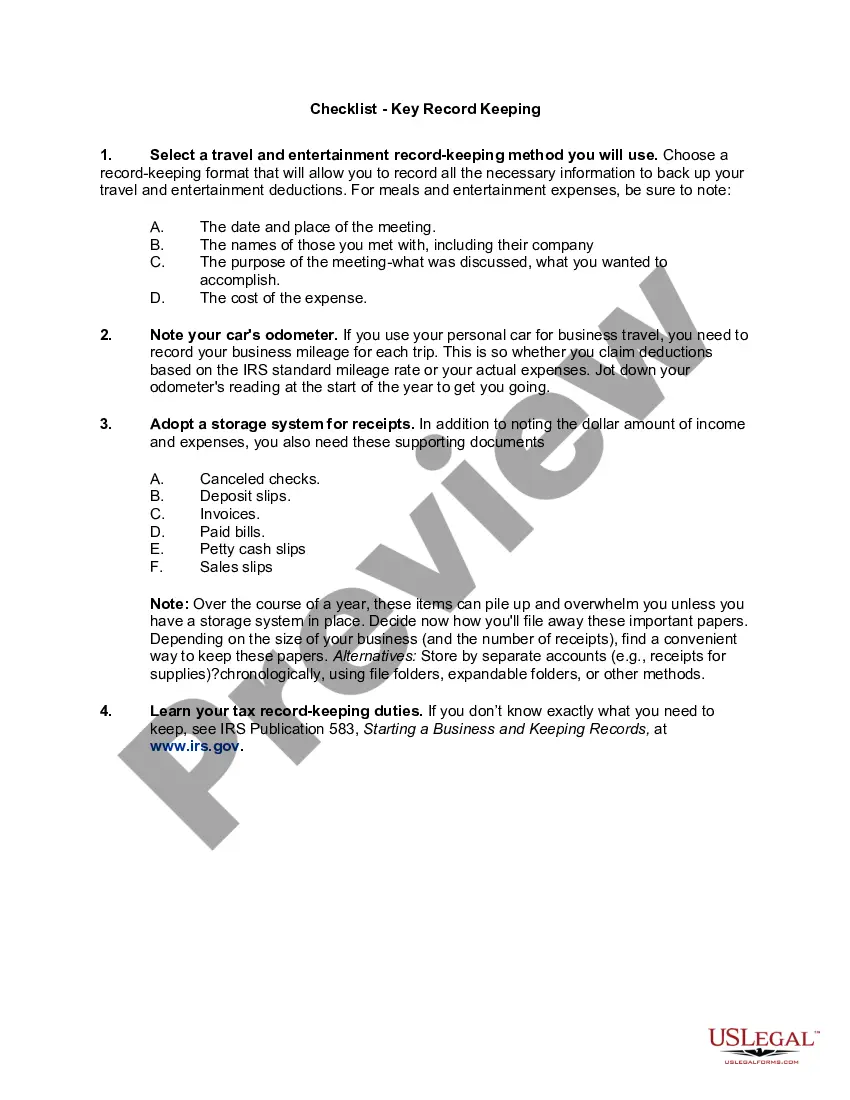
Record Keeping For Business Mileage
Description
Get your form ready online
Our built-in tools help you complete, sign, share, and store your documents in one place.
Make edits, fill in missing information, and update formatting in US Legal Forms—just like you would in MS Word.
Download a copy, print it, send it by email, or mail it via USPS—whatever works best for your next step.
Sign and collect signatures with our SignNow integration. Send to multiple recipients, set reminders, and more. Go Premium to unlock E-Sign.
If this form requires notarization, complete it online through a secure video call—no need to meet a notary in person or wait for an appointment.
We protect your documents and personal data by following strict security and privacy standards.

Make edits, fill in missing information, and update formatting in US Legal Forms—just like you would in MS Word.

Download a copy, print it, send it by email, or mail it via USPS—whatever works best for your next step.

Sign and collect signatures with our SignNow integration. Send to multiple recipients, set reminders, and more. Go Premium to unlock E-Sign.

If this form requires notarization, complete it online through a secure video call—no need to meet a notary in person or wait for an appointment.

We protect your documents and personal data by following strict security and privacy standards.
Looking for another form?





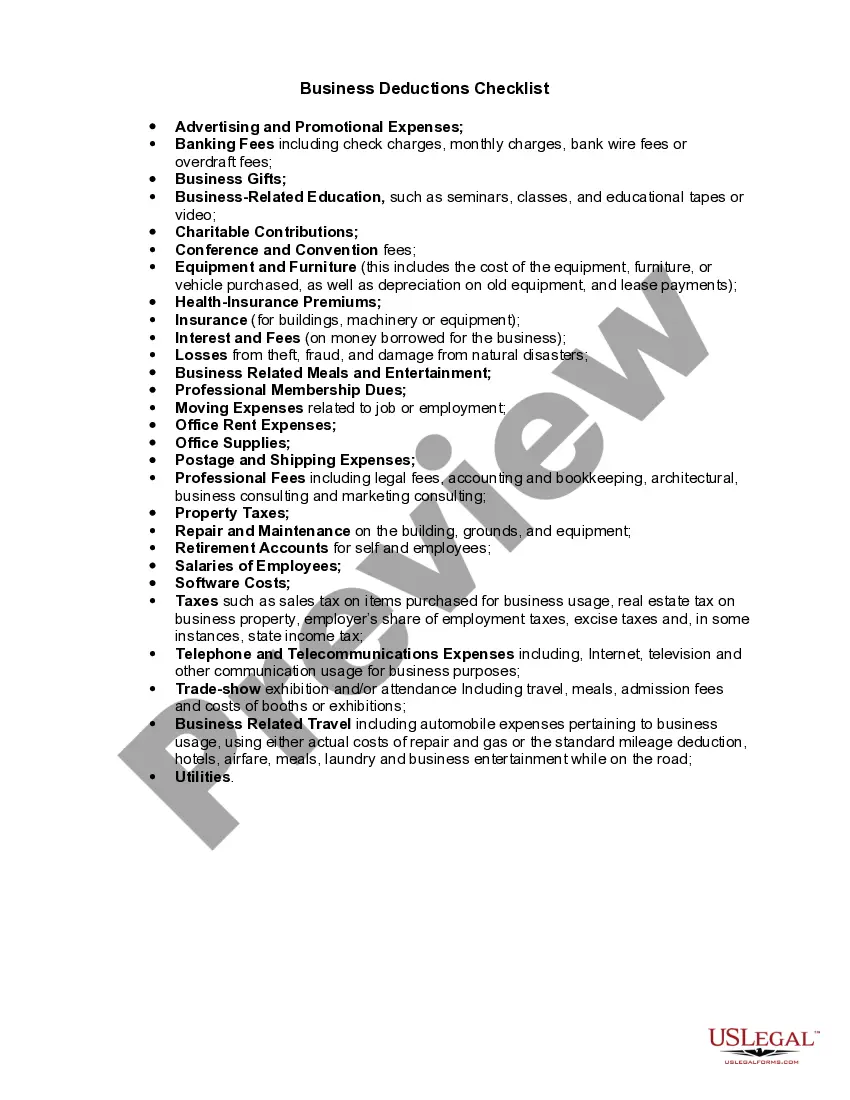
How to fill out Checklist - Key Record Keeping?
Utilizing legal templates that adhere to national and local laws is essential, and the web provides numerous choices to select from.
However, what’s the advantage of spending time searching for the appropriately composed Record Keeping For Business Mileage template online when the US Legal Forms digital library already has such documents gathered in one location.
US Legal Forms is the largest online legal archive with over 85,000 customizable templates prepared by lawyers for any business and personal circumstance. They are simple to navigate with all files categorized by state and intended use.
All templates you find through US Legal Forms are reusable. To re-download and fill out previously purchased forms, access the My documents section in your account. Enjoy the most comprehensive and user-friendly legal documentation service!
- Our specialists keep up with legal changes, ensuring your form is current and compliant when obtaining a Record Keeping For Business Mileage from our site.
- Acquiring a Record Keeping For Business Mileage is quick and straightforward for both existing and new users.
- If you already possess an account with an active subscription, Log In and retrieve the document sample you need in the correct format.
- If you are new to our site, follow the steps outlined below.
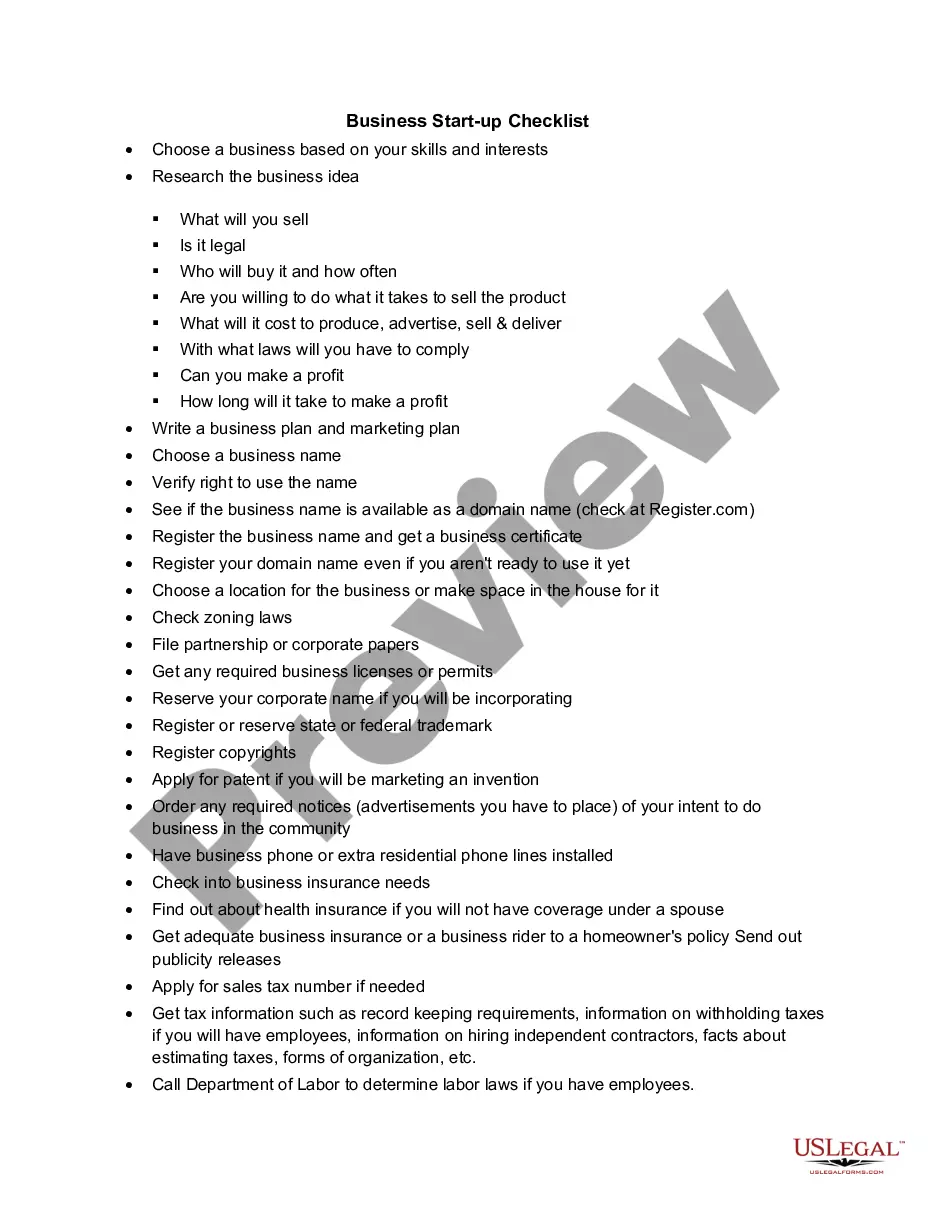
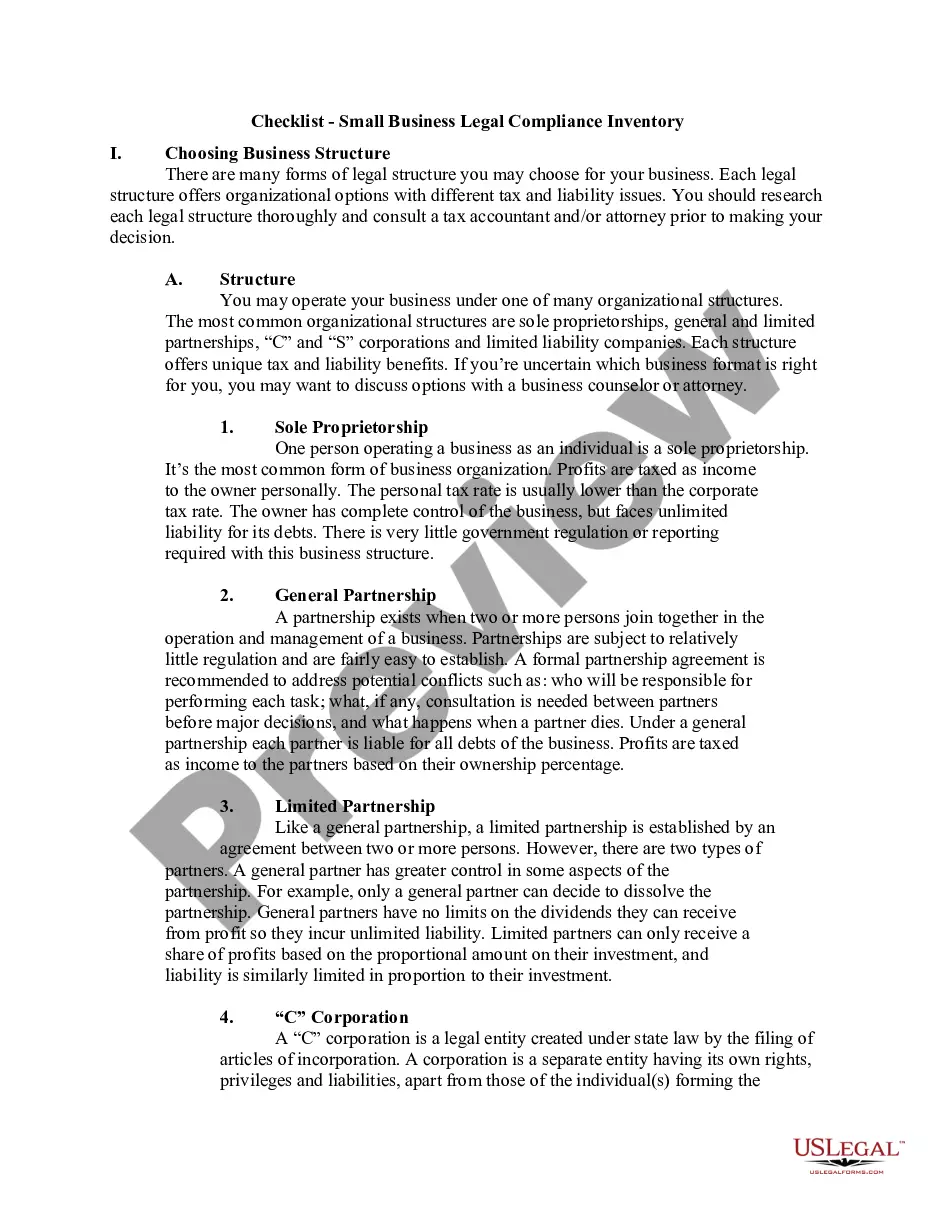
- Review the template using the Preview option or through the text outline to ensure it meets your requirements.
Form popularity
FAQ
For effective record keeping for business mileage, the IRS requires you to maintain a thorough mileage log. This log should document the date, distance, starting and ending locations, and the purpose of each trip. Accurate and comprehensive records support your deduction claims during audits. Utilizing tools or platforms like US Legal Forms can simplify this process, enabling you to create and manage your mileage logs easily, ensuring compliance and peace of mind.
The IRS provides clear guidelines for record keeping for business mileage. Typically, you can deduct the standard mileage rate set by the IRS, which changes annually. To qualify for this deduction, you must keep detailed records of your mileage, including the date, destination, purpose, and distance traveled. Following these guidelines helps ensure you maximize your deductions while remaining compliant with IRS regulations.
Yes, the IRS can check your mileage records if they suspect discrepancies in your claimed expenses. Proper record keeping for business mileage is essential, as it can support your case and protect you during audits. To streamline this task, consider utilizing resources like uslegalforms, which can assist you in maintaining accurate and organized mileage documentation.
The IRS may audit mileage reimbursement claims, and it is crucial to maintain clear and thorough records for your business trips. Effective record keeping for business mileage helps you substantiate your claims and minimizes risks during an audit. By using proper tracking methods and tools, you can ensure your expenses align with IRS guidelines, making your audit process smoother.
Yes, the IRS typically requests proof of business expenses, which includes substantiating your mileage claims as part of record keeping for business mileage. This documentation may include receipts, mileage logs, or accounting records that show how you calculated your expenses. Using platforms like uslegalforms can simplify this process, allowing you to compile evidence easily and meet IRS requirements.
The IRS requires detailed records for proof of mileage, which includes the date, destination, purpose, and the number of miles driven for each trip. Record keeping for business mileage must be systematic to ensure compliance during any potential audits. You can use apps or software that help track this information accurately. Keeping organized records will provide you peace of mind if you ever face an IRS inquiry.
Yes, the IRS expects you to provide proof of your mileage if you're claiming business expenses. Good record keeping for business mileage helps substantiate your claims in case of an audit. While receipts may not always be necessary, maintaining a thorough log of your trips will protect you. Using reliable tools, such as USLegalForms, can simplify this record-keeping.
If you are unsure about your mileage for tax purposes, you can estimate your business trips based on your calendar and records. However, accurate record keeping for business mileage is crucial to support your claims. Consider using a mileage tracking app or service to keep detailed logs of your travels, making future estimations easier. Tools like USLegalForms can help streamline this process.
To claim mileage on your taxes, you generally do not need to provide receipts if you use the standard mileage rate. However, record keeping for business mileage is essential. You should maintain a log of your trips that includes dates, destinations, and purposes. This way, if the IRS asks for verification, you can provide sufficient documentation.
The IRS requires that your mileage log includes details such as the date of the trip, starting and ending odometer readings, and the purpose of each trip. Additionally, consistent record keeping for business mileage with accurate entries ensures compliance with IRS regulations. Using a reliable platform like US Legal Forms can help you meet these requirements effortlessly.