About Your Parents
Description
Get your form ready online
Our built-in tools help you complete, sign, share, and store your documents in one place.
Make edits, fill in missing information, and update formatting in US Legal Forms—just like you would in MS Word.
Download a copy, print it, send it by email, or mail it via USPS—whatever works best for your next step.
Sign and collect signatures with our SignNow integration. Send to multiple recipients, set reminders, and more. Go Premium to unlock E-Sign.
If this form requires notarization, complete it online through a secure video call—no need to meet a notary in person or wait for an appointment.
We protect your documents and personal data by following strict security and privacy standards.

Make edits, fill in missing information, and update formatting in US Legal Forms—just like you would in MS Word.

Download a copy, print it, send it by email, or mail it via USPS—whatever works best for your next step.

Sign and collect signatures with our SignNow integration. Send to multiple recipients, set reminders, and more. Go Premium to unlock E-Sign.

If this form requires notarization, complete it online through a secure video call—no need to meet a notary in person or wait for an appointment.

We protect your documents and personal data by following strict security and privacy standards.
Looking for another form?






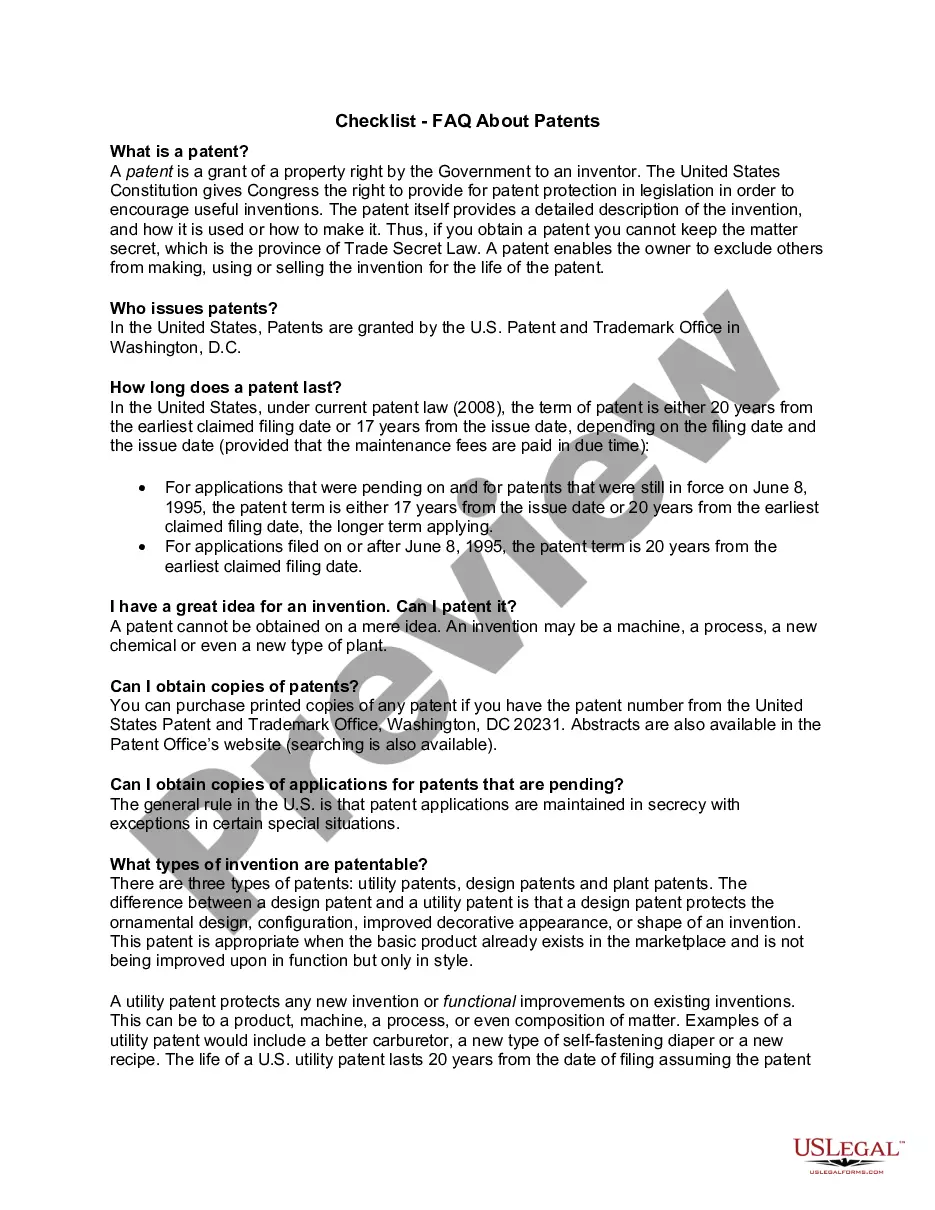
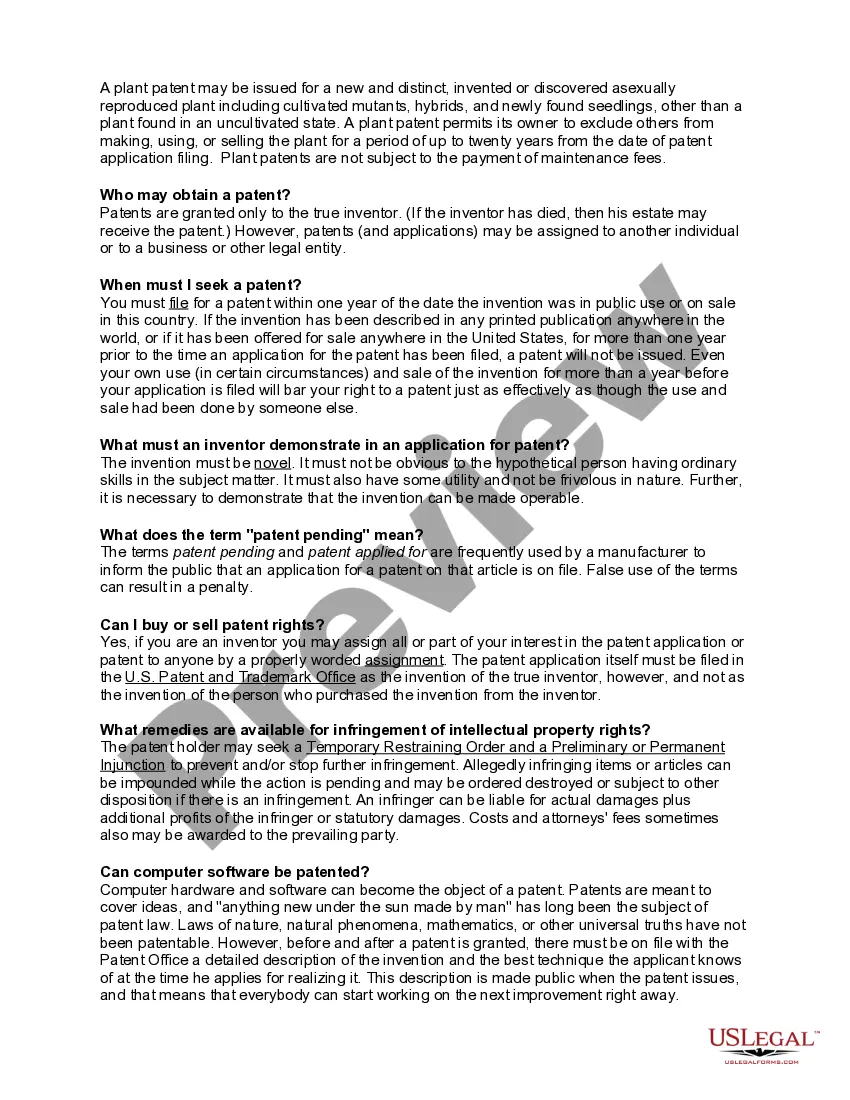
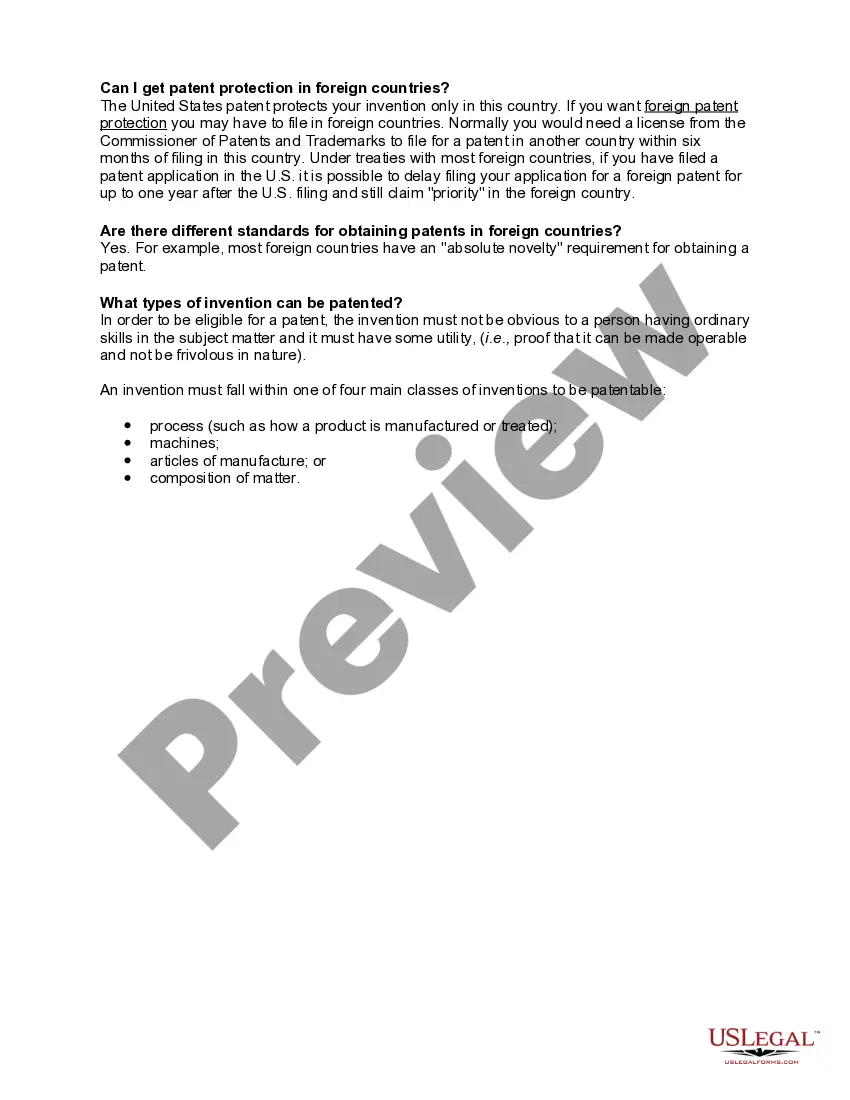
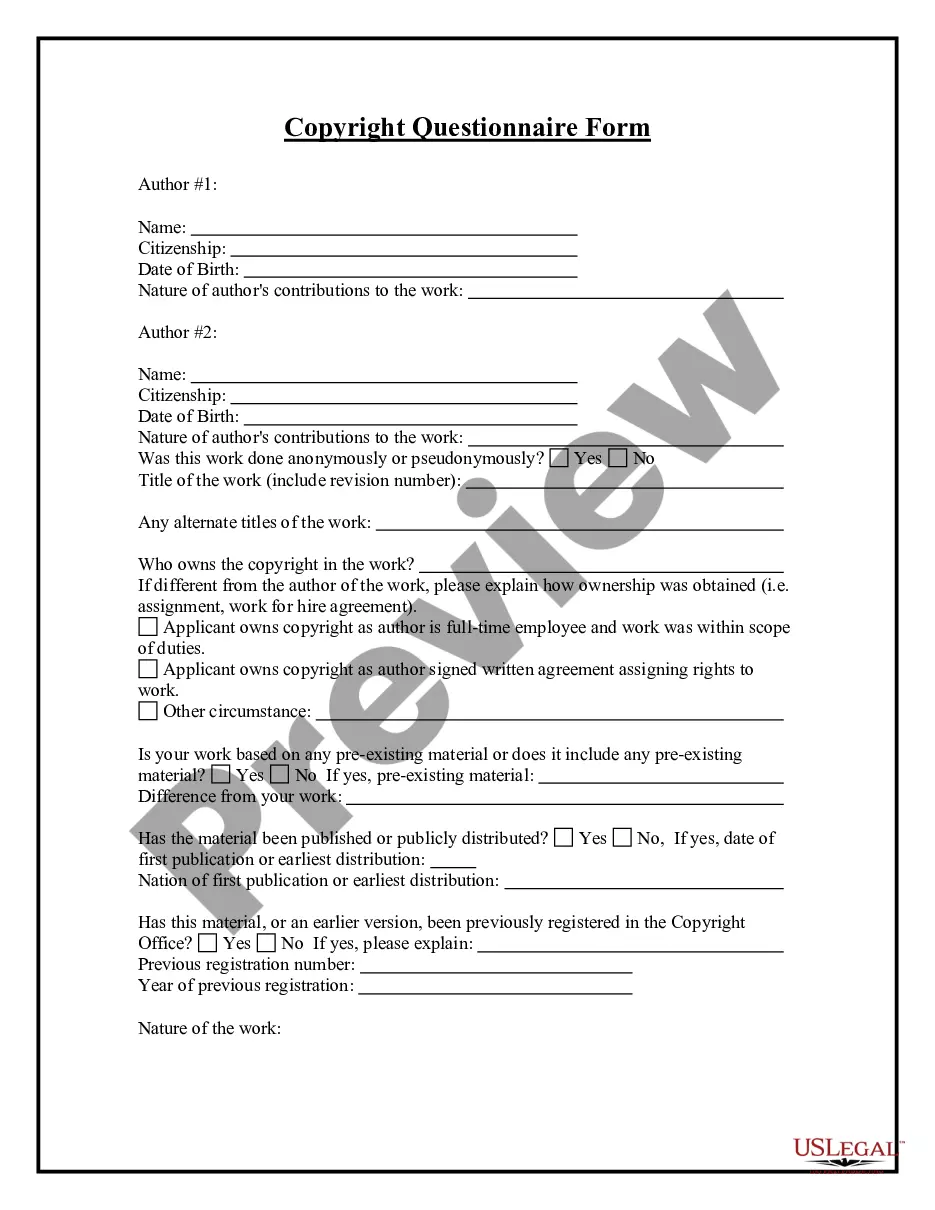
How to fill out Checklist - FAQ About Patents?
- If you're an existing user, log in to your account and check if your subscription is up-to-date. Download your required template directly by clicking the Download button.
- For new users, begin by reviewing the form's Preview mode and description to ensure it aligns with your specific requirements about your parents and complies with local laws.
- If you don't find the right template, utilize the Search option at the top of the page to browse through various options.
- Select the desired document by clicking the Buy Now button and choose a subscription plan that suits your needs. You'll need to create an account for complete access.
- Complete your purchase by entering your payment information, whether through credit card or PayPal.
- Download the form to your device, ensuring you can access it anytime from your profile under My Forms.
US Legal Forms provides a robust collection of over 85,000 editable legal forms, allowing users to find the right documents quickly. With premium expert assistance available, you can ensure that your documents are not only filled out accurately but are also legally sound.
Don't leave your legal documents to chance. Start with US Legal Forms today and simplify the process of protecting your interests concerning matters about your parents!
Form popularity
FAQ
Grieving toxic parents can involve processing feelings of loss and anger. Accept that it's okay to feel hurt while also recognizing the need to let go of unhealthy attachments. Journaling your thoughts or talking to a therapist can aid in expressing these feelings constructively. Celebrate the lessons learned, and focus on nurturing yourself as you heal.
If you have a bad relationship with your parents, start by assessing what specific issues need resolution. Open communication can bridge the gap, but it may also reveal that setting distance is necessary for your growth. Focus on building a support system that empowers you to heal and find balance. Engaging with resources like US Legal Forms can help you navigate your legal rights if needed.
When facing toxic parents, it's vital to establish clear boundaries for your well-being. Consider engaging in open and honest dialogues about your experiences, while knowing you may need to limit contact. Reflect on the impact of their behavior and seek support from trusted friends or professionals. This approach can provide clarity and healing.
To honor a difficult parent, start by embracing compassion for their struggles while maintaining your boundaries. Acknowledge their challenges and how they influenced your life. This understanding can assist you in forging a healthier relationship, even if it's not perfect. Always prioritize your emotional safety first.
When dealing with toxic parents, honor them by learning valuable lessons from your experiences. Reflect on how to grow from these challenges, and communicate your feelings honestly but respectfully. It may help to express gratitude for the positive aspects of your upbringing, while still addressing harmful behaviors. Seeking guidance can also aid in navigating tough conversations.
Honoring your parents involves recognizing their role in your life while also setting boundaries. It's essential to prioritize your mental health, so focus on practicing self-care. You can show respect by acknowledging their past contributions, even if their behavior is difficult. Remember, it's okay to distance yourself for your well-being.
Struggling to communicate openly with your parents can stem from fear of judgment, misunderstanding, or feeling that they might not relate. Additionally, differing generational perspectives can create disconnects in communication. To bridge this gap, practice being open, and consider utilizing platforms like US Legal Forms for formal channels to address legal matters that can open lines of discussion about sensitive topics concerning your parents.
The hardest age to lose a parent often varies by individual, but many report significant challenges during adolescence and early adulthood. At these stages, young individuals navigate identity formation and independence, making parental support crucial. Remember that seeking support groups or counseling can be beneficial during this tough period, especially when you think about the complexities involved about your parents.
You can learn more about your parents by observing their behavior, listening to their anecdotes, and reflecting on their values and traditions. Encourage them to share their life experiences, as these discussions often lead to significant revelations. Such engagement may illuminate many aspects about your parents that you never realized before.
To learn more about your parents, engage them in conversations about their past experiences, dreams, and challenges. Ask open-ended questions that invite storytelling, as these narratives reveal valuable insights. This process not only enhances your understanding about your parents but also strengthens your bond with them.