About Patents For Life
Description
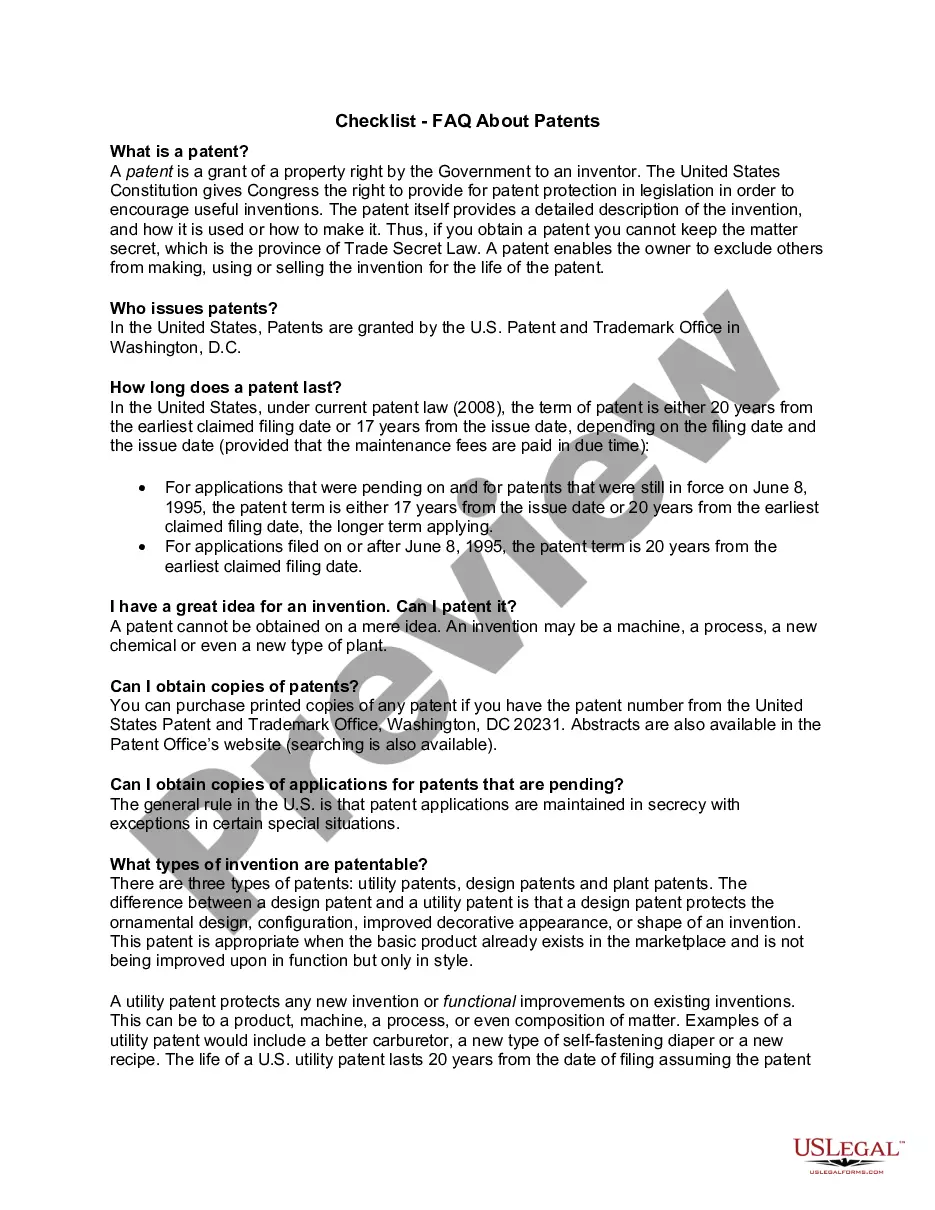
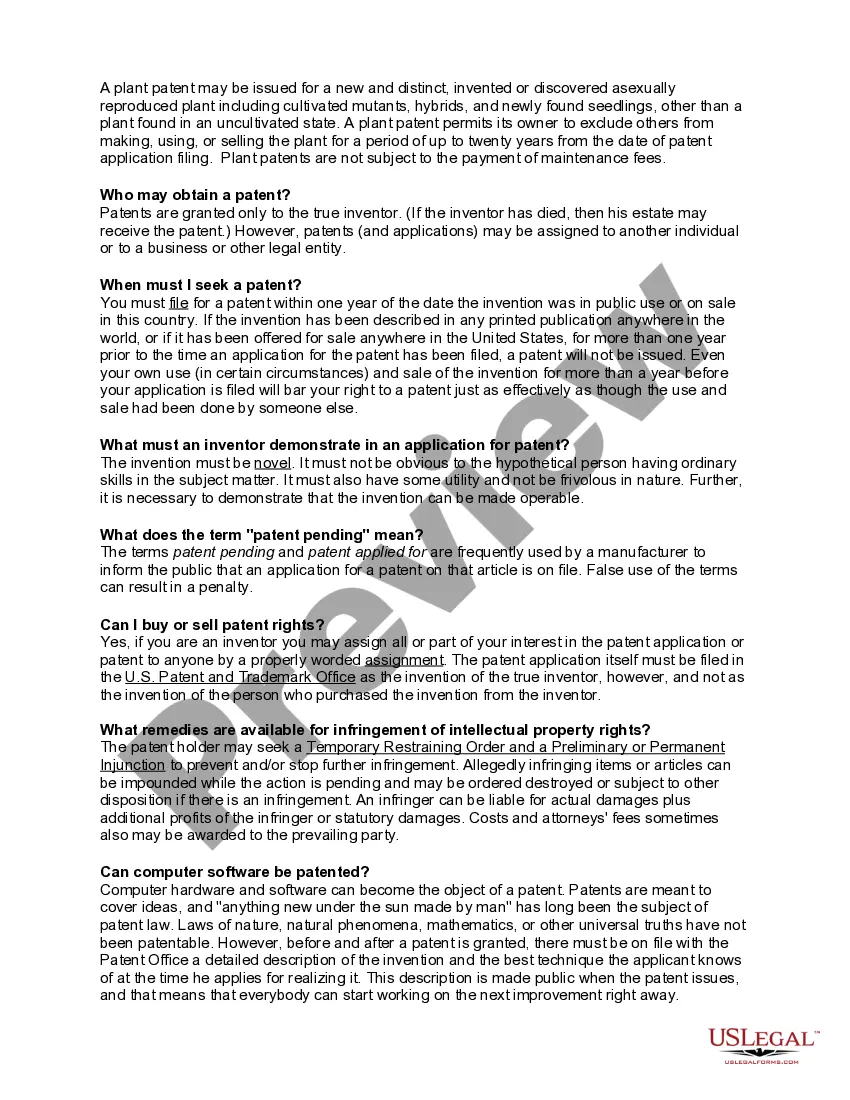
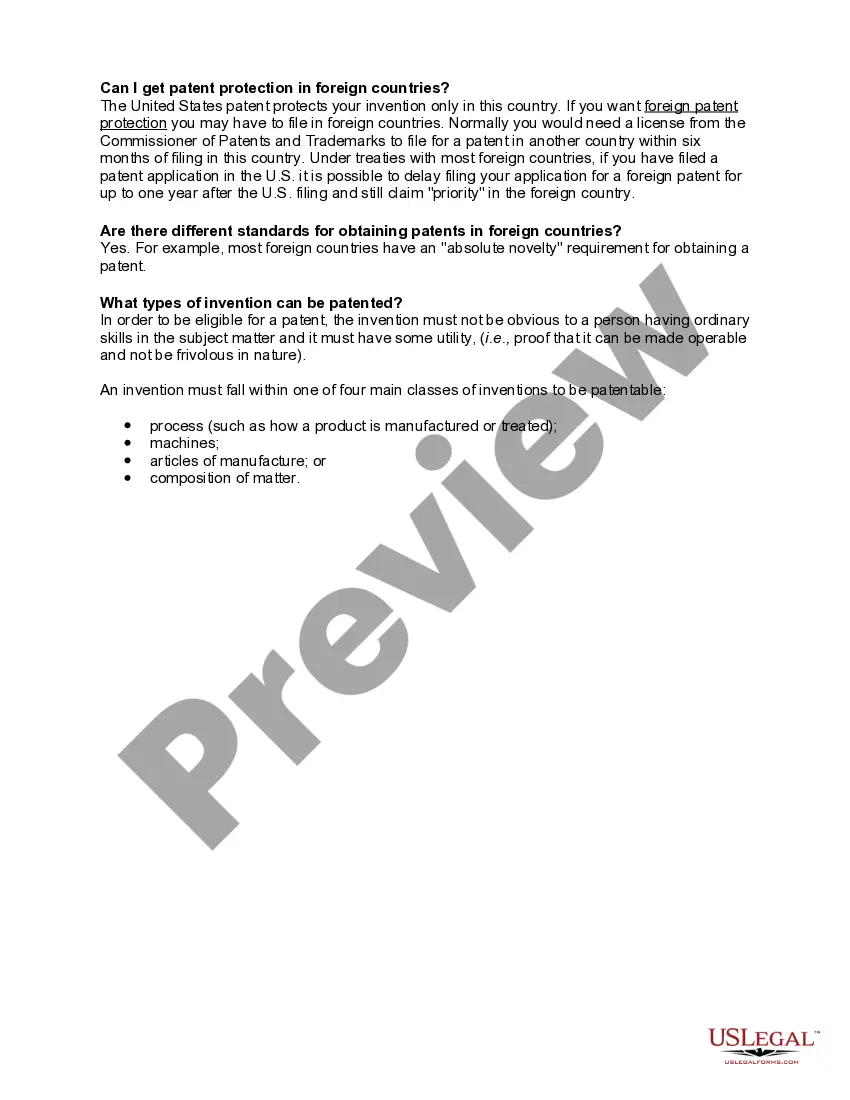
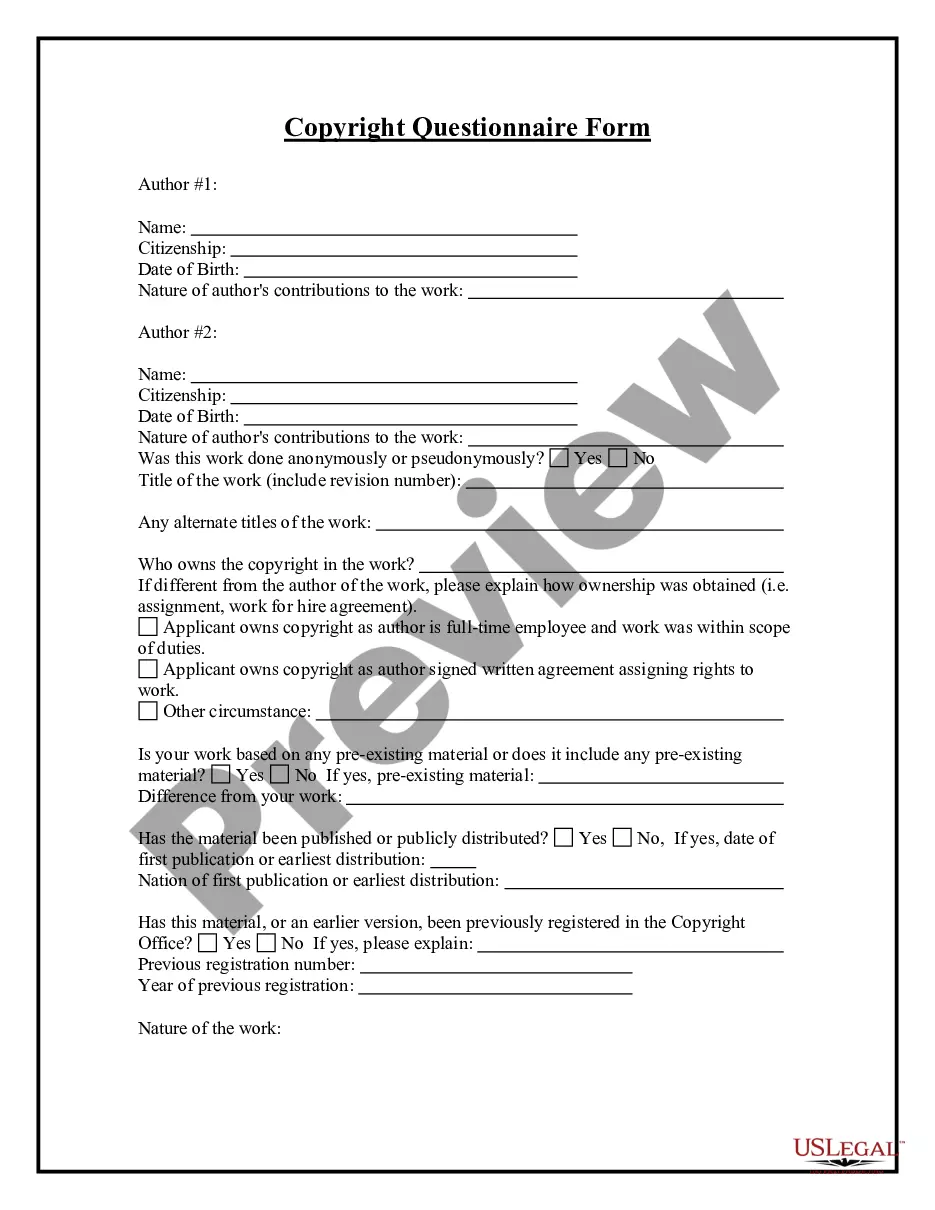
Get your form ready online
Our built-in tools help you complete, sign, share, and store your documents in one place.
Make edits, fill in missing information, and update formatting in US Legal Forms—just like you would in MS Word.
Download a copy, print it, send it by email, or mail it via USPS—whatever works best for your next step.
Sign and collect signatures with our SignNow integration. Send to multiple recipients, set reminders, and more. Go Premium to unlock E-Sign.
If this form requires notarization, complete it online through a secure video call—no need to meet a notary in person or wait for an appointment.
We protect your documents and personal data by following strict security and privacy standards.

Make edits, fill in missing information, and update formatting in US Legal Forms—just like you would in MS Word.

Download a copy, print it, send it by email, or mail it via USPS—whatever works best for your next step.

Sign and collect signatures with our SignNow integration. Send to multiple recipients, set reminders, and more. Go Premium to unlock E-Sign.

If this form requires notarization, complete it online through a secure video call—no need to meet a notary in person or wait for an appointment.

We protect your documents and personal data by following strict security and privacy standards.
Looking for another form?







How to fill out Checklist - FAQ About Patents?
- Access your US Legal Forms account by clicking here. Ensure your subscription is active; if not, renew it as per your plan.
- Preview the specific form related to patents you need. Confirm it meets your requirements and complies with local jurisdiction regulations.
- If the form isn't suitable, use the search feature to find an alternate template that better fits your needs.
- Select your desired subscription plan by clicking on the Buy Now button, and create an account to gain access to the expansive library.
- Complete your payment using your credit card or PayPal to finalize your purchase.
- Download the form to your device for completion and access it anytime through the My Forms section of your account.
After completing these steps, you will have your legal documents ready for use. US Legal Forms empowers you with an extensive collection of over 85,000 legal forms, giving you confidence in the accuracy and legality of your documents.
Start protecting your creations today! Visit US Legal Forms and streamline your legal document needs.
Form popularity
FAQ
While the term 'poor man's patent' refers to documenting your invention informally, it's often less effective than filing a provisional patent application. To safeguard your work, consider sending yourself a detailed description of your invention, but remember that this is not a substitute for formal filings. For optimal protection, explore the options available with uslegalforms, which can assist you in understanding and navigating the patent process effectively. Knowing about patents for life can also enlighten you on securing your ideas effectively.
To secure a patent, your invention must meet five key requirements: it must be novel, non-obvious, useful, adequately described, and it must be a patentable subject matter. These criteria ensure that the innovation is substantial enough to warrant protection, giving inventors exclusive rights. If you contemplate patenting your invention, familiarizing yourself with these requirements is crucial. Continuous learning about patents for life can enhance your understanding of the patent process.
You cannot legally take over an abandoned patent, as the original patent owner still retains rights unless it has fully expired. Once a patent is abandoned, it often becomes available for public use, but it’s important to check the specific circumstances. Understanding the details surrounding such patents is essential, so knowing more about patents for life can guide your strategies better.
In the United States, patents are not issued for a lifetime, as they have a finite duration based on the type; utility patents usually last for 20 years from the filing date. After this period, your invention enters the public domain, allowing others to use it freely. Consequently, staying informed about the laws and regulations about patents for life is vital for inventors seeking long-term solutions.
While the concept of a poor man's patent is still discussed, it is not a legally recognized method for securing patent rights. Today, the best approach is to file a provisional patent application, which provides a formal, albeit temporary, recognition of your invention. This route gives you a year to develop and market your idea while securing your filing date. Learning more about patents for life can help you choose the most effective route for your invention.
A poor man's patent typically involves mailing a description of your invention to yourself, which is intended to establish a filing date. However, in a legal setting, this method often doesn't stand up against formally issued patents. Courts prefer documented and established rights, so relying solely on a poor man's patent may expose you to risks. It's crucial to explore detailed information about patents for life to protect your inventions properly.
A poor man's trademark is an informal method of claiming rights to a mark by documenting its use. However, in court, this form may struggle to provide strong evidence of ownership compared to a registered trademark. For reliable protection of your brand, it is advisable to consider formal registration, which can offer comprehensive legal benefits. It is essential to understand the intricacies about patents for life to ensure you get the best protection for your intellectual property.
To file a poor man's patent, start by documenting your invention thoroughly. This includes writing a detailed description and including sketches or drawings, if possible. Next, send this documentation to yourself via certified mail. This method helps you establish a date for your invention, which can be useful if you ever need to prove ownership. However, keep in mind that while this approach can offer some protection, it is not a substitute for a formal patent, which provides stronger legal rights. For comprehensive guidance on patents for life, including filing options and procedures, consider using US Legal Forms.
No, a standard patent does not last for 70 years; it typically lasts for 20 years. However, some copyrights can last for 70 years after the creator's death, which is often confused with patents. It is essential to understand the distinctions to protect your inventions properly. With clarity on patents for life, you can ensure you know exactly how long your innovations are safeguarded.
No, patents do not expire after 10 years; they generally remain valid for 20 years. This common misconception may lead to confusion about the protection that patents provide over new inventions. Understanding the correct duration allows inventors to make informed decisions regarding their intellectual property. Stay informed about patents for life to better navigate these timelines.