About Patents For Business
Description
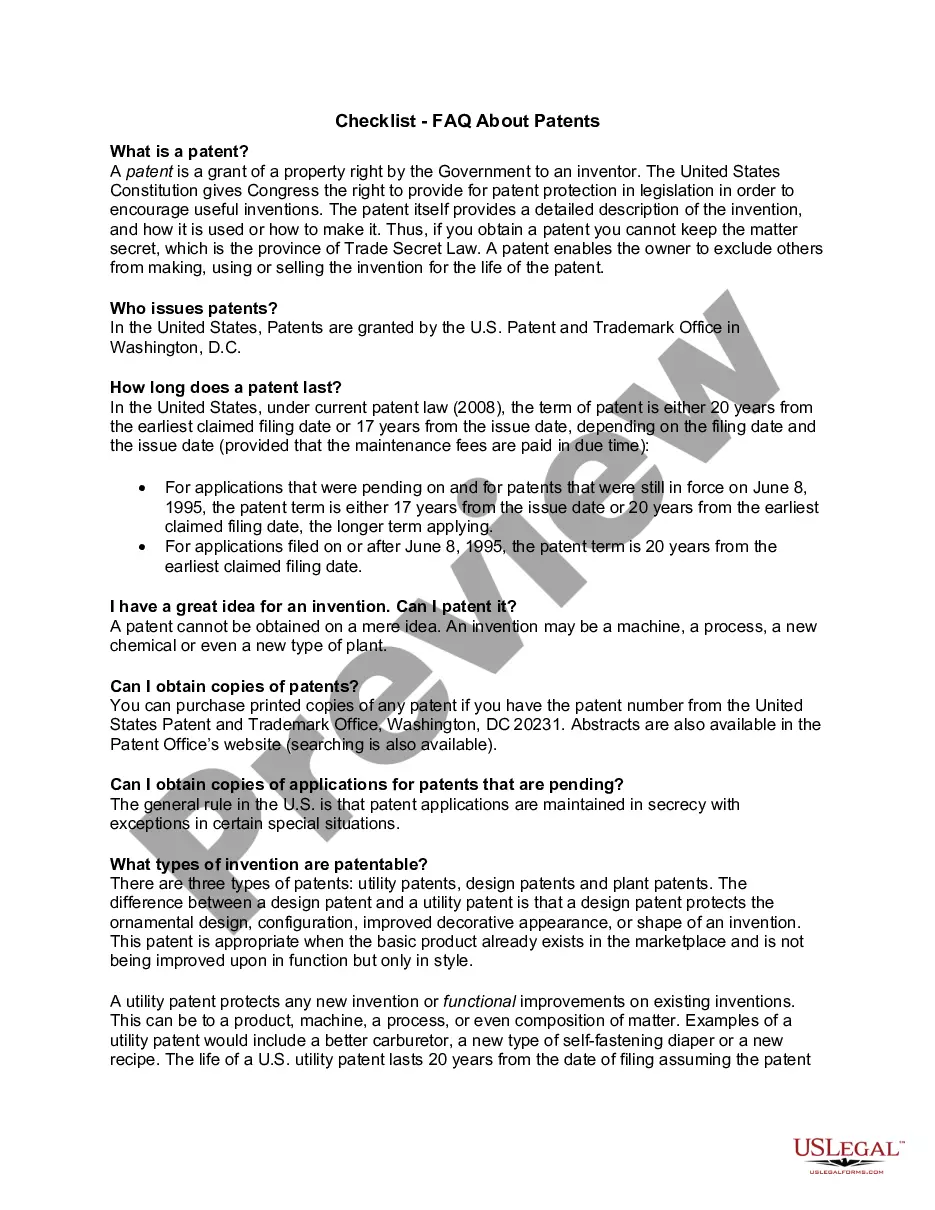
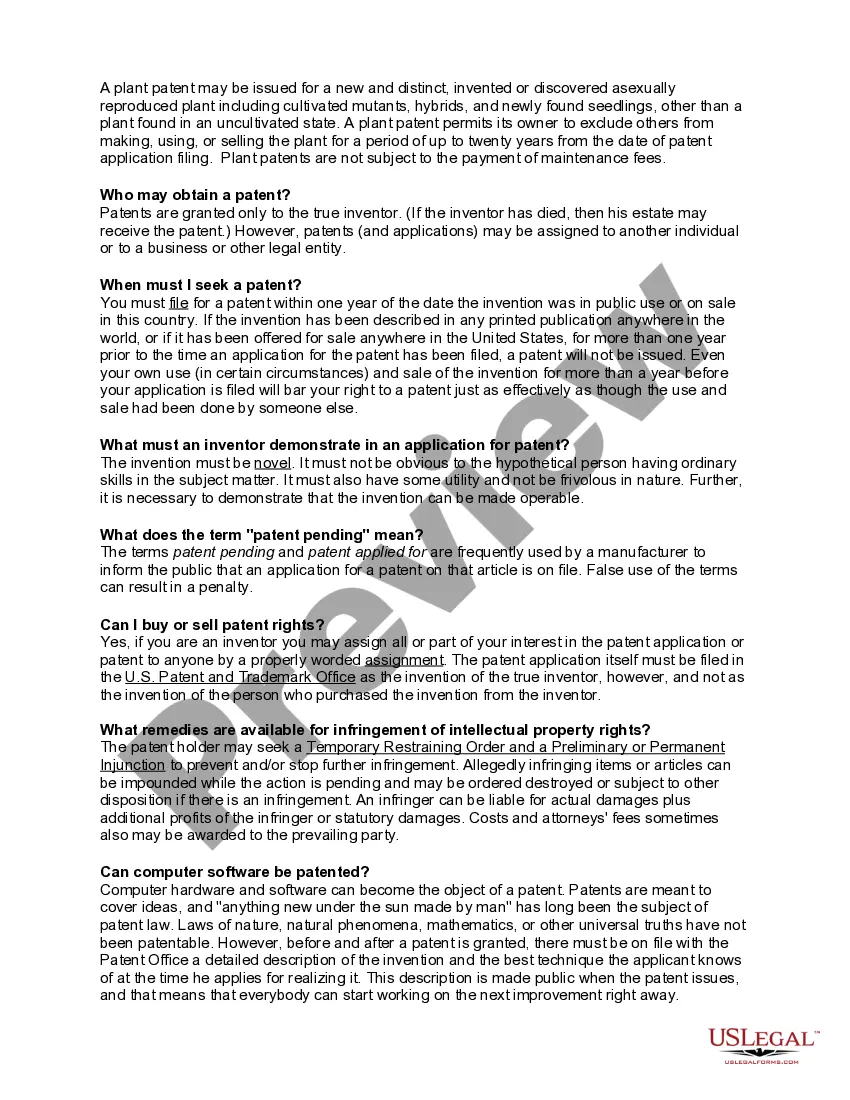
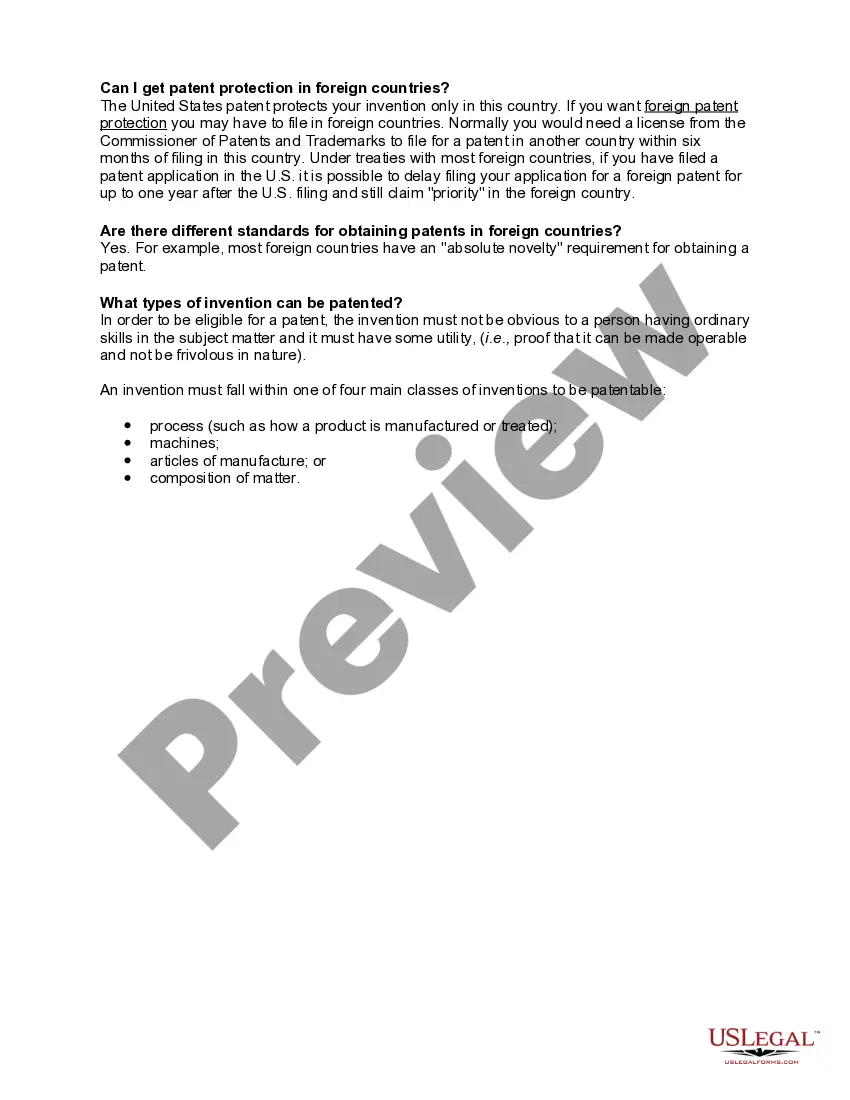
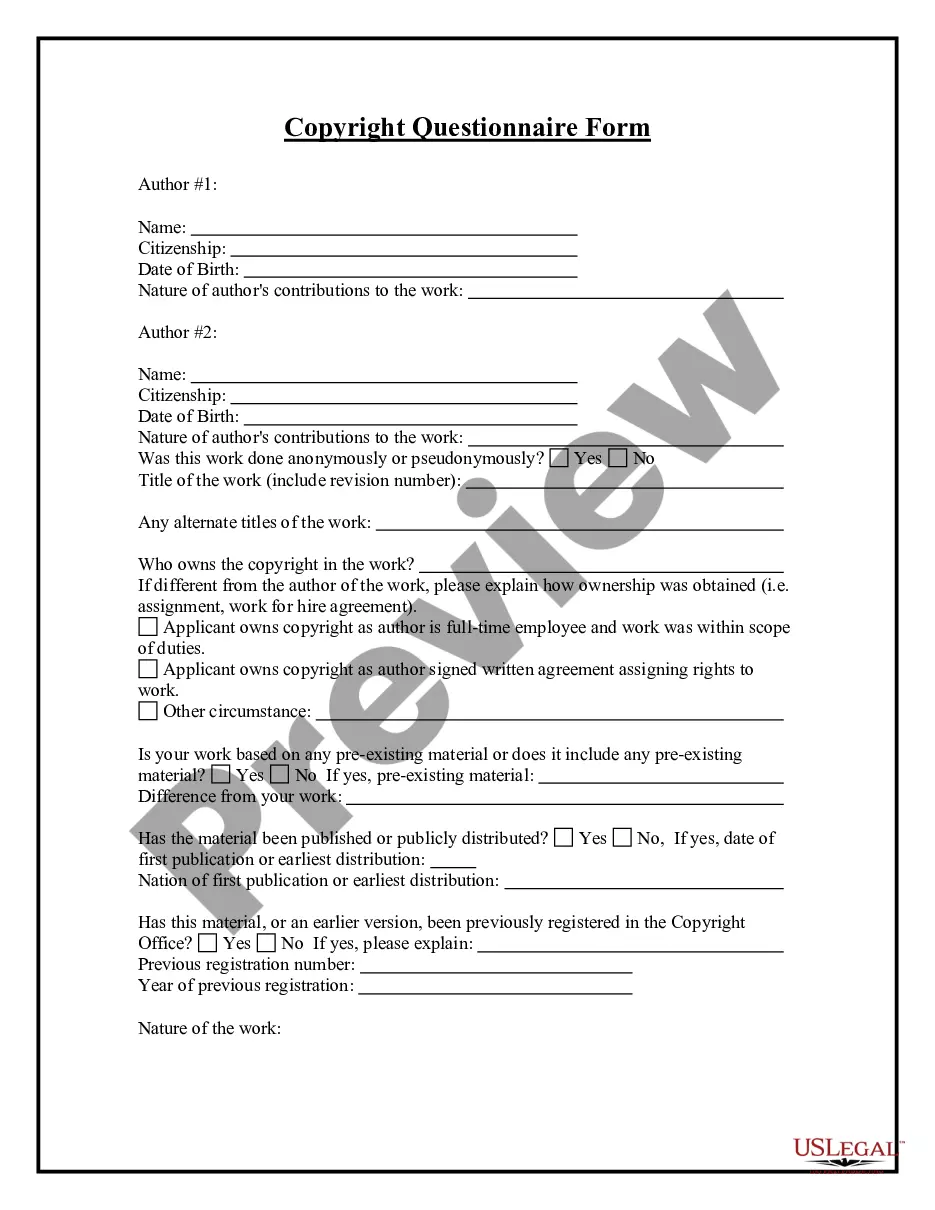
Get your form ready online
Our built-in tools help you complete, sign, share, and store your documents in one place.
Make edits, fill in missing information, and update formatting in US Legal Forms—just like you would in MS Word.
Download a copy, print it, send it by email, or mail it via USPS—whatever works best for your next step.
Sign and collect signatures with our SignNow integration. Send to multiple recipients, set reminders, and more. Go Premium to unlock E-Sign.
If this form requires notarization, complete it online through a secure video call—no need to meet a notary in person or wait for an appointment.
We protect your documents and personal data by following strict security and privacy standards.

Make edits, fill in missing information, and update formatting in US Legal Forms—just like you would in MS Word.

Download a copy, print it, send it by email, or mail it via USPS—whatever works best for your next step.

Sign and collect signatures with our SignNow integration. Send to multiple recipients, set reminders, and more. Go Premium to unlock E-Sign.

If this form requires notarization, complete it online through a secure video call—no need to meet a notary in person or wait for an appointment.

We protect your documents and personal data by following strict security and privacy standards.
Looking for another form?
How to fill out Checklist - FAQ About Patents?
- If you are a returning user, log in to your account at US Legal Forms and download the desired patent template by clicking the Download button, ensuring your subscription is active.
- For first-time users, start by checking the Preview mode and form description to confirm you have selected the right patent document that suits your needs and complies with local laws.
- If you require a different document, utilize the Search tab to find other templates that may better meet your requirements.
- Once you've identified the correct form, click the Buy Now button and select your preferred subscription plan, registering an account to gain access to the complete library.
- Proceed to checkout by entering your credit card details or opting for PayPal to finalize your subscription purchase.
- Finally, download the completed form and save it on your device. You can also access it anytime through the My Forms menu in your profile.
In conclusion, US Legal Forms makes acquiring essential patent documents user-friendly and efficient, with a vast library and expert support to guide you. Protect your business innovations today!
Start your journey by visiting US Legal Forms and explore the resources available for your patent needs.
Form popularity
FAQ
To secure a patent, an invention must fulfill five key requirements: it must be novel, non-obvious, useful, adequately described, and claimed with specificity. These criteria ensure that only truly innovative and useful inventions qualify for patent protection. Understanding these requirements can help businesses navigate the patenting process and leverage the benefits of protecting their intellectual property effectively.
A patent for a business is a legal right that grants the owner exclusive control over an invention or innovation for a set period. This prevents others from making, using, or selling the patented invention without permission, allowing businesses to capitalize on their unique ideas. In essence, a patent acts as a shield, fostering an environment where a company can thrive and develop its innovations.
Yes, patents significantly add value to a company by enhancing its market position and increasing overall company worth. Investors often view patents as tangible assets that can lead to substantial future revenues. Furthermore, a robust patent portfolio can serve as an attractive point for acquisitions, mergers, or partnerships, making it a vital strategy for business growth.
Patents help secure the processes, methods, or systems a business uses to operate, which can be critical for maintaining a competitive edge. By patenting these operational innovations, a business can protect its unique ways of delivering products or services, ensuring that competitors cannot easily replicate their success. This protection not only safeguards business strategies but also positions the company as a leader in its industry.
The importance of patents extends beyond mere protection; they foster innovation by encouraging inventors to share their ideas. When businesses secure patents, it creates a culture of creativity and investment in research and development. Ultimately, patents drive economic growth by allowing businesses to confidently invest in new products, knowing their inventions are protected.
Patents offer small businesses a powerful tool to protect their innovations, setting them apart from larger competitors. By securing patent rights, small businesses can attract investors who see the potential for unique products or services. Additionally, patents can create revenue streams through licensing agreements, providing small businesses with financial support to further develop their operations.
Patents are crucial for a business because they protect innovations and prevent others from using or copying unique ideas. This safeguard can enhance a company's reputation and establish its authority in the marketplace. In the competitive world of business, having a patent can also deter potential competitors, allowing companies to focus more on growth and innovation.
Yes, you can file a patent yourself, a process known as being a pro se applicant. However, it is important to understand patent laws and procedures to increase your chances of success. Utilizing the USLegalForms platform can guide you through filing requirements and provide resources to make the process smoother. Overall, being knowledgeable about patents for business enhances your ability to protect your innovative ideas.
Filling out a patent requires gathering essential information about your invention, including its title, description, claims, and any drawings. You must describe how the invention works and its intended use, ensuring clarity and precision. Using the USLegalForms platform can simplify this process, providing templates and guidance to help you navigate through the application efficiently. Knowing how to fill out a patent is crucial in safeguarding your business interests.
Writing a business patent involves documenting your invention clearly and concisely. Begin by detailing what your invention is, how it works, and its unique features that set it apart from existing patents. It's essential to include drawings or diagrams to explain your invention visually. Overall, understanding how to write about patents for business can help you protect your intellectual property effectively.