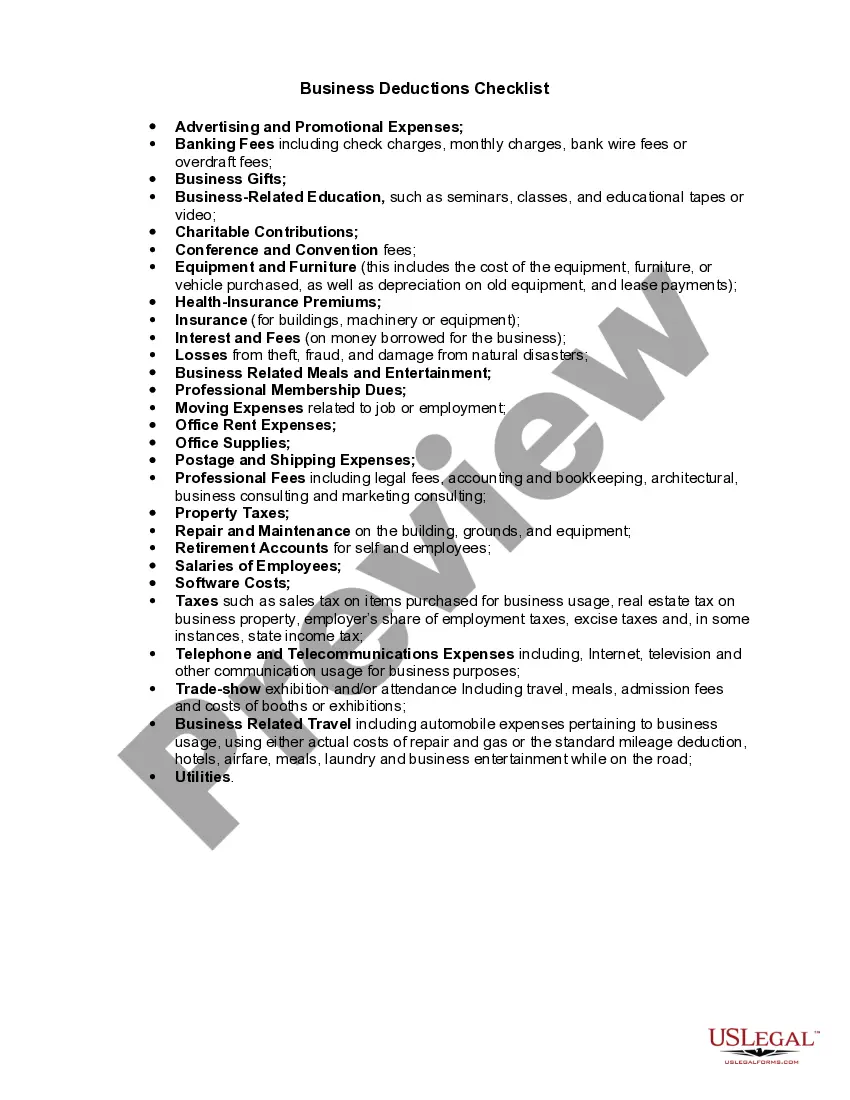
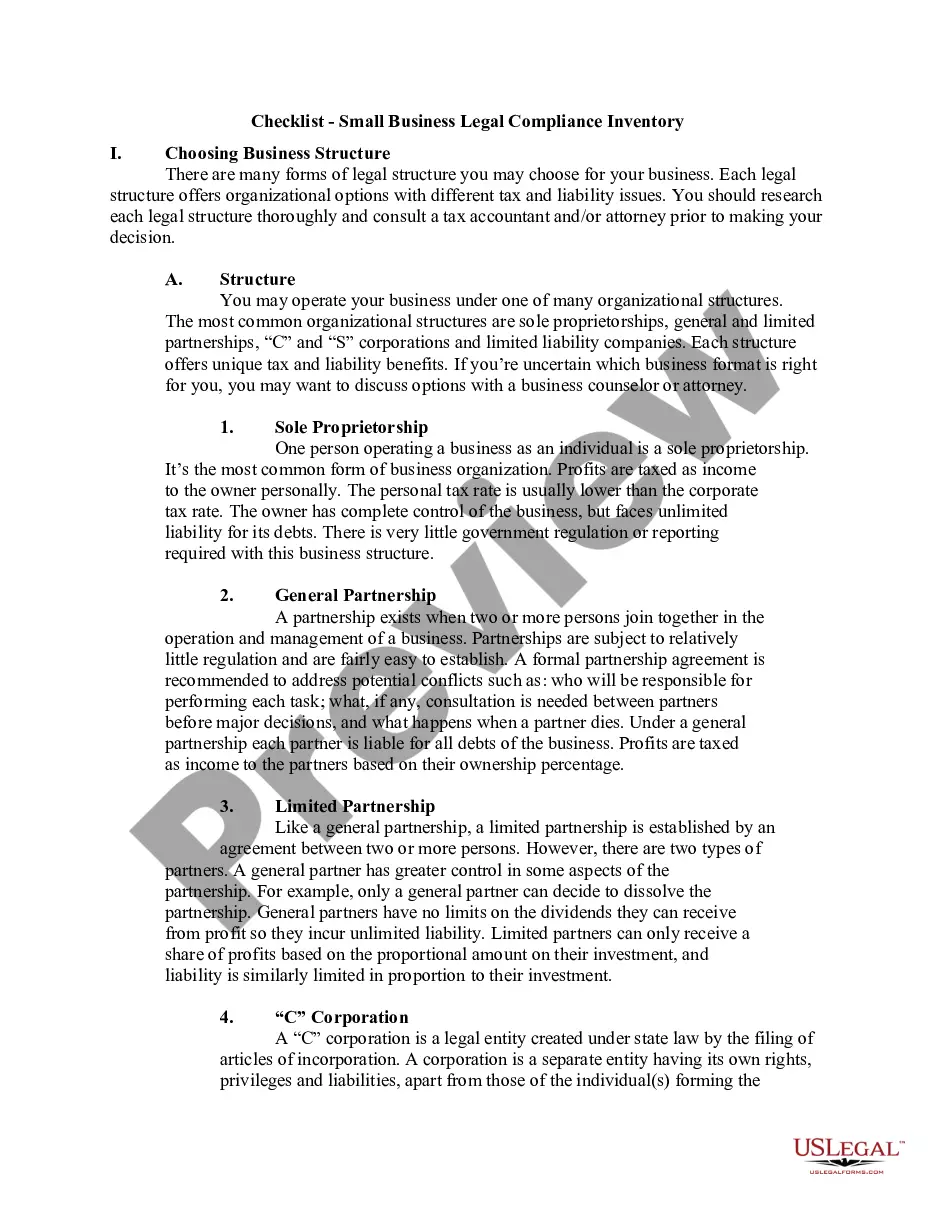
Checklist In Starting A Business
Description
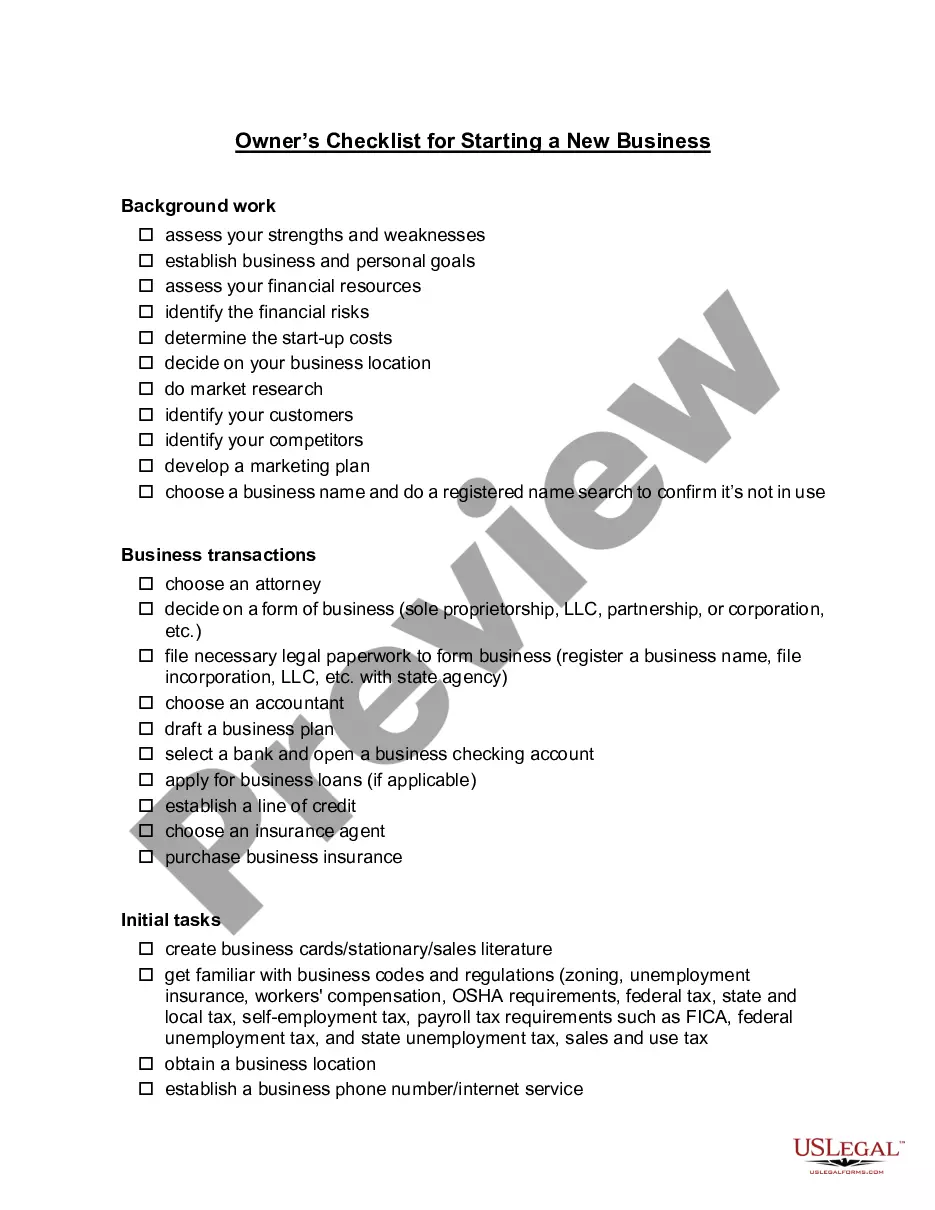
Get your form ready online
Our built-in tools help you complete, sign, share, and store your documents in one place.
Make edits, fill in missing information, and update formatting in US Legal Forms—just like you would in MS Word.
Download a copy, print it, send it by email, or mail it via USPS—whatever works best for your next step.
Sign and collect signatures with our SignNow integration. Send to multiple recipients, set reminders, and more. Go Premium to unlock E-Sign.
If this form requires notarization, complete it online through a secure video call—no need to meet a notary in person or wait for an appointment.
We protect your documents and personal data by following strict security and privacy standards.

Make edits, fill in missing information, and update formatting in US Legal Forms—just like you would in MS Word.

Download a copy, print it, send it by email, or mail it via USPS—whatever works best for your next step.

Sign and collect signatures with our SignNow integration. Send to multiple recipients, set reminders, and more. Go Premium to unlock E-Sign.

If this form requires notarization, complete it online through a secure video call—no need to meet a notary in person or wait for an appointment.

We protect your documents and personal data by following strict security and privacy standards.
Looking for another form?









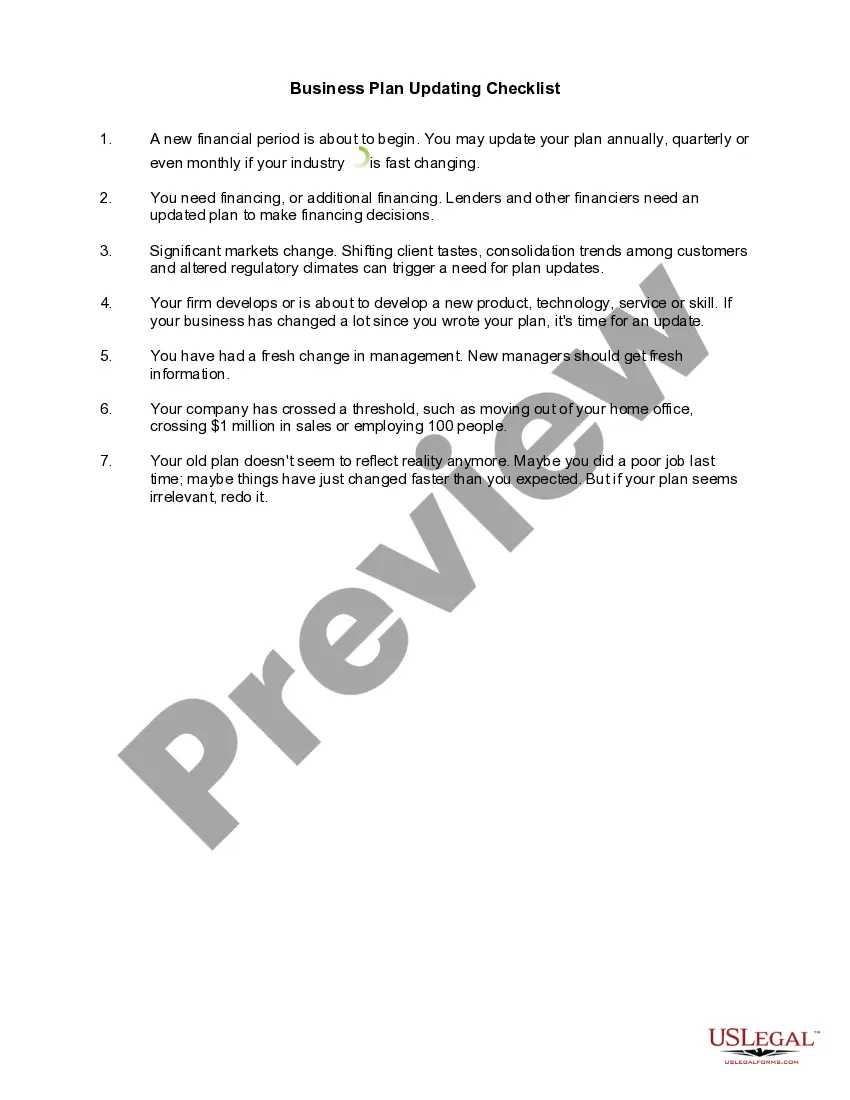
How to fill out Business Deductions Checklist?
The Checklist For Launching A Business you see on this page is a reusable legal framework crafted by experienced attorneys in alignment with federal and local regulations.
For over 25 years, US Legal Forms has supplied individuals, businesses, and legal practitioners with over 85,000 validated, state-specific documents for any commercial and personal situation. It’s the quickest, most direct, and most reliable method to acquire the documents you require, as the service assures the utmost level of data protection and anti-malware safety.
Select the format you desire for your Checklist For Launching A Business (PDF, DOCX, RTF) and save the file to your device.
- Search for the document you require and examine it.
- Browse through the sample you requested and preview it or read the form description to confirm it meets your requirements. If it doesn’t, utilize the search bar to locate the appropriate one. Click Buy Now once you’ve identified the template you need.
- Register and sign in.
- Choose the pricing plan that best fits your needs and create an account. Use PayPal or a credit card to make a swift payment. If you already possess an account, Log In and verify your subscription to proceed.
- Acquire the editable document.
Form popularity
FAQ
A deed of trust is a legal agreement that's similar to a mortgage, which is used in real estate transactions. Whereas a mortgage only involves the lender and a borrower, a deed of trust adds a neutral third party that holds rights to the real estate until the loan is paid or the borrower defaults.
Through a deed of release of mortgage, also called a release of deed of trust, the lender agrees to remove the deed of trust, which is the document containing all of the mortgage's terms and conditions that is filed at the beginning of the mortgage process.
A deed of trust is a document used in real estate transactions. It represents an agreement between the borrower and a lender to have the property held in trust by a neutral and independent third party until the loan is paid off.
The main difference between a deed and a deed of trust is that a deed is a transfer of ownership, while a deed of trust is a security interest. A deed of trust is used to secure a loan, while a deed is used to transfer ownership of a property.
The preferred written instrument to convey a legal interest in land is a deed. There are two basic categories of deed used in Vermont to convey fee title and/or easements in land: the warranty deed; and the quit-claim deed.
An unreleased Deed of Trust means that the records office has not released the deed because they were not notified of the payoff of the debt. It does not mean the loan was not paid, but it will officially show a lien against the property until the release.
(a) Deeds and other conveyances of lands, or of an estate or interest therein, shall be signed by the party granting the same and acknowledged by the grantor before a notary public and recorded at length in the clerk's office of the town in which such lands lie.
Attorney Involvement If a legal opinion of title is provided, it is executed by a Vermont Attorney. Vermont does not have an unauthorized practice of law statute, however there is Vermont Case Law indicating that deed preparation constitutes the practice of law.