Workplace For Employee Engagement
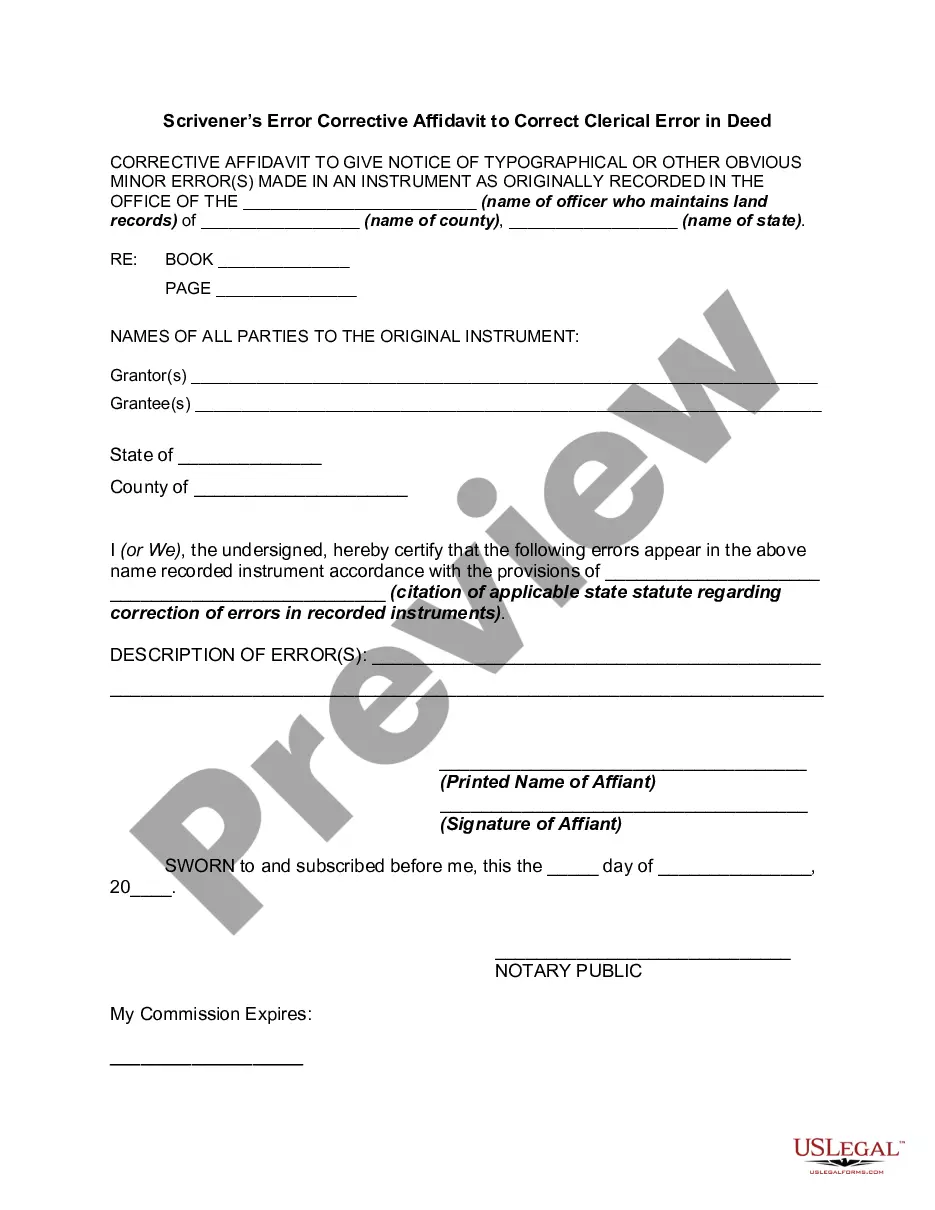
Description
Get your form ready online
Our built-in tools help you complete, sign, share, and store your documents in one place.
Make edits, fill in missing information, and update formatting in US Legal Forms—just like you would in MS Word.
Download a copy, print it, send it by email, or mail it via USPS—whatever works best for your next step.
Sign and collect signatures with our SignNow integration. Send to multiple recipients, set reminders, and more. Go Premium to unlock E-Sign.
If this form requires notarization, complete it online through a secure video call—no need to meet a notary in person or wait for an appointment.
We protect your documents and personal data by following strict security and privacy standards.

Make edits, fill in missing information, and update formatting in US Legal Forms—just like you would in MS Word.

Download a copy, print it, send it by email, or mail it via USPS—whatever works best for your next step.

Sign and collect signatures with our SignNow integration. Send to multiple recipients, set reminders, and more. Go Premium to unlock E-Sign.

If this form requires notarization, complete it online through a secure video call—no need to meet a notary in person or wait for an appointment.

We protect your documents and personal data by following strict security and privacy standards.
Looking for another form?








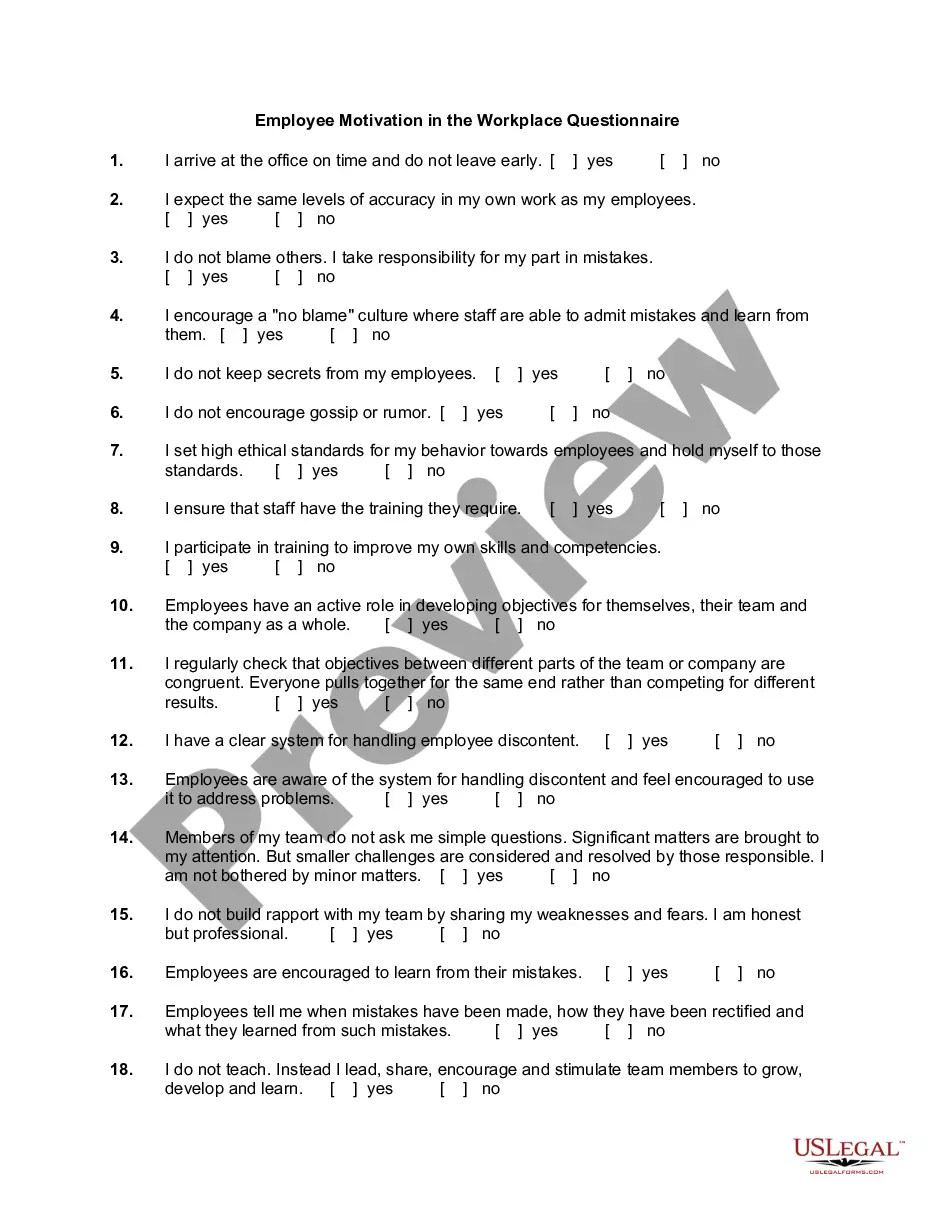
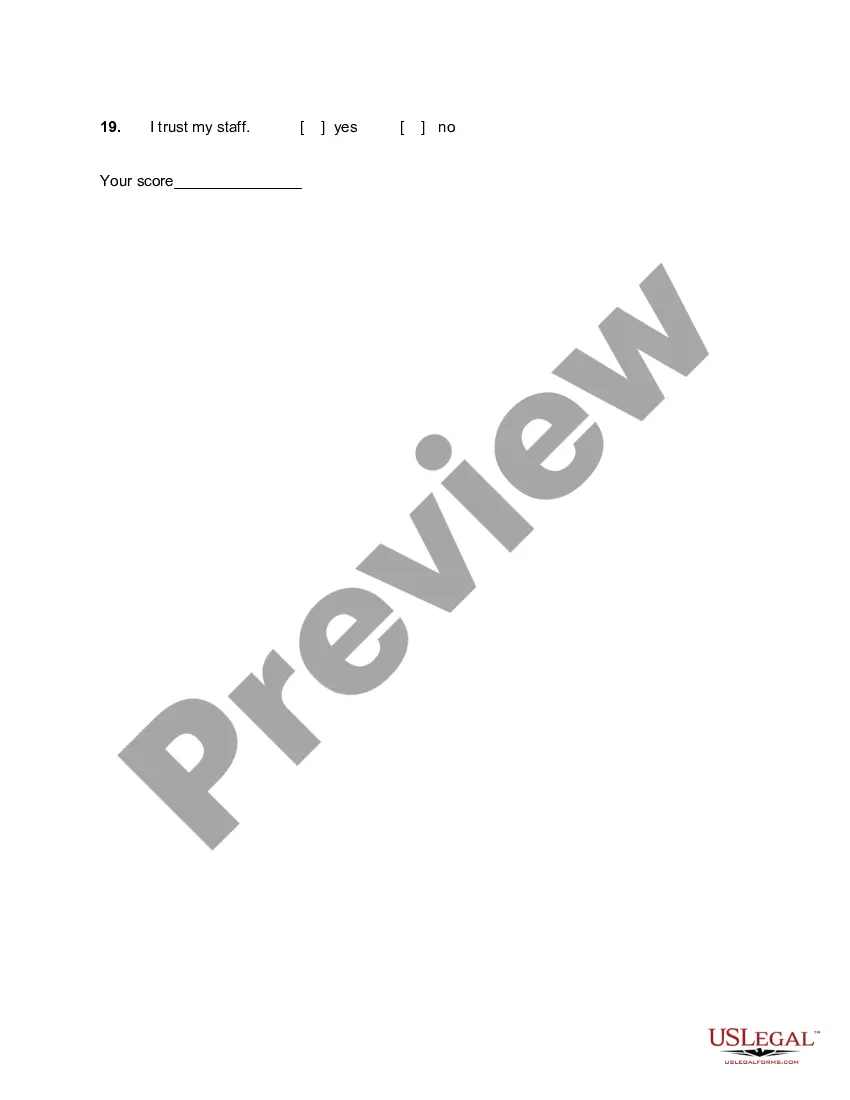
How to fill out Employee Motivation In The Workplace Questionnaire?
Finding a reliable resource for accessing the latest and pertinent legal templates is a major part of navigating bureaucracy. Identifying the correct legal paperwork requires accuracy and diligence, which is why it is essential to obtain samples of Workplace For Employee Engagement solely from credible sources, such as US Legal Forms. An incorrect template will squander your time and stall your situation. With US Legal Forms, you have little to be concerned about. You can view and verify all the specifics regarding the document’s applicability and relevance for your case and in your state or locality.
Follow these steps to finalize your Workplace For Employee Engagement.
Eliminate the hassle associated with your legal paperwork. Explore the comprehensive library at US Legal Forms to discover legal samples, assess their relevance to your needs, and download them instantly.
- Use the catalog browsing or search option to find your template.
- Review the form’s details to ensure it meets your state and regional criteria.
- If available, open the form preview to confirm the document is what you need.
- If the Workplace For Employee Engagement does not meet your needs, return to the search and look for the appropriate template.
- Once you are certain of the form’s relevance, download it.
- If you are a registered user, click Log in to verify and access your chosen forms in My documents.
- If you do not have an account yet, click Buy now to purchase the form.
- Choose the pricing plan that best fits your requirements.
- Go through the registration process to finalize your purchase.
- Complete your purchase by selecting a payment method (credit card or PayPal).
- Choose the file format for downloading Workplace For Employee Engagement.
- Once you have the form on your device, you can edit it with the editor or print it and fill it out manually.
Form popularity
FAQ
The four pillars of employee engagement serve as the foundation for a thriving workplace for employee engagement. First, 'Communication' promotes transparency and trust between management and staff. Second, 'Recognition' acknowledges employee contributions, making them feel valued. Third, 'Development' offers opportunities for growth and skill enhancement. Lastly, 'Work-Life Balance' supports employees in achieving personal and professional fulfillment, enhancing overall engagement.
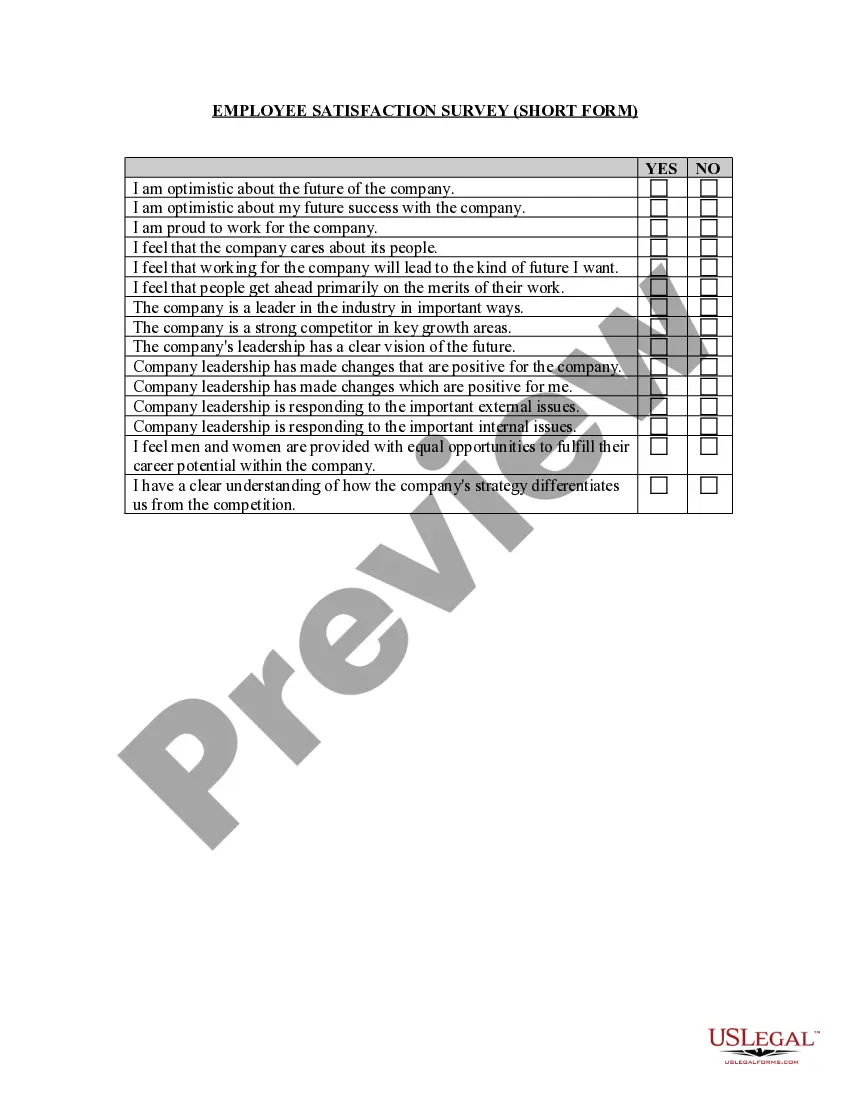
Employee engagement in the workplace for employee engagement refers to the emotional commitment that individuals feel toward their organization. When employees are engaged, they invest their energy and creativity in their work, leading to improved performance. Engagement fosters a positive workplace culture, encouraging collaboration and innovation. Consequently, companies with high engagement levels often see increased productivity and employee retention.
In the workplace for employee engagement, understanding the four types can help enhance productivity and morale. The first type is 'Active Engagement,' where employees are enthusiastic and motivated. The second type is 'Passive Engagement,' where individuals may participate but lack true motivation. The third type is 'Disengagement,' characterized by a lack of commitment. Lastly, 'Apathetic Engagement' describes those who are indifferent to their work, emphasizing the need for strategies that cater to all types.
Gaining employee engagement requires a thoughtful approach that starts with understanding your team. Begin by fostering open communication, ensuring everyone feels heard and valued. Implementing a robust platform for employee engagement, like US Legal Forms, can provide essential tools and resources to facilitate this process. By promoting teamwork and recognizing individual contributions, you enhance the overall workplace culture, leading to higher engagement levels.
The 3 C's of employee engagement are clarity, connection, and commitment. Clarity involves ensuring that employees understand their objectives and the company's goals within the workplace for employee engagement. Connection emphasizes building relationships with colleagues, while commitment represents the dedication employees feel towards their work and the organization.
The three key elements of employee engagement include meaningful work, strong relationships, and employee recognition. When employees find meaning in their tasks, they develop a deeper connection to their workplace for employee engagement. Building strong relationships and recognizing accomplishments further enhance morale and commitment.
The 3 ES of employee engagement are enablement, energy, and enthusiasm. Enablement refers to providing the tools and resources employees need to succeed in a workplace for employee engagement. Energy and enthusiasm reflect a positive attitude towards work, encouraging employees to actively contribute and participate in their roles.
The three pillars of employee engagement are communication, recognition, and trust. Effective communication encourages transparency and collaboration within your workplace for employee engagement. By recognizing achievements, you build motivation, and fostering trust ensures employees feel valued and secure in their roles.
To foster a strong workplace for employee engagement, it's crucial to follow three essential rules: provide clear expectations, offer regular feedback, and create opportunities for development. Clear expectations help employees understand their roles, while feedback allows continuous growth. Importantly, development opportunities empower employees, leading to higher engagement and productivity.
Creating an effective employee engagement plan involves assessing the current engagement levels, identifying key areas of improvement, and setting clear goals. Start by gathering employee feedback to understand their needs and concerns within the workplace for employee engagement. Craft strategies that focus on communication, culture, and recognition, then establish a timeline for implementation and review. Platforms like US Legal Forms can simplify the process by providing templates and resources to help you structure your plan effectively.