Mediation Vs Arbitration Definition Within A Company
Description

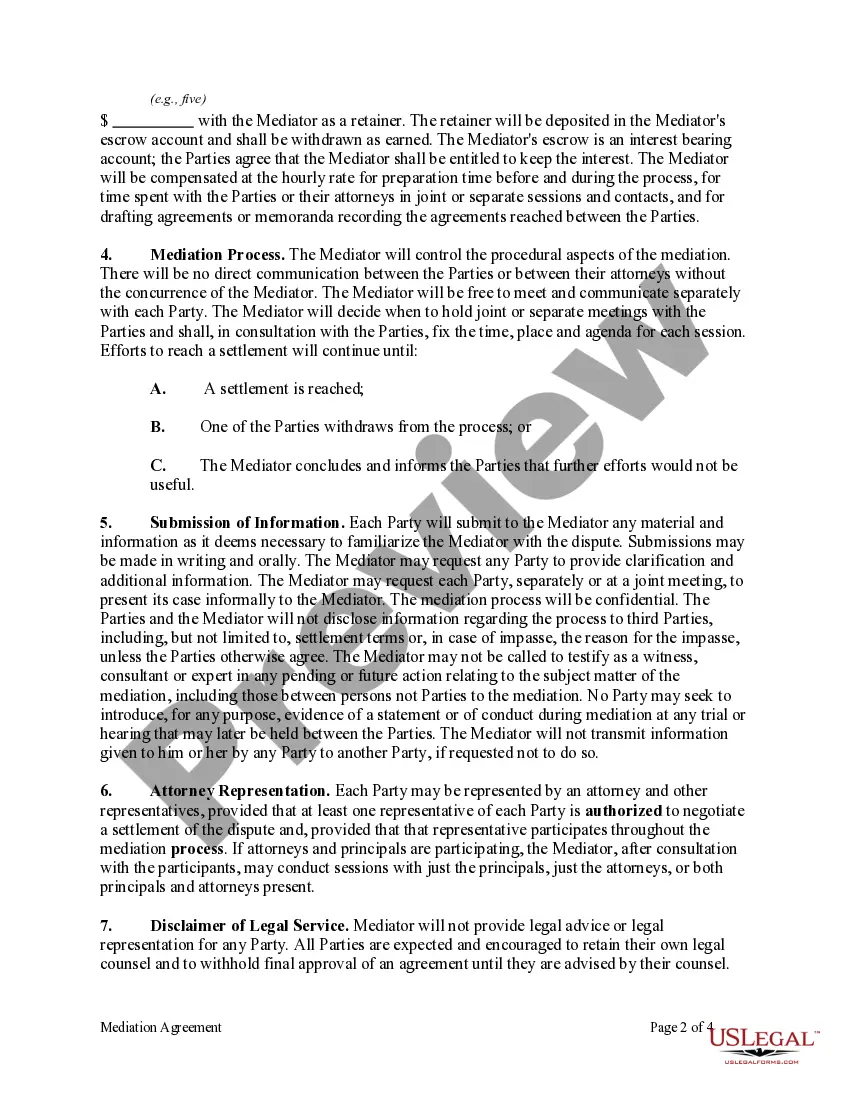
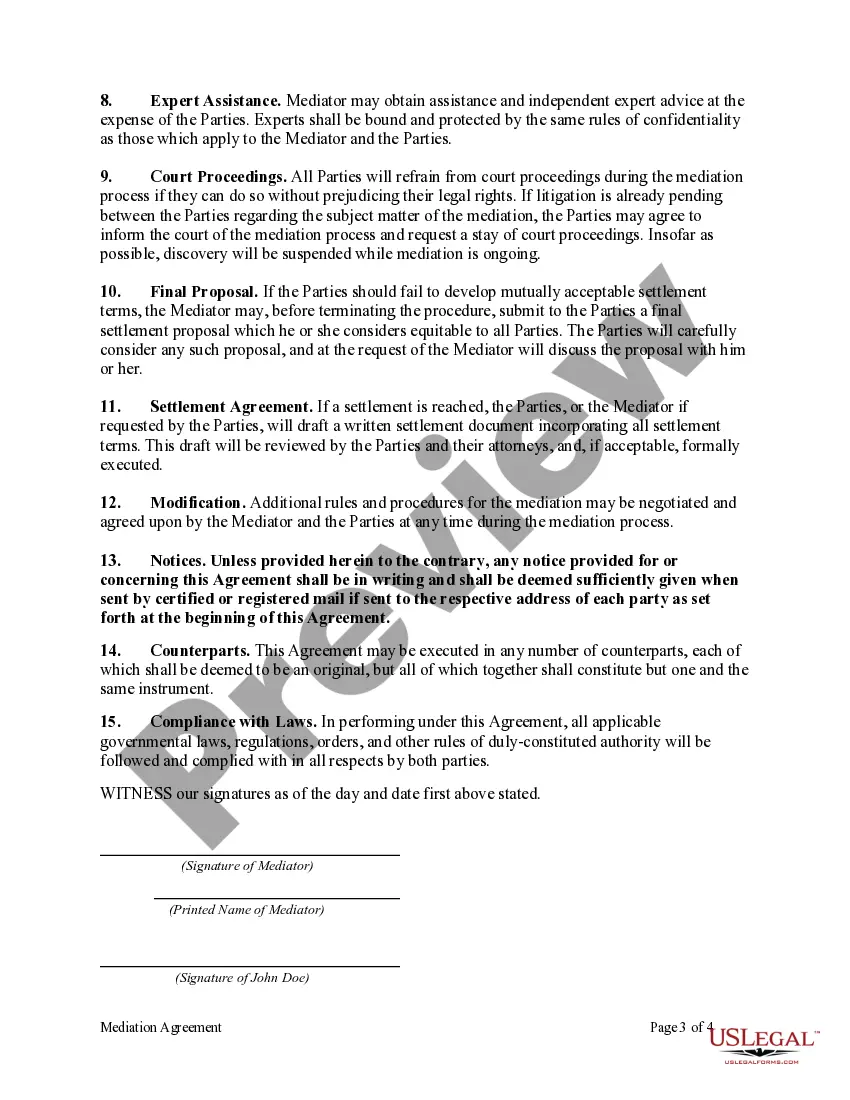


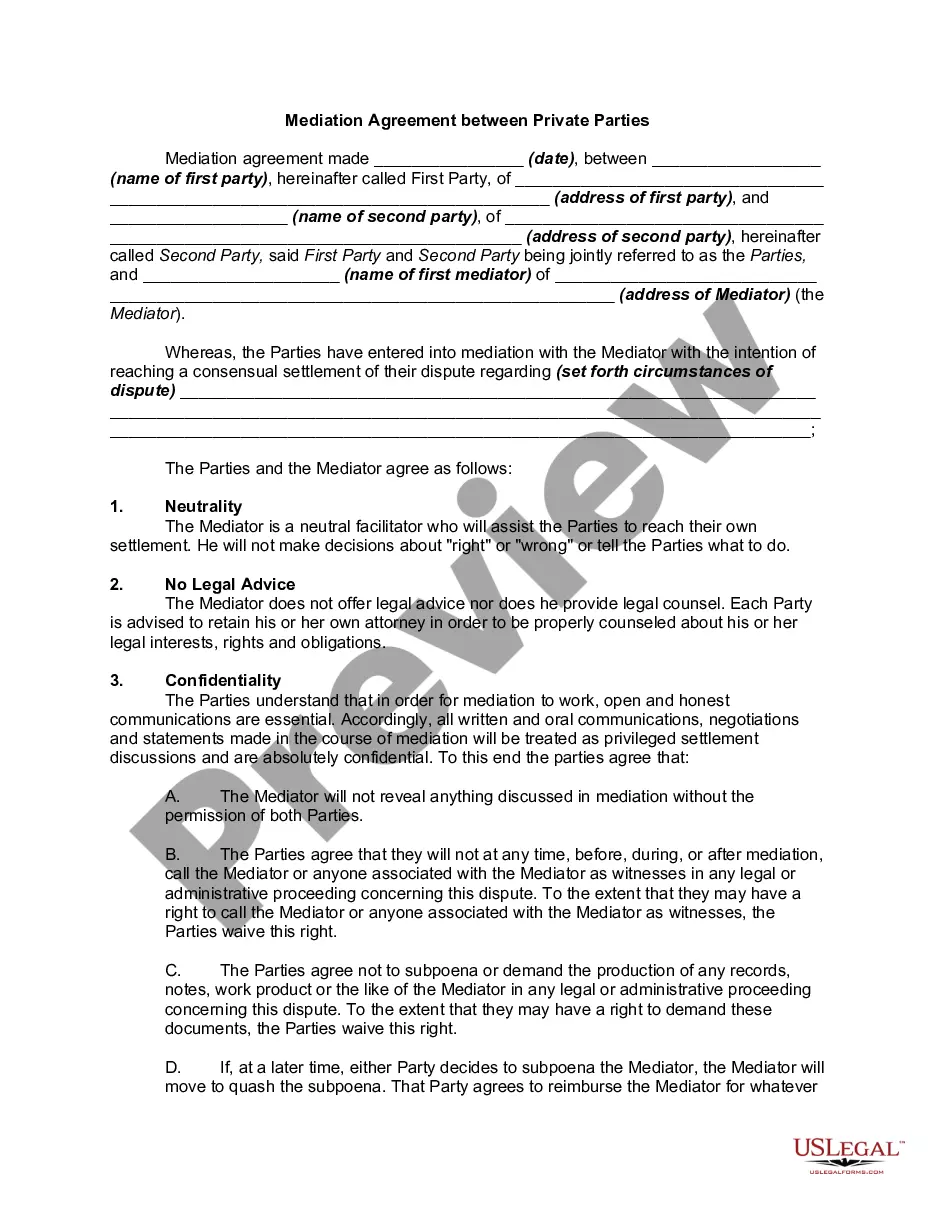
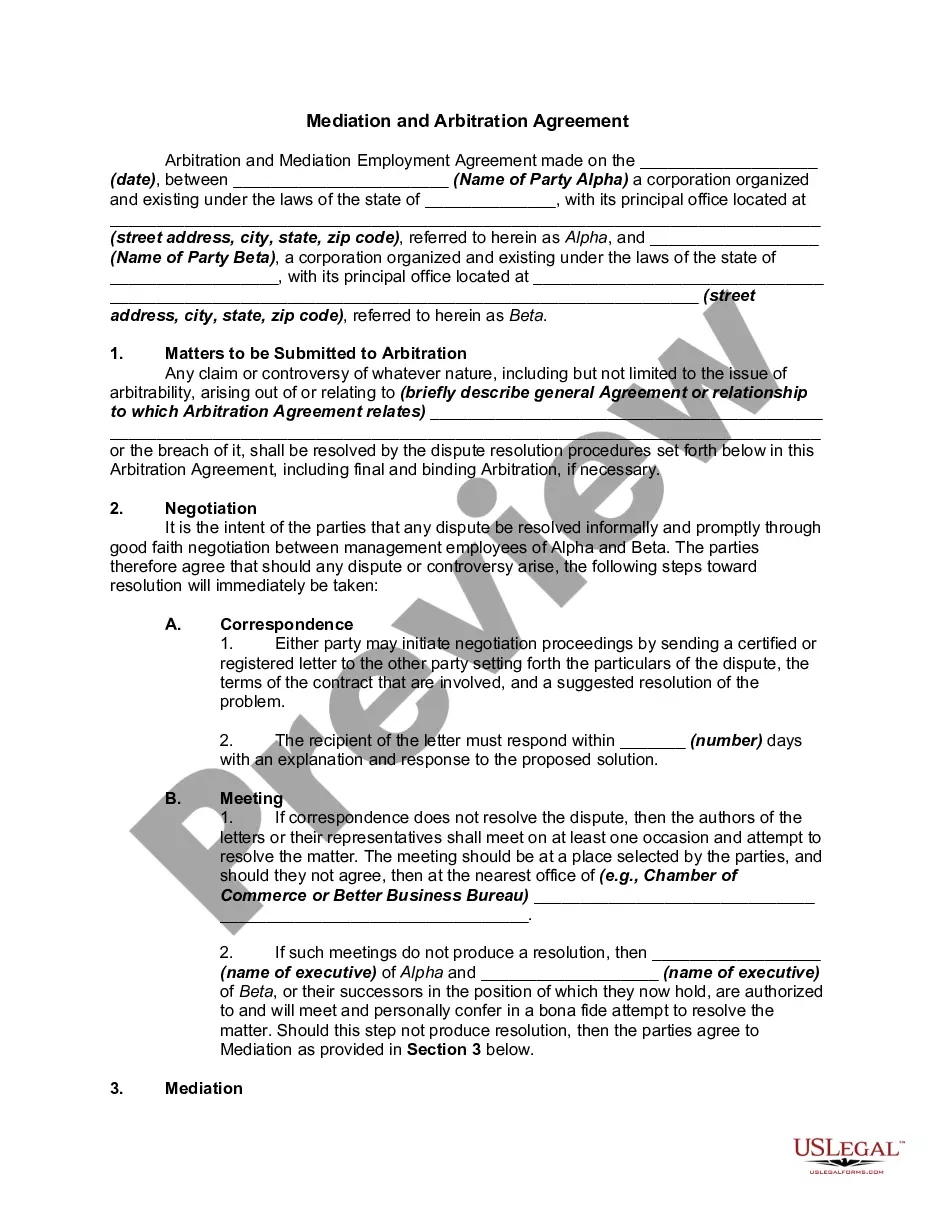





How to fill out Mediation Agreement?
Creating legal documents from the ground up can occasionally be quite daunting.
Certain situations may require extensive investigation and significant financial resources.
If you are seeking a more uncomplicated and affordable method of generating Mediation Vs Arbitration Definition Within A Company or other documents without unnecessary complications, US Legal Forms is always available to assist you.
Don’t have an account? No problem. It takes minimal time to create one and browse the directory. However, before proceeding to download the Mediation Vs Arbitration Definition Within A Company, please follow these guidelines.
- Our digital repository of over 85,000 current legal documents encompasses nearly every aspect of your financial, legal, and personal affairs.
- With only a few clicks, you can swiftly obtain state- and county-compliant forms carefully compiled for you by our legal experts.
- Utilize our service any time you require a dependable and trustworthy solution to quickly find and download the Mediation Vs Arbitration Definition Within A Company.
- If you’re already familiar with our offerings and have set up an account in the past, just Log In to your account, choose the form and download it immediately or retrieve it again at any time via the My documents section.
Form popularity
FAQ
I would recommend arbitration to my friend if they need a clear, binding resolution and are facing a complex dispute that might escalate. Arbitration provides a structured process and a definitive outcome, which can be crucial for avoiding lengthy litigation. By understanding the mediation vs arbitration definition within a company, you can appreciate the advantages of arbitration in certain situations. This method can offer peace of mind when dealing with potential legal consequences.
Mediation should be used when parties want to preserve their relationship and find a mutually agreeable solution. It is particularly effective in situations where communication is still open, and parties are willing to collaborate. Understanding the mediation vs arbitration definition within a company can help identify when mediation is a fitting choice for resolving disputes. This approach can lead to quicker, more satisfactory outcomes.
Yes, it is possible to use both mediation and arbitration in dispute resolution. Many companies first attempt mediation to reach a voluntary agreement, and if unsuccessful, they may then proceed to arbitration for a binding resolution. Understanding the mediation vs arbitration definition within a company allows you to navigate these options strategically. This combined approach can offer flexibility and thoroughness in resolving complex disputes.
Typically, mediation occurs before arbitration, especially if both parties are open to negotiation. If mediation fails to resolve the issue, arbitration can then be pursued as a more formal method. Knowing the mediation vs arbitration definition within a company can guide you on this sequential process for resolving disputes effectively. Each step provides a distinct opportunity for conflict resolution.
Many individuals opt for mediation because it encourages open dialogue and fosters cooperative problem-solving. Mediation allows parties to maintain control over the outcome, unlike arbitration, which results in a decision made by an arbitrator. By exploring the mediation vs arbitration definition within a company, you can appreciate the benefits of a less formal, more personal approach to conflict resolution. This can lead to better long-term relationships between the parties involved.
Mediation is often used when parties seek a collaborative approach to resolve disputes amicably. In contrast, arbitration is suitable for situations where parties prefer a binding decision from a neutral third party. Understanding the mediation vs arbitration definition within a company can help you choose the right method based on the nature of your conflict. Consider the desired outcome and relationship dynamics when making your decision.
The choice between mediation and arbitration depends on the specific circumstances of your dispute. Mediation may be better suited for parties seeking to maintain control over the outcome and preserve relationships. Conversely, arbitration might be appropriate when a binding resolution is necessary. By understanding the mediation vs arbitration definition within a company, you can make an informed decision that aligns with your business needs. For assistance, consider using USLegalForms to navigate these options effectively.
In a business context, mediation focuses on collaboration and preserving relationships, allowing parties to openly discuss their issues. Arbitration, on the other hand, is more structured and resembles a court trial, where the arbitrator's decision is final and enforceable. This distinction within the mediation vs arbitration definition within a company is crucial for businesses looking to maintain positive relationships while resolving disputes effectively.
The primary difference lies in how each process resolves disputes. Mediation involves a neutral third party who facilitates a conversation between disputing parties, encouraging them to reach a mutually acceptable solution. In contrast, arbitration includes a neutral arbitrator who makes a binding decision after hearing evidence and arguments from both sides. Recognizing the mediation vs arbitration definition within a company can guide you in selecting the best method for conflict resolution.
In many cases, mediation comes first in the dispute resolution process. The mediation vs arbitration definition within a company often highlights mediation as a preliminary step, where parties attempt to resolve their issues collaboratively. If mediation fails to produce an agreement, arbitration may then be pursued as a more formal method of resolution. Understanding this sequence can help you choose the right approach for your business disputes.