Mediation With Arbitration
Description
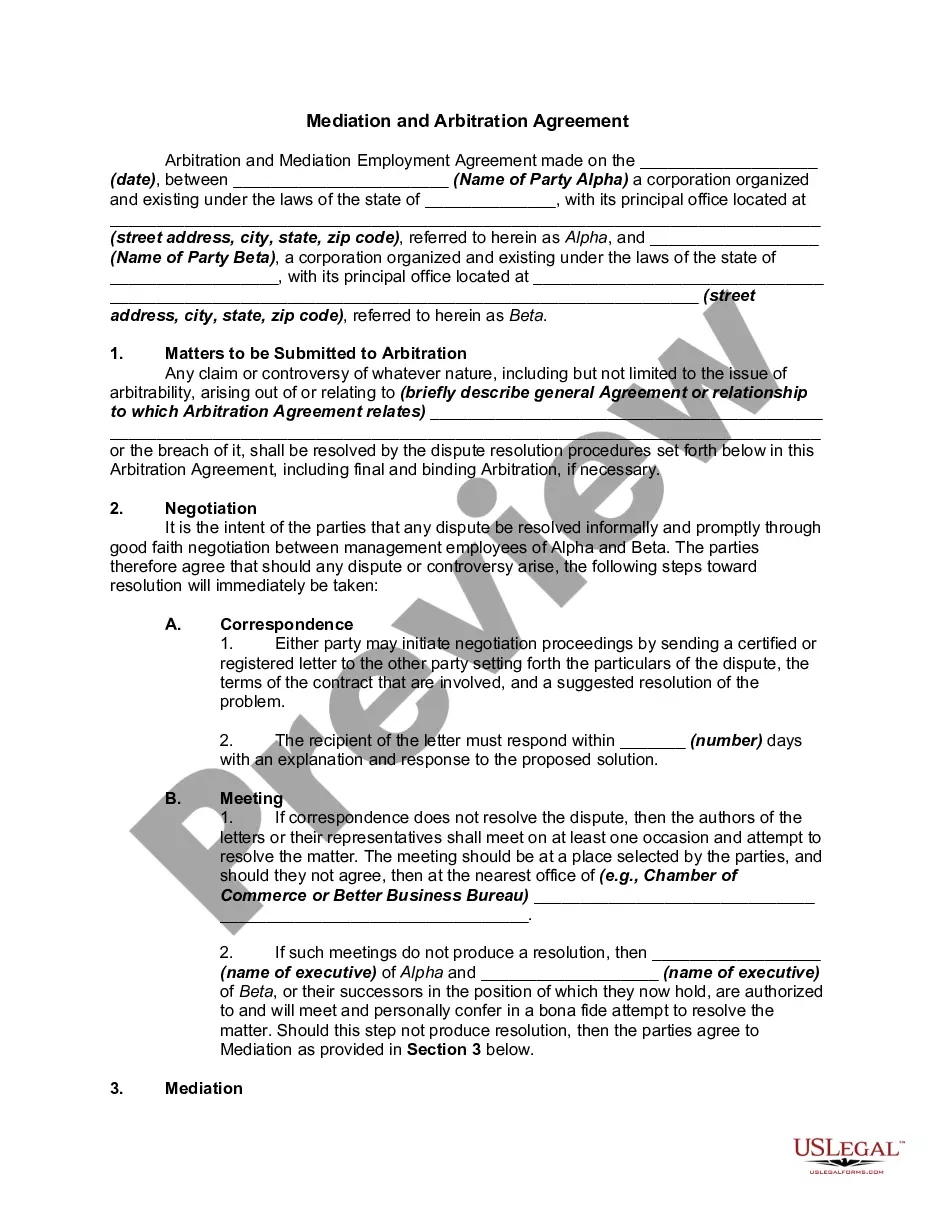
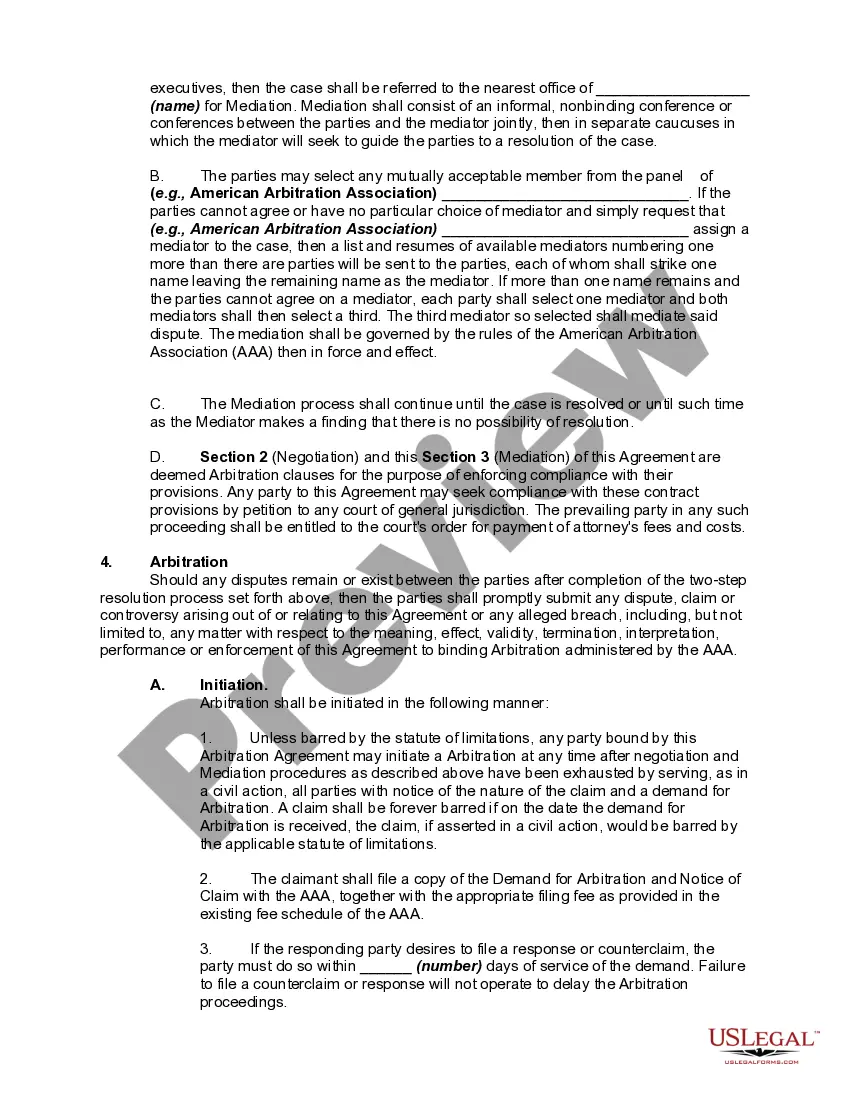
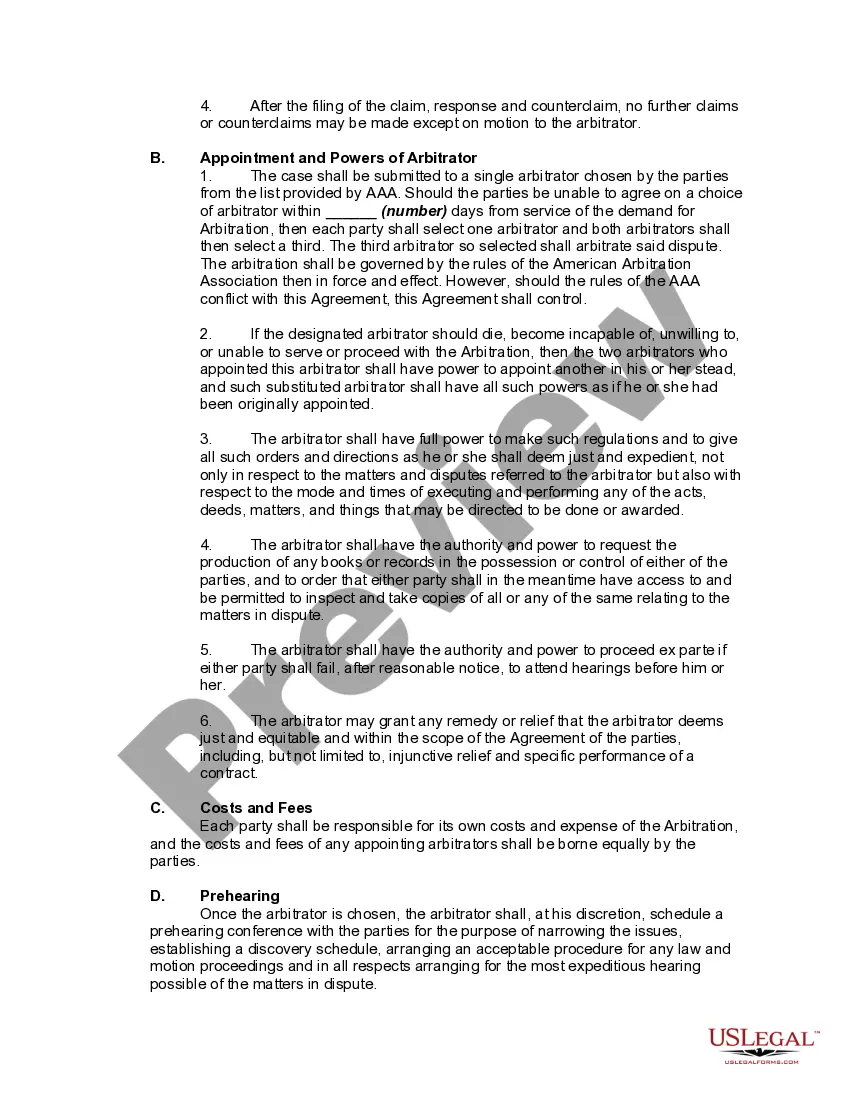
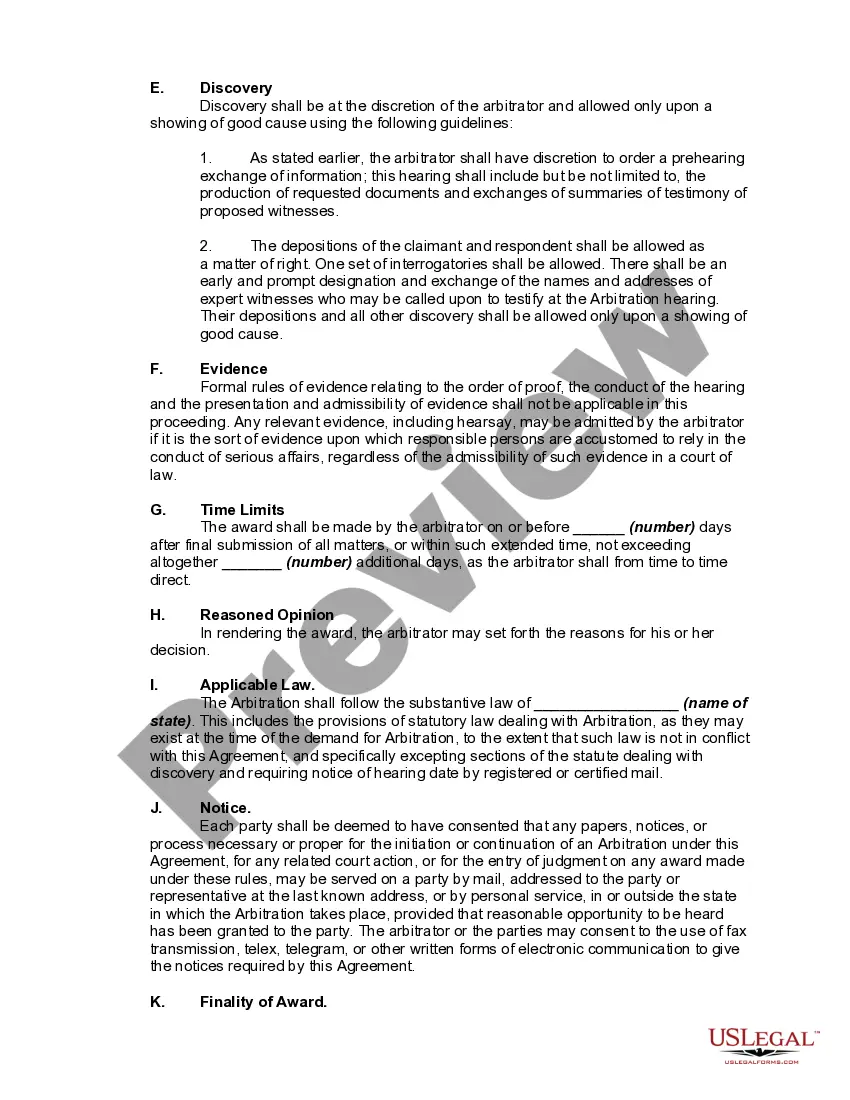
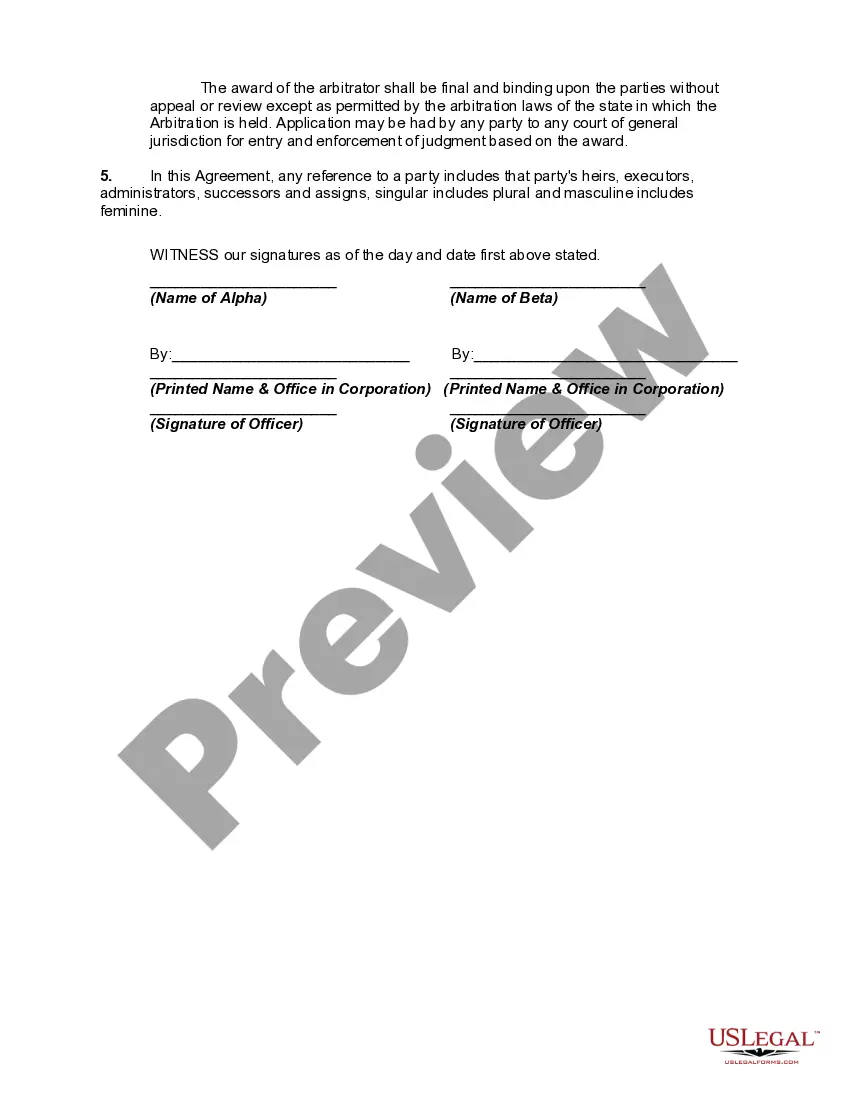



Get your form ready online
Our built-in tools help you complete, sign, share, and store your documents in one place.
Make edits, fill in missing information, and update formatting in US Legal Forms—just like you would in MS Word.
Download a copy, print it, send it by email, or mail it via USPS—whatever works best for your next step.
Sign and collect signatures with our SignNow integration. Send to multiple recipients, set reminders, and more. Go Premium to unlock E-Sign.
If this form requires notarization, complete it online through a secure video call—no need to meet a notary in person or wait for an appointment.
We protect your documents and personal data by following strict security and privacy standards.

Make edits, fill in missing information, and update formatting in US Legal Forms—just like you would in MS Word.

Download a copy, print it, send it by email, or mail it via USPS—whatever works best for your next step.

Sign and collect signatures with our SignNow integration. Send to multiple recipients, set reminders, and more. Go Premium to unlock E-Sign.

If this form requires notarization, complete it online through a secure video call—no need to meet a notary in person or wait for an appointment.

We protect your documents and personal data by following strict security and privacy standards.
Looking for another form?

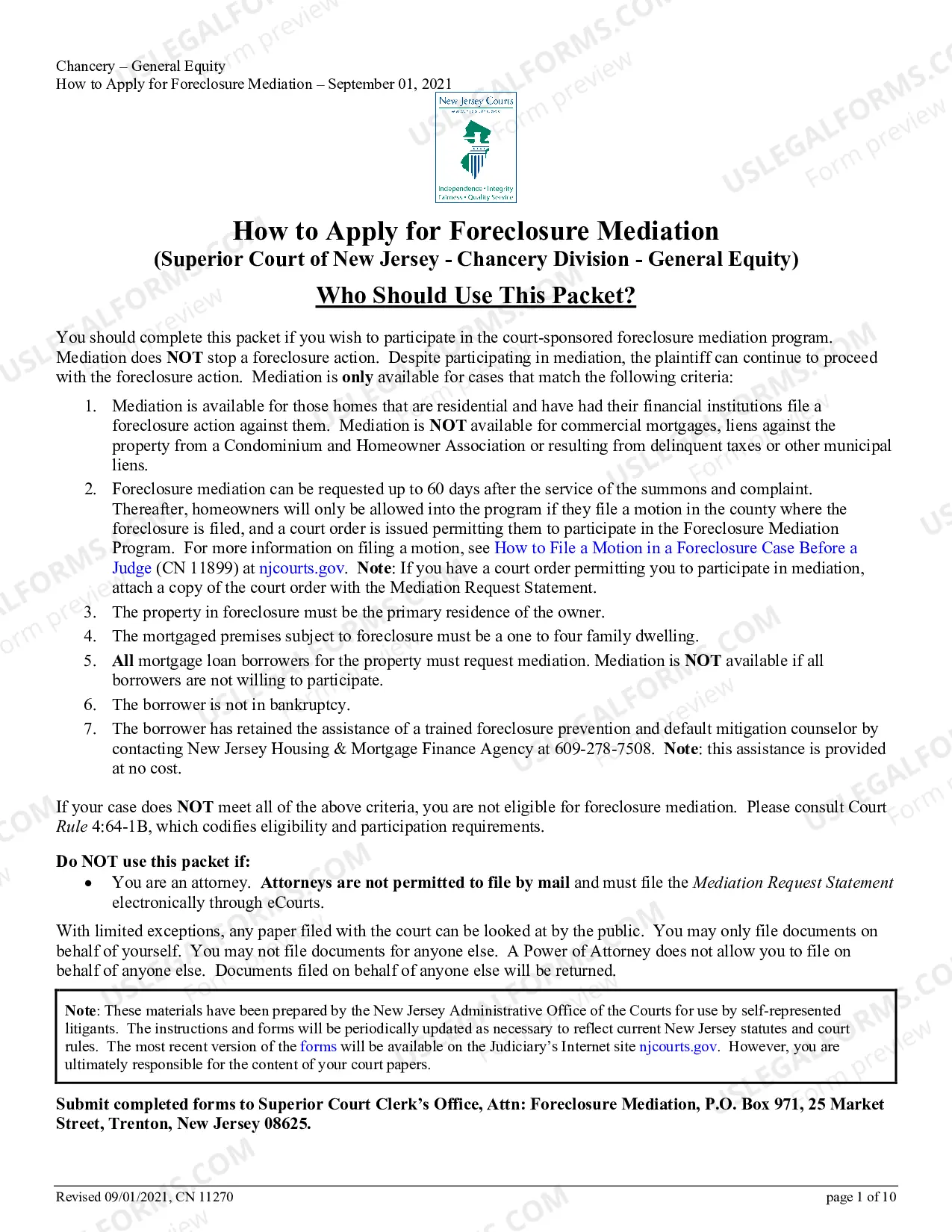







How to fill out Mediation And Arbitration Agreement?
Securing a reliable location to obtain the latest and suitable legal templates is half the battle of engaging with bureaucracy. Locating the correct legal documents requires precision and meticulousness, which is why it is crucial to source Mediation With Arbitration samples exclusively from trustworthy providers, such as US Legal Forms. An incorrect template can squander your time and delay your circumstances. With US Legal Forms, you have minimal concerns. You can access and review all details regarding the document’s application and significance for your situation and in your specific state or area.
Consider the outlined steps to finalize your Mediation With Arbitration.
Eliminate the hassle associated with your legal documentation. Explore the comprehensive US Legal Forms library where you can discover legal templates, assess their pertinence to your situation, and download them instantly.
- Utilize the library navigation or search bar to find your template.
- View the form’s description to confirm it meets the criteria of your state and area.
- Preview the form, if possible, to verify the template is indeed the one you seek.
- Return to the search to find the appropriate document if the Mediation With Arbitration does not meet your requirements.
- Once you are certain about the form’s relevance, download it.
- If you are a registered user, click Log in to verify and access your chosen forms in My documents.
- If you have yet to create an account, click Buy now to purchase the form.
- Select the pricing option that aligns with your preferences.
- Proceed with the registration to finalize your transaction.
- Complete your purchase by choosing a payment method (credit card or PayPal).
- Select the document format for downloading Mediation With Arbitration.
- After obtaining the form on your device, you may alter it with the editor or print it and fill it out by hand.
Form popularity
FAQ
Settling is often better than going to arbitration when both parties can reach a mutually agreeable resolution. Settlements can save time, reduce costs, and preserve relationships. However, if no agreement can be reached, arbitration becomes a necessary option. Therefore, utilizing mediation with arbitration first can be an effective strategy to settle disputes amicably before escalating to arbitration.
The odds of winning in arbitration can depend on numerous factors such as the strength of your case, the evidence presented, and the arbitrator's perspective. Generally, arbitration can be more favorable for parties with clear documentation and solid arguments. However, mediation with arbitration allows for more negotiation, potentially improving your chances of a favorable outcome.
The average settlement offer during mediation can vary widely based on the case specifics, including the parties involved and the issues at stake. Typically, parties may begin negotiations at a percentage of their claims, aiming for a compromise that both find acceptable. While mediation with arbitration might not guarantee a specific offer, it often results in settlements that reflect the interests of both parties.
Choosing mediation over arbitration can lead to a more amicable resolution. Mediation emphasizes collaboration, allowing parties to express their concerns and work towards a mutually beneficial agreement. This process can preserve relationships, which is often crucial in business or personal disputes. By integrating mediation with arbitration, you can enjoy the benefits of both processes while maintaining flexibility.
Choosing between mediation and arbitration depends on your specific needs. Mediation often provides a more flexible and collaborative environment, while arbitration offers a quicker resolution with a binding decision. For those who value control over the outcome, mediation is usually preferable. However, combining mediation with arbitration can create a balanced approach, offering the best of both worlds.
The golden rule of mediation is to maintain open communication and foster mutual respect among all parties. This principle encourages honesty and willingness to understand each other's perspectives. By prioritizing dialogue, mediation can pave the way for collaborative solutions. Integrating mediation with arbitration can further enhance this cooperative environment.
One significant disadvantage of mediation compared to arbitration is that mediation lacks a binding decision. If parties cannot reach an agreement, they may still need to pursue arbitration or litigation. This can prolong the resolution process. However, mediation with arbitration can serve as a valuable first step, potentially leading to a quicker resolution before resorting to more formal measures.
Mediation typically offers more confidentiality than arbitration. In mediation, the discussions and outcomes remain private, encouraging open dialogue between parties. Conversely, arbitration proceedings can be more formal, and while they are generally not public, certain elements may still become accessible. Choosing mediation with arbitration can enhance confidentiality in dispute resolution.
During mediation, it's important to avoid inflammatory language or personal attacks. Focus on the issues at hand rather than getting personal, as this can derail productive discussion. Mediation with arbitration encourages constructive communication, so aim for a respectful dialogue. Keeping the conversation professional can lead to better outcomes.
Generally, mediation is faster than arbitration. Mediation focuses on negotiation and can often lead to quicker resolutions than the more formal arbitration process. The flexibility of mediation with arbitration allows parties to address issues directly, potentially saving time. Choosing this approach can lead to a smoother, more efficient resolution.