Promissory Estoppel With Example
Description
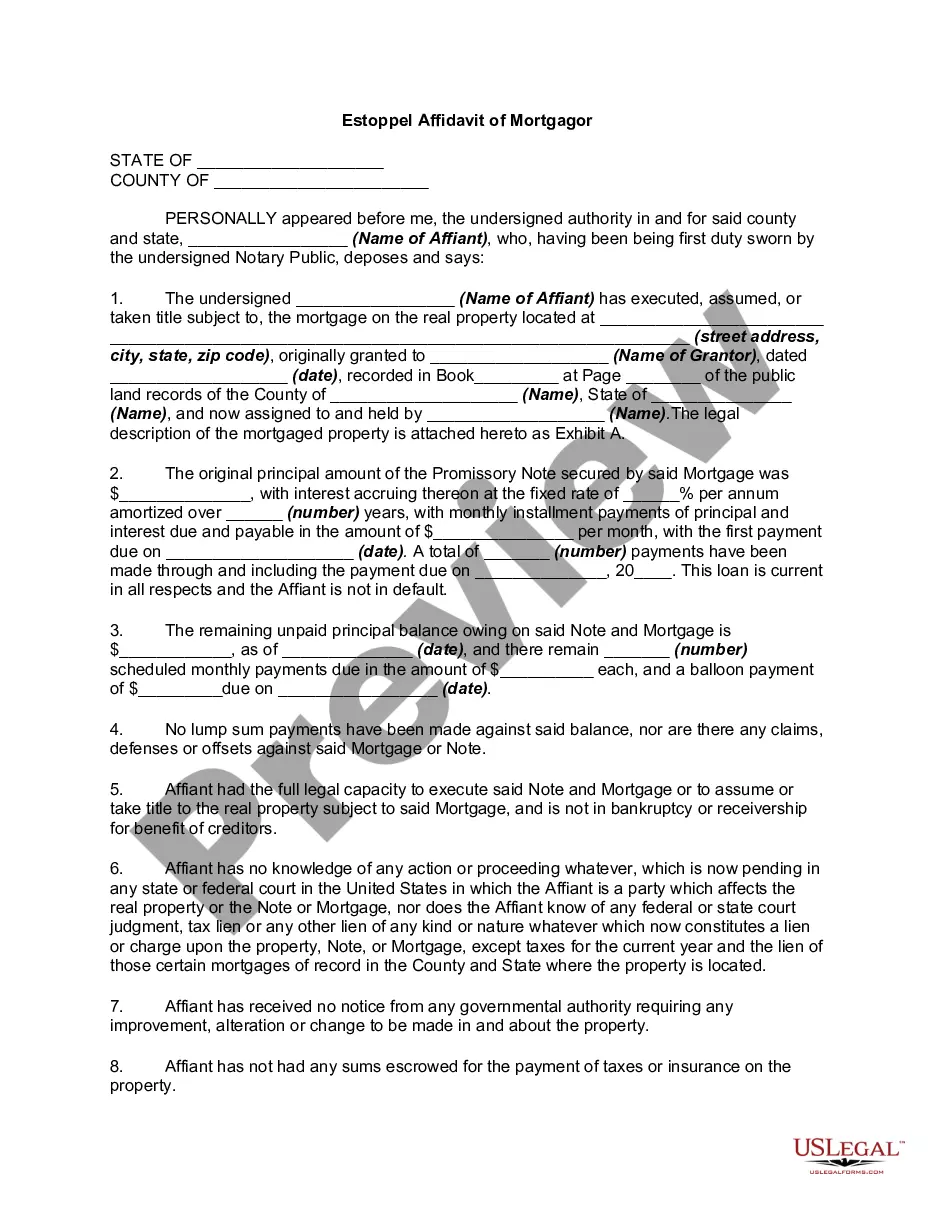



How to fill out Estoppel Affidavit Of Mortgagor?
Utilizing legal formats that comply with federal and state laws is crucial, and the web provides numerous alternatives to choose from.
However, what's the use of spending time searching for the correct Promissory Estoppel With Example template online if the US Legal Forms digital library already has such formats collected in one location.
US Legal Forms is the largest online legal repository with over 85,000 customizable templates created by attorneys for any business and personal situation. They are user-friendly with all documents categorized by state and intended use. Our specialists stay updated on legislative changes, so you can always trust your form is current and compliant when obtaining a Promissory Estoppel With Example from our site.
Click Buy Now once you've located the suitable document and select a subscription plan. Create an account or Log In and complete your payment with PayPal or a credit card. Choose the format for your Promissory Estoppel With Example and download it. All documents accessed through US Legal Forms are multi-usable. To re-download and fill out previously acquired forms, access the My documents section in your account. Enjoy the most extensive and user-friendly legal documentation service!
- Obtaining a Promissory Estoppel With Example is quick and straightforward for both existing and new users.
- If you already possess an account with an active subscription, Log In and save the document template you need in the appropriate format.
- If you're new to our platform, follow the steps below.
- Review the template using the Preview feature or via the text description to confirm it satisfies your needs.
- Search for another sample using the search bar at the top of the page if needed.
Form popularity
FAQ
To secure promissory estoppel, you should illustrate how a clear promise led you to take significant action or make choices that resulted in harm. Document every relevant interaction and ensure you show the detrimental effects of the promise not being honored. Utilizing the resources available on US Legal Forms can simplify the process and provide you with guidance on constructing your claim.
Obtaining promissory estoppel involves presenting a clear case where a promise was made, you relied on it, and you suffered a loss due to that reliance. You should gather evidence that supports your claim, such as documentation of the promise and any related communications. To navigate this effectively, consider using US Legal Forms, which offers templates and resources to assist you in preparing your case.
The four requirements for promissory estoppel include a clear and definite promise, reliance on that promise, reasonable reliance taken by the promisee, and a detriment suffered as a result. Each of these components must be established for the doctrine to apply. For an illustration of promissory estoppel with example, consider a situation where a promise of employment leads someone to forgo other job opportunities, resulting in a loss when the promise is not fulfilled.
To establish estoppel, you must demonstrate that you relied on another person's promise, they intended for you to rely on it, and your reliance led to a significant change in your situation. Additionally, proving that it would be unjust not to enforce that promise is crucial. Promissory estoppel with example typically highlights how reliance on a clear promise can lead to substantial consequences, reinforcing why it matters in legal contexts.
For promissory estoppel to take place, certain conditions must be met. Firstly, there must be a clear promise made to the promisee, who must rely on it to their detriment. Additionally, the promise must be unambiguous, and the reliance must be reasonable, which can be illustrated with a promissory estoppel with example; imagine an employer promising a job to a candidate, leading them to turn down other offers. If the job does not materialize, the candidate may seek compensation based on that reliance.
Estoppel occurs when one party makes a promise or representation to another party, leading the second party to rely on that promise. The primary conditions include a clear promise, reasonable reliance by the other party, and potential harm if the promise is not honored. For a clearer understanding, consider promissory estoppel with example; a contractor promises to complete work by a certain date, and the homeowner begins preparations based on this assurance. If the contractor fails to deliver, the homeowner may have a case for estoppel.
The three elements of promissory estoppel include a promise made with the intention of reliance, actual reliance on that promise by the other party, and a detriment caused by the reliance. Each element plays a vital role in establishing the need to enforce the promise made. Recognizing these elements helps in understanding the broader implications of promissory estoppel with example in legal scenarios.
Some examples of promissory estoppel include an employer's promise of a job for which an applicant resigns from their current position and a parent promising to fund their child's education, leading the child to forego other opportunities. These situations demonstrate how individuals can rely on assurances that lead to significant life changes, effectively illustrating promissory estoppel with example. Legal resources, like US Legal Forms, can help you navigate these situations.
The grounds for promissory estoppel typically include a clear and definite promise, reliance on that promise by the other party, and a resulting detriment. Essentially, if someone makes a promise that another party reasonably relies on, the promise can be enforced to avoid injustice. Understanding these grounds helps clarify the application of promissory estoppel with example in legal situations.
An example of promissory estoppel might involve a homeowner who intends to sell their house and informs a potential buyer. If the buyer, relying on the homeowner's promise, sells their current home and secures financing, the homeowner may be prevented from backing out of the sale. This scenario illustrates how promissory estoppel with example can create binding obligations based on reliance.