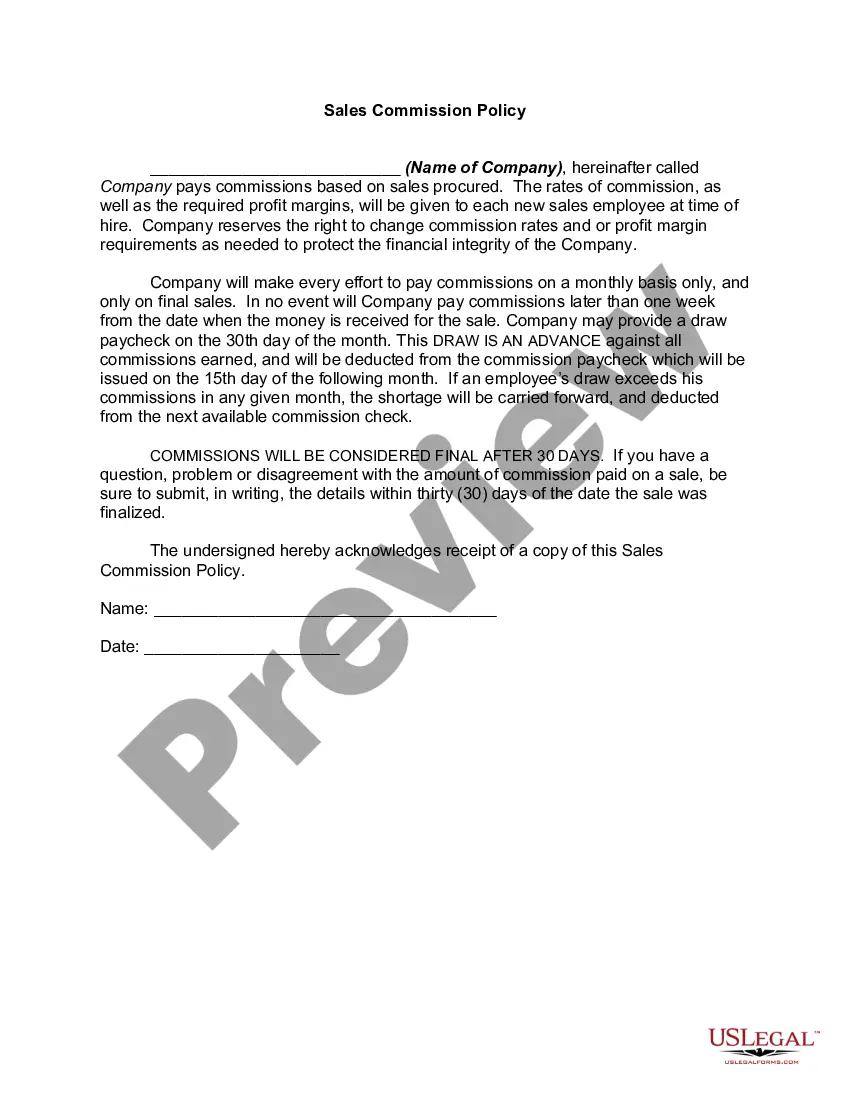
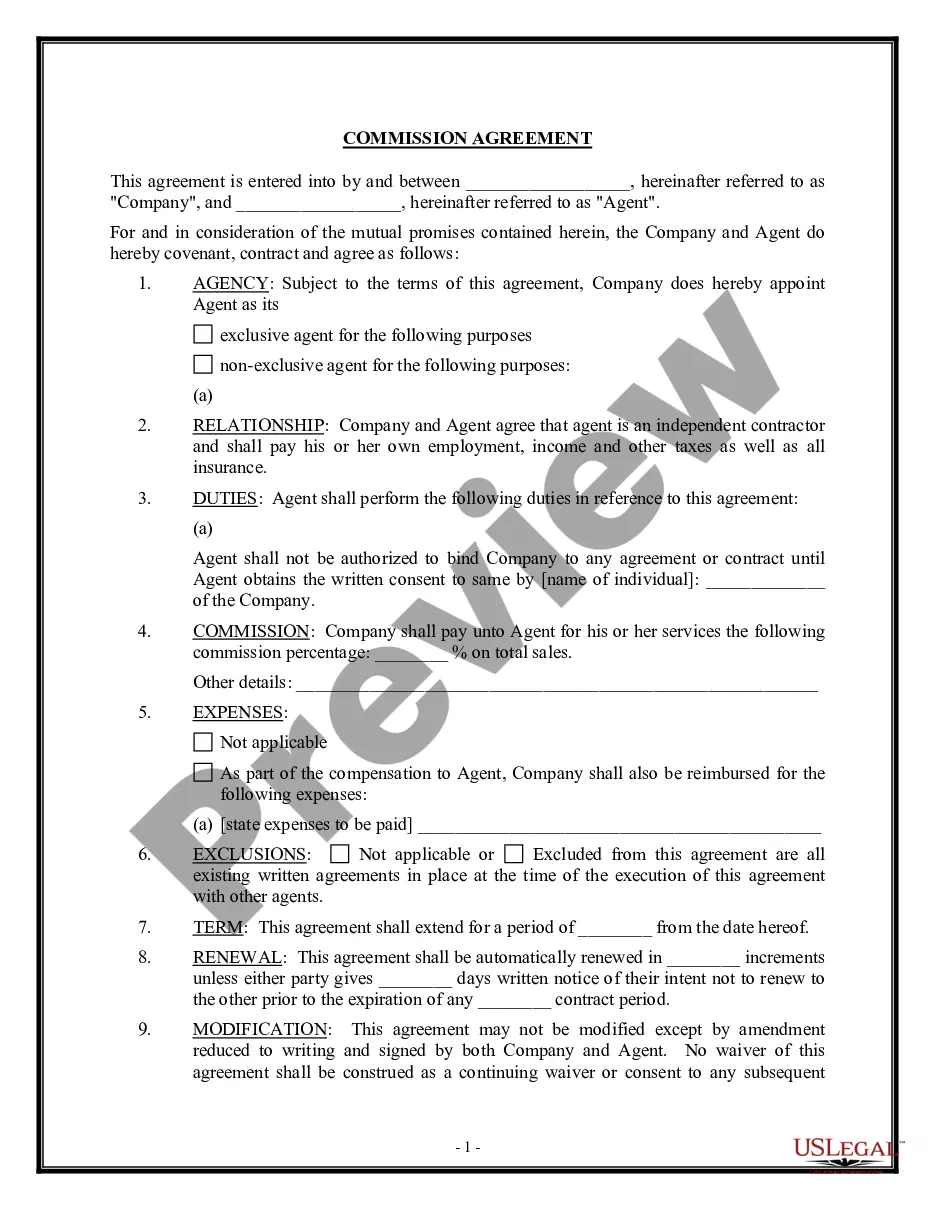
Commission On Lic Policy For Agent
Description
Get your form ready online
Our built-in tools help you complete, sign, share, and store your documents in one place.
Make edits, fill in missing information, and update formatting in US Legal Forms—just like you would in MS Word.
Download a copy, print it, send it by email, or mail it via USPS—whatever works best for your next step.
Sign and collect signatures with our SignNow integration. Send to multiple recipients, set reminders, and more. Go Premium to unlock E-Sign.
If this form requires notarization, complete it online through a secure video call—no need to meet a notary in person or wait for an appointment.
We protect your documents and personal data by following strict security and privacy standards.

Make edits, fill in missing information, and update formatting in US Legal Forms—just like you would in MS Word.

Download a copy, print it, send it by email, or mail it via USPS—whatever works best for your next step.

Sign and collect signatures with our SignNow integration. Send to multiple recipients, set reminders, and more. Go Premium to unlock E-Sign.

If this form requires notarization, complete it online through a secure video call—no need to meet a notary in person or wait for an appointment.

We protect your documents and personal data by following strict security and privacy standards.
Looking for another form?







How to fill out Sales Commission Policy?
Whether for commercial reasons or personal matters, everyone must navigate legal situations at some stage in their life.
Filling out legal documents requires careful consideration, starting with choosing the correct template.
With a substantial inventory of US Legal Forms available, you’ll never have to waste time searching for the appropriate template online. Utilize the library’s simple navigation to find the right template for any occasion.
- Locate the template you require by using the search box or browsing the catalog.
- Review the form’s details to ensure it aligns with your situation, state, and area.
- Click on the form’s preview to inspect it.
- If it is the incorrect form, return to the search function to find the Commission On Lic Policy For Agent sample you need.
- Obtain the template when it satisfies your criteria.
- If you already possess a US Legal Forms account, click Log in to access previously saved documents in My documents.
- If you do not have an account yet, you may acquire the form by clicking Buy now.
- Select the appropriate pricing option.
- Fill out the profile registration form.
- Choose your payment method: use a credit card or PayPal account.
- Select the file format you desire and download the Commission On Lic Policy For Agent.
- Once it is saved, you can complete the form using editing software or print it and fill it out by hand.
Form popularity
FAQ
The commission granted by LIC policies depends on several factors, including the type of policy sold and the duration of the contract. Generally, LIC offers competitive commission rates to agents, which can enhance earnings significantly. Understanding the specifics of each policy will give you a clearer picture of the potential commission on LIC policy for agents. Furthermore, consider leveraging resources like USLegalForms for assistance with calculations and policy comparisons.
Insurance commission income should be reported on your tax return under self-employment income if you are an independent agent. Make sure to separate it from other types of income for clarity. Utilize the forms provided by platforms like USLegalForms to ensure you categorize your commission on LIC policy for agents correctly. This helps you avoid potential audit issues and ensures accurate tax filings.
To file a commission income return, begin by gathering all necessary documentation related to your earnings from commission on LIC policy for agents. This includes payslips, contracts, and any tax forms. Use the available online platforms or tax software to accurately report your income. Additionally, consult a tax professional if you have questions about your specific situation.
An example of an insurance agent commission could be when an agent sells a policy with a total premium of $5,000 and earns a 10% commission. In this case, the agent would receive $500 as commission. Such examples illustrate the potential financial rewards associated with selling LIC policies.
Calculating agent commission often involves a straightforward approach. You determine the total sales made and apply the commission rate specific to those sales. By mastering this calculation, agents can accurately forecast their earnings and strategically plan their sales efforts.
To calculate LIC agent commission, take the total premium and apply the applicable commission rate based on the current commission structure provided by LIC. This process ensures agents receive appropriate compensation for their efforts. Familiarity with these calculations is essential for better financial planning.
To find out what 5% commission on $10,000 is, you multiply $10,000 by 0.05, which equals $500. This is a clear example of how commissions on LIC policies for agents can significantly impact earnings. Agents can easily use this simple multiplication to estimate their commission amounts.
To calculate commissions on a commission on LIC policy for agent, you typically use a simple formula: Total Premium × Commission Rate. The total premium refers to the total amount the policyholder pays during the policy term. This straightforward calculation helps you determine the income directly associated with selling a particular policy.
The agent commission in LIC can be quite rewarding, typically ranging from 2.5% to as much as 35%, depending on the specific policy and its features. This commission structure is designed to not only reward agents for their sales but also to encourage them to provide exceptional service. Accessing detailed information about these commissions can help agents maximize their earning potential. Hence, understanding the commission on LIC policy for agent is beneficial for all involved.
Yes, LIC agents do receive commissions for selling policies. They earn this commission based on the premium collected from clients and the type of insurance policies they sell. Commissions are designed to incentivize agents to promote LIC products effectively. Consequently, the commission on LIC policy for agent provides a significant portion of their income.