Forbearance With Student Loan
Description
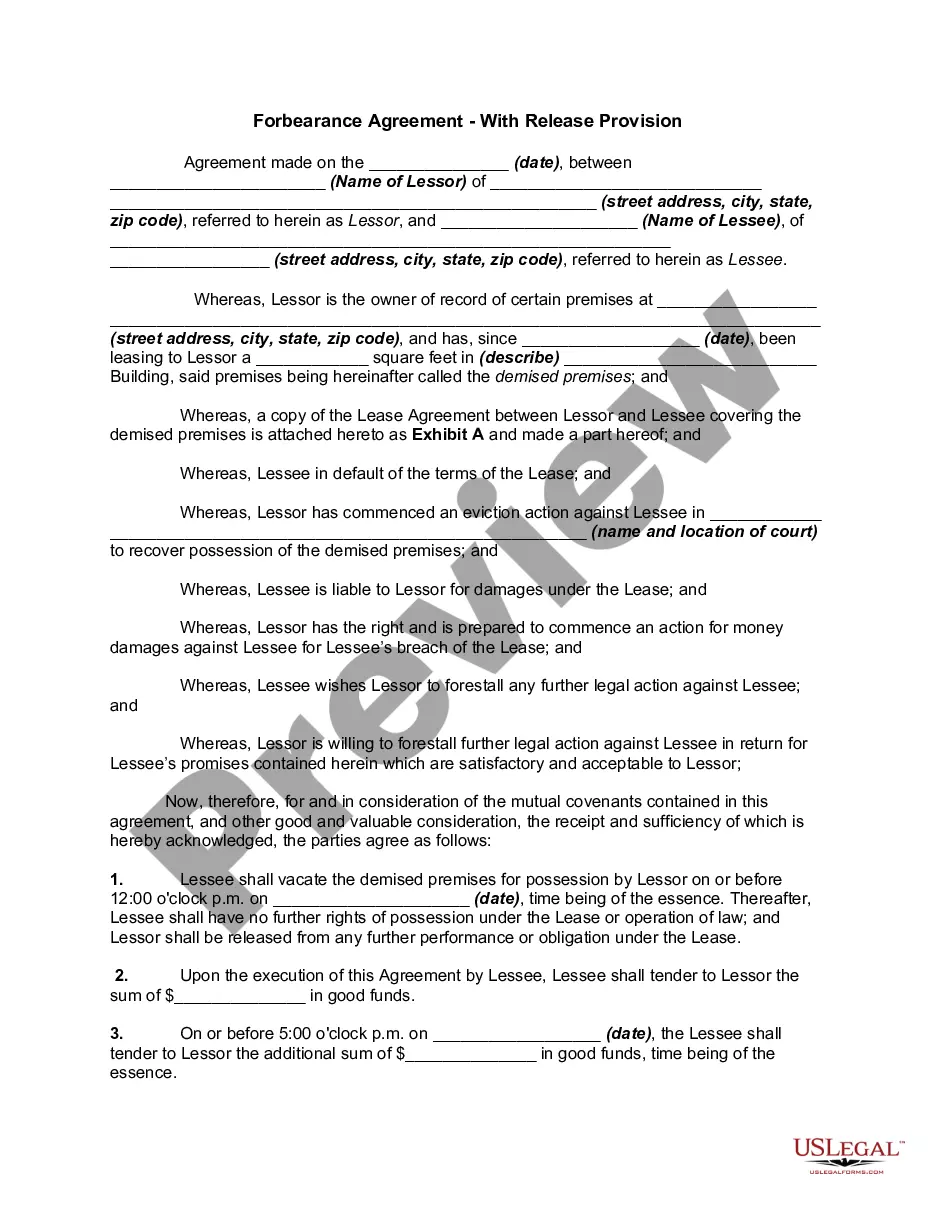
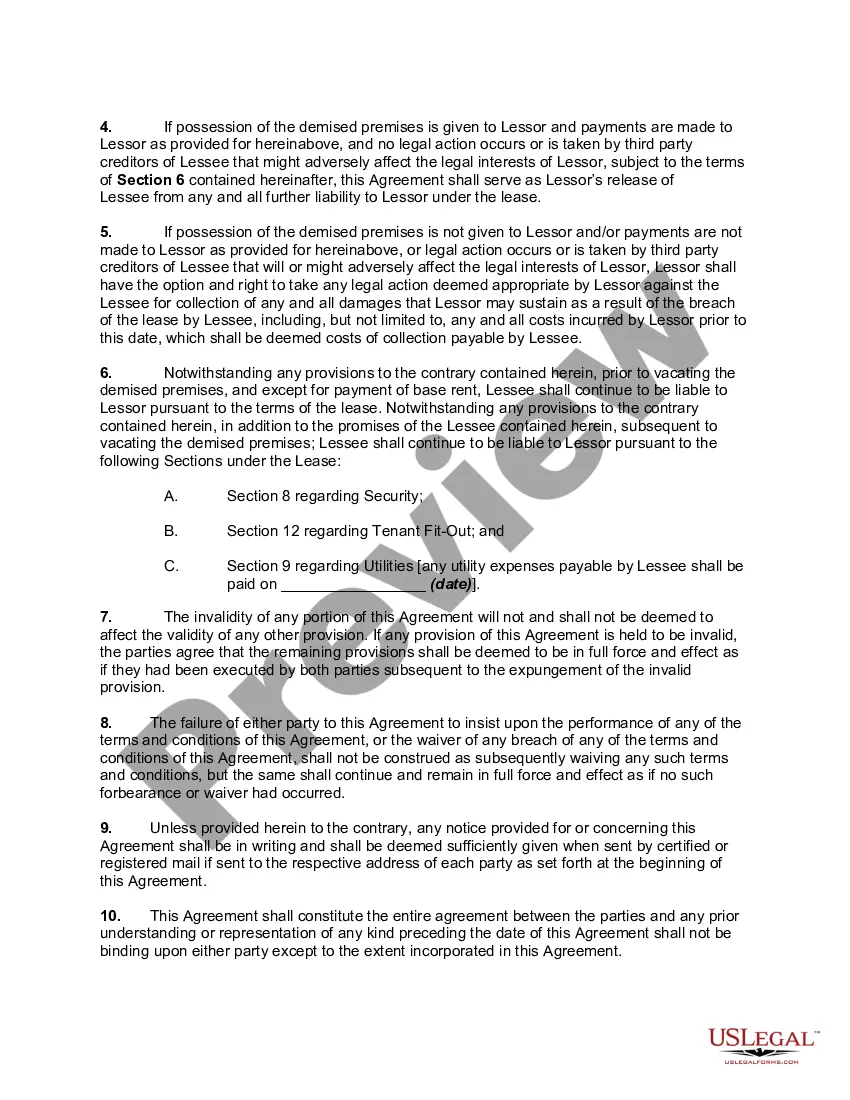
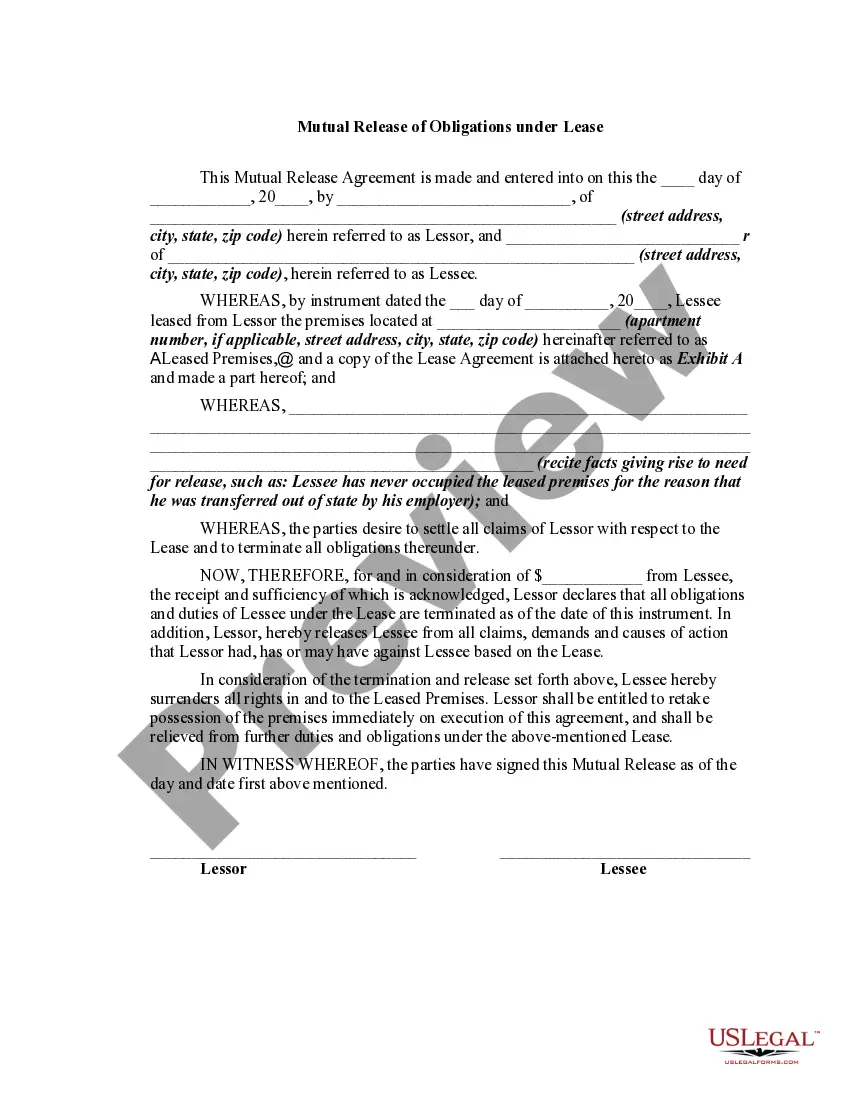

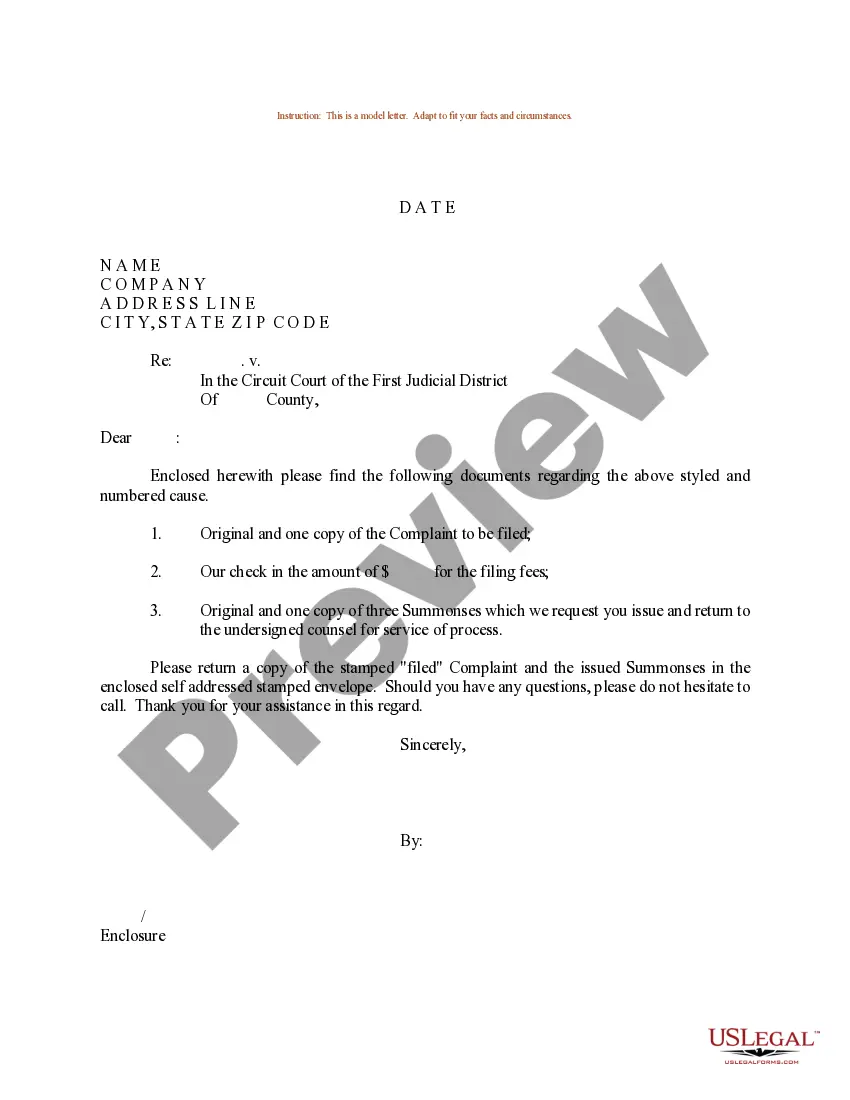

How to fill out Forbearance Agreement - With Release Provision?
- If you're a returning user, log in to your account to select and download your desired form template directly.
- For new users, start by previewing the available forms. Ensure you select one that aligns with your specific requirements and local legal standards.
- If you need a different template, utilize the Search feature to find the appropriate form for your situation.
- Once you find the right document, click on the Buy Now button. Select your subscription plan and create an account for full access to the library.
- Complete your purchase using a credit card or PayPal to finalize your subscription.
- Download the form onto your device, allowing you to fill it out conveniently. You can also access it anytime in the My Forms section of your profile.
With US Legal Forms, you gain access to a robust library containing over 85,000 editable and fillable legal forms. Our service empowers individuals and attorneys alike to efficiently manage legal documents, ensuring they have what they need when they need it.
Take charge of your student loan forbearance today and explore the resources available at US Legal Forms. Start your journey toward financial relief!
Form popularity
FAQ
Choosing between deferment and forbearance with student loans depends on your financial circumstances. Generally, deferment allows you to pause payments without accruing interest on certain types of loans. In contrast, forbearance may incur interest, making loans more costly in the long run. Evaluating your situation can help determine which option is more suitable for your needs.
Forbearance with student loans can be beneficial if you face temporary financial difficulties. However, it's crucial to remember that interest may continue to accrue during this period. It's advisable to consider all options, including potential repayment plans, before deciding. Always weigh the pros and cons according to your financial situation.
Forbearance with student loans does not directly impact your credit score, as lenders typically do not report your forbearance status. However, if the forbearance leads to missed or late payments before the request is approved, that could harm your credit. It's essential to stay proactive and communicate with your servicer during this time to avoid potential negative effects on your credit.
Choosing between deferment and forbearance with student loans depends on your individual circumstances. Deferment allows you to temporarily pause payments, often without interest accumulating, especially for subsidized loans. On the other hand, forbearance pauses your payments but typically leads to interest accruing. Evaluate both options carefully based on your financial situation.
Putting loans in forbearance with student loans isn't inherently bad, but it requires careful consideration. It can provide crucial short-term relief, but be mindful of accumulating interest and extended repayment terms. You might find it beneficial to explore other options, such as income-driven repayment plans, before choosing forbearance. Resources like US Legal Forms can help you understand your choices better.
No, forbearance with student loans does not directly harm your credit score. However, it does not improve your credit either, as your repayment activity is not reported during this period. Thus, while it offers immediate relief, it may not contribute positively to your credit history, keeping your score stagnant. Staying informed about your overall debt strategy is essential.
Forbearance with student loans can lead to higher overall costs. While it provides temporary relief from payments, interest often accrues, increasing the total balance. This means when you resume payments, you may face a larger amount due. Additionally, relying on forbearance too frequently can limit your repayment options in the future.
The pros of forbearance with student loans include relief from immediate payment obligations, which can ease your financial stress during tough times. However, the cons involve the accumulation of interest, potentially leading to higher debt in the future. This balance between immediate relief and long-term consequences makes forbearance a nuanced choice. Consider using platforms like uslegalforms to explore your options thoroughly.
While forbearance specifically pertains to student loans, homeowners often ask about its duration regarding mortgage payments. Typically, mortgage forbearance can last for several months to a year, depending on your lender's policies. Although this doesn't directly apply to student loans, knowing the duration limits can help you manage your financial strategy. Always consult with a financial advisor to explore your options.