Forbearance With Bank
Description
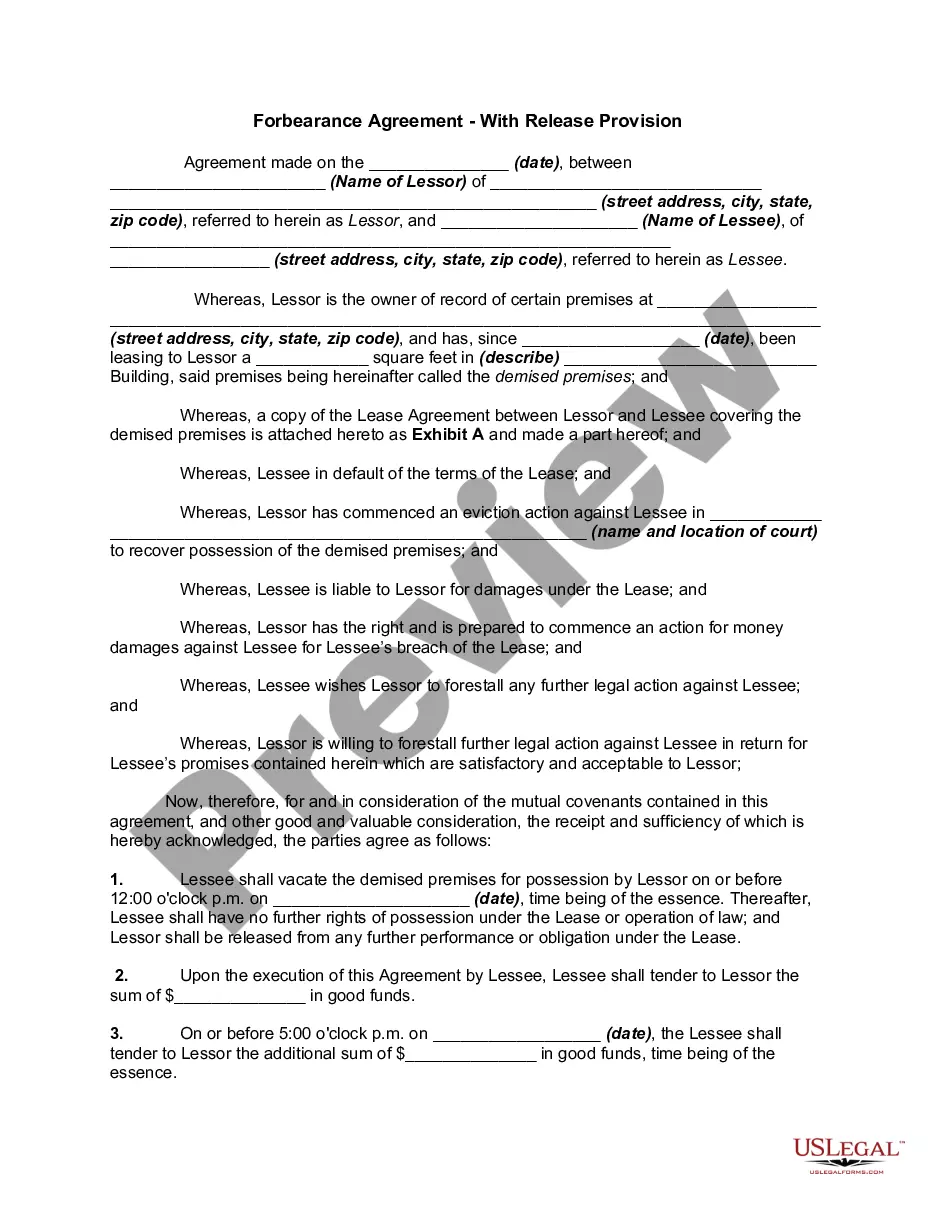
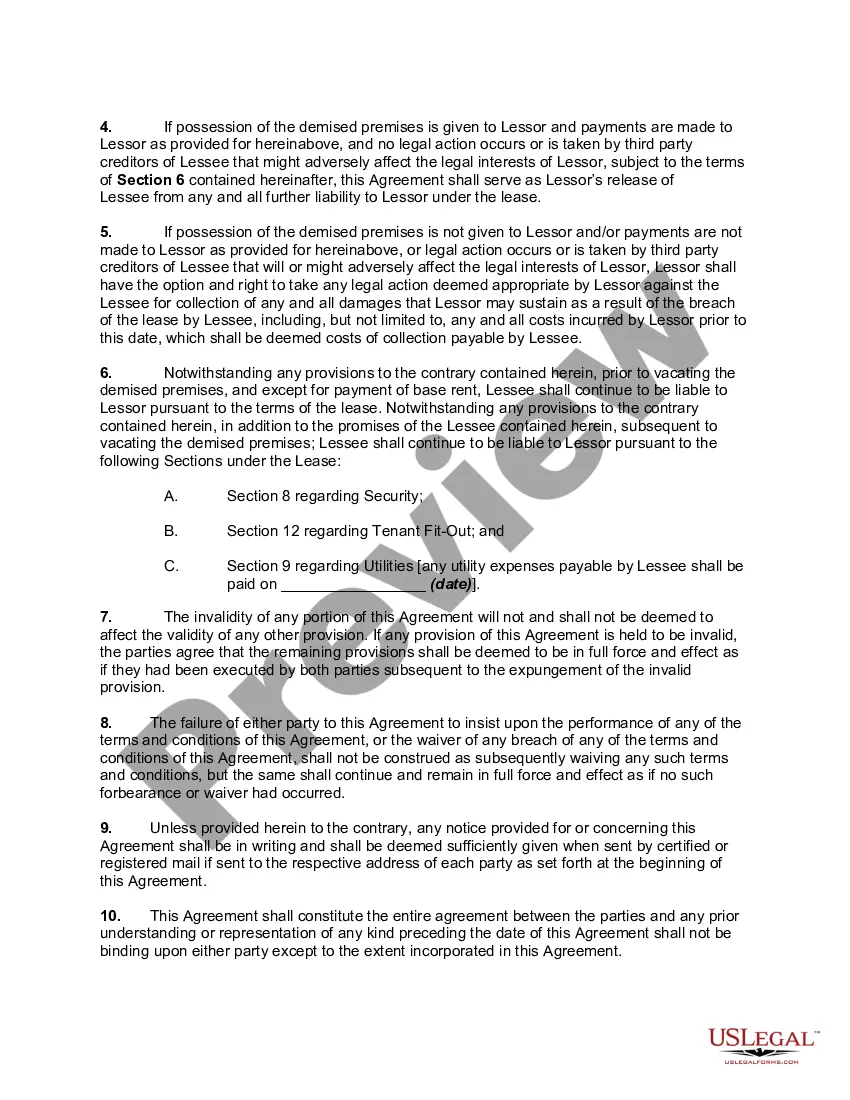
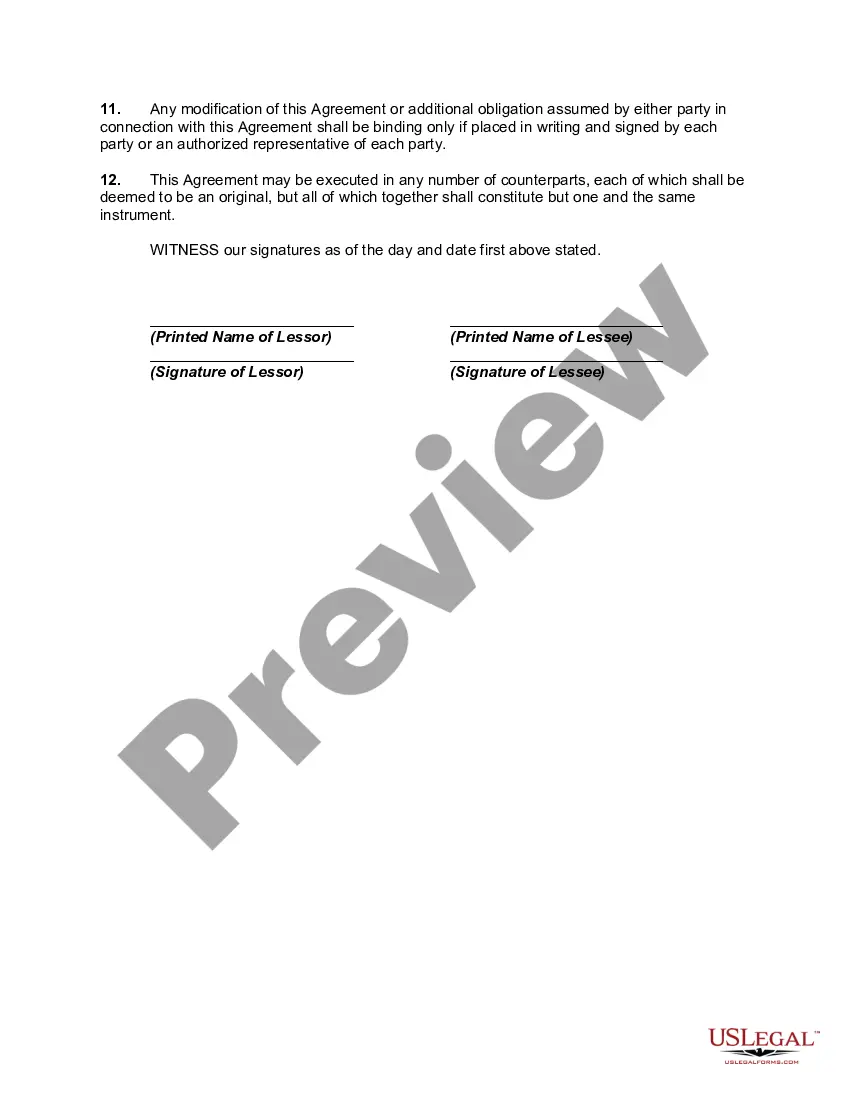
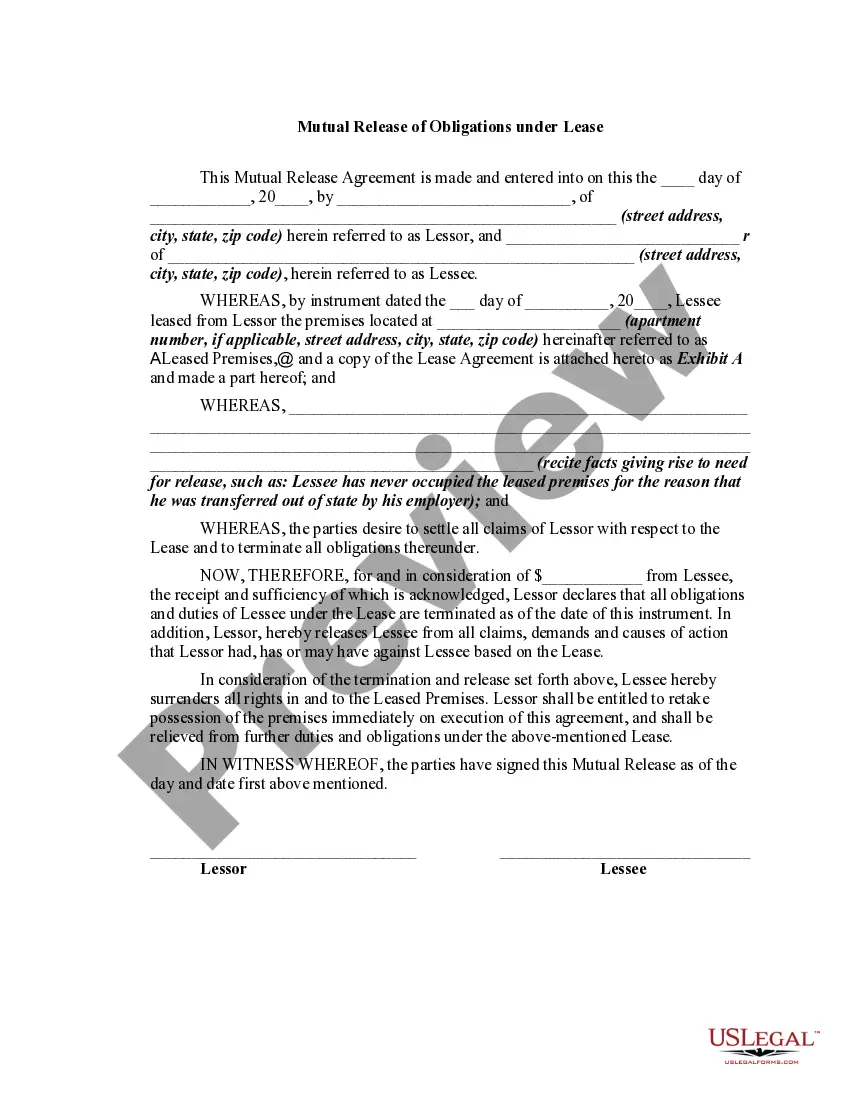



How to fill out Forbearance Agreement - With Release Provision?
- Log into your existing US Legal Forms account and check your subscription status to ensure it is active.
- Preview the template you're interested in and confirm it meets your needs and local jurisdiction requirements.
- If adjustments are needed, utilize the Search tab to find the most suitable form that aligns with your situation.
- Select the 'Buy Now' option for your chosen document and choose your preferred subscription plan, creating an account if required.
- Complete your purchase by entering your payment details or using PayPal for secure transaction.
- Download the document directly to your device and save it for easy reference, accessible any time via the 'My Forms' section in your account.
By following these steps, you will be well-equipped to handle your forbearance with bank needs efficiently. With US Legal Forms, you gain access to more than 85,000 editable legal forms, ensuring you have the right documentation at your fingertips.
Revolutionize your legal process today! Visit US Legal Forms to get started with your forbearance documentation.
Form popularity
FAQ
To qualify for forbearance with a bank, you usually need to demonstrate a temporary financial hardship. This may involve providing documentation of income loss or unexpected expenses. Check your bank's specific guidelines, as they may vary, and you might find tools on platforms like US Legal Forms to help you navigate the qualification process.
Requesting forbearance with a bank typically does not hurt your credit score. It is important to understand that if you miss payments or neglect terms, that could negatively impact your credit. By effectively managing your forbearance, you can keep your credit intact while receiving the financial support you need.
Applying for forbearance with a bank generally does not affect your credit score if done correctly. However, the impact can vary based on how your lender reports the forbearance agreement to credit bureaus. Keeping open communication with your bank and adhering to terms can help maintain your credit standing.
The duration for which loans can remain in forbearance with a bank often depends on specific terms and your situation. Most lenders allow forbearance periods ranging from a few months to up to a year. It's important to communicate with your bank and understand their guidelines. For personalized assistance, platforms like US Legal Forms can help you navigate these options effectively.
The approval process for forbearance with a bank typically varies based on the lender’s policies. Generally, you can expect a response within a few days to a couple of weeks after submitting your request. To help streamline this process, providing clear documentation can be beneficial. Stay in contact with your lender for updates on your application.
Forbearance with a bank can offer temporary relief, but it's essential to understand the potential downsides. While you may avoid immediate payments, interest can still accrue, which may increase your total debt. Additionally, this type of arrangement might impact your credit score if not handled properly. Overall, it's crucial to weigh these factors before proceeding.
Yes, banks do offer forbearance options for customers facing financial difficulties. Typically, banks will evaluate your situation to determine eligibility based on specific criteria. It's essential to reach out proactively to discuss your needs and explore available options. Utilizing resources such as US Legal Forms can simplify the process of understanding what your bank can provide regarding forbearance.
The two main types of forbearance are temporary and longer-term forbearance. Temporary forbearance allows homeowners to pause payments for a short period, providing immediate relief during financial hardships. Longer-term forbearance may extend for several months or even years, allowing for a more gradual recovery without the constant pressure of monthly payments. Deciding between these options is crucial when negotiating forbearance with your bank.
When you see the term 'awaiting form administrative forbearance,' it signifies that your request for a payment pause is being processed. Your bank is reviewing your application to determine if you qualify for forbearance relief. During this time, it’s important to remain in contact with your bank for updates and to ensure a smooth transition into any approved forbearance arrangement. Effective communication can help clarify issues surrounding forbearance with your bank.
The two common types of forbearance are voluntary and mandatory forbearance. With voluntary forbearance, your bank agrees to postpone or reduce your payments, usually after a discussion about your financial situation. In mandatory forbearance, you may qualify automatically under specific conditions set by the bank, which allows for temporary relief without extensive documentation. Understanding these types is essential for managing your mortgage effectively while engaging in forbearance with your bank.