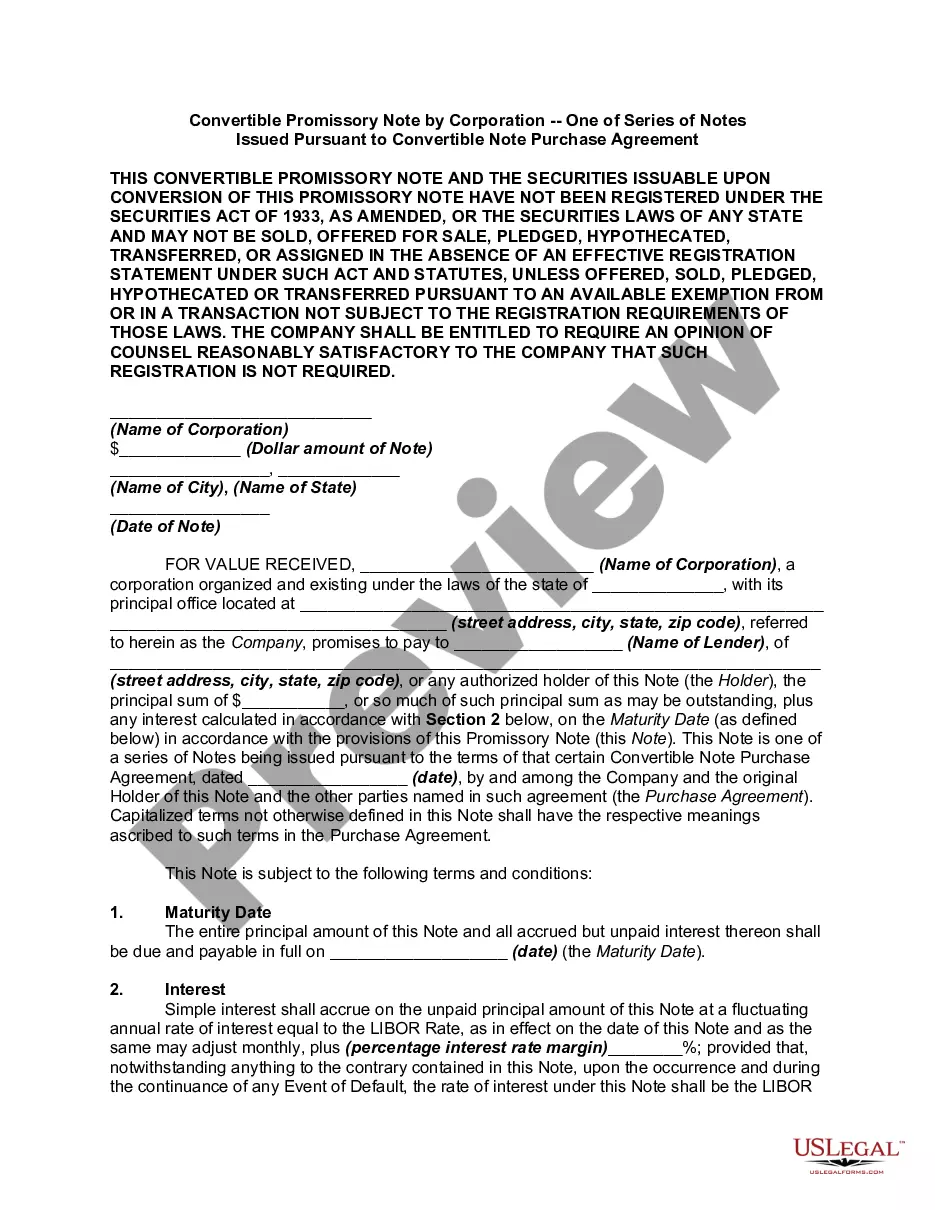
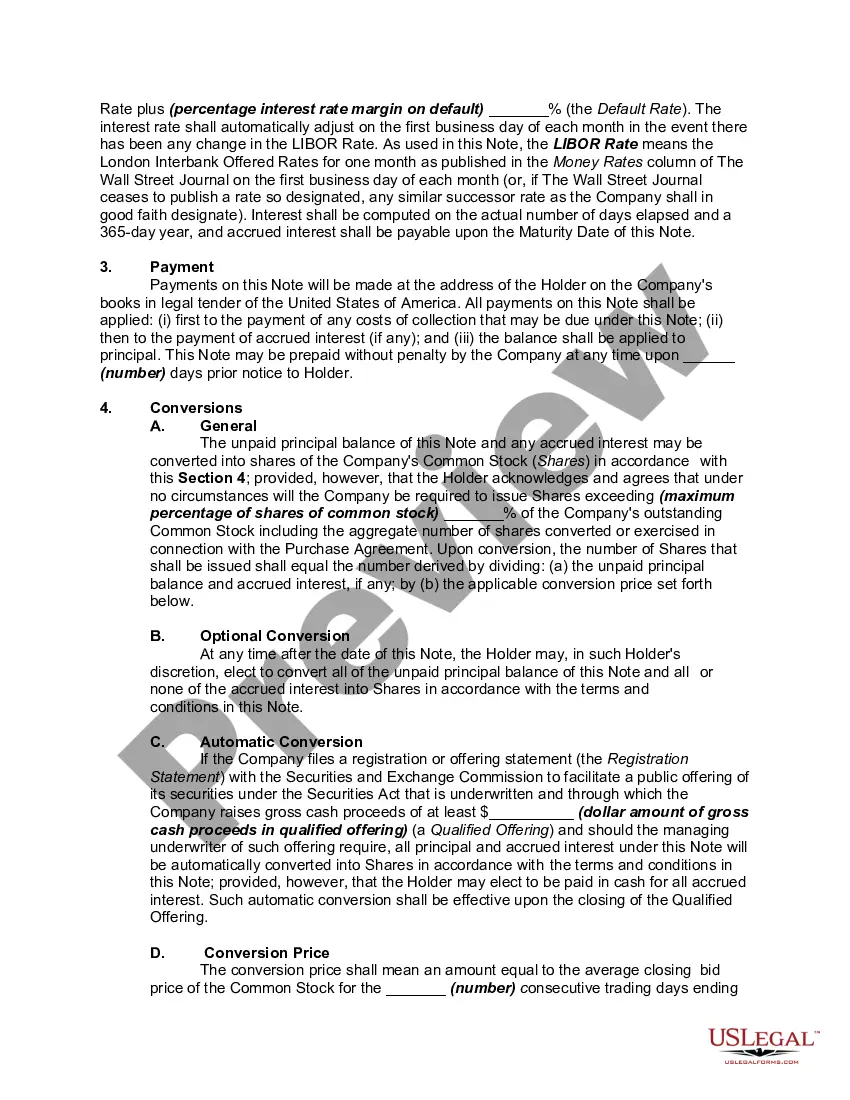
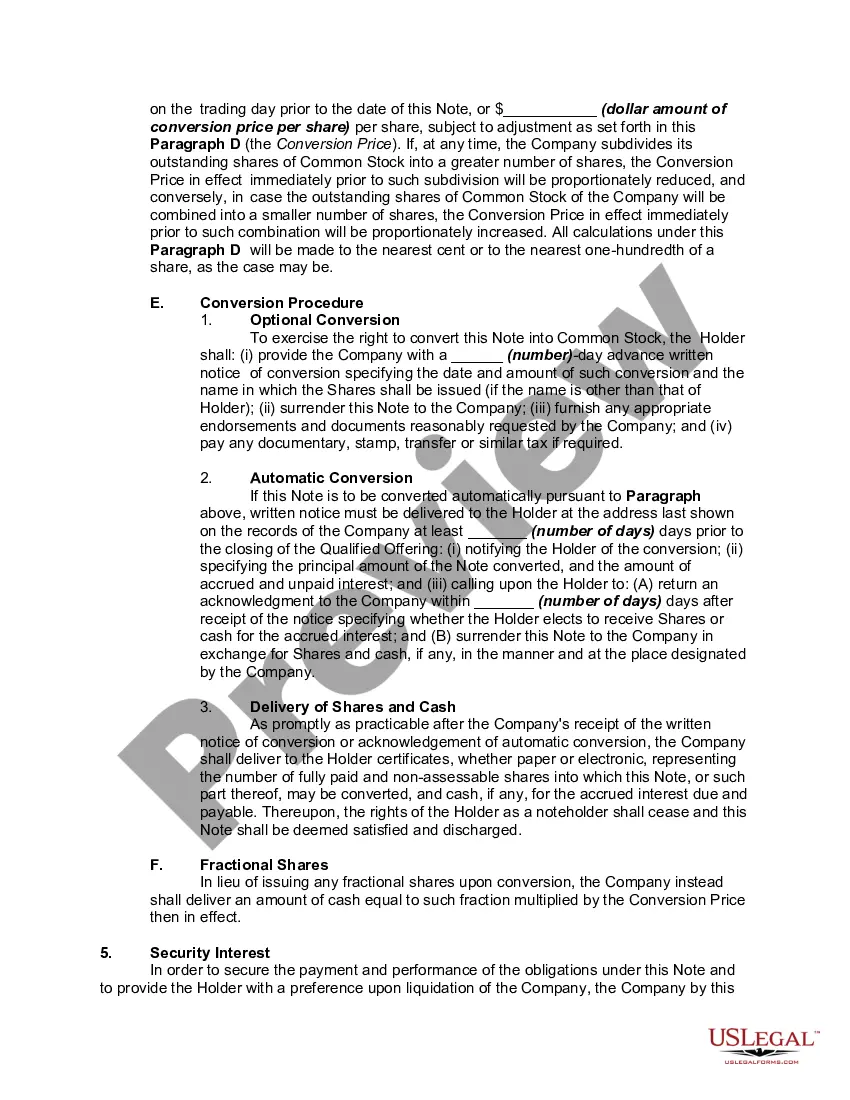
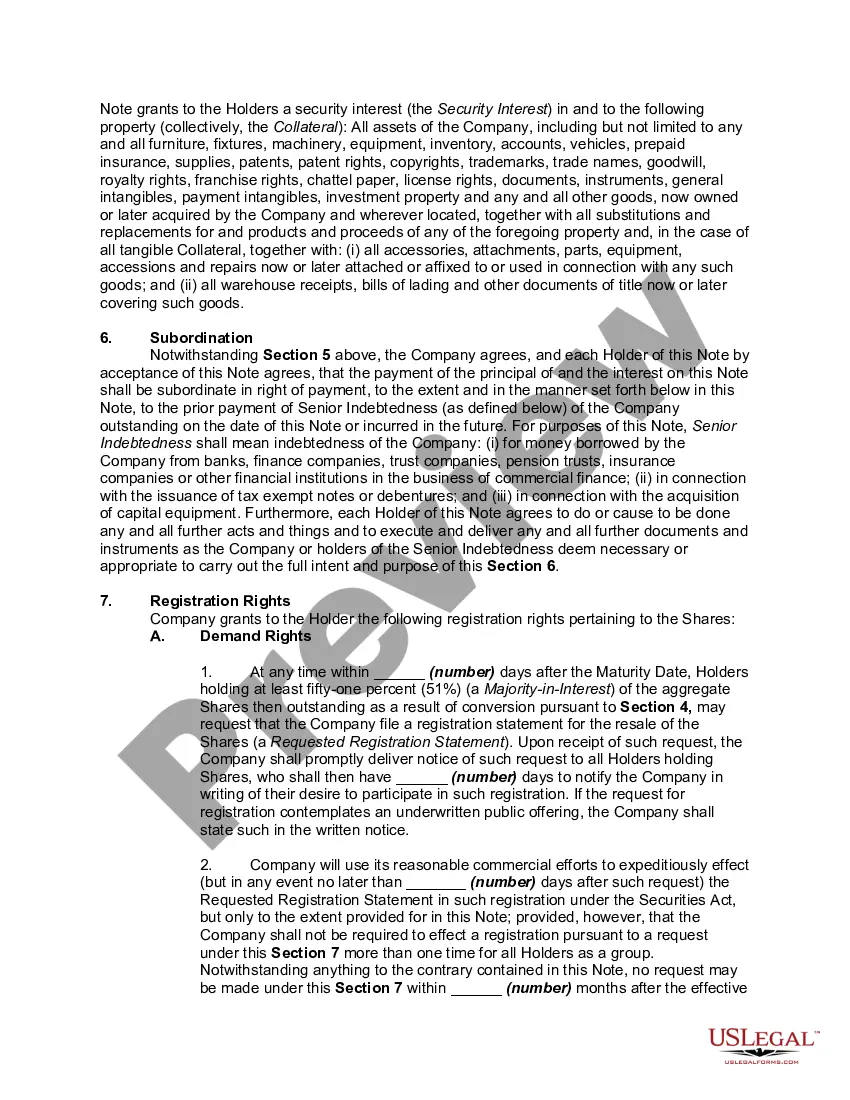
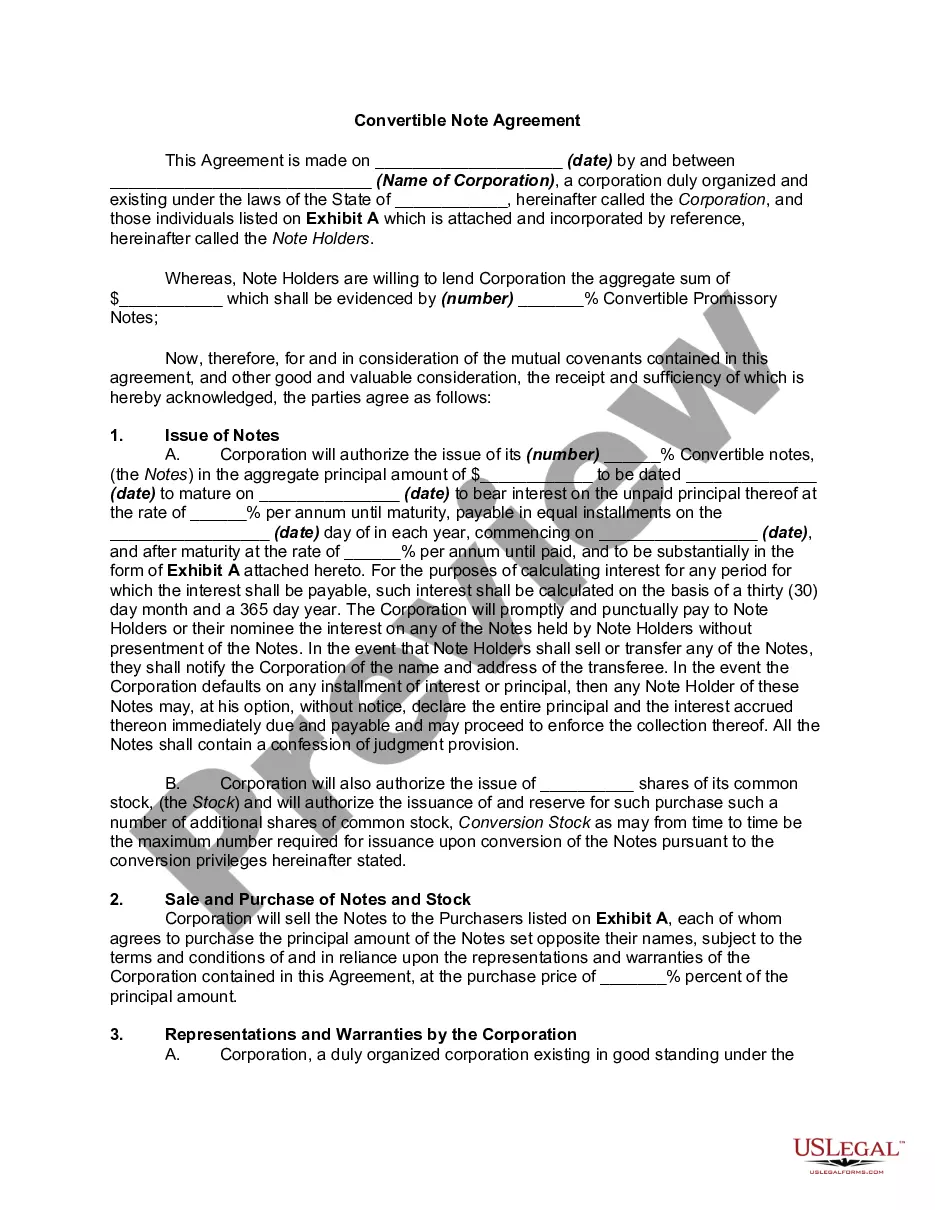
Convertible Note Corporation With Warrants Term Sheet
Description
Get your form ready online
Our built-in tools help you complete, sign, share, and store your documents in one place.
Make edits, fill in missing information, and update formatting in US Legal Forms—just like you would in MS Word.
Download a copy, print it, send it by email, or mail it via USPS—whatever works best for your next step.
Sign and collect signatures with our SignNow integration. Send to multiple recipients, set reminders, and more. Go Premium to unlock E-Sign.
If this form requires notarization, complete it online through a secure video call—no need to meet a notary in person or wait for an appointment.
We protect your documents and personal data by following strict security and privacy standards.

Make edits, fill in missing information, and update formatting in US Legal Forms—just like you would in MS Word.

Download a copy, print it, send it by email, or mail it via USPS—whatever works best for your next step.

Sign and collect signatures with our SignNow integration. Send to multiple recipients, set reminders, and more. Go Premium to unlock E-Sign.

If this form requires notarization, complete it online through a secure video call—no need to meet a notary in person or wait for an appointment.

We protect your documents and personal data by following strict security and privacy standards.
Looking for another form?






How to fill out Convertible Promissory Note By Corporation - One Of Series Of Notes Issued Pursuant To Convertible Note Purchase Agreement?
Utilizing legal document examples that adhere to federal and state laws is essential, and the internet provides numerous alternatives to choose from.
However, what is the advantage of spending time searching for the appropriately drafted Convertible Note Corporation With Warrants Term Sheet sample online when the US Legal Forms online repository has already compiled such templates in one location.
US Legal Forms stands as the leading online legal database, featuring over 85,000 fillable templates created by attorneys for various professional and personal situations. They are easy to navigate, with all documents categorized by jurisdiction and purpose of use. Our specialists keep abreast of legal updates, ensuring that you can always trust your form is current and compliant when obtaining a Convertible Note Corporation With Warrants Term Sheet from our platform.
Click Buy Now once you find the correct document and select a subscription plan. Register for an account or Log In and complete the payment using PayPal or a credit card. Choose the suitable format for your Convertible Note Corporation With Warrants Term Sheet and download it. All documents retrieved through US Legal Forms are reusable. To re-download and fill out previously purchased forms, access the My documents tab in your profile. Take advantage of the most comprehensive and user-friendly legal document service!
- Acquiring a Convertible Note Corporation With Warrants Term Sheet is straightforward and quick for both existing and new users.
- If you possess an account with an active subscription, Log In and save the document template you require in the appropriate format.
- If you are unfamiliar with our website, follow the steps outlined below.
- Examine the template using the Preview function or through the text description to confirm it fits your requirements.
- If needed, find another sample using the search tool at the top of the page.
Form popularity
FAQ
The warrant coverage on a convertible note specifies how much additional equity you can acquire through warrants tied to your investment. For instance, if a company offers 20% warrant coverage, it allows you to buy that percentage of equity in the future. This element of the convertible note corporation with warrants term sheet can be a significant motivator for potential investors.
Investing in warrants offers potential leverage on future stock performance without the immediate capital outlay required for purchasing shares. This means you can secure your position and wait for the optimal market conditions to exercise your warrants. Such strategic choices are often detailed in the convertible note corporation with warrants term sheet.
The procedure for issuing convertible notes involves drafting the convertible note corporation with warrants term sheet, determining the terms of the note, and obtaining necessary approvals. After creating the document, you will issue the notes to investors in exchange for funding, and then manage the conversion process, if applicable, according to the terms outlined in the term sheet.
Convertible notes appear as a liability on a balance sheet until they are converted into equity. You'll report them under short-term or long-term liabilities, depending on their maturity dates. It's essential to follow accounting guidelines when recording these financial instruments, particularly if they are specified in a convertible note corporation with warrants term sheet.
Although it is customary to forego a term sheet, in some cases it may be required if the parties need to negotiate certain terms. It can be advantageous to use a term sheet for the company to easily summarize the terms of the notes for potential other investors purchasing a convertible note.
Warrants are typically issued by companies as a way to raise capital, while convertible debt is usually issued by investors as a way to hedge their investment. Another key difference is that warrants are often attached to debt, while convertible debt is often attached to equity.
Warrants, on the other hand, typically don't have any intrinsic value of their own. Unlike convertible securities, there's no underlying bond or preferred shares that give the warrant owner any additional rights. The only value that the warrant has comes from its conversion feature.
What Is a Warrant Coverage on a Convertible Note? On a convertible note, a warrant coverage allows the holder to purchase additional shares of a company. The amount that is allowed to be purchased is a percentage based on the loan principal.
What are Warrants? A classic feature in venture debt deals are warrants. Warrants are a security that gives the holder the right (but not the obligation) to purchase company stock at a specified price within a specific period of time. These are issued by the company.