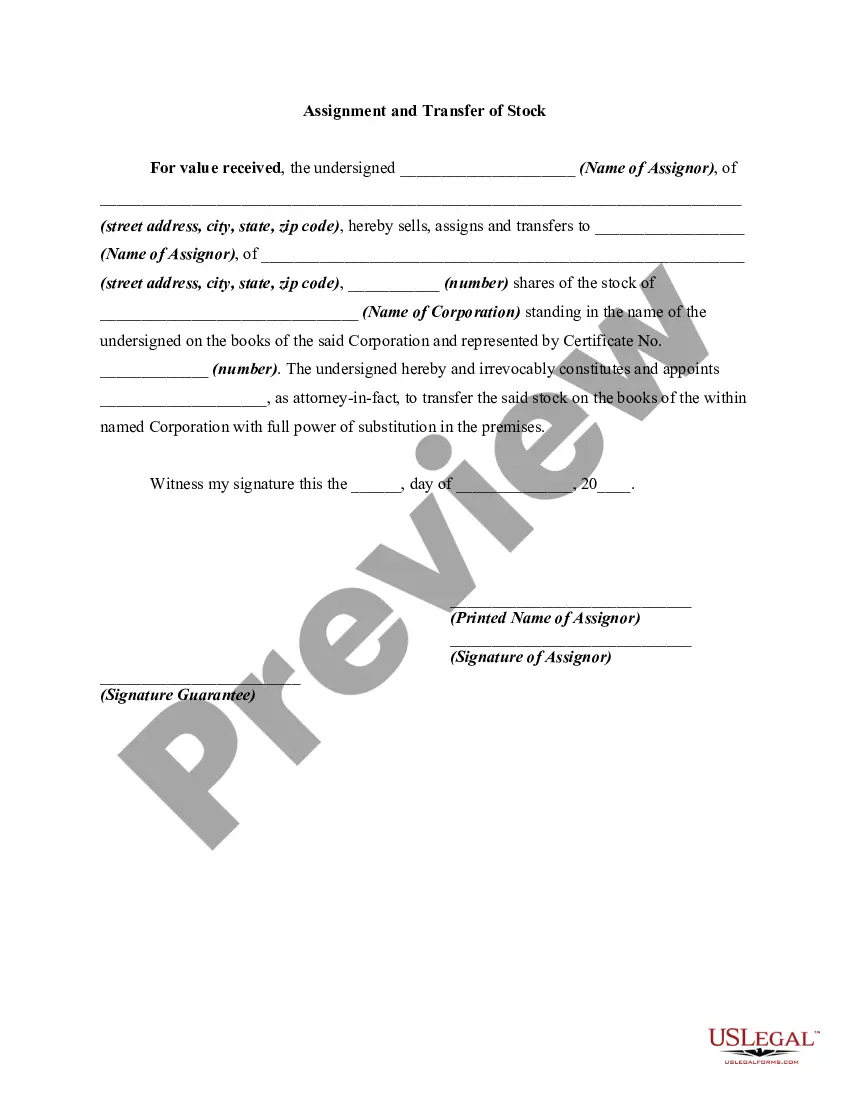
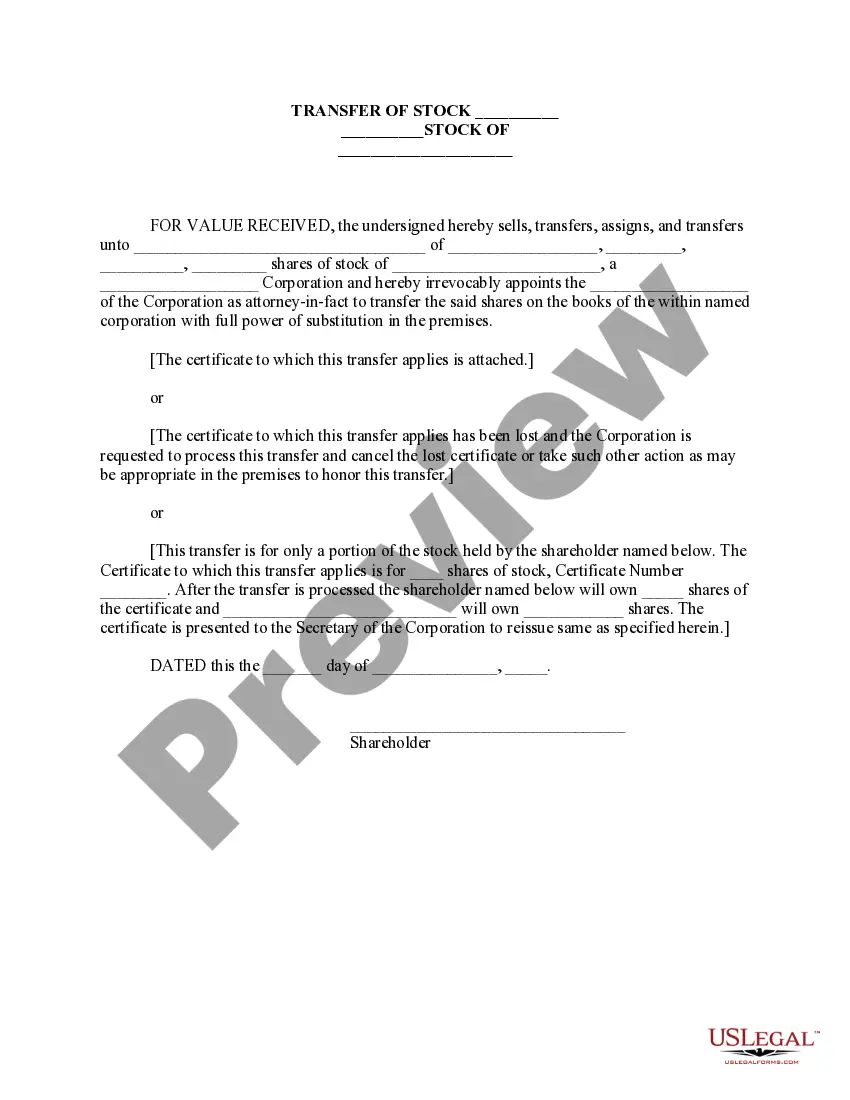
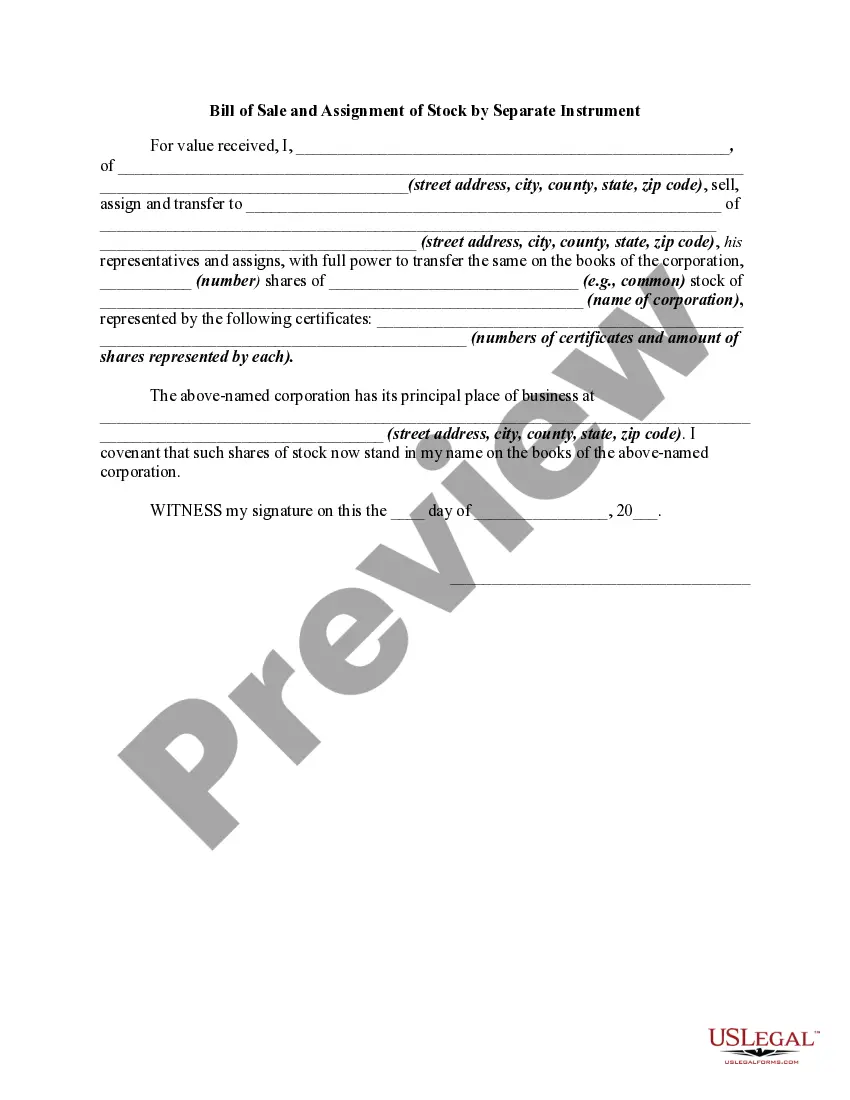
Stock Transfer Form J30
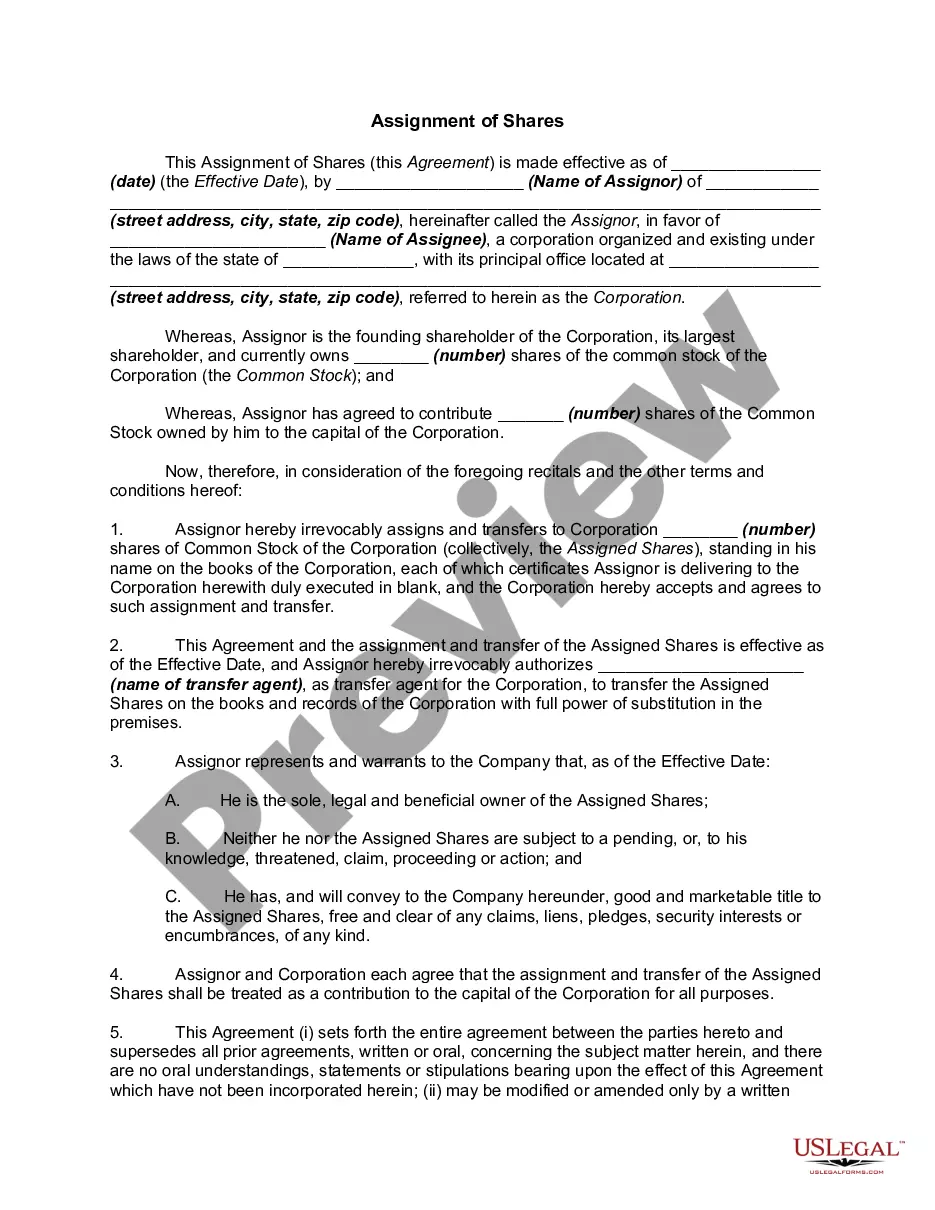
Description
Get your form ready online
Our built-in tools help you complete, sign, share, and store your documents in one place.
Make edits, fill in missing information, and update formatting in US Legal Forms—just like you would in MS Word.
Download a copy, print it, send it by email, or mail it via USPS—whatever works best for your next step.
Sign and collect signatures with our SignNow integration. Send to multiple recipients, set reminders, and more. Go Premium to unlock E-Sign.
If this form requires notarization, complete it online through a secure video call—no need to meet a notary in person or wait for an appointment.
We protect your documents and personal data by following strict security and privacy standards.

Make edits, fill in missing information, and update formatting in US Legal Forms—just like you would in MS Word.

Download a copy, print it, send it by email, or mail it via USPS—whatever works best for your next step.

Sign and collect signatures with our SignNow integration. Send to multiple recipients, set reminders, and more. Go Premium to unlock E-Sign.

If this form requires notarization, complete it online through a secure video call—no need to meet a notary in person or wait for an appointment.

We protect your documents and personal data by following strict security and privacy standards.
Looking for another form?









Form popularity
FAQ
Yes, a stock transfer form J30 needs to be sent to a company's house in certain cases, particularly when registering the transfer of shares. This ensures all ownership records are accurate and legally binding. Adhering to this requirement helps avoid potential disputes over share ownership.
The procedure for transferring shares typically involves completing the stock transfer form J30, obtaining signatures from both the seller and buyer, and possibly notifying the company. After the paperwork is finalized, it may be necessary to update the company's share register. Uslegalforms provides resources to guide you through this process efficiently.
You can obtain the stock transfer form J30 from various online resources, including the uslegalforms platform. This site offers templates and customizable options to simplify the process. Alternatively, you can find this form through legal stationery suppliers or directly from Companies House.
Share transfer forms are indeed required when ownership of shares changes hands. The stock transfer form J30 serves as the official documentation of the transfer, ensuring that both the seller and buyer have a clear record. It's essential for legal compliance as well as for maintaining organizational integrity.
Yes, share transfers often need to be notified to Companies House. This includes filing the stock transfer form J30 when the transfer involves registered shares. Keeping Companies House informed is vital for maintaining compliance and ensuring that public records reflect current ownership.
Completing the J30 stock transfer form requires clear and accurate information. You'll need to provide details such as the names of the transferor and transferee, the number of shares being transferred, and the date of transfer. Additionally, it's wise to refer to uslegalforms, where you can find guidance and templates to make the process smoother.
You must submit a stock transfer form to a company's house in certain situations, especially if the shares being transferred are part of a registered company. The stock transfer form J30 serves as an important record for ownership changes. It ensures that the company maintains accurate and up-to-date information in its registers.
Typically, the current stockholder fills out the stock transfer form. They provide details about the transaction and confirm the transfer through signatures. However, both the transferor and transferee should review the form for accuracy. Relying on the US Legal Forms platform can help ensure every detail meets legal standards.
To fill out a stock transfer certificate, input the name of the transferor, the transferee, and the number of shares being transferred. Include the date and signatures of both parties to authorize the transfer. It is essential that all information is accurate to prevent future disputes, and you'll find helpful templates on US Legal Forms to guide you.
Creating a stock ledger involves documenting all transactions, including purchases and sales of shares. Be sure to log details like transaction dates, share quantities, and party names. Keeping this document up to date helps in monitoring share ownership effectively. Tools available on the US Legal Forms platform can help streamline this task.