Not Profitable Template Without Subsidies
Description
Get your form ready online
Our built-in tools help you complete, sign, share, and store your documents in one place.
Make edits, fill in missing information, and update formatting in US Legal Forms—just like you would in MS Word.
Download a copy, print it, send it by email, or mail it via USPS—whatever works best for your next step.
Sign and collect signatures with our SignNow integration. Send to multiple recipients, set reminders, and more. Go Premium to unlock E-Sign.
If this form requires notarization, complete it online through a secure video call—no need to meet a notary in person or wait for an appointment.
We protect your documents and personal data by following strict security and privacy standards.

Make edits, fill in missing information, and update formatting in US Legal Forms—just like you would in MS Word.

Download a copy, print it, send it by email, or mail it via USPS—whatever works best for your next step.

Sign and collect signatures with our SignNow integration. Send to multiple recipients, set reminders, and more. Go Premium to unlock E-Sign.

If this form requires notarization, complete it online through a secure video call—no need to meet a notary in person or wait for an appointment.

We protect your documents and personal data by following strict security and privacy standards.
Looking for another form?







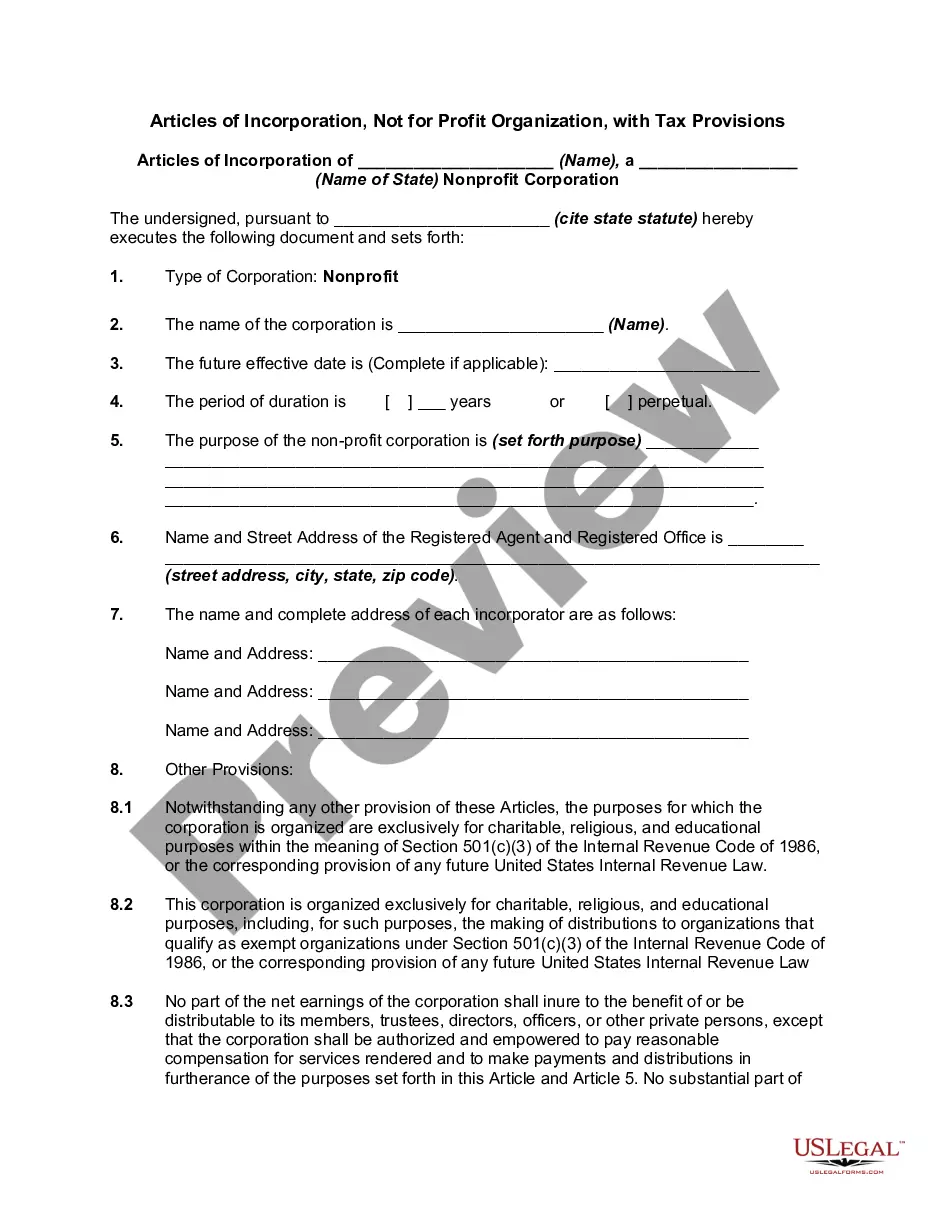
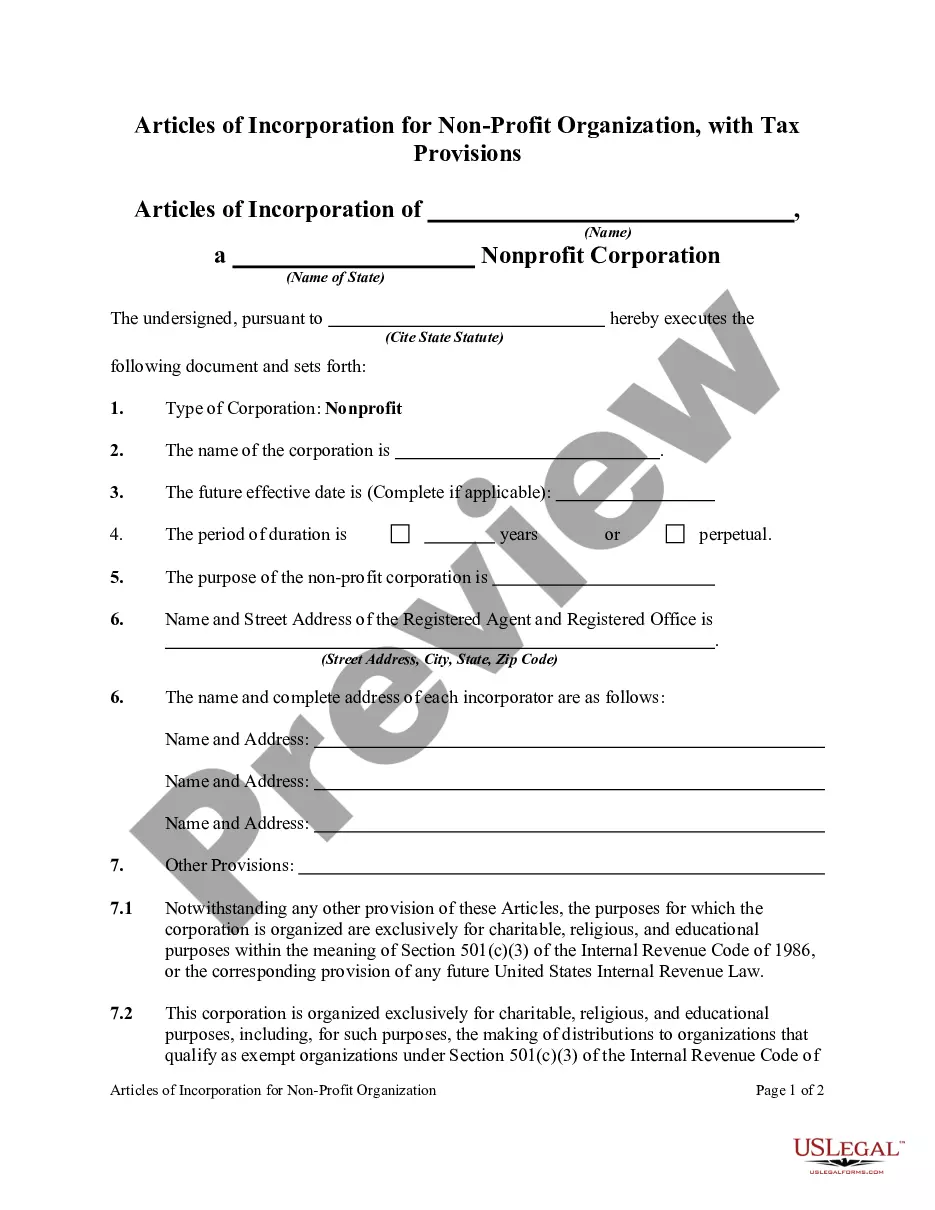
How to fill out Articles Of Incorporation, Not For Profit Organization, With Tax Provisions?
It’s well-known that you can’t transform into a legal authority in an instant, nor can you understand how to swiftly compose a Not Profitable Template Without Subsidies without possessing a specific skill set.
Creating legal documents is a labor-intensive process that necessitates certain training and expertise.
So why not entrust the preparation of the Not Profitable Template Without Subsidies to the experts.
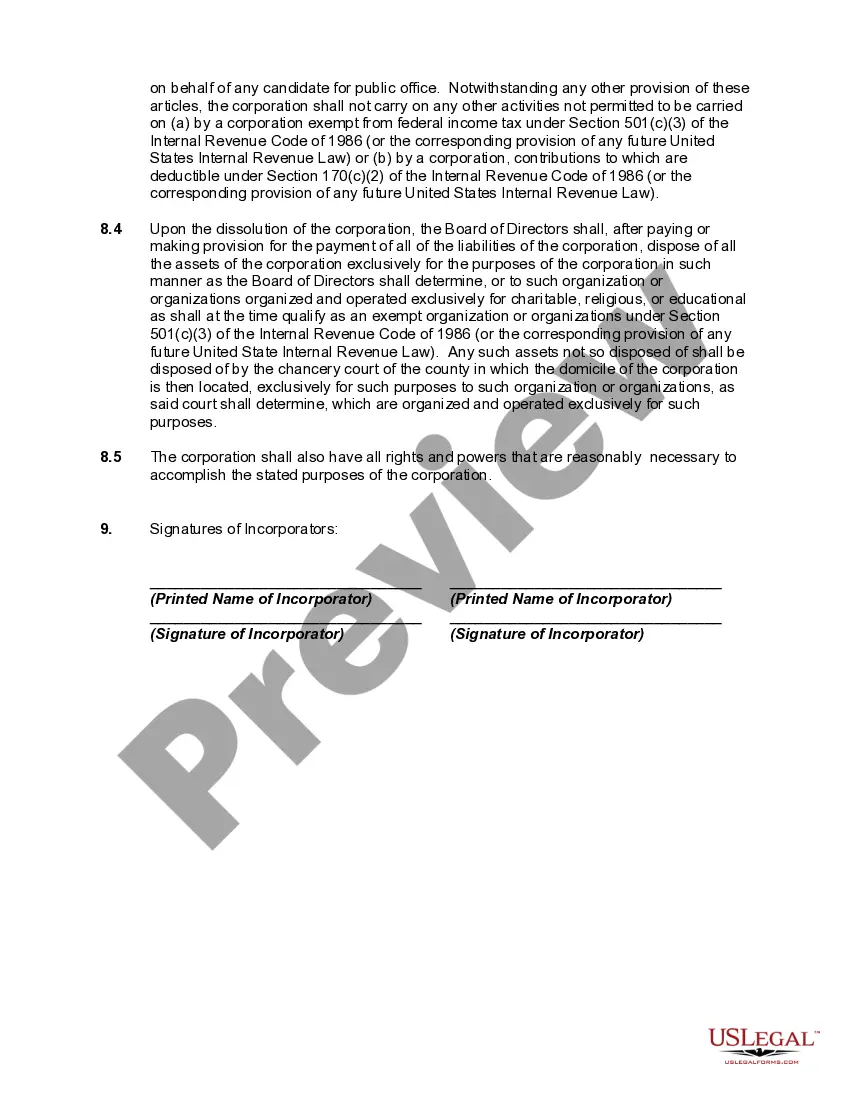
Preview it (if this option is available) and read the accompanying description to ascertain whether the Not Profitable Template Without Subsidies meets your needs.
If you require any other form, you can initiate your search again. Create a free account and choose a subscription plan to purchase the form. Click Buy now. Once the transaction is completed, you can access the Not Profitable Template Without Subsidies, fill it out, print it, and send it via mail to the specified individuals or organizations.
- With US Legal Forms, one of the most extensive legal template repositories, you can discover anything from judicial paperwork to templates for internal corporate communication.
- We understand how crucial compliance and adherence to federal and state regulations are.
- That’s why, on our platform, all forms are location-specific and current.
- Here’s how to get started on our site and obtain the form you need in just minutes.
- Search for the form you require using the search bar at the top of the page.
Form popularity
FAQ
A subsidy is a benefit given to an individual, business, or institution, usually by the government. It can be direct (such as cash payments) or indirect (such as tax breaks).
Fuel subsidy removal means that the government stops providing financial support to reduce the cost of fuel for consumers. The purpose of removing fuel subsidy is usually to reduce government spending and promote more efficient use of resources.
This could include, for example, a cash payment, relief on business rates charge, a loan with interest below the market rate or free use of equipment or office space. Subsidies should only be given if they are in the public interest, to address a market failure or equity concern.
The subsidy control regime ? a flexible, principles-based approach for the UK. A clear, proportionate and transparent set of principles and rules that make clear which subsidies are permitted and prohibited, and under what circumstances.
Because there are so many industries receiving government assistance, this article will focus on three business sectors that receive subsidies: energy, agriculture, and transportation. Each of these business sectors receives billions of dollars annually from the government.