Not For Profit Insurance Application
Description
Get your form ready online
Our built-in tools help you complete, sign, share, and store your documents in one place.
Make edits, fill in missing information, and update formatting in US Legal Forms—just like you would in MS Word.
Download a copy, print it, send it by email, or mail it via USPS—whatever works best for your next step.
Sign and collect signatures with our SignNow integration. Send to multiple recipients, set reminders, and more. Go Premium to unlock E-Sign.
If this form requires notarization, complete it online through a secure video call—no need to meet a notary in person or wait for an appointment.
We protect your documents and personal data by following strict security and privacy standards.

Make edits, fill in missing information, and update formatting in US Legal Forms—just like you would in MS Word.

Download a copy, print it, send it by email, or mail it via USPS—whatever works best for your next step.

Sign and collect signatures with our SignNow integration. Send to multiple recipients, set reminders, and more. Go Premium to unlock E-Sign.

If this form requires notarization, complete it online through a secure video call—no need to meet a notary in person or wait for an appointment.

We protect your documents and personal data by following strict security and privacy standards.
Looking for another form?






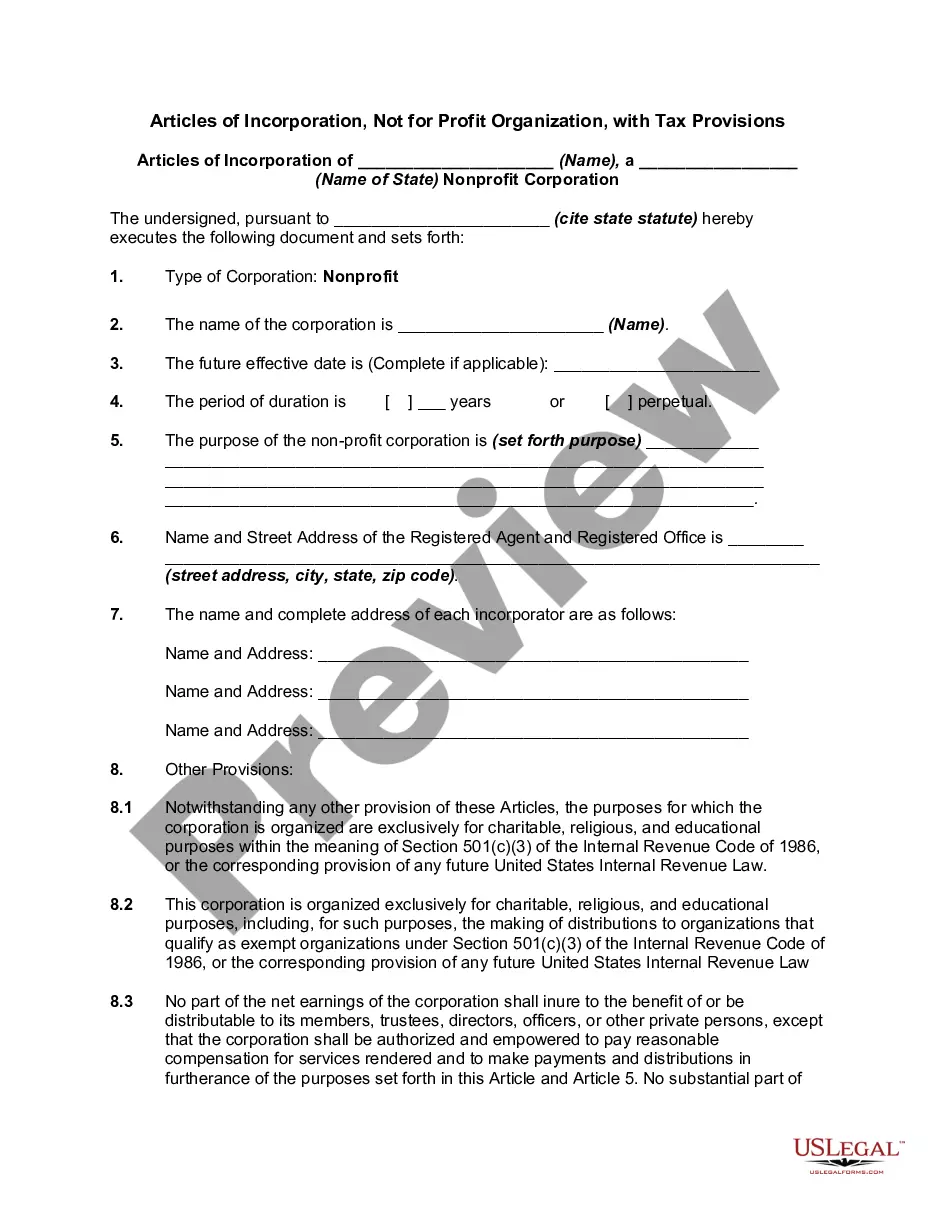
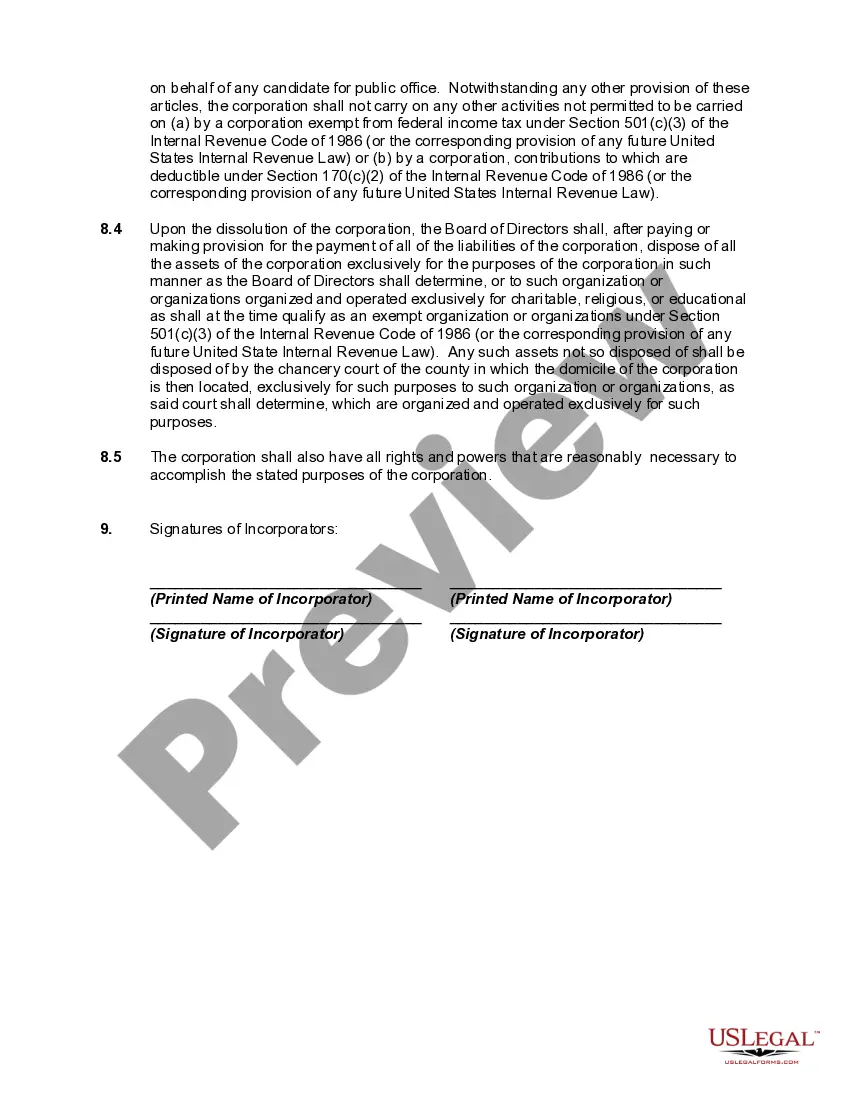
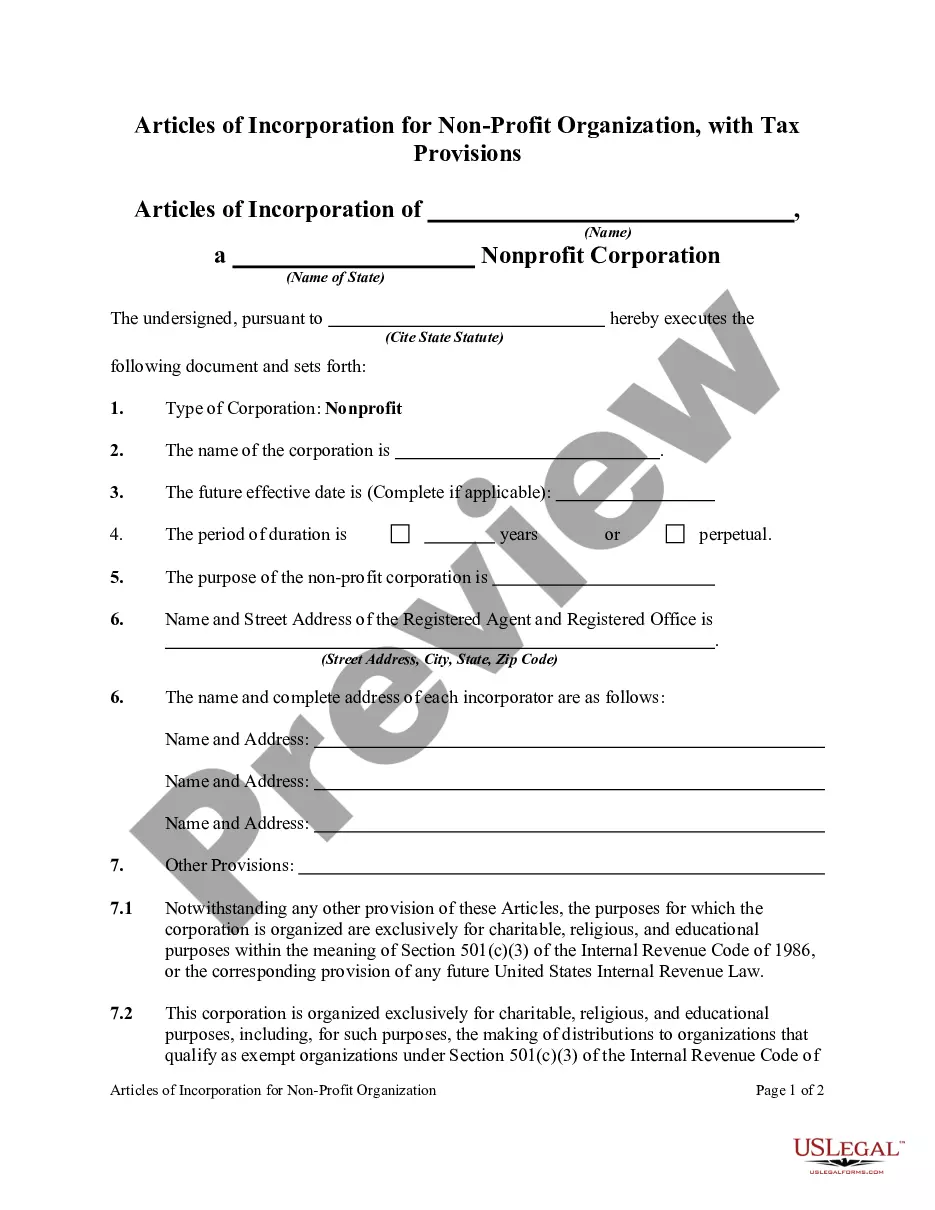
How to fill out Articles Of Incorporation, Not For Profit Organization, With Tax Provisions?
- Log into your account on US Legal Forms. Ensure your subscription is current to access the necessary templates.
- Search for your specific form in the extensive library. Utilize the Preview mode to review the document description, ensuring it meets your local jurisdiction requirements.
- If you need a different template, use the Search tab to find what suits your needs best.
- Once you've identified the right document, click 'Buy Now' and select your preferred subscription plan.
- Complete your purchase by entering your payment information through credit card or PayPal.
- Download your completed form to your device and access it anytime through the 'My Forms' menu in your profile.
By following these steps, you can efficiently obtain the necessary documentation for your not for profit insurance application. US Legal Forms empowers you to create legally sound documents with ease.
Don't hesitate—explore the vast resources available on US Legal Forms today and streamline your legal document process!
Form popularity
FAQ
To file for a not-for-profit organization, start by choosing a name and drafting your organization’s mission statement and bylaws. Next, complete and submit the required articles of incorporation to your state, and apply for your federal tax exemption through the IRS. Remember, once established, you may want to consider a not for profit insurance application to protect your organization and its assets.
Yes, there are several non-profit health insurance companies in the United States that operate with the primary goal of providing affordable coverage rather than maximizing profits. These organizations focus on serving their community members and may offer lower premiums. When exploring insurance options, consider how a not for profit insurance application could provide coverage tailored to your needs.
While the terms nonprofit and not for profit are often used interchangeably, they can have different meanings. Nonprofits typically focus on charitable activities and may qualify for tax-exempt status, while not for profit organizations can engage in business activities but do not aim to distribute profits to members. Both types can benefit from a not for profit insurance application to manage risks associated with their operations.
Yes, you can start a nonprofit by yourself, but it often helps to have a team or a board of directors for support and guidance. You'll need to draft bylaws, file articles of incorporation, and apply for tax-exempt status. Don't forget to consider a not for profit insurance application to safeguard your organization from potential risks as it grows.
Starting a nonprofit for yourself is not the typical approach, as nonprofits exist to serve the public good, not private interests. If you have a cause you are passionate about, consider forming a separate organization that addresses that need. By filing a not for profit insurance application, you can protect the organization's assets and liability as you work toward your mission.
To qualify as a not-for-profit organization, you must meet specific criteria set by the Internal Revenue Service. Typically, this involves demonstrating that your group is organized for charitable, educational, or similar purposes and that you do not intend to make a profit. Completing a not for profit insurance application often goes hand-in-hand with gaining nonprofit status, as it shows a commitment to responsible practices. Utilizing platforms like US Legal Forms can simplify the process of meeting these qualifications and getting the necessary coverage.
Nonprofits typically require several types of insurance, such as general liability, property insurance, and directors and officers insurance. Each type of coverage addresses specific risks that nonprofits face in their daily operations. By completing a not for profit insurance application, organizations can find the right combination of policies that fit their financial situation and operational needs. Protecting your nonprofit with the right insurance ensures its longevity and sustainability.
Yes, small nonprofits do need insurance to protect themselves from unexpected events. Insurance helps safeguard the organization’s assets, reduces financial risks, and ensures compliance with legal requirements. By filing a not for profit insurance application, small nonprofits can secure coverage tailored to their specific needs. This proactive approach allows organizations to focus on their mission without the burden of unforeseen liabilities.
Qualifying as a not for profit typically involves applying for tax-exempt status with the IRS. This process requires you to provide documentation outlining your mission and organizational structure. Consistency in adhering to nonprofit regulations and financial transparency is crucial for maintaining that status. Additionally, utilizing a practical not for profit insurance application can help you navigate this landscape effectively.
Nonprofits should consider various types of insurance to protect their operations and assets. General liability insurance is essential, as well as property insurance and, in many cases, directors and officers insurance. By evaluating the specific risks associated with your mission, you can ensure comprehensive coverage. Implementing a not for profit insurance application can streamline this process and safeguard your organization.