Nonprofit Sentence Examples
Description
Get your form ready online
Our built-in tools help you complete, sign, share, and store your documents in one place.
Make edits, fill in missing information, and update formatting in US Legal Forms—just like you would in MS Word.
Download a copy, print it, send it by email, or mail it via USPS—whatever works best for your next step.
Sign and collect signatures with our SignNow integration. Send to multiple recipients, set reminders, and more. Go Premium to unlock E-Sign.
If this form requires notarization, complete it online through a secure video call—no need to meet a notary in person or wait for an appointment.
We protect your documents and personal data by following strict security and privacy standards.

Make edits, fill in missing information, and update formatting in US Legal Forms—just like you would in MS Word.

Download a copy, print it, send it by email, or mail it via USPS—whatever works best for your next step.

Sign and collect signatures with our SignNow integration. Send to multiple recipients, set reminders, and more. Go Premium to unlock E-Sign.

If this form requires notarization, complete it online through a secure video call—no need to meet a notary in person or wait for an appointment.

We protect your documents and personal data by following strict security and privacy standards.
Looking for another form?
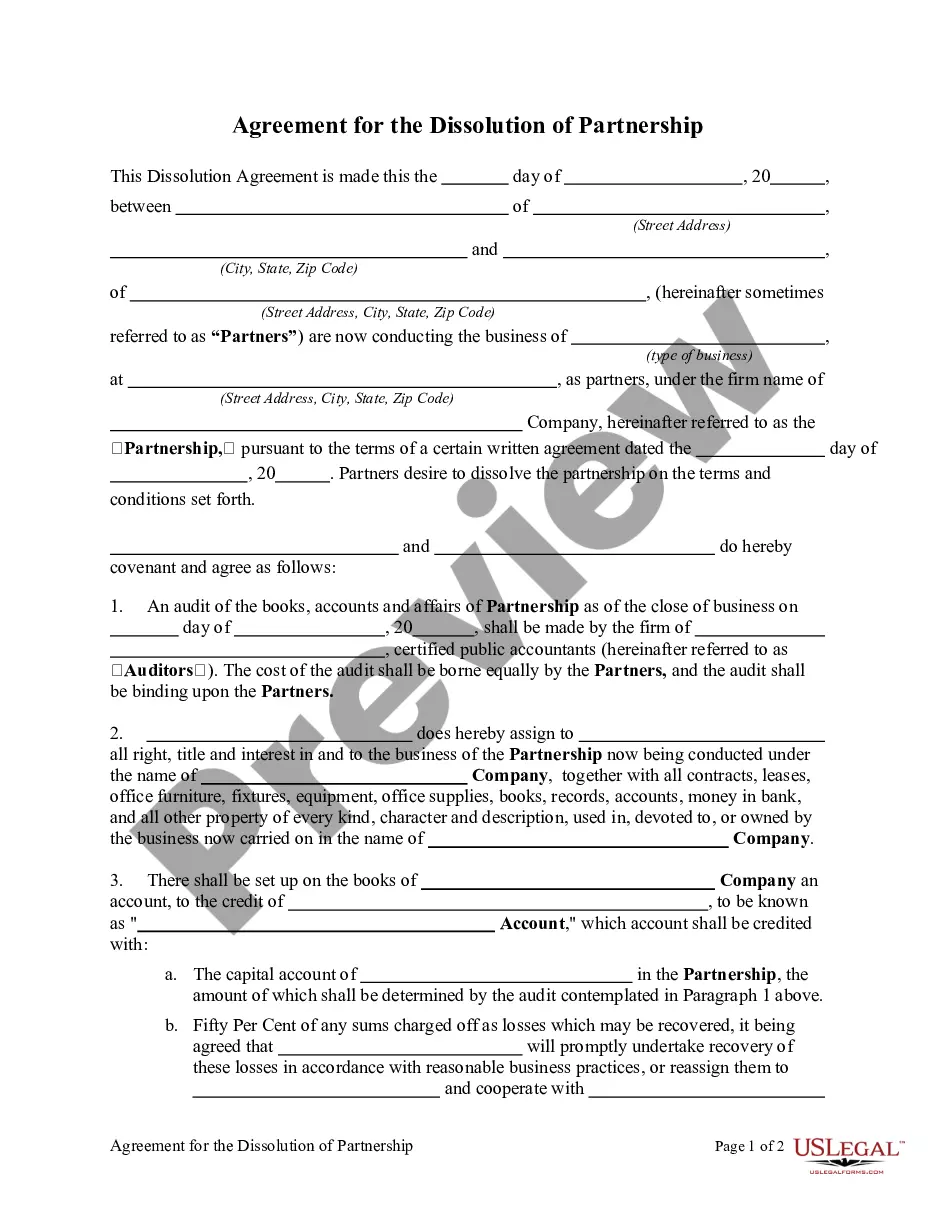
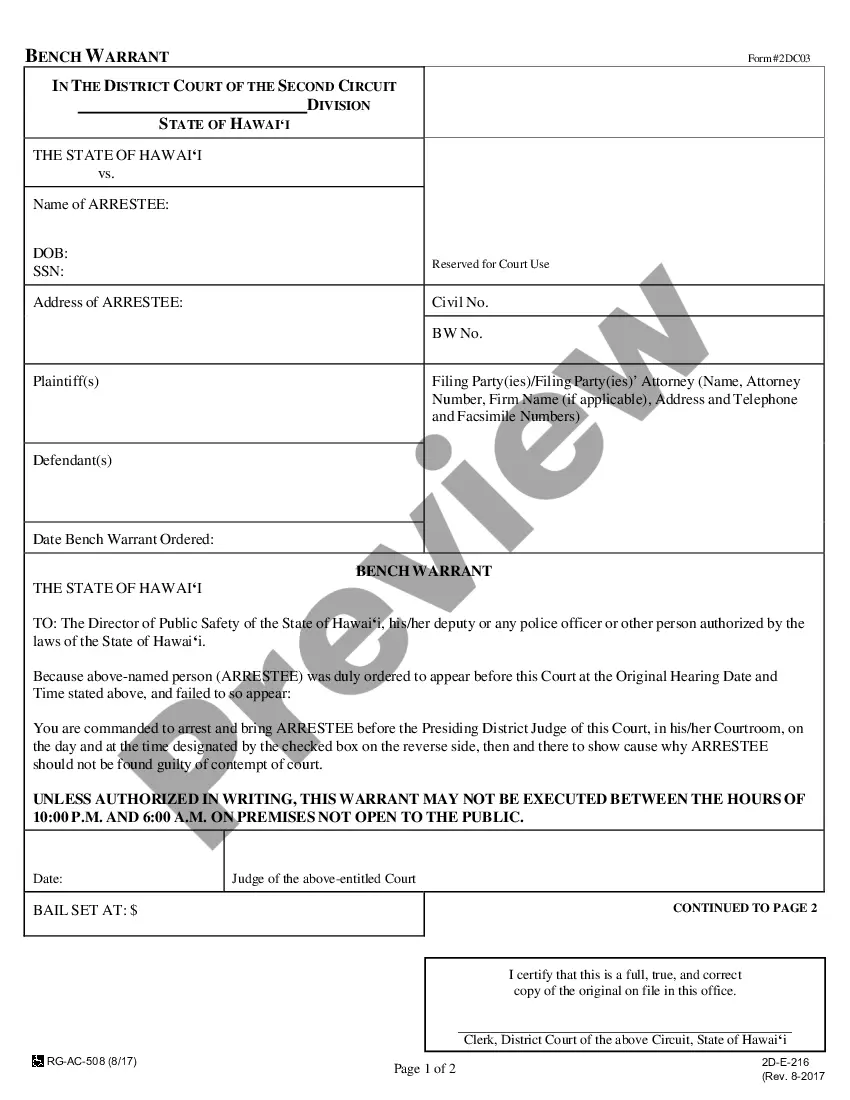

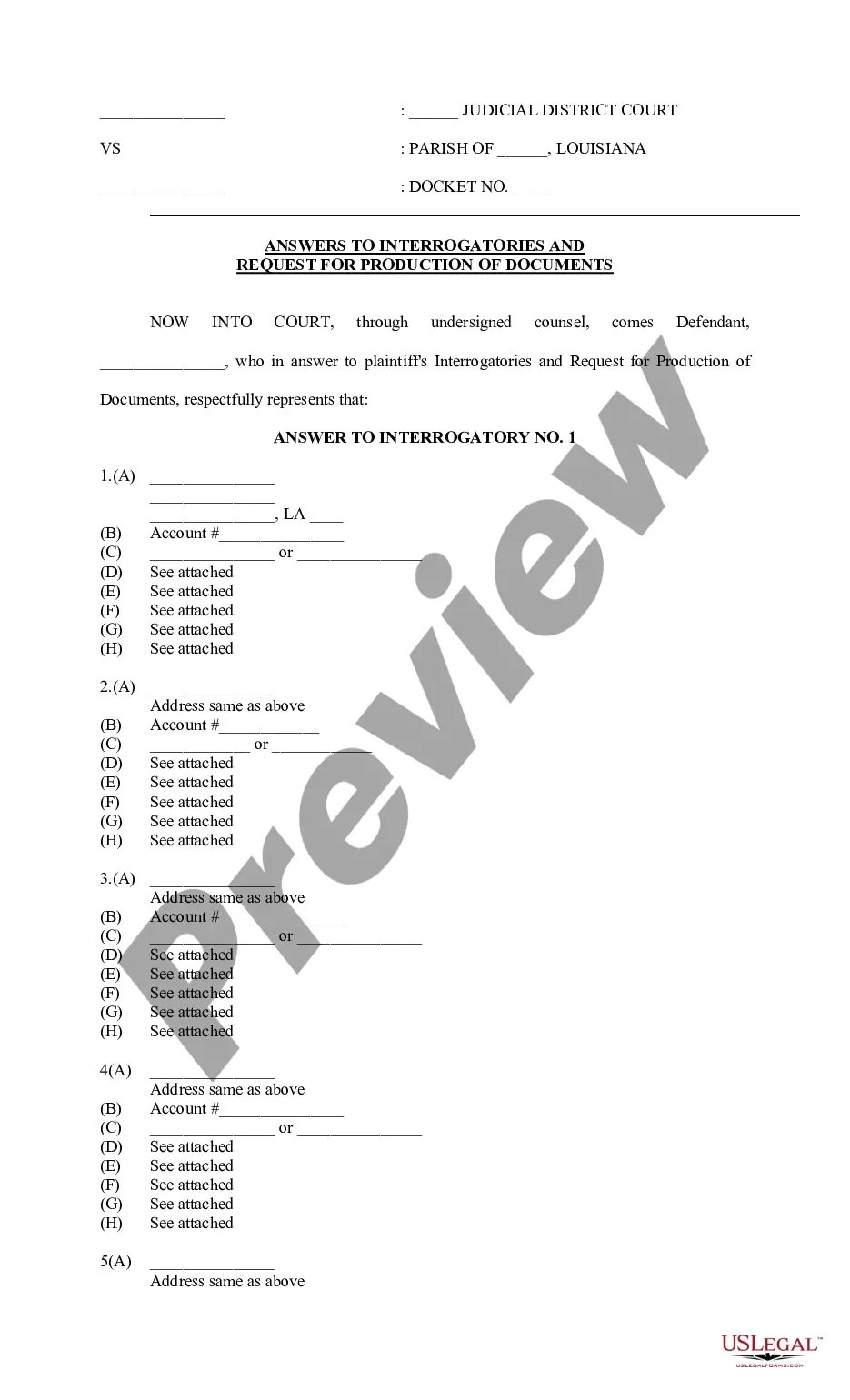
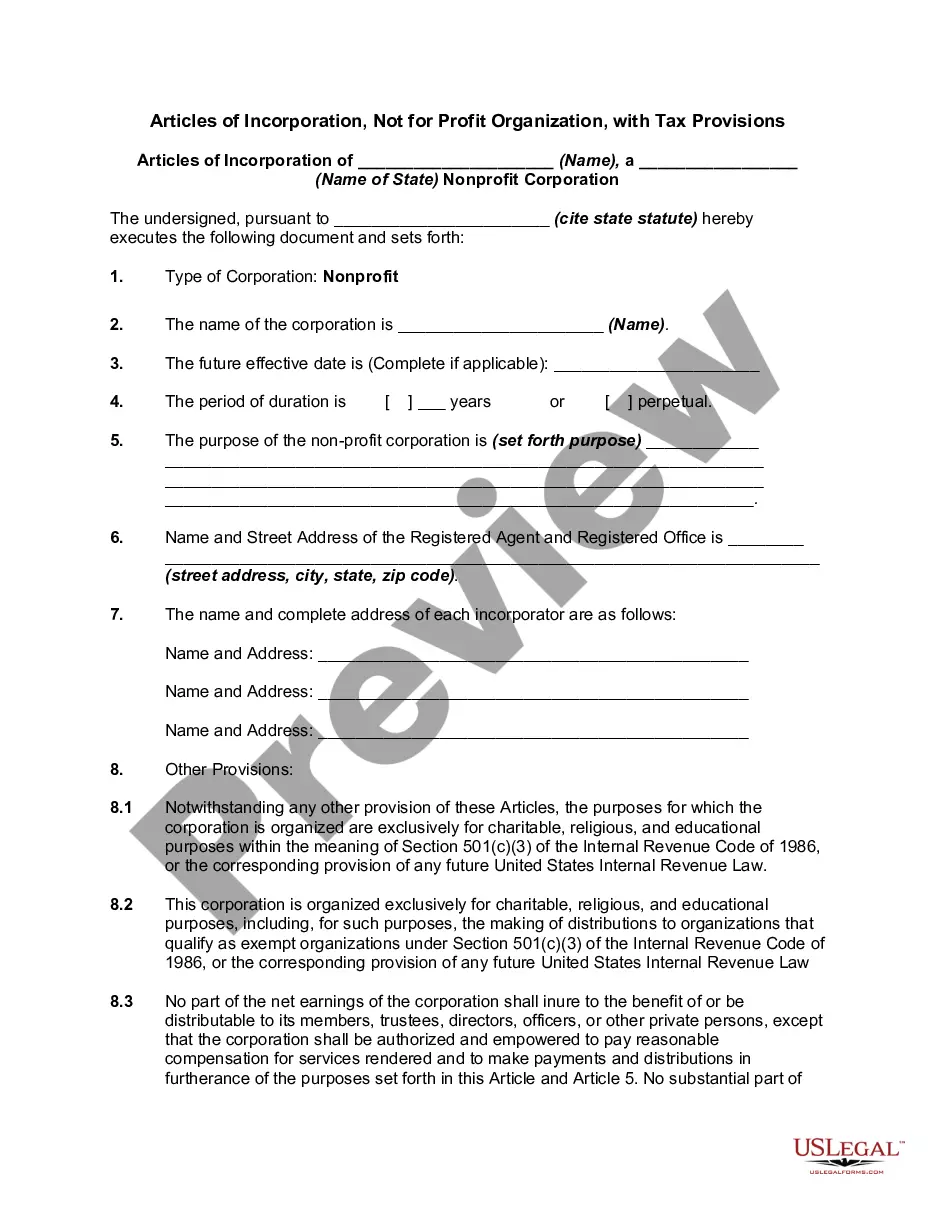
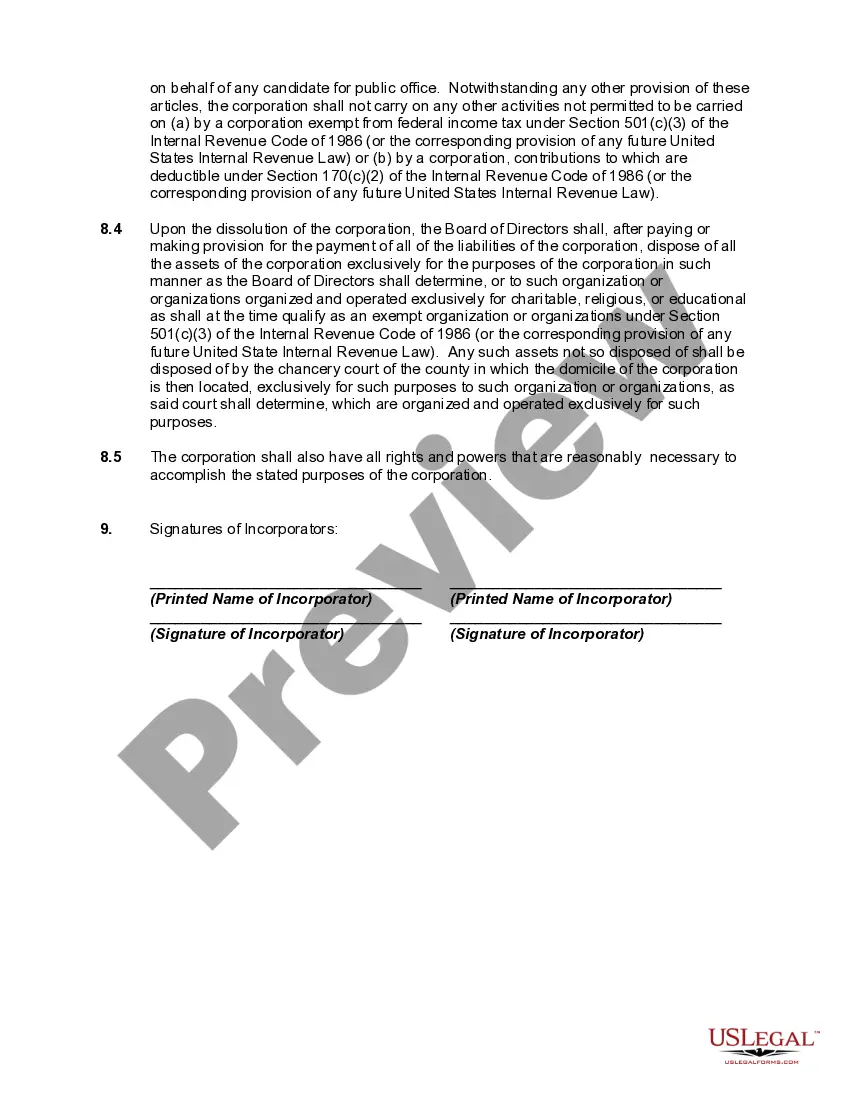
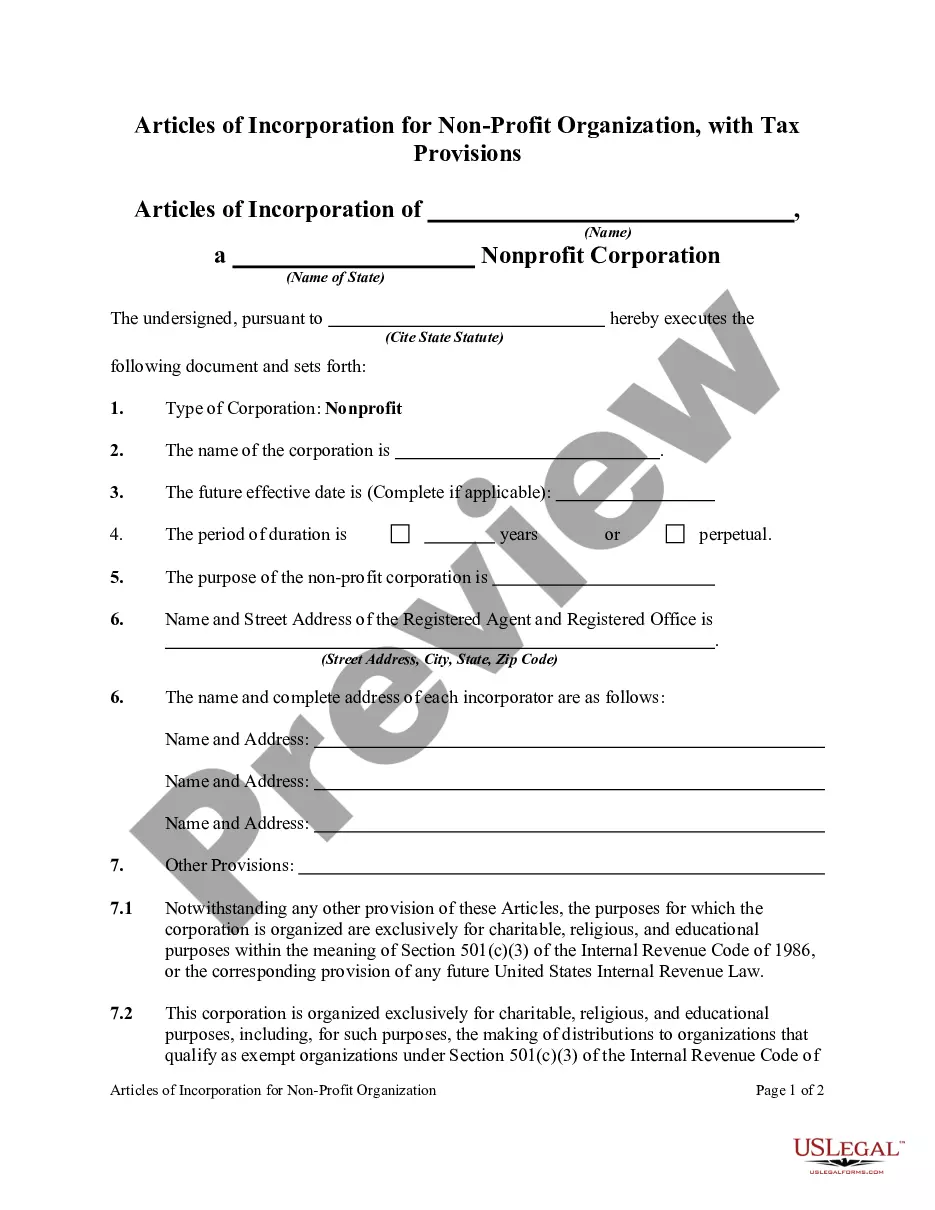
How to fill out Articles Of Incorporation, Not For Profit Organization, With Tax Provisions?
The Nonprofit Sentence Examples displayed on this webpage is a reusable legal framework crafted by experienced attorneys in compliance with federal and local statutes and guidelines.
For over 25 years, US Legal Forms has supplied individuals, businesses, and lawyers with more than 85,000 verified, state-specific documents for any professional and personal event. It’s the fastest, simplest, and most dependable method to secure the forms you need, as the service promises the utmost level of data protection and anti-malware security.
Select the format you wish for your Nonprofit Sentence Examples (PDF, DOCX, RTF) and store the template on your device. Complete and sign the documents. Print the template to fill it out manually. Alternatively, use an online multifunctional PDF editor to swiftly and accurately complete and sign your form with an electronic signature. Download your documents again if necessary. Reuse the same document whenever needed. Access the My documents section in your profile to redownload any previously acquired forms. Enlist with US Legal Forms to access verified legal templates for every aspect of life.
- Search for the document you require and examine it.
- Browse through the template you looked up and view it or check the form description to verify it meets your needs. If it doesn’t, utilize the search functionality to discover the correct one. Click Buy Now once you find the template you desire.
- Register and Log Into your account.
- Choose the pricing option that works for you and create an account. Make a quick payment using PayPal or a credit card. If you already possess an account, Log In and review your subscription to proceed.
- Acquire the editable template.
Form popularity
FAQ
An example of a nonprofit entity is the American Red Cross, which provides disaster relief and health services. This organization operates primarily on donations and volunteer efforts, illustrating the core mission of nonprofit work. To better understand different types of nonprofits and their structures, visit US Legal Forms, where you can find resources and templates tailored to your needs.
The U.S. Copyright Office maintains records of registered works by author and title, some of which may be searched online. More information can be found in the Copyright Office Circular 22 ? How to Investigate the Copyright Status of a Work, or by calling the Copyright Office at (202) 707-9100.
Look for the copyright notice, if there is one (generally there is in a published book). That gives the name of the copyright holder. Typically it is the author but may even be the publisher. If the copyright holder is deceased, it may be their heirs or estate.
Works that no longer attract copyright protection are said to be in the public domain, and you are free to use them without restriction. That includes no restrictions on copying and adapting, no need to seek permission, and no uncertainty about your rights as a user.
Under copyright law, anonymous and pseudonymous works are still fully protected. Simply because you cannot find the name of the copyright owner does not mean that it is not under copyright. Nevertheless, you are left to ponder whom to ask for permission.
When you register a claim to copyright in a work with the Copyright Office, you create a public record of your claim. All information you provide on your copyright registration will be available to the public, and most of it will be available online.
Finding and verifying the copyright status for works published after 1978 is easy, as all copyright records since that date are available at cocatalog.loc.gov. The situation is more complicated when you want to find information about copyrighted works from before that date.
Welcome to the Copyright Public Records Portal. This is your starting point for finding copyright records held by the Copyright Office. Here, you can search our online records, learn about our searching and retrieval services, and view educational videos and materials.