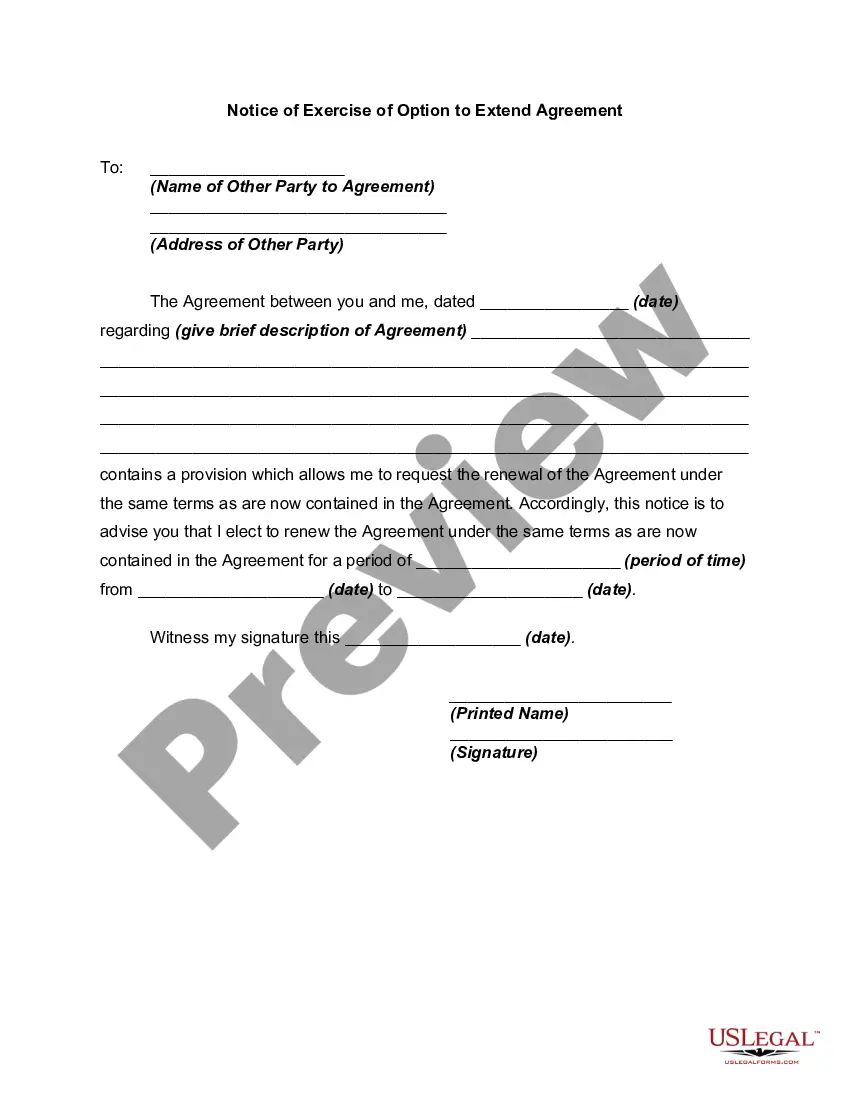
Notice Under Terms With Pictures
Description
Get your form ready online
Our built-in tools help you complete, sign, share, and store your documents in one place.
Make edits, fill in missing information, and update formatting in US Legal Forms—just like you would in MS Word.
Download a copy, print it, send it by email, or mail it via USPS—whatever works best for your next step.
Sign and collect signatures with our SignNow integration. Send to multiple recipients, set reminders, and more. Go Premium to unlock E-Sign.
If this form requires notarization, complete it online through a secure video call—no need to meet a notary in person or wait for an appointment.
We protect your documents and personal data by following strict security and privacy standards.

Make edits, fill in missing information, and update formatting in US Legal Forms—just like you would in MS Word.

Download a copy, print it, send it by email, or mail it via USPS—whatever works best for your next step.

Sign and collect signatures with our SignNow integration. Send to multiple recipients, set reminders, and more. Go Premium to unlock E-Sign.

If this form requires notarization, complete it online through a secure video call—no need to meet a notary in person or wait for an appointment.

We protect your documents and personal data by following strict security and privacy standards.
Looking for another form?





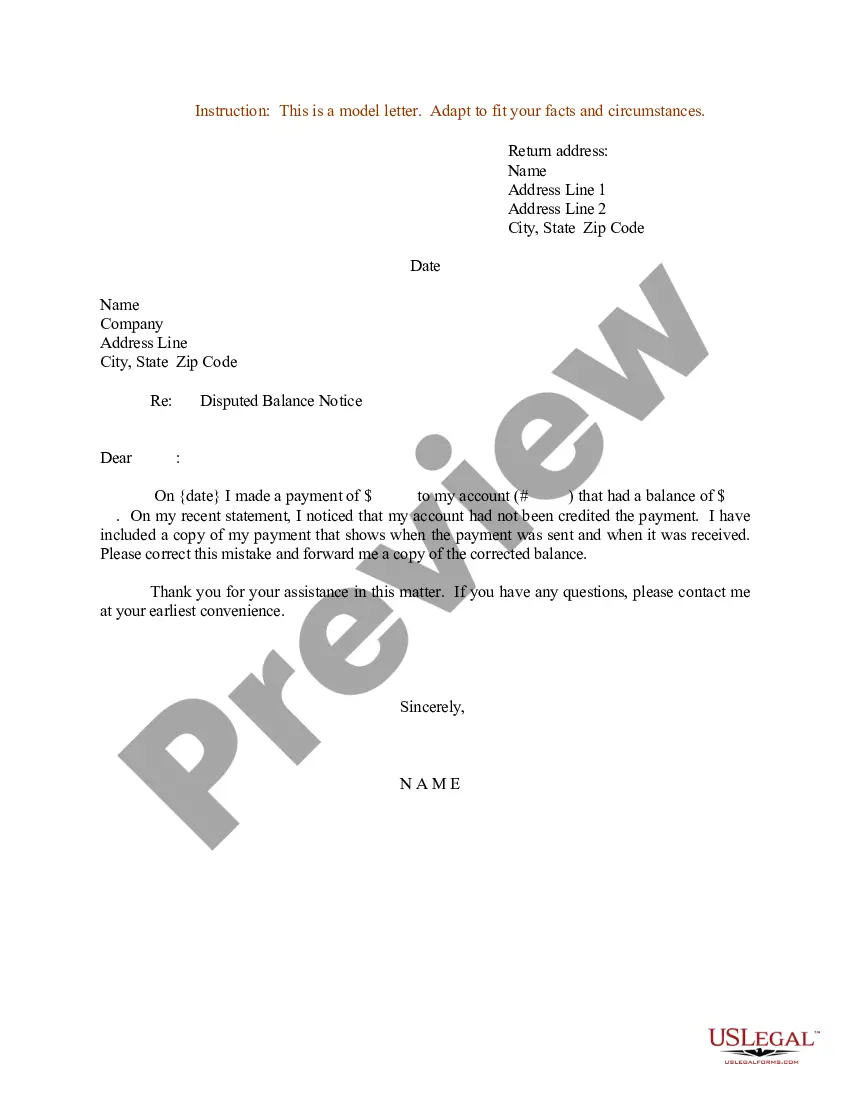


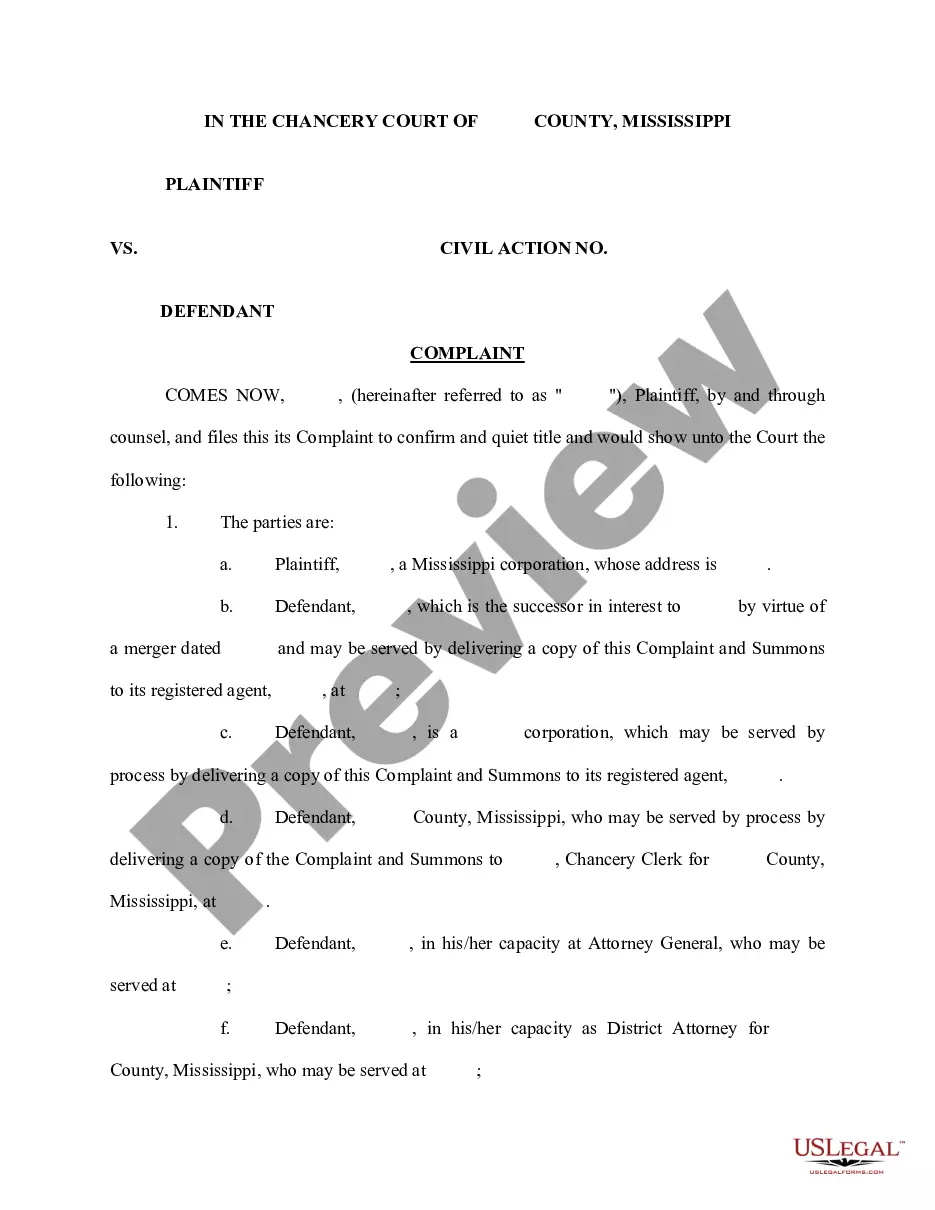
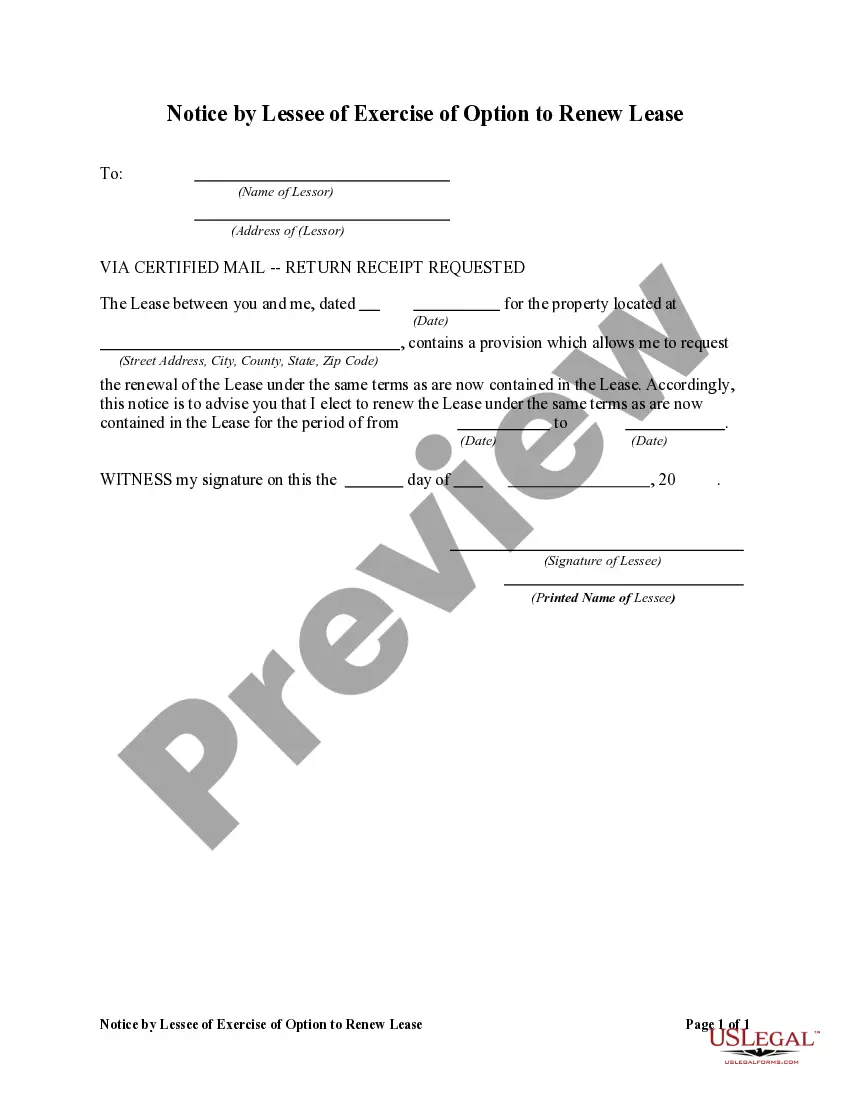
How to fill out Notice Of Exercise Of Option To Extend Agreement?
Utilizing legal document examples that comply with federal and local laws is essential, and the internet provides an abundance of choices to select from.
However, what’s the benefit of squandering time searching for the suitable Notice Under Terms With Pictures template online when the US Legal Forms online repository already has these templates assembled in one location.
US Legal Forms is the largest online legal repository with over 85,000 fillable forms created by attorneys for various business and personal situations. These documents are straightforward to navigate with all files organized by state and intended use. Our experts keep up with legal updates, ensuring that your form is always current and compliant when acquiring a Notice Under Terms With Pictures from our site.
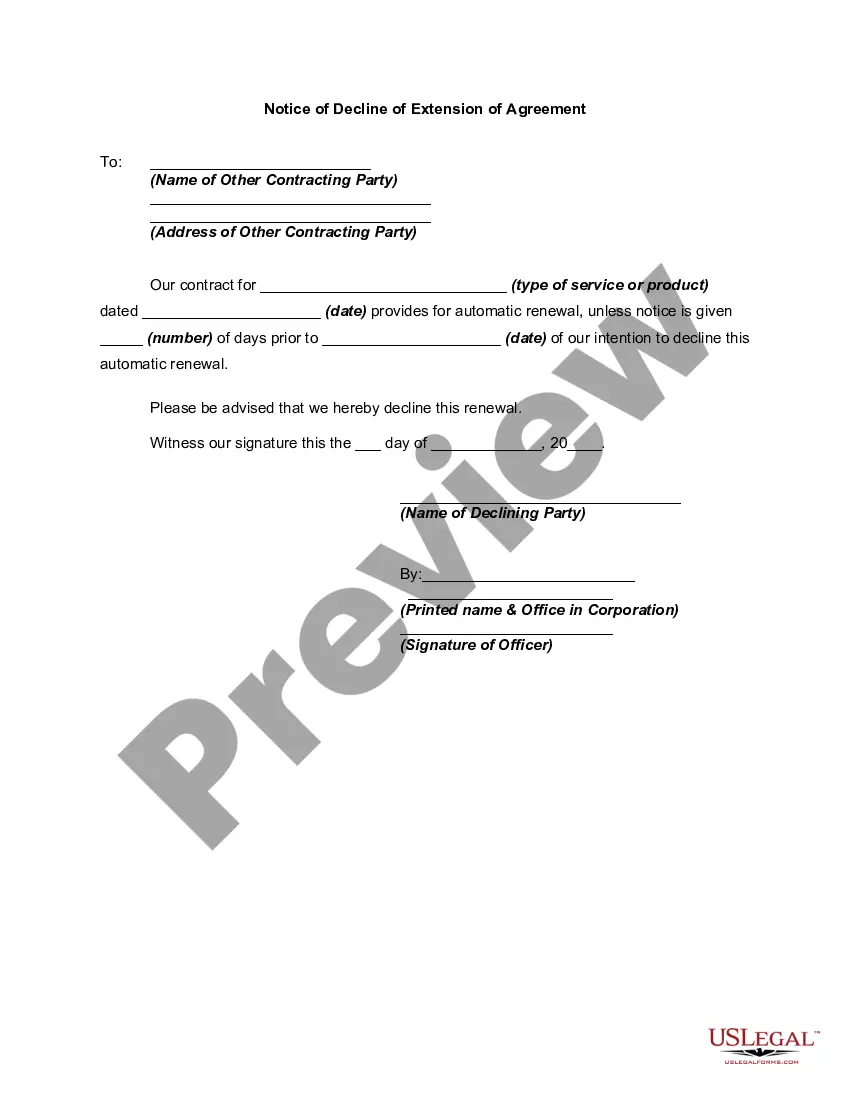
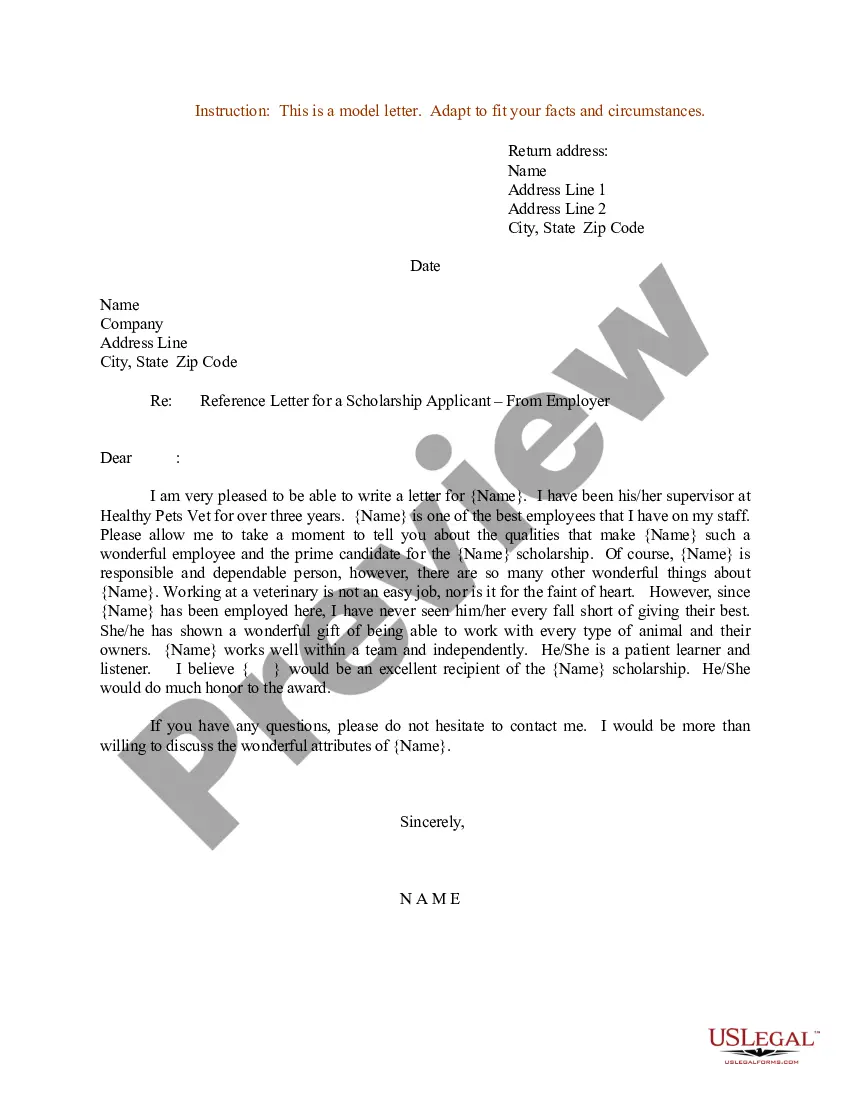
- Examine the template using the Preview feature or through the text outline to confirm it fits your requirements.
- Search for another example using the search tool at the top of the page if necessary.
- Click Buy Now when you’ve located the appropriate document and choose a subscription plan.
- Create an account or Log In and complete the payment with PayPal or a credit card.
- Select the right format for your Notice Under Terms With Pictures and download it.
Form popularity
FAQ
Common Clauses to Include in Your App Terms and Conditions Introduction and Definitions. License to Use. Acceptable Uses. Prohibited Behaviors. Termination and Account Suspension. Intellectual Property Protection. User-Generated Content. Payment Clauses.
Here are a few examples of what you can include in yours: Establish and clarify your intellectual property rights. Limit your liabilities. Outline your dispute resolution options. Disclose your governing laws. Establish payment terms. Include shipping policy and return and refund details.
What To Include In Your Terms and Conditions Introduction. Effective Date. Changes to the Agreement. User Guidelines and Acceptable Uses. Prohibited Behaviors and Activities. User Contributions Clause. Digital Millennium Copyright Act (DMCA) Notice and Policy. Intellectual Property Disclosure.
These are the most common clauses that every Terms of Service agreement should include: User guidelines (rules, restrictions on use) Your right to terminate abusive accounts. How users can terminate accounts. Warranty disclaimer. Limitation of liability. Governing law and legal disputes. Contact information.
Terms and conditions are aimed at protecting the business (you). They give business owners the opportunity to set their rules (within applicable law) of how their service or product may be used including, but not limited to, things like copyright conditions, age limits, and the governing law of the contract.