Discrimination In Employment
Description
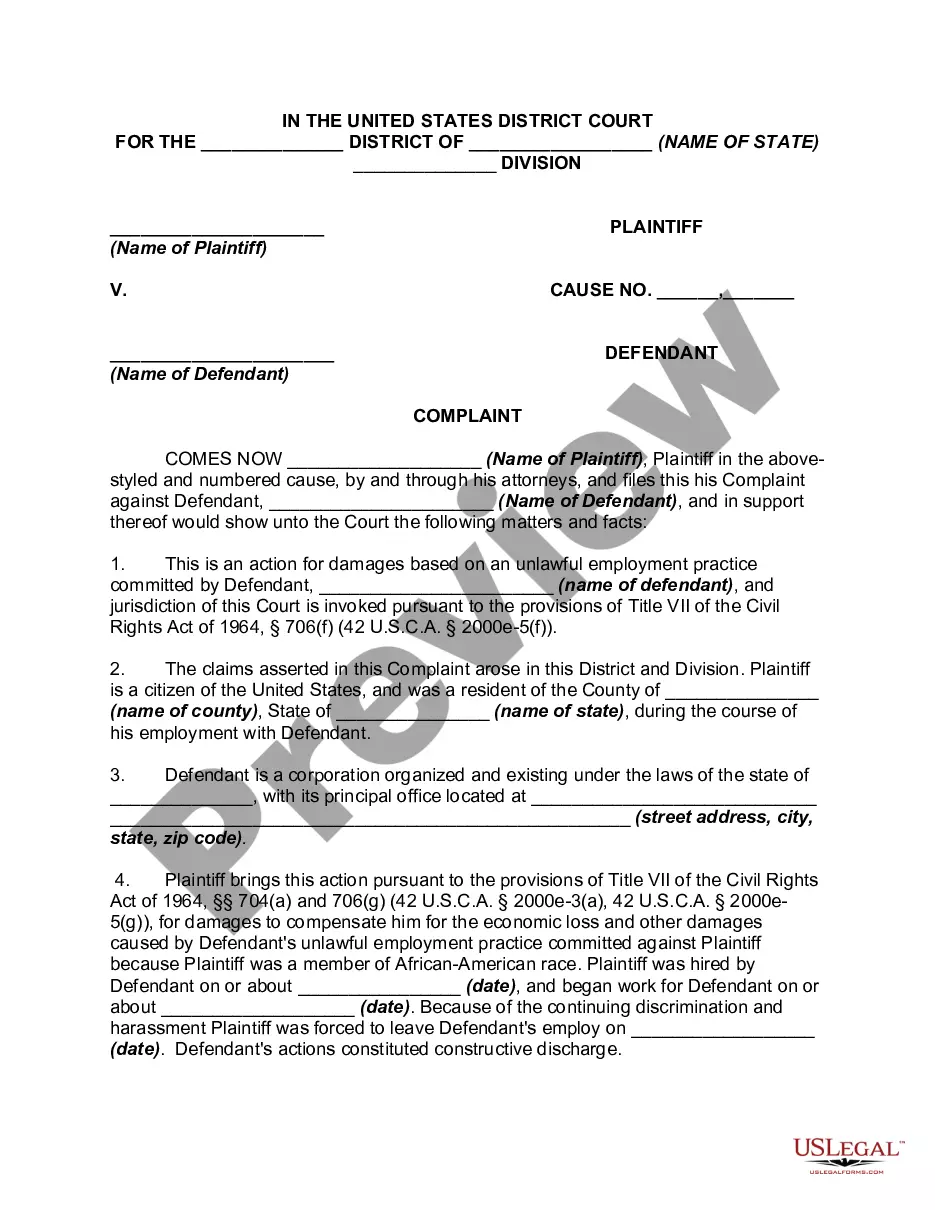



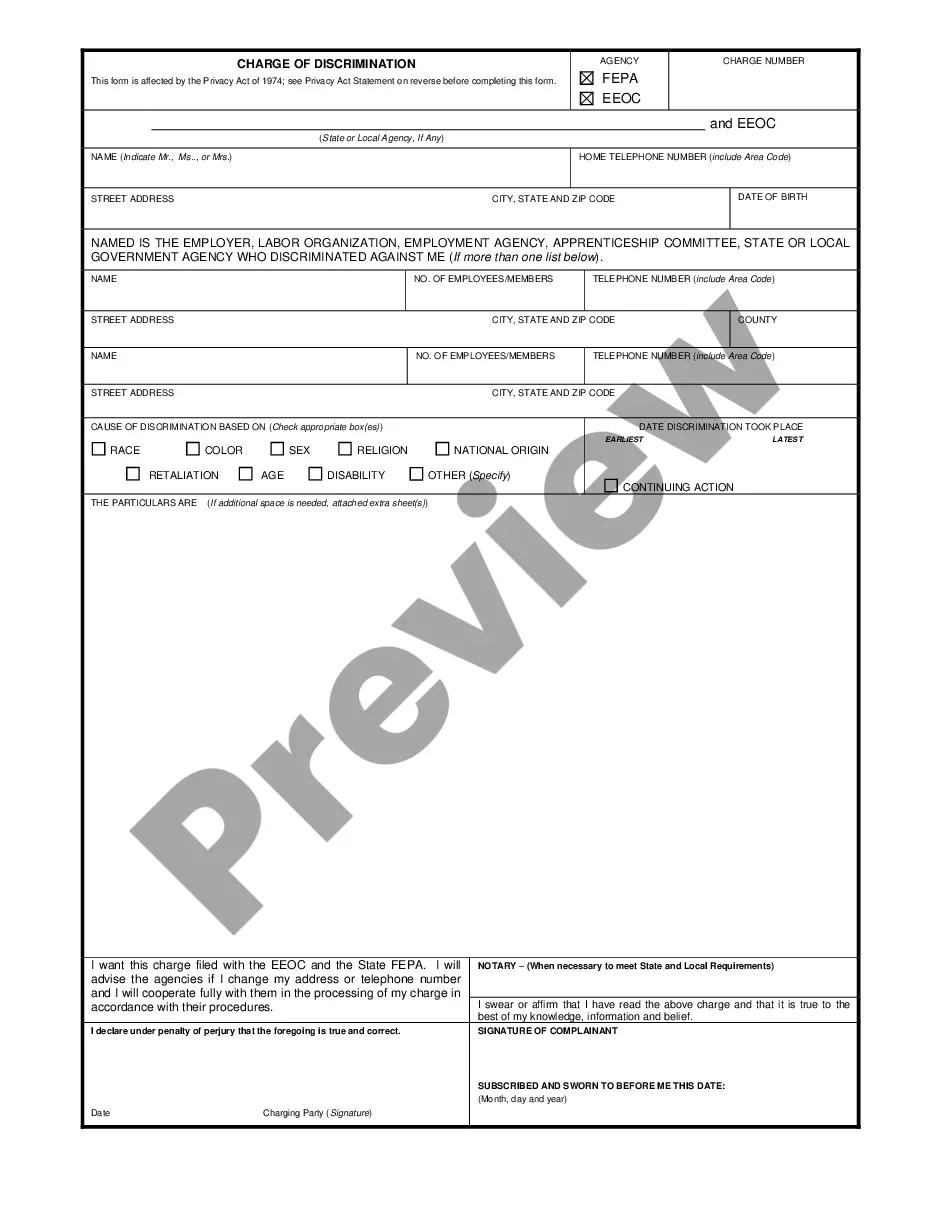
How to fill out Complaint For Racial Discrimination In Employment, Constructive Discharge And For Damages For Discrimination In Promotion By Employer - Equal Employment?
Whether for professional reasons or personal matters, everyone must handle legal issues at some point during their life.
Filling out legal documents requires meticulous attention, beginning with selecting the appropriate form example.
With a vast collection of US Legal Forms available, you don’t have to waste time searching for the correct example online. Utilize the library’s straightforward navigation to find the ideal template for any circumstance.
- Obtain the example you require using the search bar or catalog browsing.
- Review the form’s description to ensure it fits your case, jurisdiction, and area.
- Click on the form’s preview to examine it.
- If it is the wrong document, return to the search feature to locate the Discrimination In Employment sample you need.
- Acquire the template if it aligns with your requirements.
- If you have a US Legal Forms account, simply click Log in to access previously saved documents in My documents.
- If you do not possess an account yet, you can retrieve the form by clicking Buy now.
- Choose the correct pricing option.
- Complete the profile registration form.
- Select your payment method: you can opt for a credit card or PayPal account.
- Choose the document format you prefer and download the Discrimination In Employment.
- Once it is saved, you can fill out the form using editing software or print it and complete it manually.
Form popularity
FAQ
If you find yourself facing discrimination in employment, prioritize documenting your experiences as soon as possible. Approach your supervisor or HR to formally report the issue. If the situation persists, it may be beneficial to seek legal assistance, such as the resources offered by US Legal Forms, which can guide you through the process.
To document discrimination in employment effectively, maintain a detailed log of incidents, including dates, times, locations, and the nature of each occurrence. Collect emails, messages, or any relevant documents that support your claims. This thorough approach will strengthen your case if you seek legal recourse.
To prove you are experiencing discrimination in employment, gather evidence that supports your claims. Keep records of specific incidents, including dates, circumstances, and any witness accounts. This documentation will be invaluable if you decide to file a complaint or pursue legal action.
If you feel unfairly treated at work, start by documenting your experiences and discussing them with trusted colleagues. Communication is key; consider raising your concerns with your supervisor or HR department. If the situation does not improve, seeking legal counsel can provide you with options to ensure your rights are protected.
Suing an employer for discrimination in employment can be a significant decision. It may be worth it if you have substantial evidence and your employer has not resolved the issue through internal channels. However, consider the emotional and financial impacts of a legal battle before proceeding.
If you believe you are experiencing discrimination in employment, the first step is to document your experiences. Record any incidents, including dates, times, and witnesses. Then, report the issue to your supervisor or human resources. If your employer does not address the issue, consider seeking legal advice.
Proving discrimination in employment requires gathering evidence that supports your claims. Start by collecting any emails, performance reviews, or witness statements that demonstrate unfair treatment based on a protected characteristic. You can also seek assistance from platforms like US Legal Forms, which provide resources and documentation templates to help you build a strong case.
If you believe you are facing discrimination in employment, it is crucial to document your experiences. Keep detailed records of incidents, including dates, times, and witnesses. Additionally, consider discussing your concerns with a human resources representative who can offer guidance and help you explore your options for addressing the situation.
If you suspect discrimination in employment, document your experiences and gather any evidence. Next, consider discussing your concerns with your supervisor or HR department. If those options do not resolve the issue, utilizing platforms like USLegalForms can provide guidance on your rights and help you to navigate legal action if needed.
Discrimination at work includes any unfair treatment based on characteristics such as race, gender, religion, or disability. It can involve hiring practices, job assignments, promotions, or workplace harassment. Understanding what qualifies as discrimination in employment is vital for recognizing and addressing unjust practices.