De Jure Segregation In A Sentence
Description
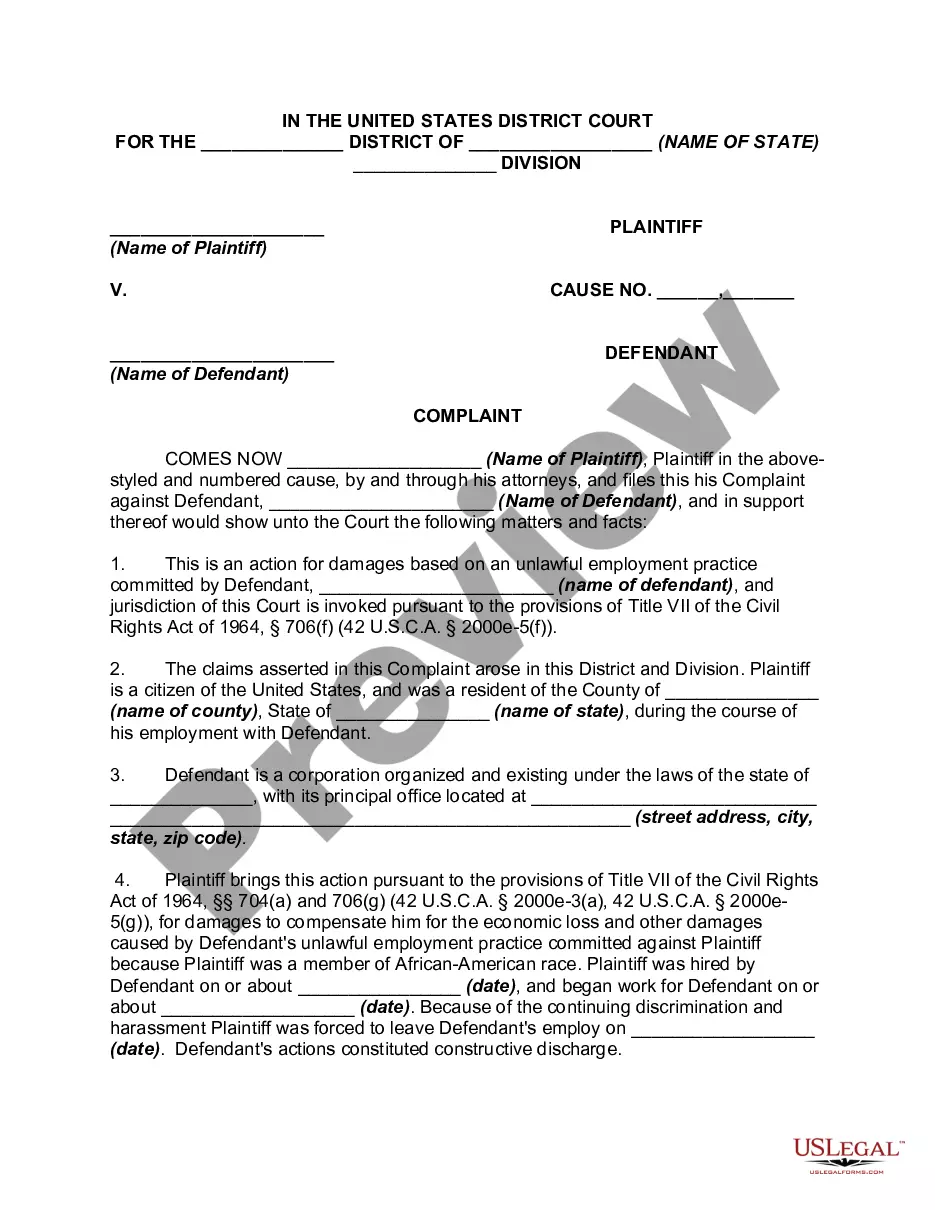



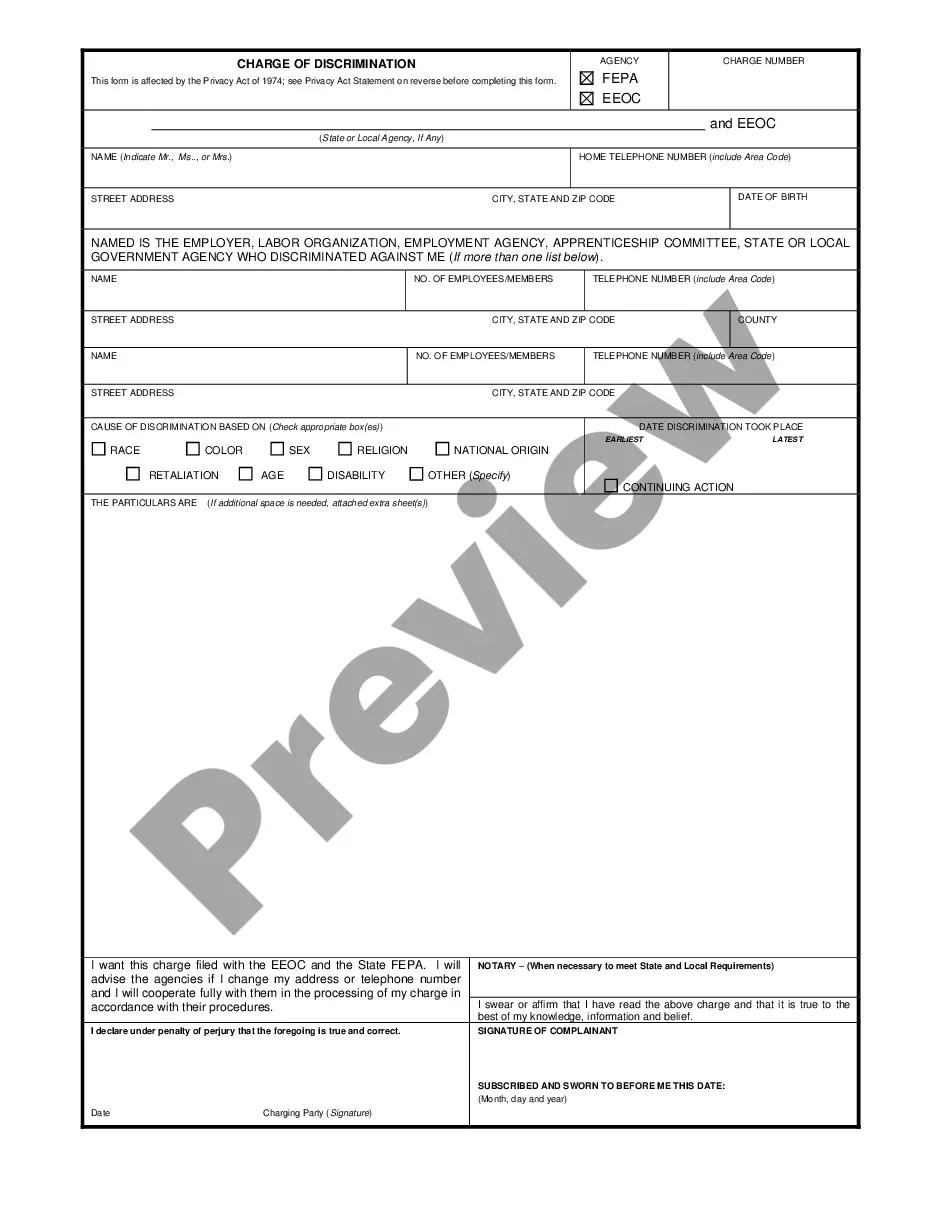




How to fill out Complaint For Racial Discrimination In Employment, Constructive Discharge And For Damages For Discrimination In Promotion By Employer - Equal Employment?
The legally mandated segregation described in this document is a versatile legal template created by expert attorneys in line with federal and state laws.
For over 25 years, US Legal Forms has offered individuals, businesses, and legal experts access to more than 85,000 confirmed, state-specific documents for any commercial and personal circumstance. It’s the quickest, easiest, and most reliable method to acquire the paperwork you require, as the service ensures bank-level data protection and anti-malware safeguards.
Register for US Legal Forms to access verified legal templates for all of life's situations at your convenience.
- Look for the document you need and review it.
- Browse through the example you searched and view or check the form description to ensure it meets your requirements. If it doesn’t, use the search feature to find the suitable one. Click Buy Now when you have found the template you need.
- Choose and Log In.
- Pick the pricing plan that works for you and create an account. Utilize PayPal or a credit card for quick payment. If you already have an account, Log In and review your subscription to continue.
- Obtain the editable template.
- Select the format you prefer for your legally mandated segregation document (PDF, DOCX, RTF) and save the document to your device.
- Fill out and sign the document.
- Print the template to fill it in by hand. Alternatively, use an online versatile PDF editor to quickly and accurately complete and sign your form with a legally binding electronic signature.
- Redownload your documents when needed.
- Use the same document again whenever required. Access the My documents tab in your account to re-download any previously acquired documents.
Form popularity
FAQ
You can use de jure law in a sentence when discussing laws that are established and enforced by legal statutes. For instance, one might say, 'The country faced de jure segregation, where laws explicitly dictated the separation of racial groups.' This illustrates how legal frameworks impacted society, showcasing the effectiveness of using de jure segregation in a sentence for clarity. To learn more about such concepts, consider exploring the resources available on USLegalForms.
De jure segregation refers to the legal separation of groups based on characteristics such as race or ethnicity. An example of this is the Jim Crow laws that enforced racial segregation in the southern United States. In instances like these, laws mandated separate facilities for white and Black people, leading to unequal access to resources. Understanding de jure segregation in a sentence highlights the legal context that created these disparities.
You can use 'de jure segregation in a sentence' by illustrating its legal context. For example, you might say, 'The court's ruling highlighted the impact of de jure segregation in a sentence, emphasizing how laws enforced racial separation in public facilities.' This approach clarifies the distinction between legal and social segregation. By incorporating this keyword, you effectively convey the legal implications and history behind such practices.
An example of de jure segregation is the legal separation of black and white individuals in public schools, which was commonplace before the Civil Rights Movement. In this context, laws enforced racial discrimination, leading to unequal educational opportunities. Understanding de jure segregation in a sentence highlights the impact of legislation on societal structure. To address historical injustices and promote equality, legal resources like UsLegalForms can assist in navigating related legal matters.
An example of a de jure situation could be laws that mandated racial segregation in public facilities, such as schools and transportation. For instance, during the Jim Crow era, segregation was legally enforced, allowing for discrimination under the guise of law. Recognizing examples of de jure practices helps inform discussions about civil rights and the importance of legal reforms. Platforms like US Legal Forms can provide resources to better understand these legal distinctions.
A clear example sentence could be, 'In many Southern states, de jure segregation was institutionalized through various laws until the mid-20th century.' This statement illustrates how legal systems perpetuated segregation, underscoring its impact on society. By using such examples, you clarify complex legal concepts for your audience, making discussions more accessible and informative.
To use 'de jure' in a sentence, consider the context of legally established practices. An example might be, 'The policy remained in place as a de jure measure despite growing public opposition.' By integrating this phrase into your writing, you add precision and convey a deeper understanding of legal matters. This can be particularly useful in discussions surrounding civil rights.
You can use the phrase 'de jure segregation' effectively in sentences that discuss legal contexts. For example, you might say, 'The court ruled that de jure segregation in schools violated the students' equal rights.' This usage not only showcases your understanding of the law but also highlights the implications of such segregation. Using this term correctly can enhance your legal discussions.
The term 'de jure' is a Latin expression that translates to 'by law.' In the context of de jure segregation, it refers to separation enforced by legal statutes and regulations. This contrasts with 'de facto' segregation, which occurs in practice but not by legal requirement. Understanding these distinctions helps individuals grasp the complexities of segregation laws in society.