Compensation Fair Labor Standards Act With 1938
Description
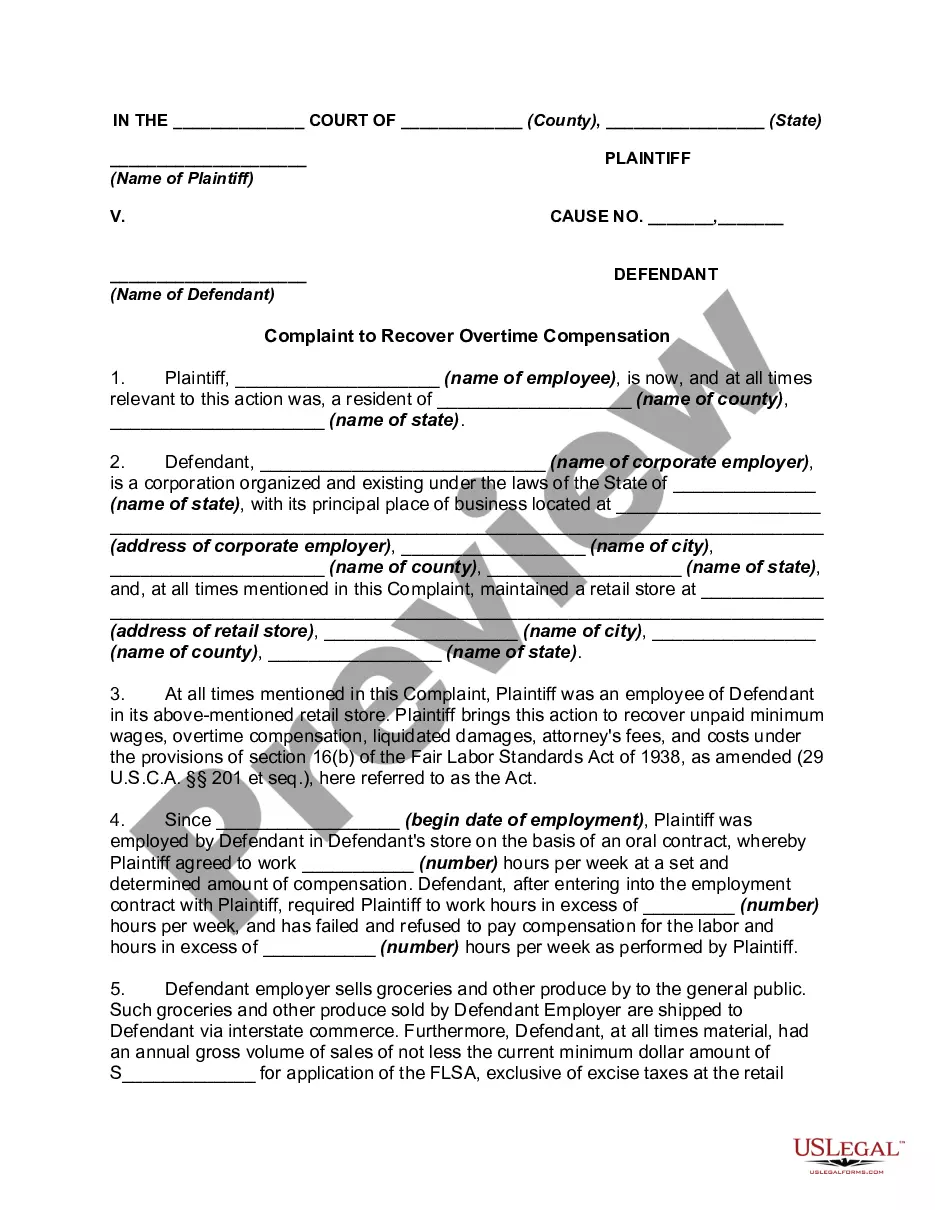
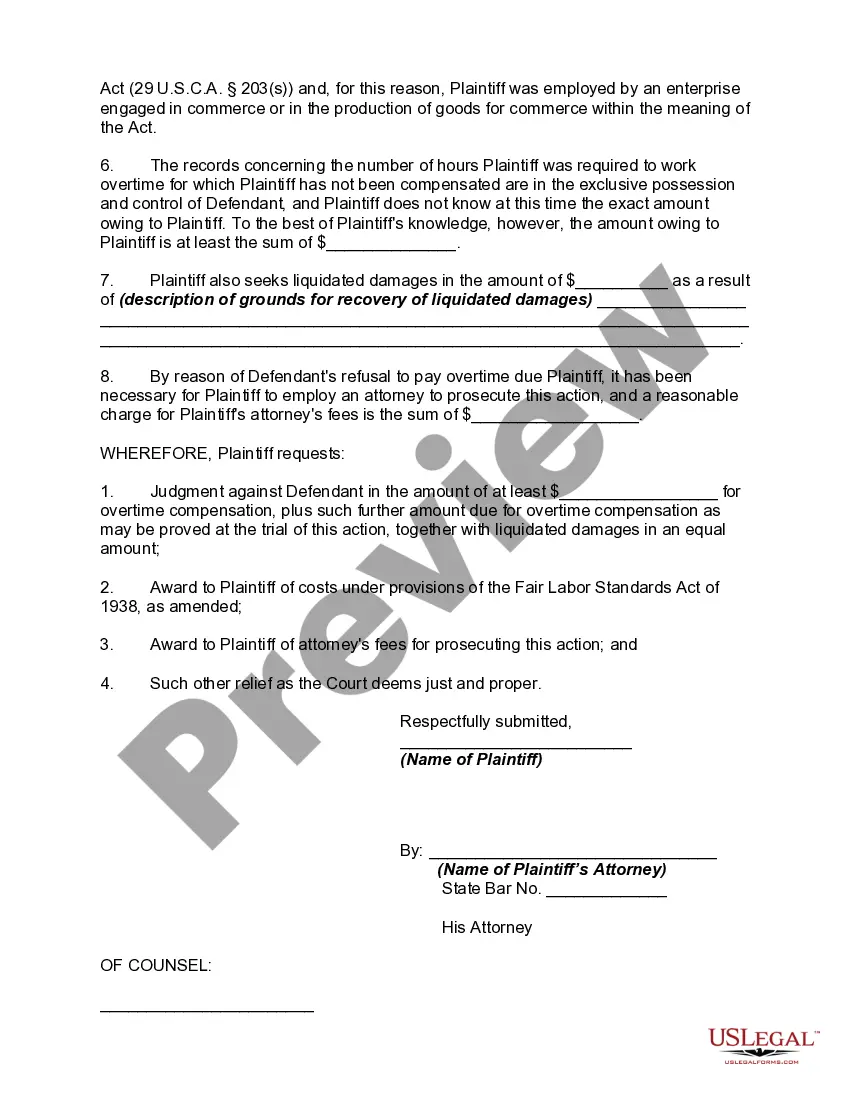
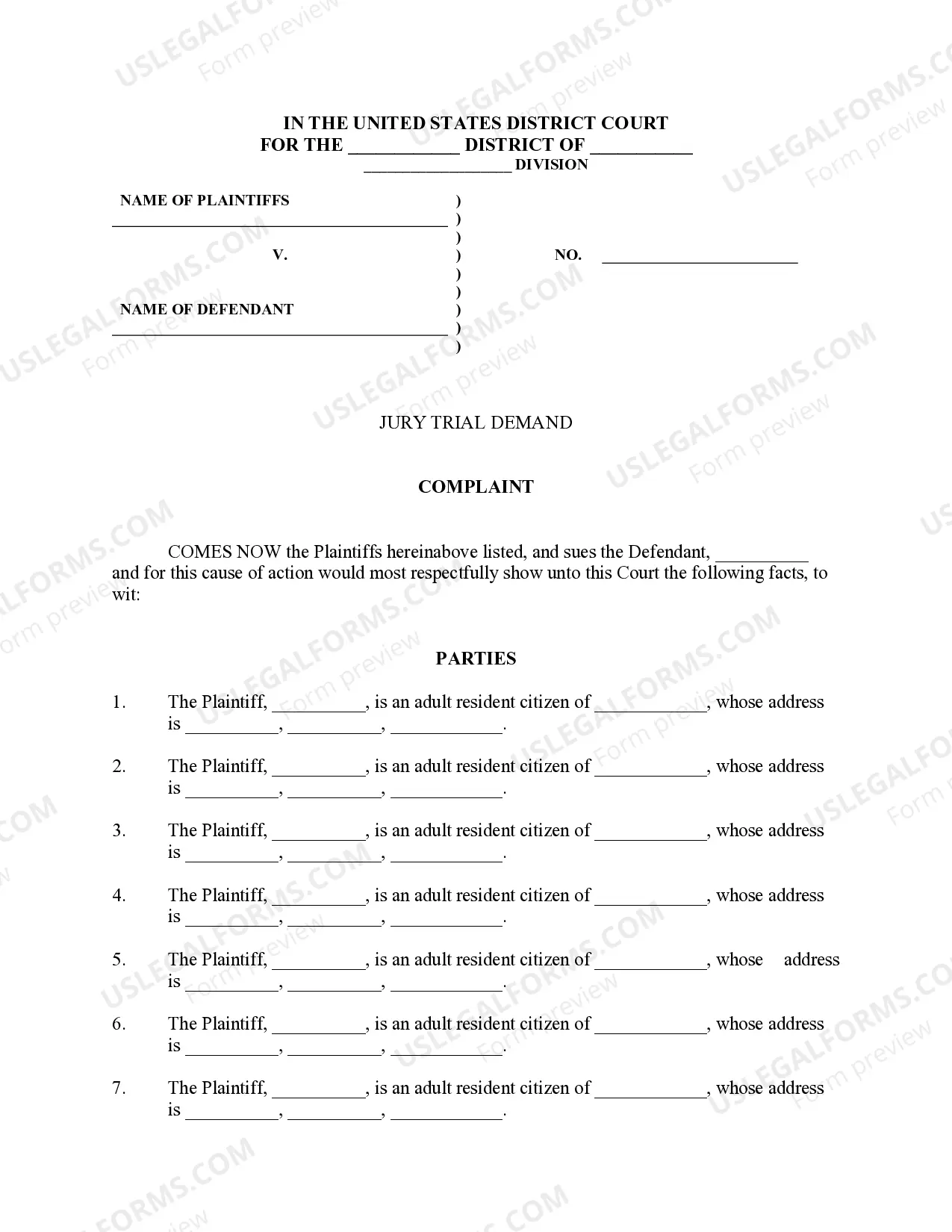
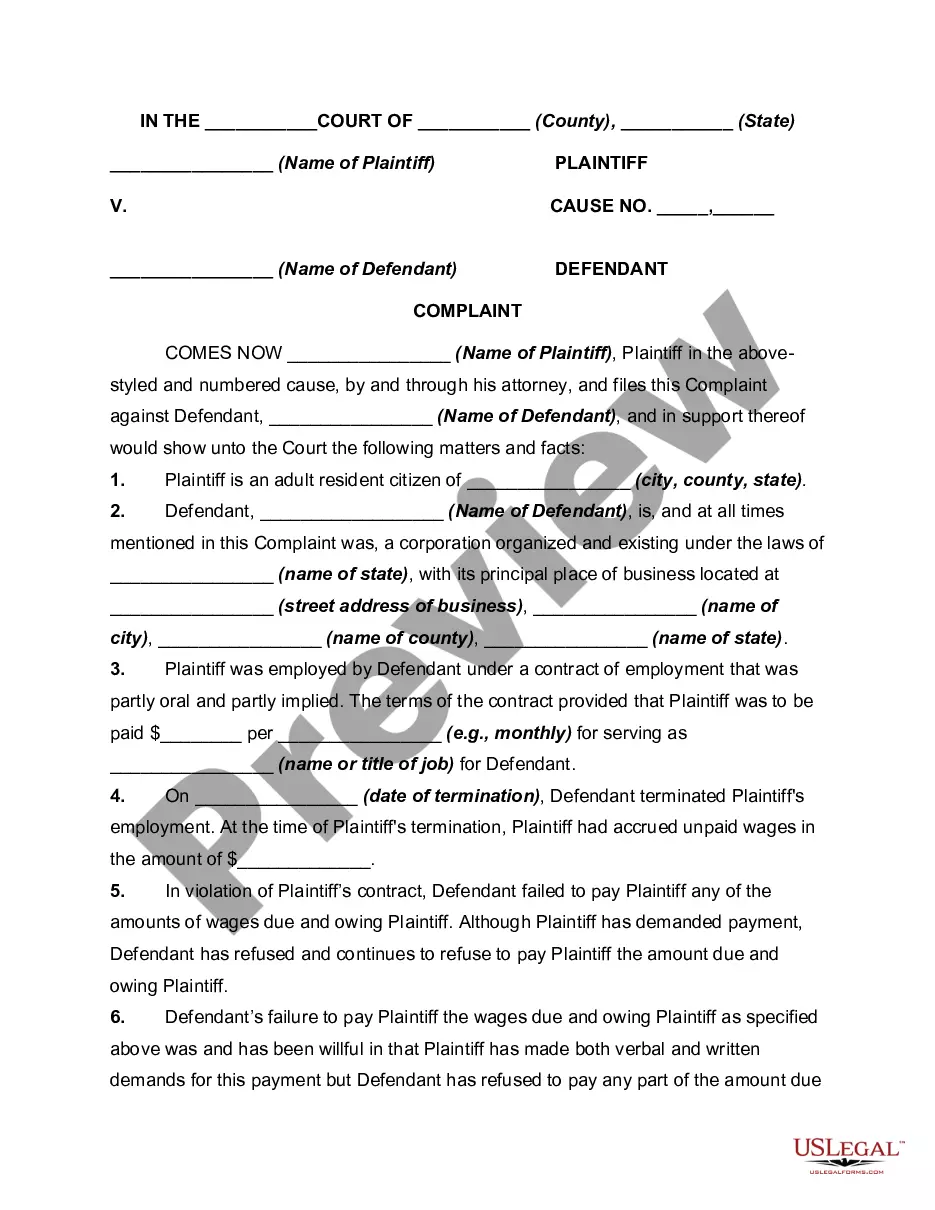



How to fill out Complaint To Recover Overtime Compensation Or Wages In State Court Under Section 16(b) Of Fair Labor Standards Act?
Securing a reliable source for obtaining the latest and suitable legal templates constitutes a significant part of navigating bureaucracy.
Locating the appropriate legal documents necessitates accuracy and careful consideration, which is why it is vital to obtain samples of the Compensation Fair Labor Standards Act With 1938 exclusively from reputable providers, such as US Legal Forms.
Once you have the form on your device, you can edit it using the editor or print it out and fill it in by hand. Eliminate the complications associated with your legal documentation. Explore the extensive US Legal Forms catalog where you can discover legal templates, evaluate their pertinence to your circumstances, and download them instantly.
- Utilize the library navigation or search function to identify your template.
- Examine the form’s description to verify if it complies with the stipulations of your state and locality.
- Inspect the form preview, if accessible, to confirm that it is indeed the document you seek.
- Return to the search and locate the suitable document if the Compensation Fair Labor Standards Act With 1938 does not meet your requirements.
- Once you are certain about the form’s applicability, download it.
- If you are a registered user, click Log in to verify your identity and access your chosen templates in My documents.
- If you do not possess an account yet, click Buy now to acquire the template.
- Choose the pricing option that aligns with your preferences.
- Proceed to the registration to complete your purchase.
- Conclude your purchase by selecting a payment method (credit card or PayPal).
- Determine the file format for downloading the Compensation Fair Labor Standards Act With 1938.
Form popularity
FAQ
The Fair Labor Standards Act (FLSA) establishes minimum wage, overtime pay, recordkeeping, and youth employment standards affecting employees in the private sector and in Federal, State, and local governments.
The Fair Labor Standards Act (FLSA) establishes minimum wage, overtime pay, recordkeeping, and child labor standards affecting full-time and part-time workers in the private sector and in Federal, State, and local governments.
This chapter may be cited as the "Fair Labor Standards Act of 1938". (June 25, 1938, ch. 676, §1, 52 Stat. 1060 .)
So, how does one decide if an employee is exempt vs. non exempt? Pay rate, job duties and responsibilities are all key factors in determining if an employee is exempt or non-exempt, not the type of clothes they wear or their work environment.
The Fair Labor Standards Act (FLSA) establishes minimum wage, overtime pay, recordkeeping, and youth employment standards affecting employees in the private sector and in Federal, State, and local governments.