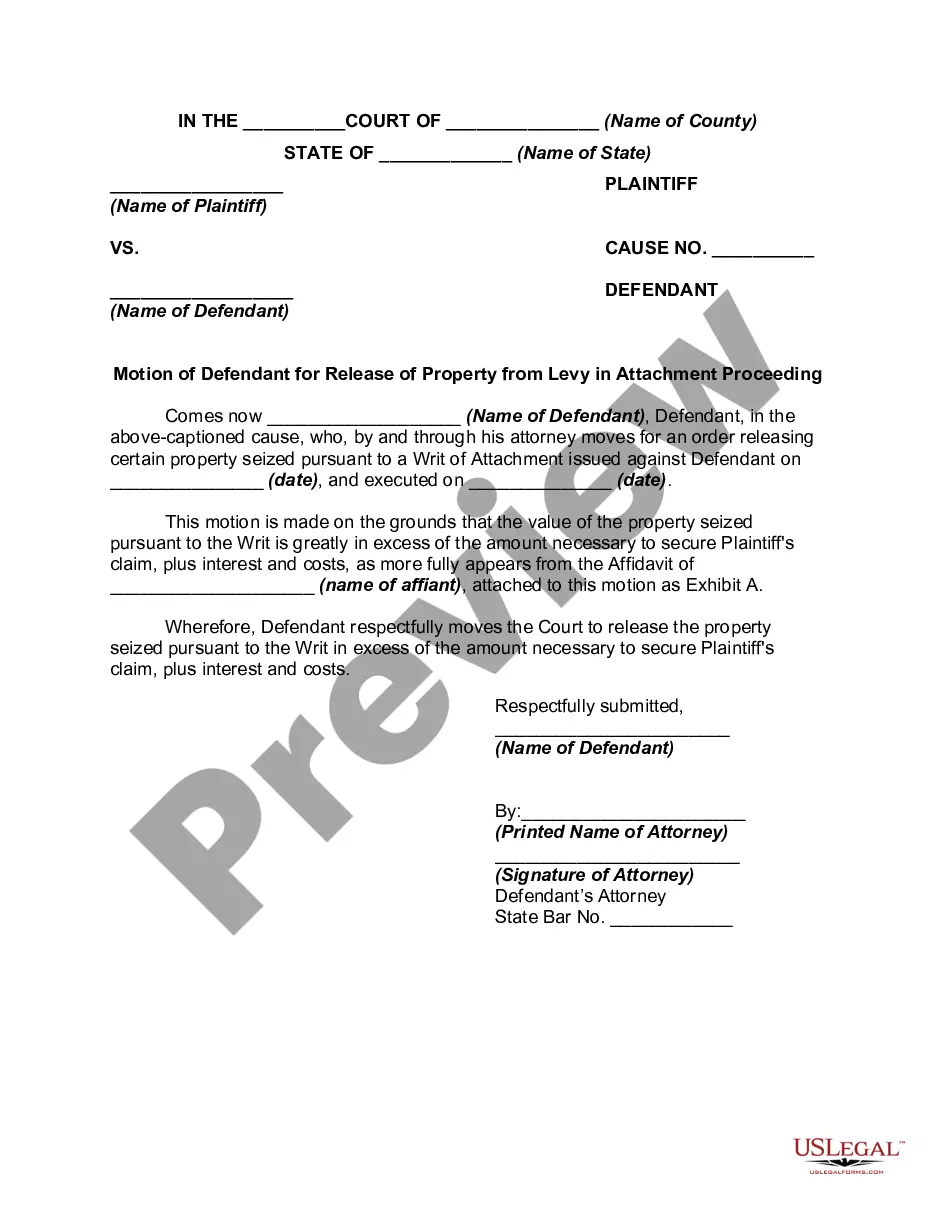
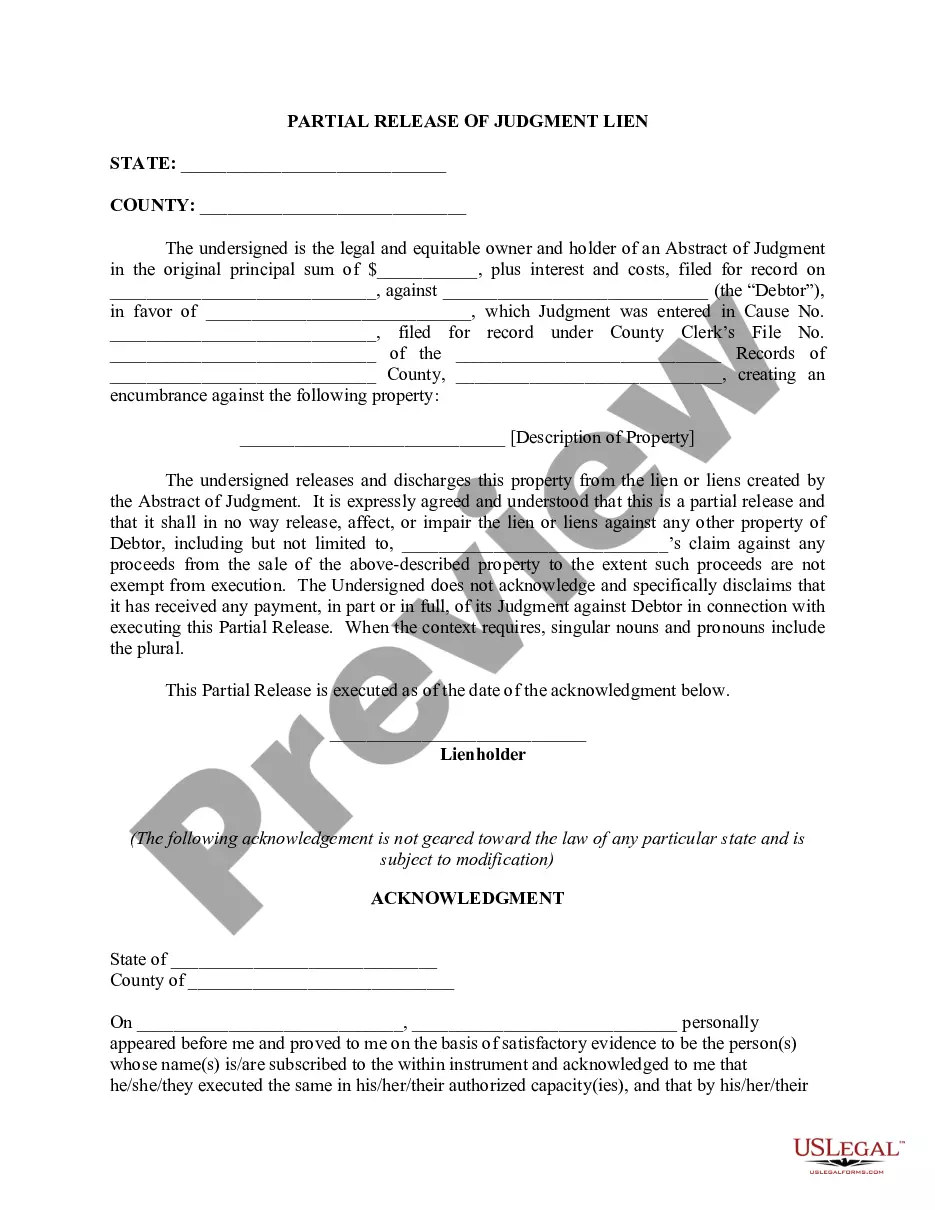
Motion For Release Of Property From Levy/garnishment (dc-cv-036)
Description
Get your form ready online
Our built-in tools help you complete, sign, share, and store your documents in one place.
Make edits, fill in missing information, and update formatting in US Legal Forms—just like you would in MS Word.
Download a copy, print it, send it by email, or mail it via USPS—whatever works best for your next step.
Sign and collect signatures with our SignNow integration. Send to multiple recipients, set reminders, and more. Go Premium to unlock E-Sign.
If this form requires notarization, complete it online through a secure video call—no need to meet a notary in person or wait for an appointment.
We protect your documents and personal data by following strict security and privacy standards.

Make edits, fill in missing information, and update formatting in US Legal Forms—just like you would in MS Word.

Download a copy, print it, send it by email, or mail it via USPS—whatever works best for your next step.

Sign and collect signatures with our SignNow integration. Send to multiple recipients, set reminders, and more. Go Premium to unlock E-Sign.

If this form requires notarization, complete it online through a secure video call—no need to meet a notary in person or wait for an appointment.

We protect your documents and personal data by following strict security and privacy standards.
Looking for another form?
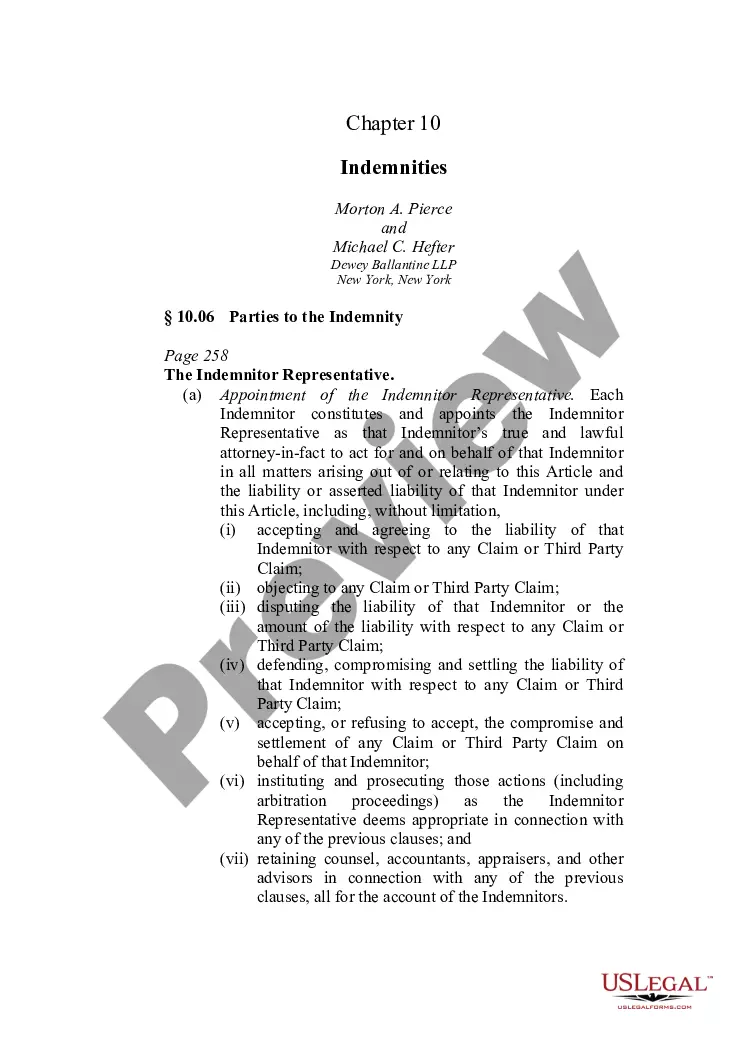
How to fill out Motion For Release Of Property From Levy In Attachment Proceeding Due To Excess Amount Attached?
It’s clear that you can’t quickly become a legal expert, nor can you understand how to efficiently create Motion For Release Of Property From Levy/garnishment (dc-cv-036) without having specific expertise.
Preparing legal documents is a labor-intensive task that requires particular education and abilities. So why not allow the experts to handle the development of the Motion For Release Of Property From Levy/garnishment (dc-cv-036).
With US Legal Forms, one of the largest collections of legal documents, you can find everything from court forms to templates for organizational communication.
You can revisit your documents from the My documents section at any time. If you are a returning client, you can simply Log In and locate and download the template from the same section.
No matter the intent of your forms—whether financial, legal, or personal—our platform is here to assist you. Give US Legal Forms a try today!
- Find the document you want by using the search feature located at the top of the site.
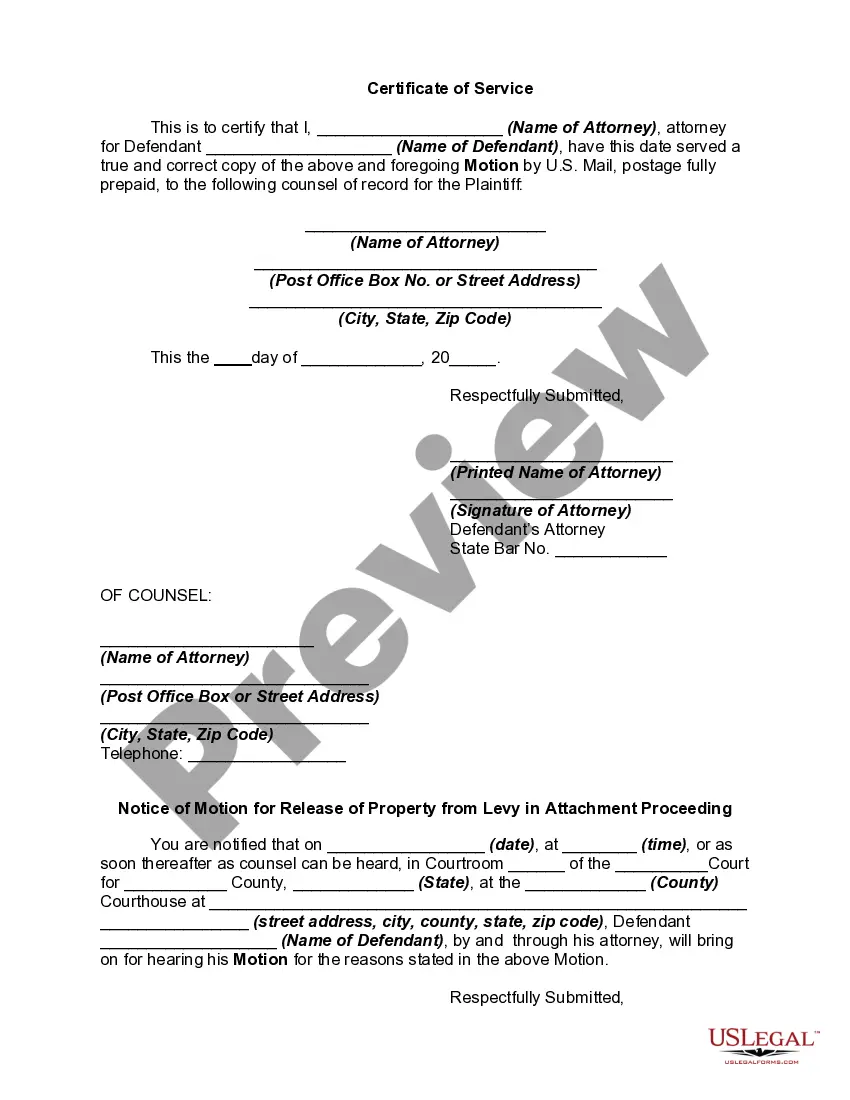
- View a preview (if the option is available) and review the accompanying details to determine if Motion For Release Of Property From Levy/garnishment (dc-cv-036) is what you require.
- Begin your search anew if you need a different template.
- Create a free account and choose a subscription plan to purchase the form.
- Click Buy now. Once the payment is processed, you can access the Motion For Release Of Property From Levy/garnishment (dc-cv-036), complete it, print it, and send it to the specified recipients or organizations.
Form popularity
FAQ
How to Write a Mortgage Deed Step 1 ? Fill In the Effective Date. ... Step 2 ? Enter Borrower and Lender Details. ... Step 3 ? Write Loan Information. ... Step 4 ? Fill In Property Details. ... Step 5 ? Identify Assigned Rents. ... Step 6 ? Enter Acceleration Upon Default. ... Step 7 ? Choose the Power of Sale Option.
Although many contracts are enforceable whether written or oral, contracts that involve a transfer of real estate are deemed important enough that they are required, under the Statute of Frauds, to be in writing to be enforceable.
What is a Mortgage Agreement? A Mortgage Agreement is a contract between a borrower (called the mortgagor) and the lender (called the mortgagee) where a lien is created on the property in order to secure repayment of the loan.
Mortgages: Do not require witnesses but must be acknowledged to be recorded. Powers of Attorneys: Requires two witnesses and a notary acknowledgment.
A mortgage deed is, in short, a document that contains all details concerning the loan given including the parties involved, details of the property kept as collateral, loan amount, interest rate, and more. The deed gives a thorough run-through with regards to the interest and title over the property.
How to Write a Mortgage Deed Step 1 ? Fill In the Effective Date. ... Step 2 ? Enter Borrower and Lender Details. ... Step 3 ? Write Loan Information. ... Step 4 ? Fill In Property Details. ... Step 5 ? Identify Assigned Rents. ... Step 6 ? Enter Acceleration Upon Default. ... Step 7 ? Choose the Power of Sale Option.
Mortgages are usually six to 10 pages in length but are often longer because they typically are accompanied by different riders and addenda, which make specific demands against the type of lien on the land. Buyers who are on the Mortgage or the Deed, are not necessarily also on the Note.