Estate Without Beneficiaries
Description
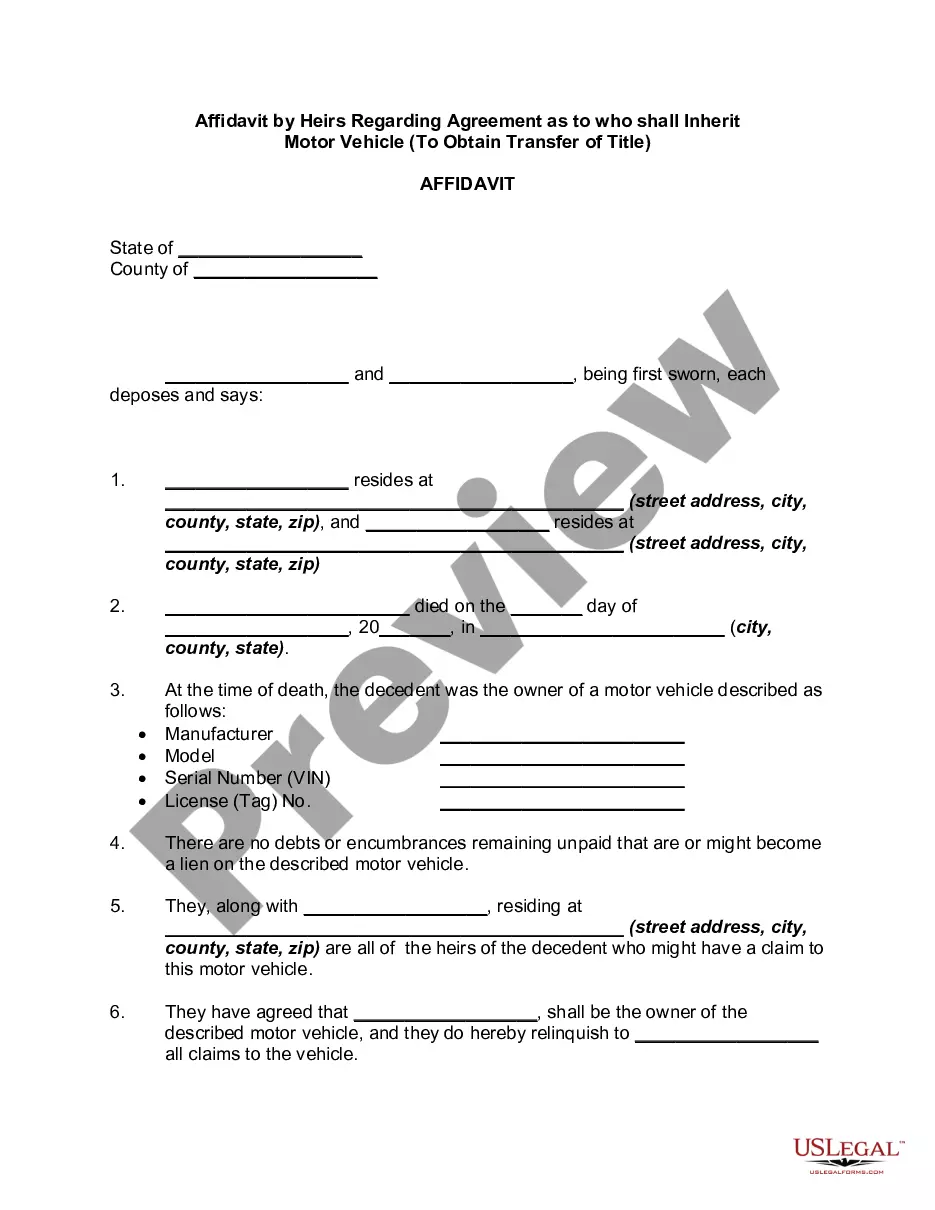



How to fill out Sworn Statement Of Beneficiary Of Estate And Consent To Close Estate - Uniform Probate Code?
Locating a reliable place to obtain the latest and suitable legal templates is half the challenge of dealing with red tape.
Identifying the correct legal documents requires accuracy and meticulousness, which is why it is essential to obtain samples of Estate Without Beneficiaries solely from reputable sources, such as US Legal Forms.
Eliminate the complications that come with your legal documentation. Explore the extensive US Legal Forms catalog where you can find legal templates, assess their relevance to your circumstances, and download them immediately.
- Utilize the library navigation or search bar to locate your sample.
- Examine the form's description to determine if it meets the criteria of your state and locality.
- Review the form preview, if available, to confirm that it is indeed the form you seek.
- Continue searching to find the appropriate template if the Estate Without Beneficiaries does not meet your needs.
- If you are certain of the form's applicability, download it.
- As an authorized user, click Log in to verify and access your selected templates in My documents.
- If you have not created an account yet, click Buy now to acquire the form.
- Choose the pricing plan that aligns with your requirements.
- Proceed to the registration to complete your transaction.
- Finalize your purchase by selecting a payment method (credit card or PayPal).
- Select the document format for downloading Estate Without Beneficiaries.
- Once you have the document on your device, you can edit it with the editor or print it and fill it out manually.
Form popularity
FAQ
Yes, an estate can be settled without probate in Alabama under certain conditions, such as if the estate without beneficiaries consists solely of exempt property or small estates valued below a specific threshold. In these cases, simpler legal processes can be utilized. However, it is crucial to follow the correct procedures to avoid future complications. For guidance, you can explore the resources available on US Legal Forms to navigate the estate settlement process.
When someone dies with no beneficiaries, their estate without beneficiaries is typically handled by the probate court. The court will appoint an administrator to manage the estate and distribute assets according to state laws. This process can be lengthy and may not reflect the deceased's wishes. To ensure your preferences are met, consider establishing a comprehensive estate plan with the help of US Legal Forms.
Yes, an estate can have no beneficiaries, especially if the deceased did not designate anyone in their will. In such cases, the estate without beneficiaries may be managed by the state under intestacy laws. This situation can lead to complications and disputes among potential heirs. To avoid these issues, it is essential to create a will or trust using resources like US Legal Forms.
If you have no beneficiaries, your estate without beneficiaries typically goes through a legal process called intestacy. In this case, state laws dictate how your assets will be distributed, often favoring relatives such as parents, siblings, or children. Without designated beneficiaries, your wishes may not be honored. To prevent this, consider using US Legal Forms to set up a clear estate plan.
The 3 year rule for a deceased estate refers to the time frame in which heirs can claim their inheritance. If no beneficiaries are identified within this period, the estate without beneficiaries may be subject to escheatment, meaning it could revert to the state. This rule emphasizes the importance of designating beneficiaries to ensure your assets are passed down according to your wishes. Utilizing platforms like US Legal Forms can help you create necessary documents to avoid complications.
In cases where there are no beneficiaries, the estate may enter probate, where the court will determine the distribution of assets. Without clear beneficiaries, the estate might ultimately go to the state, following its intestacy laws. To prevent this outcome, establishing a clear estate plan is vital. US Legal Forms offers tools that make it easy to designate beneficiaries and secure your assets for your loved ones.
When an estate has no heirs, it is considered to be without beneficiaries, leading to the property being claimed by the state. This process is known as escheat, where the state takes ownership of the estate after a thorough search for potential heirs. To avoid this situation, it is crucial to have a will or estate plan in place. US Legal Forms provides various resources to help you create a solid estate plan that ensures your wishes are honored.
If an estate has no designated beneficiaries, the property typically goes to the deceased's closest relatives according to state intestacy laws. This often means that spouses, children, parents, or siblings may inherit the estate. However, the exact distribution can vary by state, so it is essential to consult legal resources or professionals. Utilizing a platform like US Legal Forms can help you understand and navigate these intestacy laws effectively.