Estate Foreign Beneficiary
Description
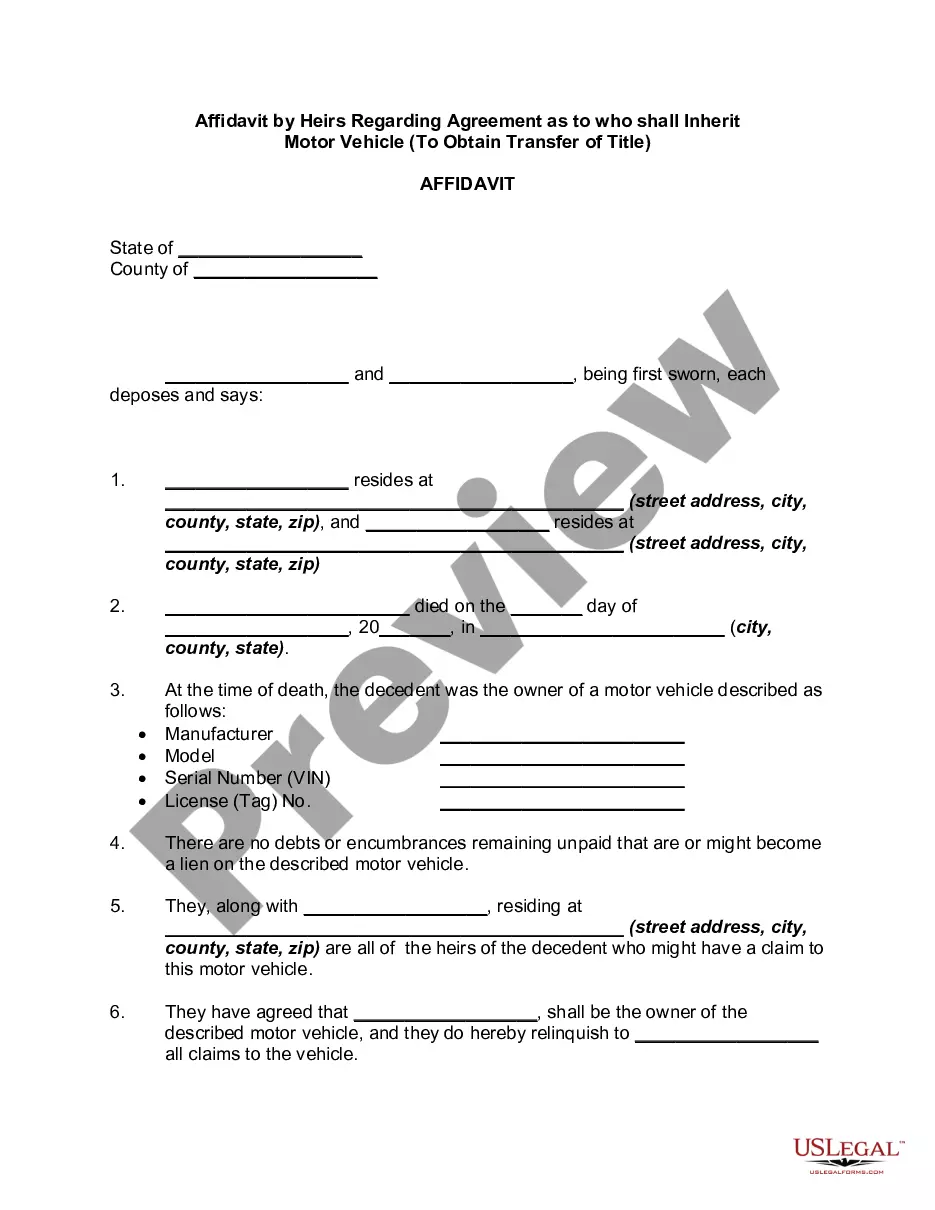


How to fill out Sworn Statement Of Beneficiary Of Estate And Consent To Close Estate - Uniform Probate Code?
Handling legal documents and processes may be a lengthy addition to your daily routine.
Estate Foreign Beneficiary and similar forms frequently require you to search for them and figure out the most efficient way to fill them out accurately.
Therefore, if you are managing financial, legal, or personal affairs, having access to a comprehensive and functional online library of forms will be tremendously beneficial.
US Legal Forms is the leading online platform for legal templates, featuring over 85,000 state-specific forms and various tools to help you complete your documents effortlessly.
Are you using US Legal Forms for the first time? Create an account in just a few moments and gain access to the form library and Estate Foreign Beneficiary. Then, follow the steps below to complete your form.
- Browse the collection of relevant documents available to you with just a single click.
- US Legal Forms provides you with state- and county-specific forms accessible at any time for download.
- Streamline your document management tasks with a premium service that allows you to prepare any form in minutes without any additional or concealed charges.
- Simply Log In to your account, search for Estate Foreign Beneficiary and download it instantly from the My documents section.
- You can also access previously downloaded forms.
Form popularity
FAQ
If your beneficiary is in another country, it is essential to understand the legal and tax implications of the inheritance. Different jurisdictions may have various rules affecting the transfer of assets. To ensure compliance and smooth transitions, consider using US Legal Forms, which can assist you in managing estate foreign beneficiaries effectively.
US citizen can receive an inheritance without any issues. Estate planning allows you to include individuals from any nationality as beneficiaries. However, it is essential to be aware of the potential tax consequences and reporting requirements that may apply. Services like US Legal Forms can help you efficiently manage these aspects.
Yes, a beneficiary can indeed be a foreigner. This setup is common in estate planning, especially for individuals with international connections. While foreign beneficiaries can inherit, they may face specific tax implications, which vary by jurisdiction. To ensure a smooth process for estate foreign beneficiaries, utilizing services like US Legal Forms can provide helpful guidance.
Inheritance tax does not automatically apply to foreign beneficiaries, but the rules can vary significantly based on state laws. Some states impose taxes on the transfer of assets to foreign beneficiaries, while others do not. Therefore, it is crucial to understand the local laws governing these situations. For assistance, consider using resources like US Legal Forms to navigate the complexities.
Yes, a US trust can have foreign beneficiaries. This arrangement allows you to manage assets effectively while providing for your beneficiaries regardless of their location. However, specific rules and regulations apply, especially concerning taxation and reporting. Using US Legal Forms can help you create a compliant trust that accommodates estate foreign beneficiaries.
Foreign beneficiaries may face different tax implications when receiving an inheritance. Generally, the estate of the deceased might have to withhold taxes based on the value of the estate. Additionally, the IRS requires that certain forms be filed to report the income from the estate foreign beneficiary. Consulting a tax professional or using a service like US Legal Forms can help clarify these obligations.
Yes, a foreign person can be a beneficiary of a US trust, making them an estate foreign beneficiary. However, certain rules and regulations may apply, especially regarding tax obligations. To ensure compliance and smooth management of your trust, consider seeking guidance from legal professionals. Platforms like USLegalForms offer valuable tools to assist you in setting up a trust that accommodates your foreign beneficiaries.
If your beneficiary is not a US citizen, you can still name them as an estate foreign beneficiary in your will or trust. However, keep in mind that this could lead to different tax implications. It is essential to consult with a legal expert to understand how this may affect your estate planning. Using resources like USLegalForms can help you navigate these complexities effectively.
The 5-year rule refers to a provision that impacts the distribution of assets to beneficiaries, particularly in the case of inherited IRAs. An estate foreign beneficiary must withdraw the full amount within five years if the original account holder passes away. Understanding this rule is essential for effective estate planning. Platforms like US Legal Forms provide valuable resources to help clarify these regulations.
Yes, a non-U.S. citizen can be named as a beneficiary of an IRA. However, there are specific rules and tax regulations that apply to an estate foreign beneficiary in this context. It's vital to understand these rules to avoid complications in the future. Consulting with an expert can help you make informed decisions regarding your IRA.