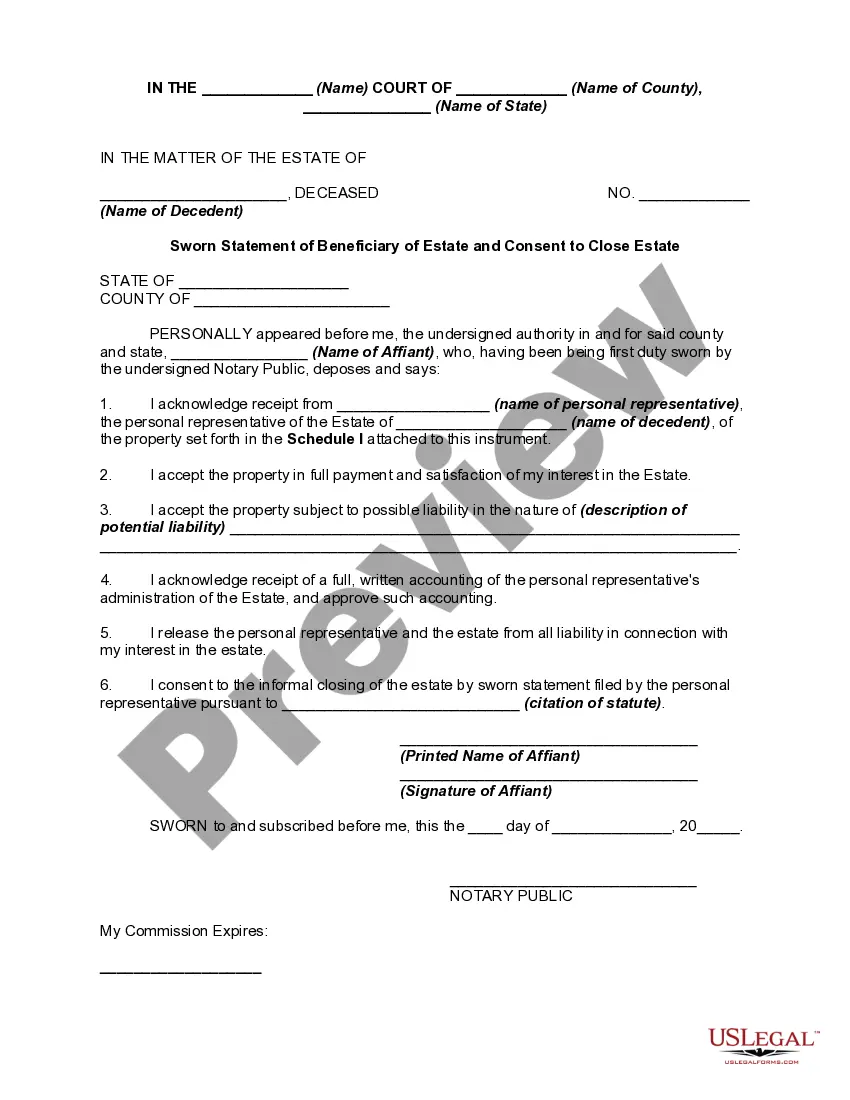
Beneficiary Estate Form Withdraw
Description

Get your form ready online
Our built-in tools help you complete, sign, share, and store your documents in one place.
Make edits, fill in missing information, and update formatting in US Legal Forms—just like you would in MS Word.
Download a copy, print it, send it by email, or mail it via USPS—whatever works best for your next step.
Sign and collect signatures with our SignNow integration. Send to multiple recipients, set reminders, and more. Go Premium to unlock E-Sign.
If this form requires notarization, complete it online through a secure video call—no need to meet a notary in person or wait for an appointment.
We protect your documents and personal data by following strict security and privacy standards.

Make edits, fill in missing information, and update formatting in US Legal Forms—just like you would in MS Word.

Download a copy, print it, send it by email, or mail it via USPS—whatever works best for your next step.

Sign and collect signatures with our SignNow integration. Send to multiple recipients, set reminders, and more. Go Premium to unlock E-Sign.

If this form requires notarization, complete it online through a secure video call—no need to meet a notary in person or wait for an appointment.

We protect your documents and personal data by following strict security and privacy standards.
Looking for another form?








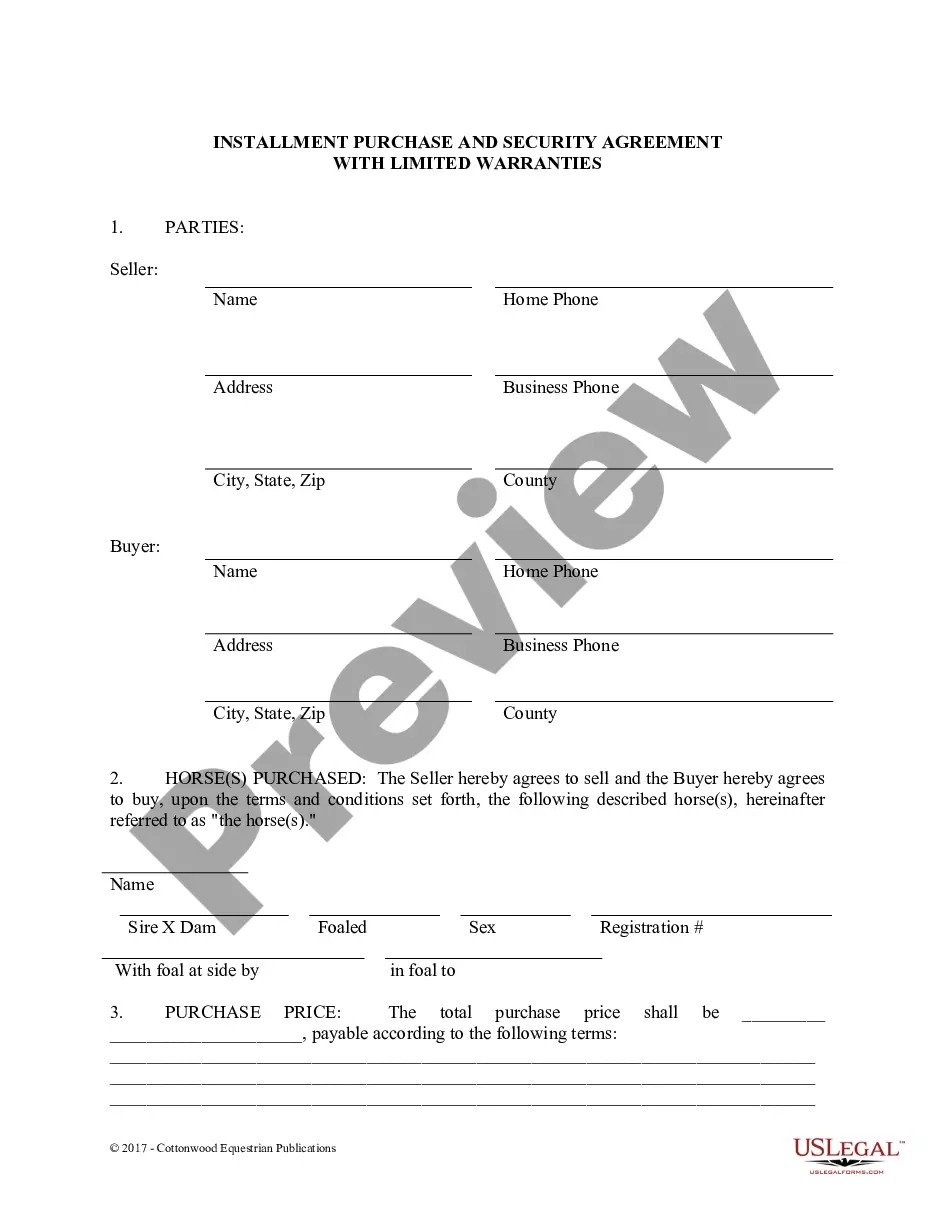

How to fill out Sworn Statement Of Beneficiary Of Estate And Consent To Close Estate - Uniform Probate Code?
Creating legal documents from the ground up can frequently be daunting.
Certain circumstances may necessitate extensive research and significant financial expenditure.
If you’re looking for a simpler and more economical method of generating Beneficiary Estate Form Withdraw or any other paperwork without unnecessary complications, US Legal Forms is always accessible to you.
Our online repository of over 85,000 current legal documents encompasses nearly every facet of your financial, legal, and personal affairs.
However, before directly downloading the Beneficiary Estate Form Withdraw, adhere to these guidelines: Examine the form preview and descriptions to make sure you have located the document you need. Confirm that the template you select meets the stipulations of your state and county. Choose the most appropriate subscription option to acquire the Beneficiary Estate Form Withdraw. Download the form, then complete, certify, and print it out. US Legal Forms has built a solid reputation and boasts over 25 years of experience. Join us today and make form completion an effortless and efficient process!
- With only a few clicks, you can swiftly obtain state- and county-compliant forms meticulously prepared for you by our legal experts.
- Utilize our platform whenever you require dependable and trustworthy services through which you can rapidly find and download the Beneficiary Estate Form Withdraw.
- If you’re familiar with our website and have already set up an account with us, just Log In to your account, find the form, and download it or re-download it anytime in the My documents section.
- Not registered yet? No problem. It only takes a few minutes to sign up and browse the catalog.
Form popularity
FAQ
The estate takes a deduction for the income distributed to beneficiaries in the same year it is received by the estate. Beneficiaries are required to include the distribution in their gross income. However, if the estate does not distribute income before the end of the year, the estate will owe income taxes.
Most beneficiary designations will require you to provide a person's full legal name and their relationship to you (spouse, child, mother, etc.). Some beneficiary designations also include information like mailing address, email, phone number, date of birth and Social Security number.
Use this form to request a distribution to the beneficiary of an IRA, SEP, SAR-SEP, 403(b), Profit-Sharing or Money Purchase Pension Plan account.
If you decide to have more than one beneficiary, you will allocate a percentage of the death benefit for each, so that the total allocation equals 100%. A simple example of this would be allocating 50% to your partner, and 25% to each of your two children, for a total of 100%.
Primary Beneficiaries If you're naming only one primary beneficiary, put 100% in the percent column. If you're naming more than one primary beneficiary, you must indicate what percentage each is to receive.