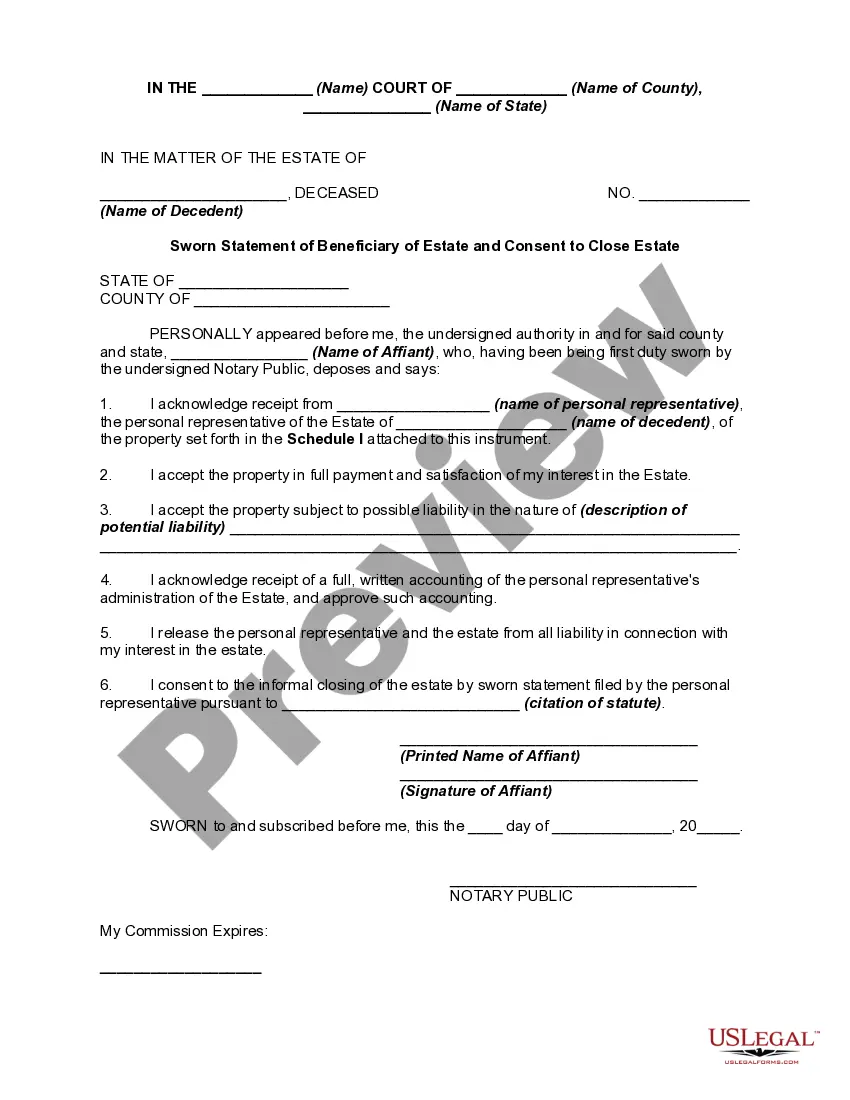
Beneficiary Estate Form For Trust
Description
Get your form ready online
Our built-in tools help you complete, sign, share, and store your documents in one place.
Make edits, fill in missing information, and update formatting in US Legal Forms—just like you would in MS Word.
Download a copy, print it, send it by email, or mail it via USPS—whatever works best for your next step.
Sign and collect signatures with our SignNow integration. Send to multiple recipients, set reminders, and more. Go Premium to unlock E-Sign.
If this form requires notarization, complete it online through a secure video call—no need to meet a notary in person or wait for an appointment.
We protect your documents and personal data by following strict security and privacy standards.

Make edits, fill in missing information, and update formatting in US Legal Forms—just like you would in MS Word.

Download a copy, print it, send it by email, or mail it via USPS—whatever works best for your next step.

Sign and collect signatures with our SignNow integration. Send to multiple recipients, set reminders, and more. Go Premium to unlock E-Sign.

If this form requires notarization, complete it online through a secure video call—no need to meet a notary in person or wait for an appointment.

We protect your documents and personal data by following strict security and privacy standards.
Looking for another form?
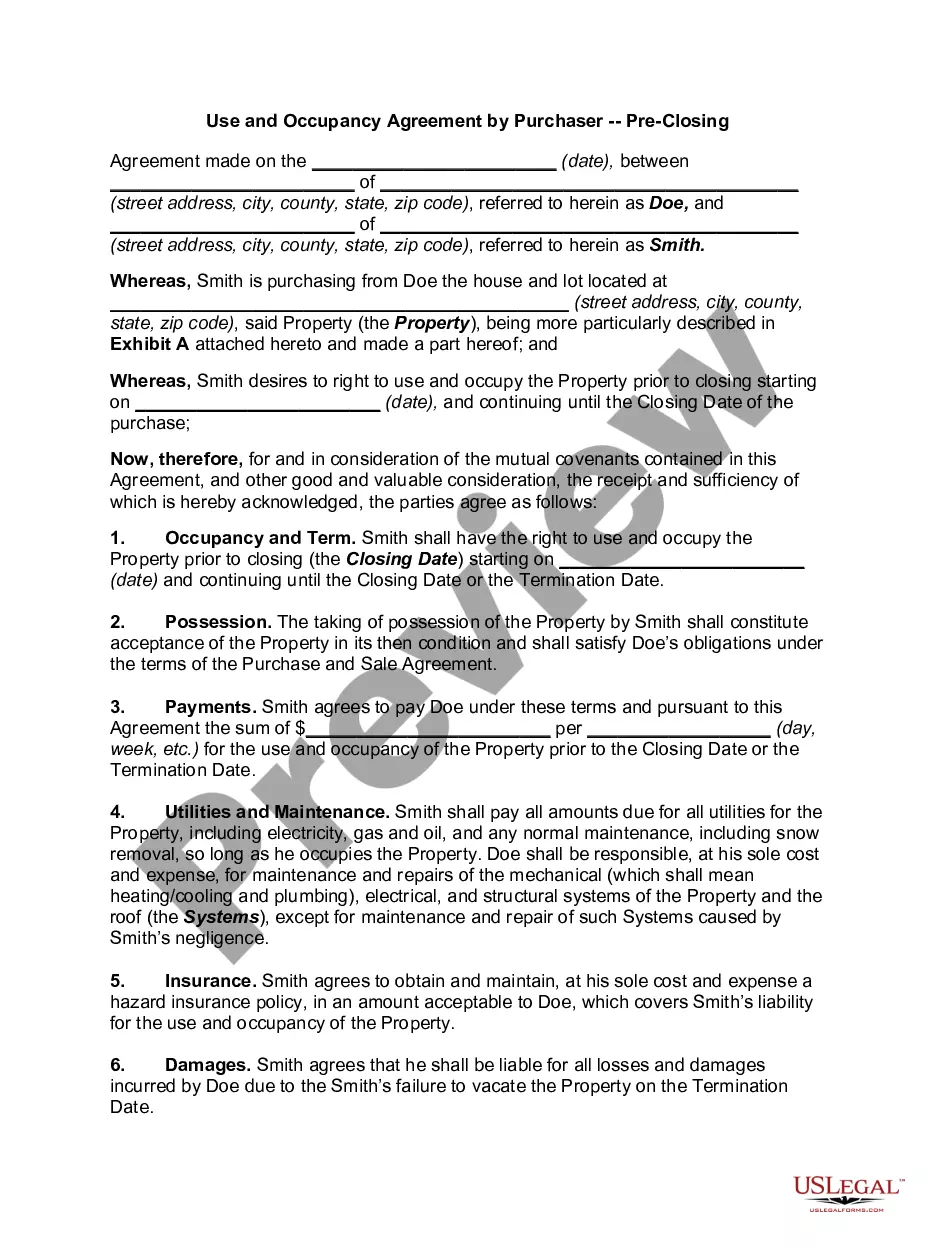








How to fill out Sworn Statement Of Beneficiary Of Estate And Consent To Close Estate - Uniform Probate Code?
Securing a reliable source for obtaining the latest and pertinent legal documents is a significant part of navigating bureaucracy.
Finding the appropriate legal forms requires precision and meticulousness, which is why it is essential to obtain the Beneficiary Estate Form For Trust exclusively from trustworthy providers, such as US Legal Forms.
Once the form is saved on your device, you can modify it using the editor or print it out and complete it by hand. Eliminate the complications associated with your legal documents. Investigate the extensive US Legal Forms library where you can discover legal samples, assess their pertinence to your situation, and download them instantly.
- Utilize the library navigation or search bar to locate your template.
- Review the form’s details to ensure it meets the stipulations of your region and state.
- View the form preview, if offered, to confirm that the form aligns with what you need.
- Return to the search function and find the right template if the Beneficiary Estate Form For Trust does not fulfill your requirements.
- If you are certain of the form’s applicability, download it.
- As a registered user, click Log in to verify your identity and access your selected templates in My documents.
- If you currently do not have an account, click Buy now to acquire the template.
- Choose the pricing option that aligns with your needs.
- Proceed to the registration process to complete your purchase.
- Finalize your payment by selecting a payment method (credit card or PayPal).
- Choose the file format for downloading the Beneficiary Estate Form For Trust.
Form popularity
FAQ
For example, if you name your three cousins as your primary beneficiaries, you can name the children of each cousin as alternate primary beneficiaries. Then, if one cousin dies before you do, their share will be divided between their children who are named as alternate primary beneficiaries.
Beneficiary designations allow you to transfer assets directly to individuals, regardless of the terms of your will. Beneficiary designations are often made when a financial account, retirement account, or life insurance policy is established.
Naming your estate as a beneficiary can feel more straightforward than naming specific beneficiaries for your major assets, but it has significant downsides. If you name your estate as a beneficiary, the assets in your estate must pass through probate before distribution. This could take a year or longer.
To leave property to your living trust, name your trust as beneficiary for that property, using the trustee's name and the name of the trust. For example: John Doe as trustee of the John Doe Living Trust, dated January 1, 20xx.
Write only one beneficiary on each line. Make sure that you write the full names of all beneficiaries. For example, if you name you children as beneficiaries, DO NOT merely write ?children? on one of the lines; instead write the full names of each of your children on separate lines.