Florida Court Motion Forms Withdraw
Description
Get your form ready online
Our built-in tools help you complete, sign, share, and store your documents in one place.
Make edits, fill in missing information, and update formatting in US Legal Forms—just like you would in MS Word.
Download a copy, print it, send it by email, or mail it via USPS—whatever works best for your next step.
Sign and collect signatures with our SignNow integration. Send to multiple recipients, set reminders, and more. Go Premium to unlock E-Sign.
If this form requires notarization, complete it online through a secure video call—no need to meet a notary in person or wait for an appointment.
We protect your documents and personal data by following strict security and privacy standards.

Make edits, fill in missing information, and update formatting in US Legal Forms—just like you would in MS Word.

Download a copy, print it, send it by email, or mail it via USPS—whatever works best for your next step.

Sign and collect signatures with our SignNow integration. Send to multiple recipients, set reminders, and more. Go Premium to unlock E-Sign.

If this form requires notarization, complete it online through a secure video call—no need to meet a notary in person or wait for an appointment.

We protect your documents and personal data by following strict security and privacy standards.
Looking for another form?





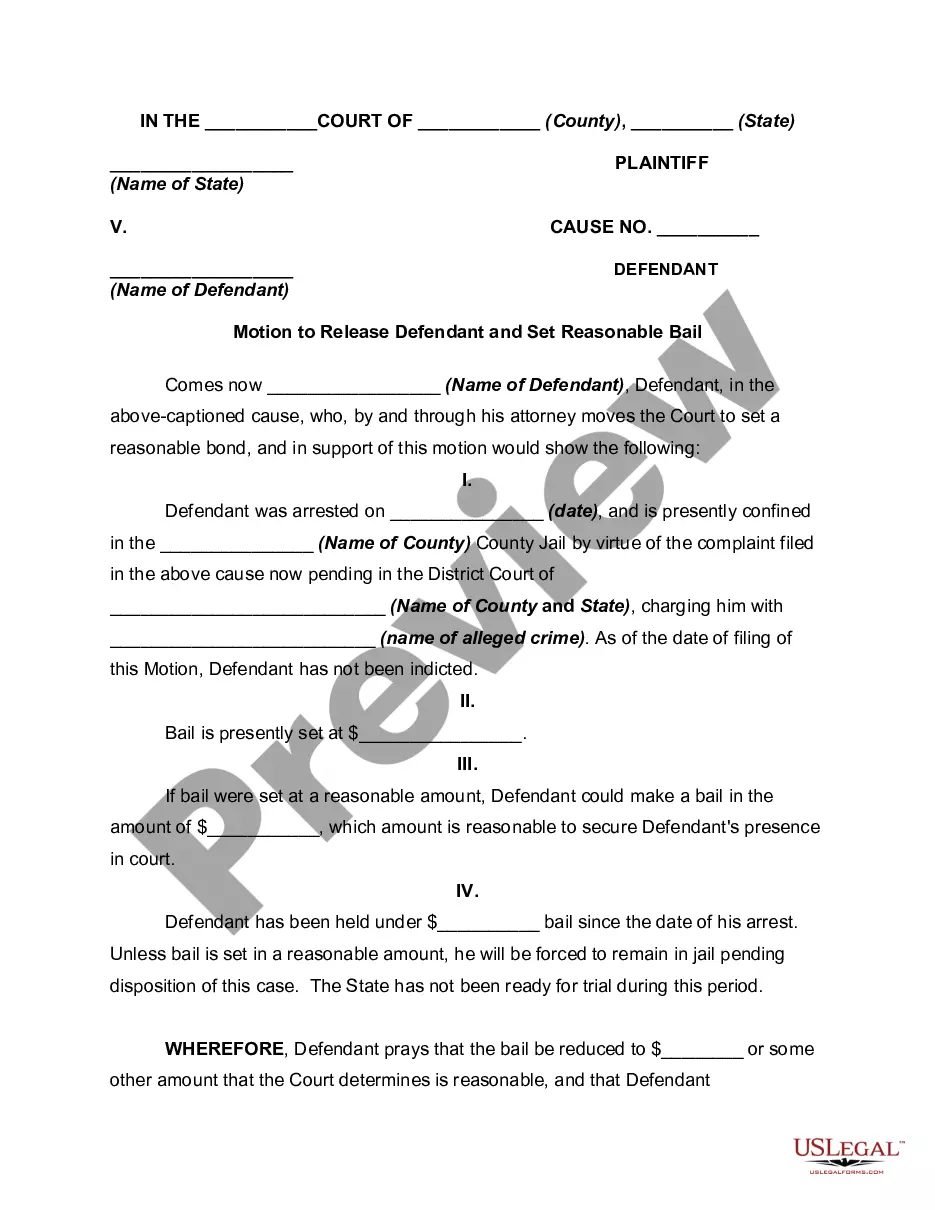
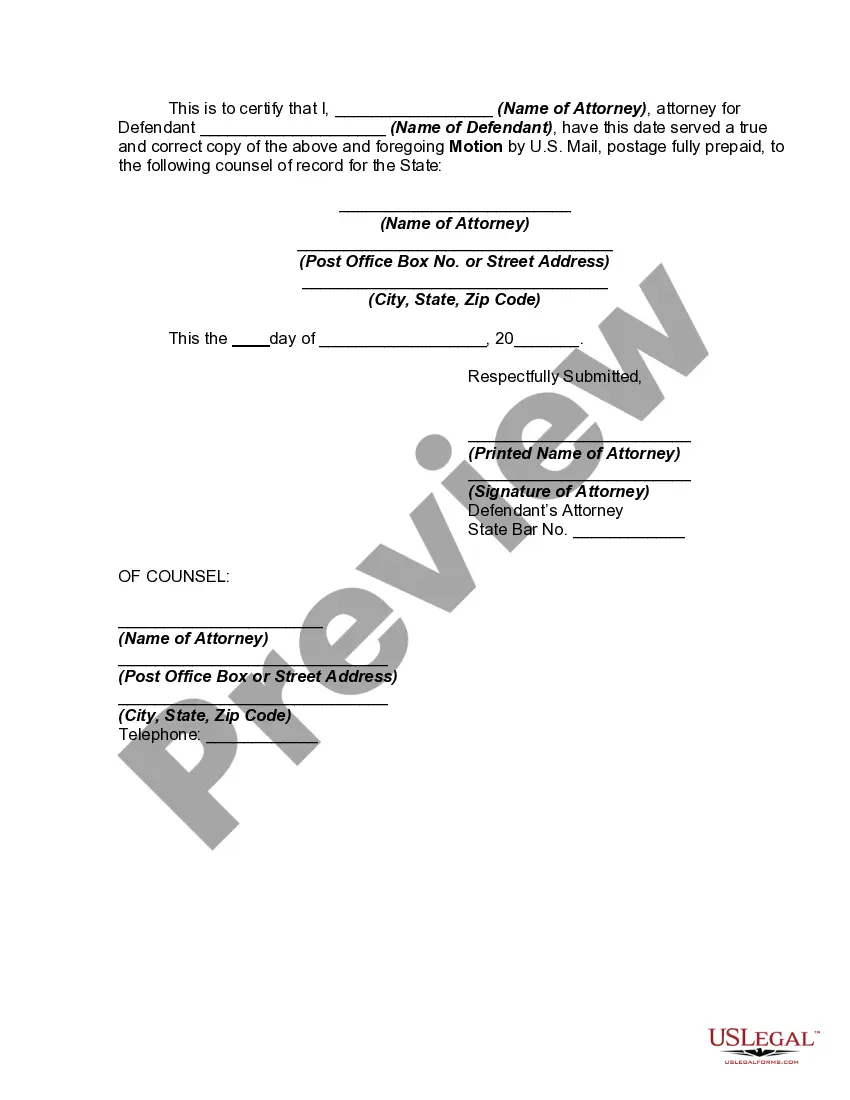
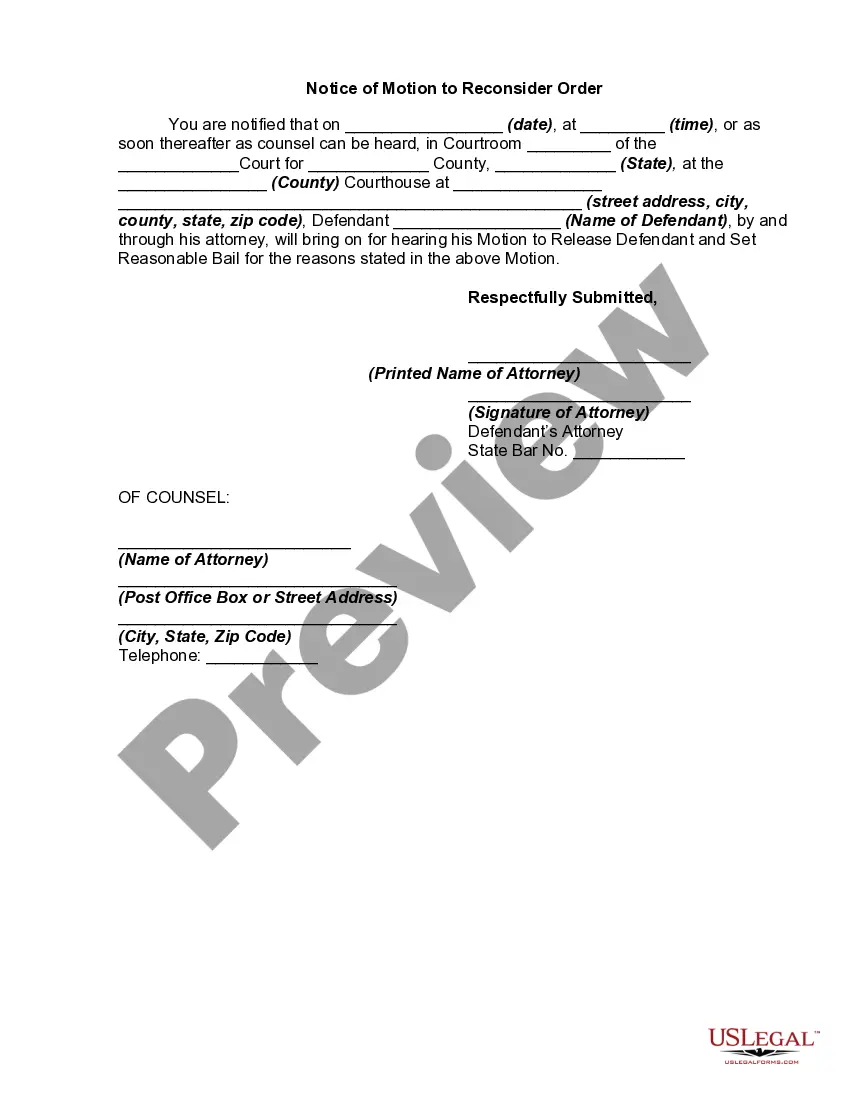
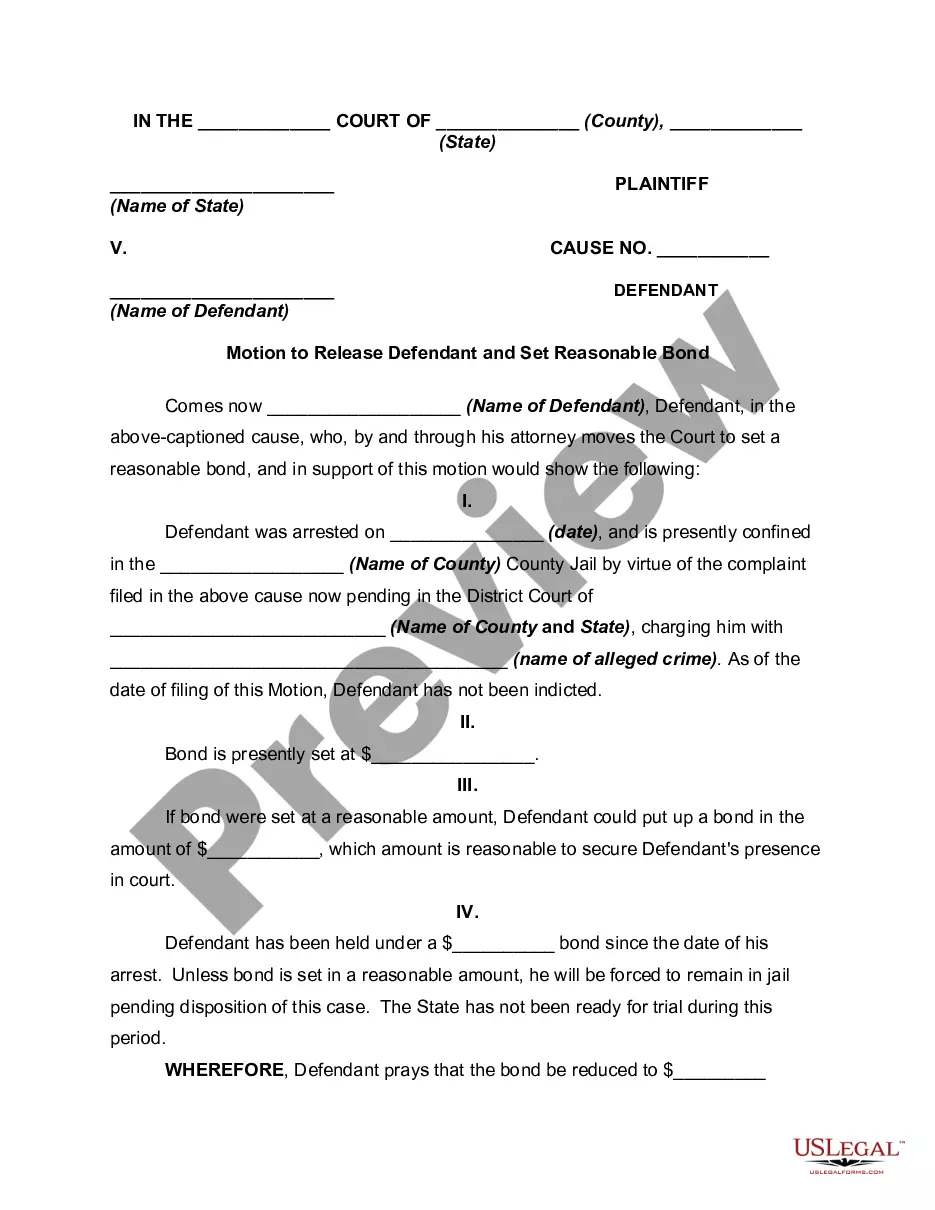
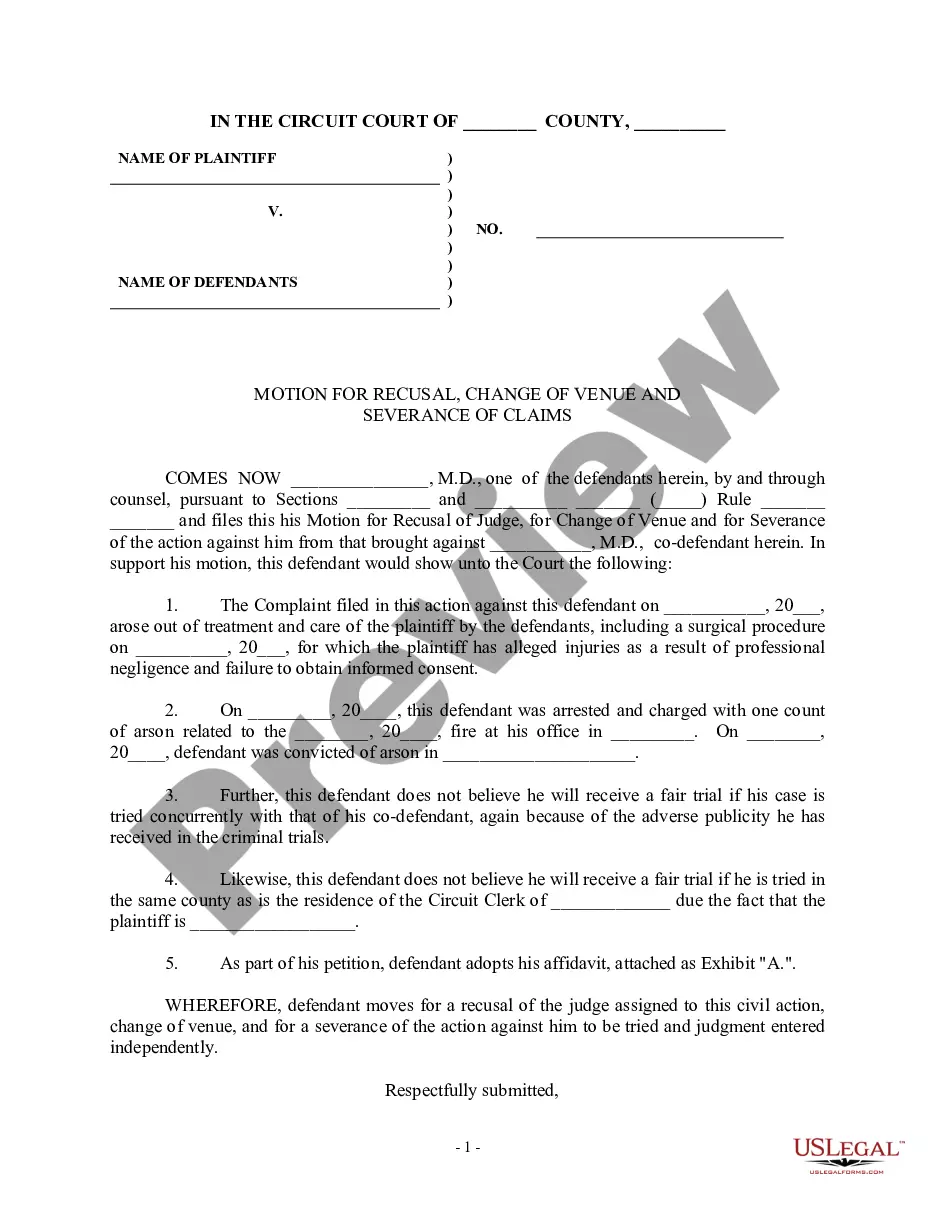
How to fill out Motion To Release Defendant And Set Reasonable Bail?
It’s well known that one cannot instantly become a legal expert, nor can one swiftly master how to efficiently prepare Florida Court Motion Forms Withdraw without possessing specialized knowledge.
Formulating legal documents is a labor-intensive process that demands specific training and expertise. So why not entrust the creation of the Florida Court Motion Forms Withdraw to the professionals.
With US Legal Forms, which boasts one of the most extensive legal document reservoirs, you can discover anything from judicial papers to templates for internal organizational correspondence.
You can regain entry to your documents from the My documents tab at any time. If you’re an existing client, you can simply Log In and find and download the template from that tab.
Regardless of the intent behind your documentation—whether it’s for financial, legal, or personal matters—our website has everything you need. Give US Legal Forms a try now!
- Locate the document you require by utilizing the search bar at the top of the page.
- View it (if this option is available) and review the accompanying description to assess whether Florida Court Motion Forms Withdraw is what you’re seeking.
- Initiate your search again if you require additional forms.
- Establish a complimentary account and select a subscription plan to acquire the template.
- Select Buy now. After the payment is processed, you can retrieve the Florida Court Motion Forms Withdraw, complete it, print it, and send it or forward it via mail to the appropriate individuals or organizations.
Form popularity
FAQ
The client's failure to fulfill her financial obligations to the attorney can furnish grounds for the attorney to withdraw from the representation after notifying his client of his intent to do so if the client fails to satisfy her obligations: Except as stated in paragraph (c), a lawyer may withdraw from representing ...
A lawyer may withdraw from representation in some circumstances. The lawyer has the option to withdraw if it can be accomplished without material adverse effect on the client's interests.
Florida law provides for two different types of motions to withdraw a plea depending on when the motion is filed. For example, Rule 3.170(f) authorizes a plea withdrawal ?at any time before a sentence.? Rule 3.170(l) authorizes a motion to withdraw a plea ?within thirty days after rendition of the sentence.?
Optional withdrawal The lawyer has the option to withdraw if it can be accomplished without material adverse effect on the client's interests. The lawyer also may withdraw where the client insists on taking action that the lawyer considers repugnant, imprudent, or with which the lawyer has a fundamental disagreement.
Ing to subsection (j) of Rule 2.060, an attorney must file a motion setting out the reasons for withdrawing and the name and address of the client. The motion must be set for hearing, and the notice and the motion must be served on the client and opposing counsel.