Confidentiality With For Someone
Description
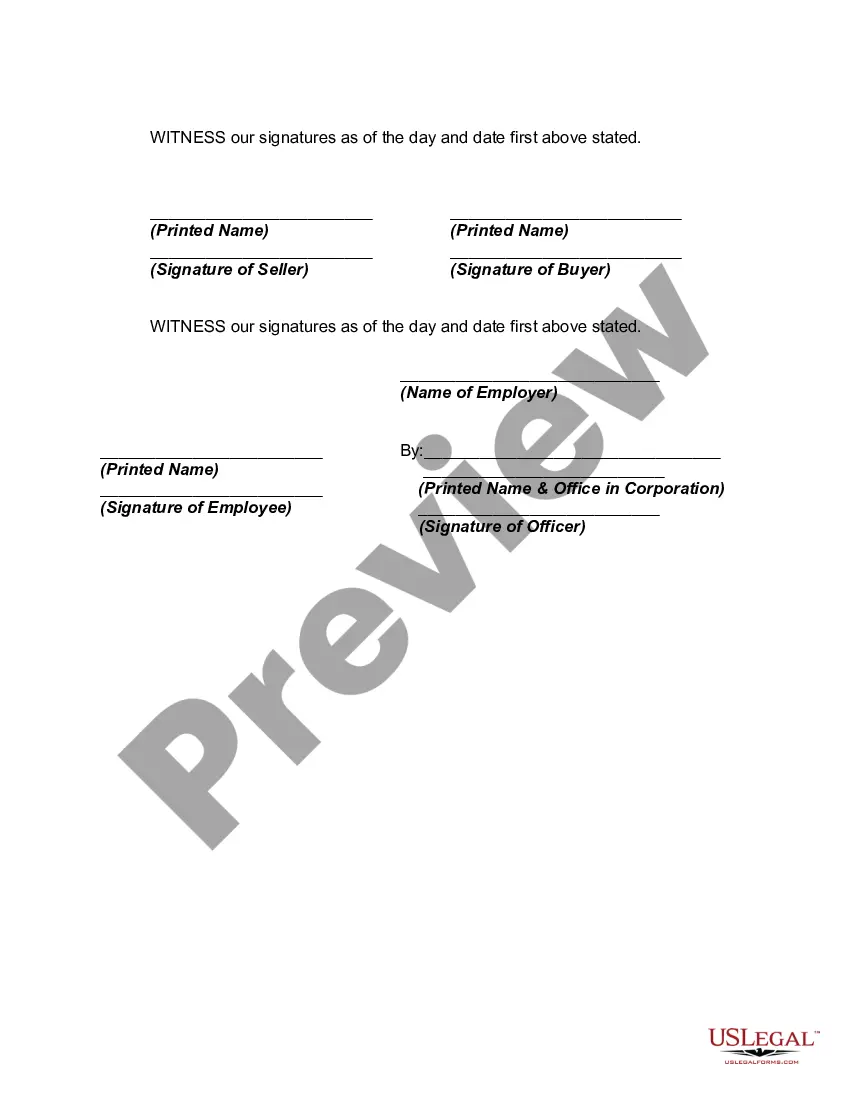
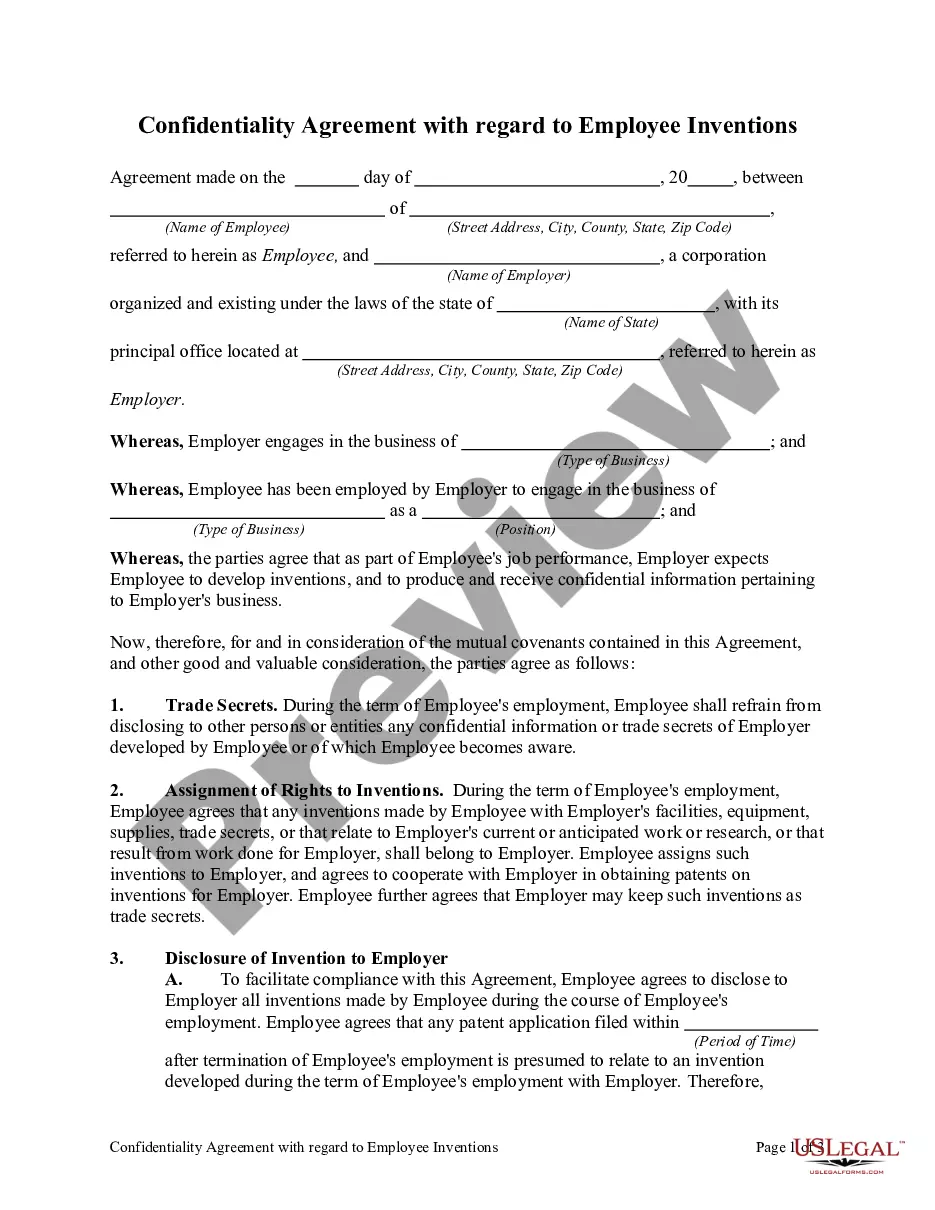
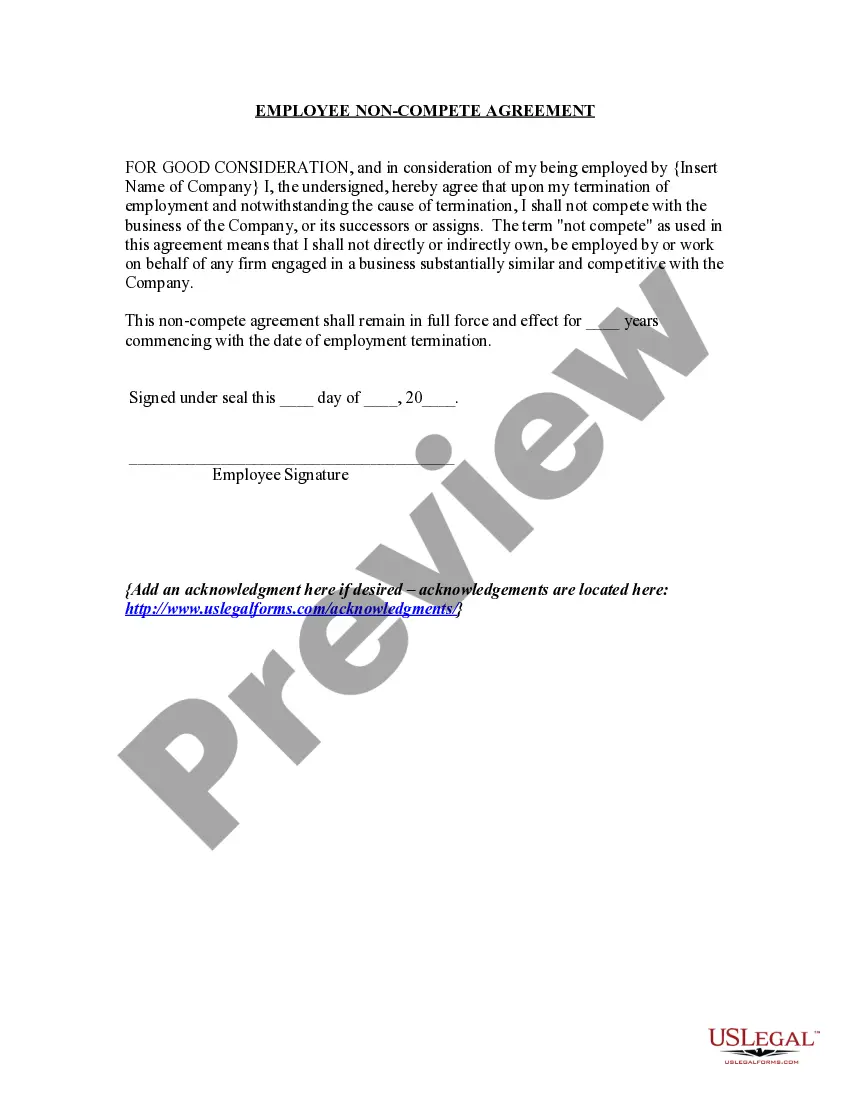
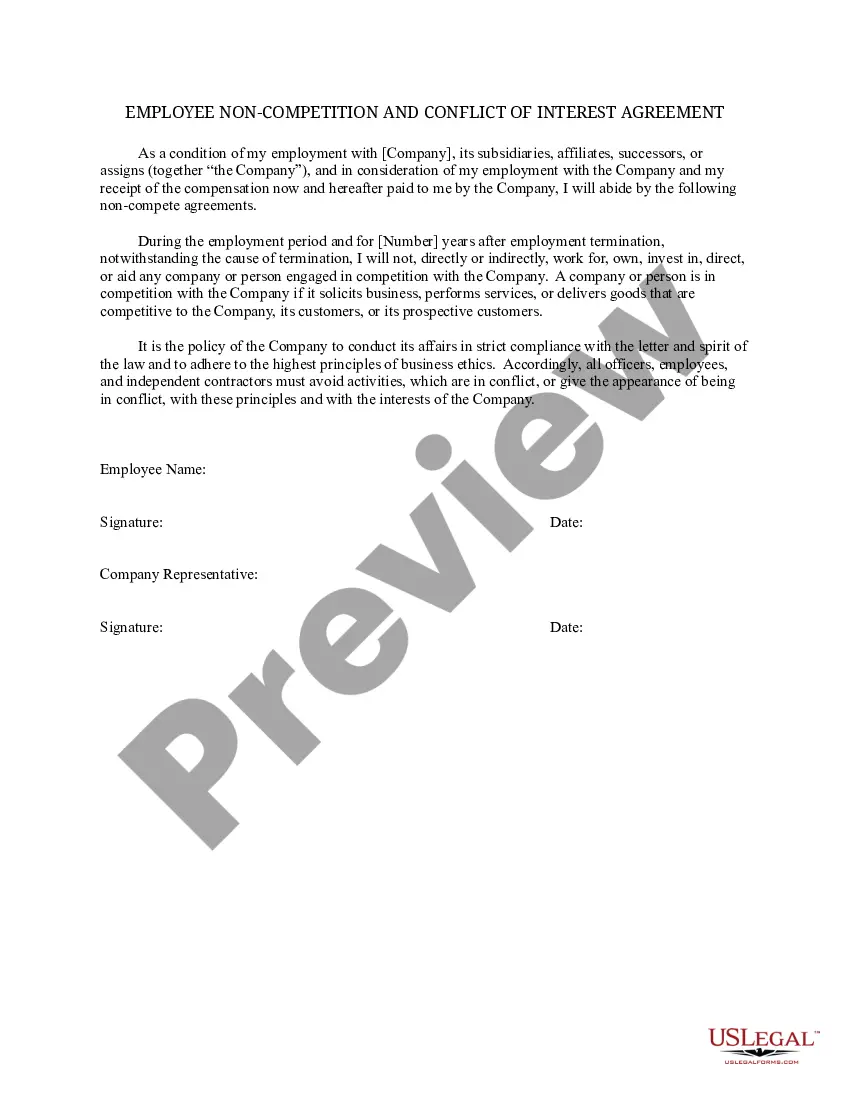
Get your form ready online
Our built-in tools help you complete, sign, share, and store your documents in one place.
Make edits, fill in missing information, and update formatting in US Legal Forms—just like you would in MS Word.
Download a copy, print it, send it by email, or mail it via USPS—whatever works best for your next step.
Sign and collect signatures with our SignNow integration. Send to multiple recipients, set reminders, and more. Go Premium to unlock E-Sign.
If this form requires notarization, complete it online through a secure video call—no need to meet a notary in person or wait for an appointment.
We protect your documents and personal data by following strict security and privacy standards.

Make edits, fill in missing information, and update formatting in US Legal Forms—just like you would in MS Word.

Download a copy, print it, send it by email, or mail it via USPS—whatever works best for your next step.

Sign and collect signatures with our SignNow integration. Send to multiple recipients, set reminders, and more. Go Premium to unlock E-Sign.

If this form requires notarization, complete it online through a secure video call—no need to meet a notary in person or wait for an appointment.

We protect your documents and personal data by following strict security and privacy standards.
Looking for another form?
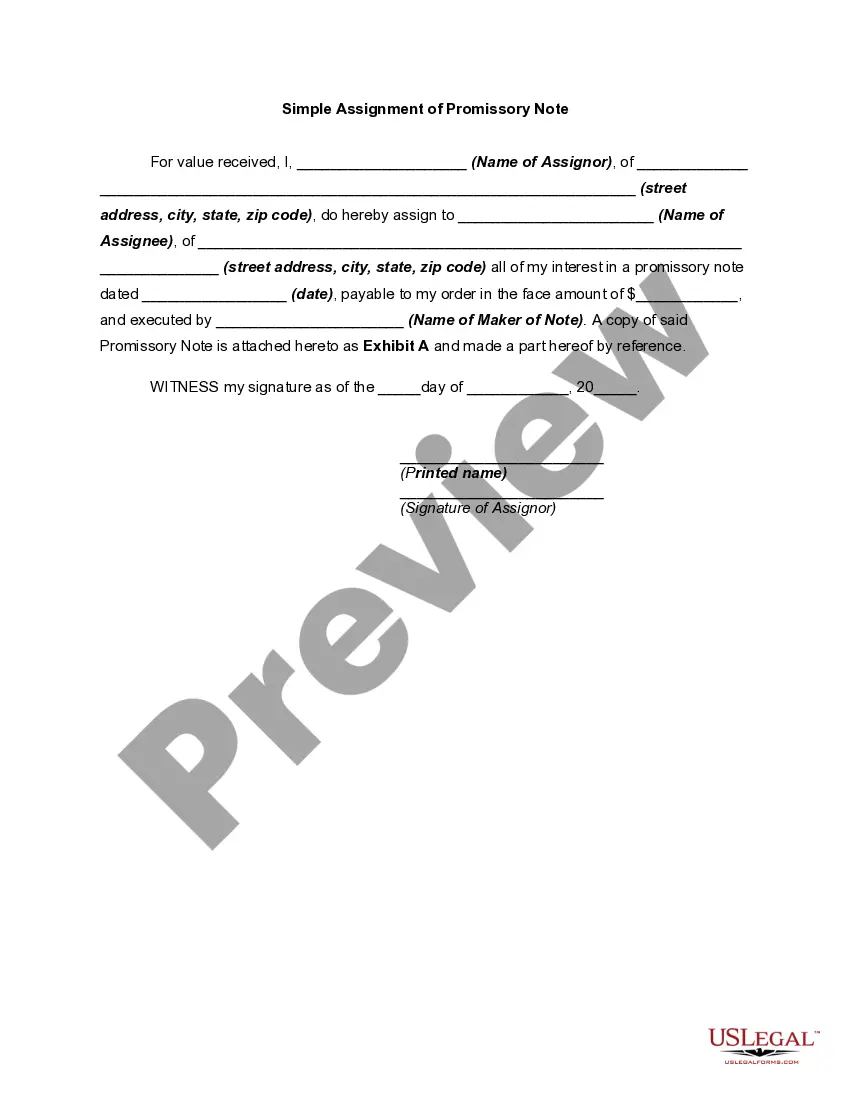
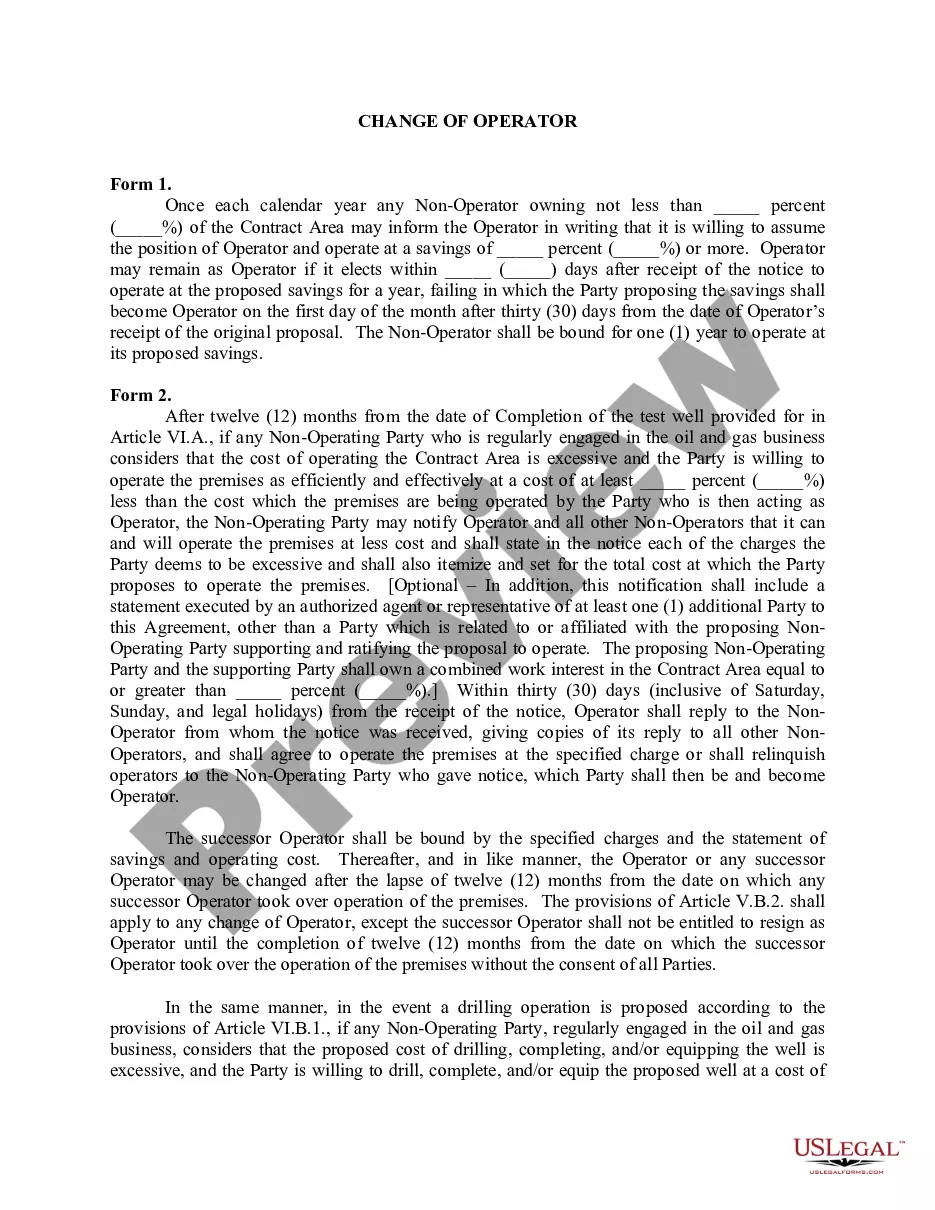
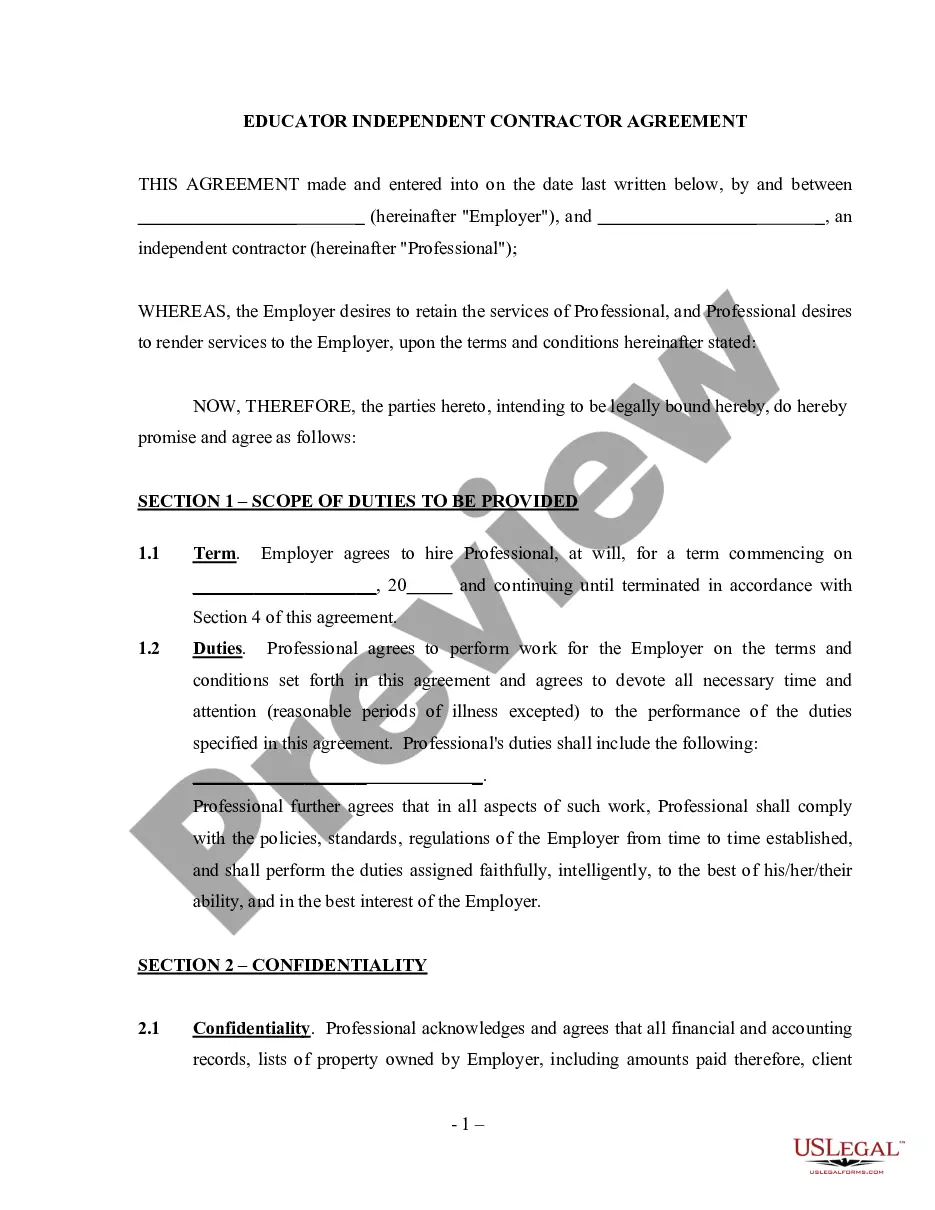







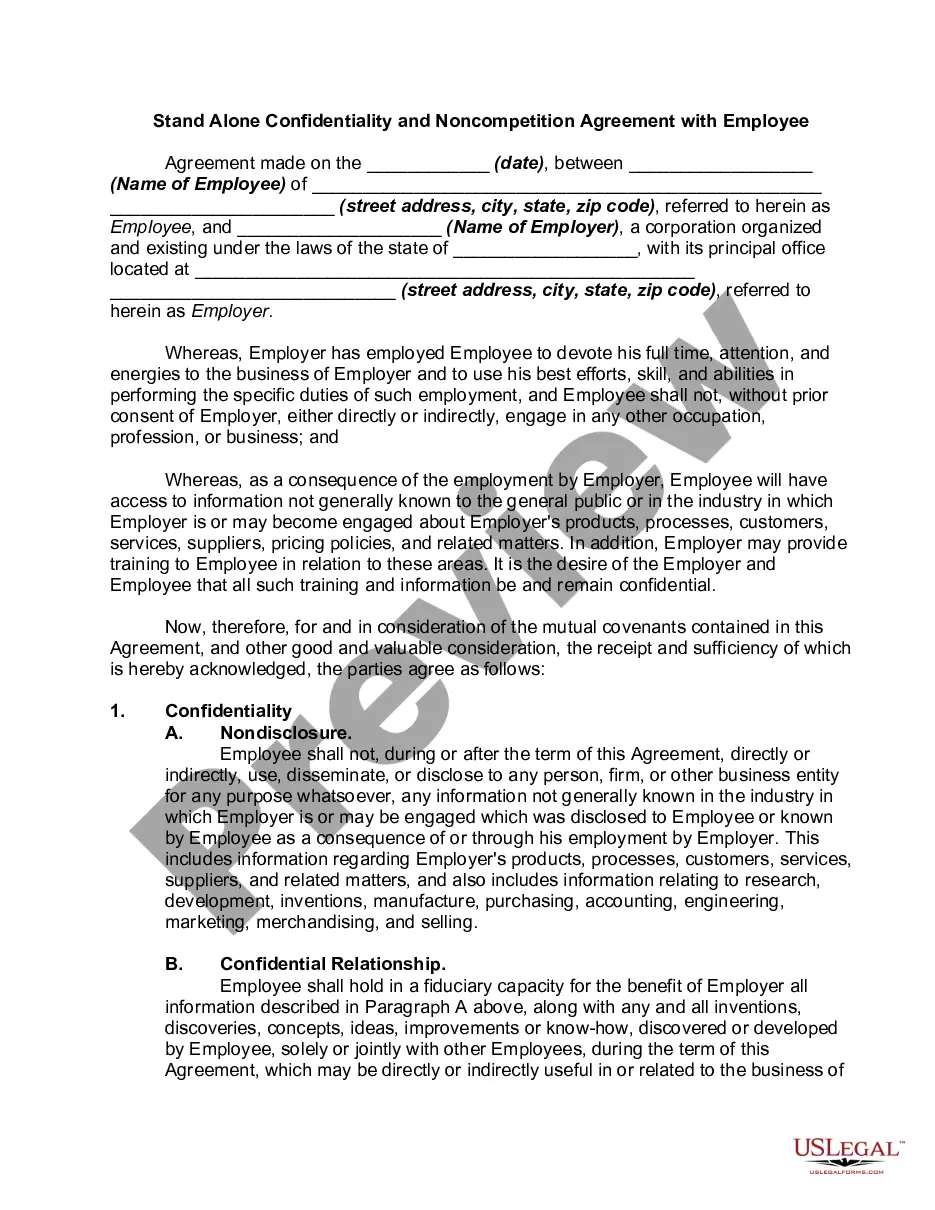
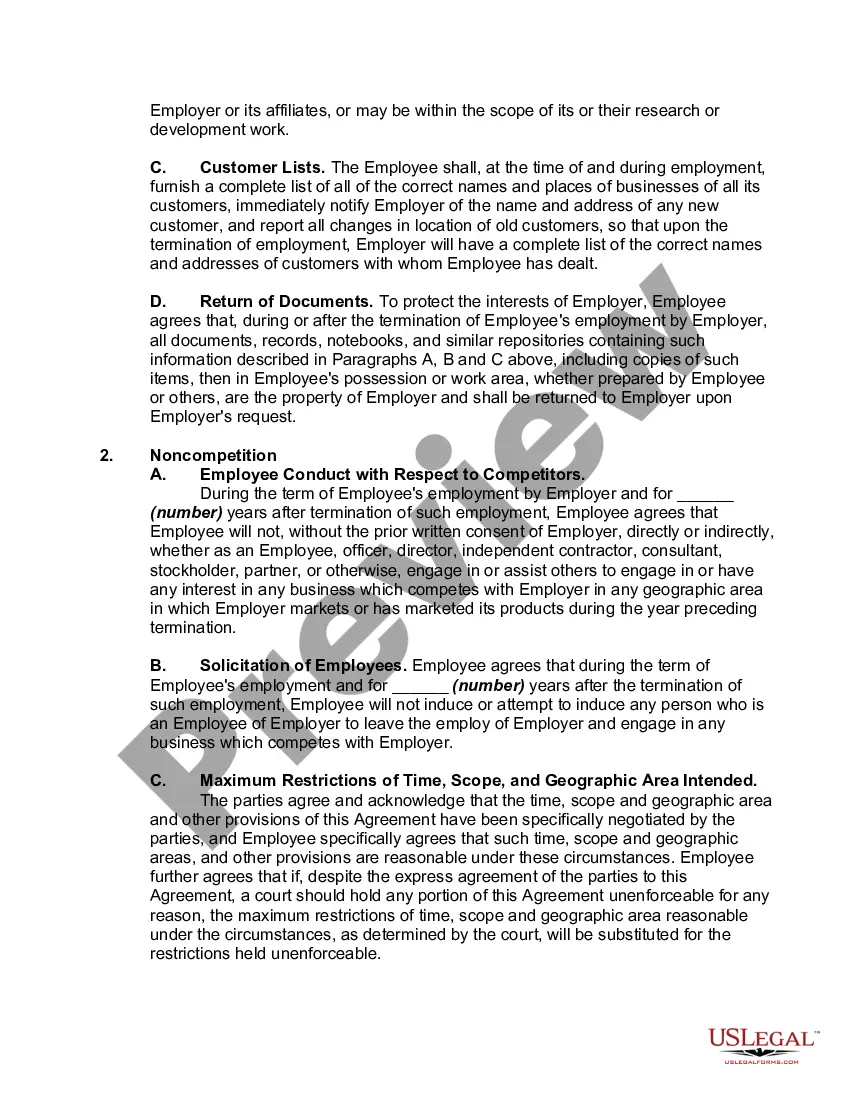
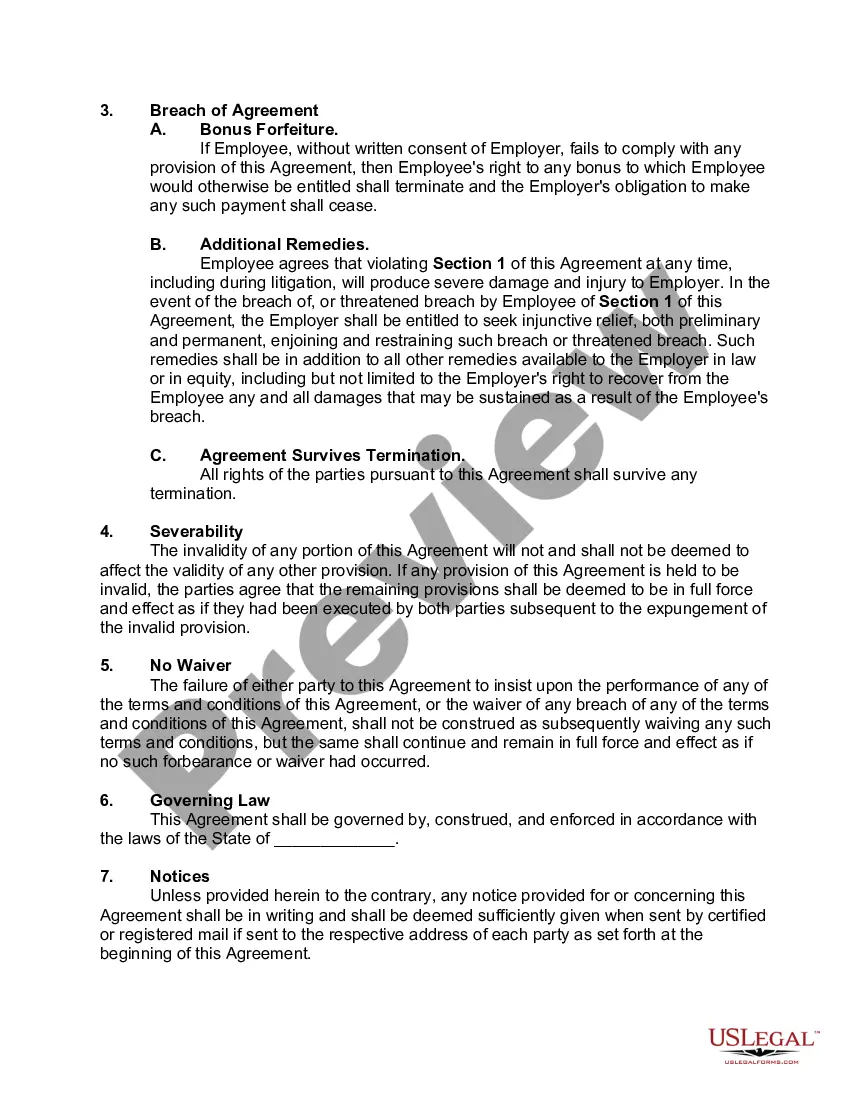
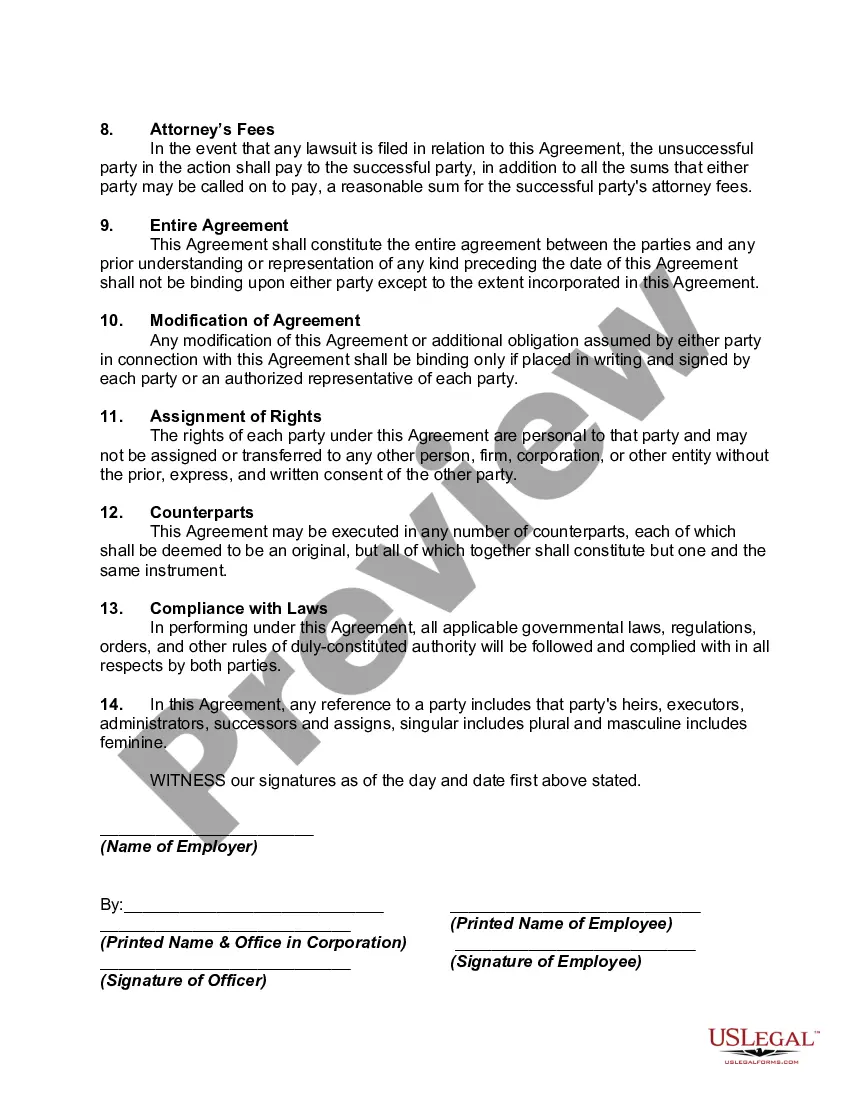
How to fill out Stand Alone Confidentiality And Noncompetition Agreement With Employee?
It’s clear that you cannot become a legal authority instantaneously, nor can you understand how to swiftly create a Confidentiality Agreement for Someone without possessing a unique skill set.
Generating legal documents is a lengthy process that demands particular training and abilities. So why not entrust the creation of the Confidentiality Agreement for Someone to the experts.
With US Legal Forms, one of the largest legal document repositories, you can find everything from court filings to templates for internal organizational communication. We recognize how vital adherence and compliance to federal and local statutes and regulations are.
Click Buy now. Once the payment is processed, you can download the Confidentiality Agreement for Someone, complete it, print it, and send or mail it to the specified individuals or entities.
You can access your forms again from the My documents section anytime. If you’re an existing client, you can simply Log In, and find and download the template from the same area.
Regardless of the reason for your documents—whether they are financial, legal, or personal—our website has you covered. Give US Legal Forms a try now!
- Visit our website and obtain the document you need in just a few minutes.
- Find the form you want by utilizing the search bar at the top of the site.
- Preview it (if this option is available) and review the accompanying description to determine if the Confidentiality Agreement for Someone is what you seek.
- If you require another template, restart your search.
- Sign up for a complimentary account and choose a subscription plan to buy the template.
Form popularity
FAQ
You can talk to professionals such as lawyers, doctors, or therapists confidentially. These individuals are often bound by ethical guidelines to protect your privacy. Additionally, trusted friends or family members might also serve as a confidential sounding board, depending on your relationship with them and their understanding of confidentiality with for someone.
Here is a common example: CONFIDENTIALITY NOTICE: This message and any accompanying documents contain information belonging to the sender which may be confidential and legally privileged. This information is only for the use of the individual or entity to which it was intended.
A typical confidentiality clause might say, "The phrases and circumstances of this Agreement are completely confidential between the parties and shall not be disclosed to anybody else. Any disclosure in violation shall be deemed a breach of this Agreement."
The three most common situations that are considered limitations of confidentiality in counseling include immediate danger to self, duty to warn, and suspected abuse or neglect of a child or elder.
Having another's trust or confidence; entrusted with secrets or private affairs: a confidential secretary.
Private/Non-Public Social security number. Birth date. Home phone number. Home address. Health information. Passwords. Parking leases. Gender.