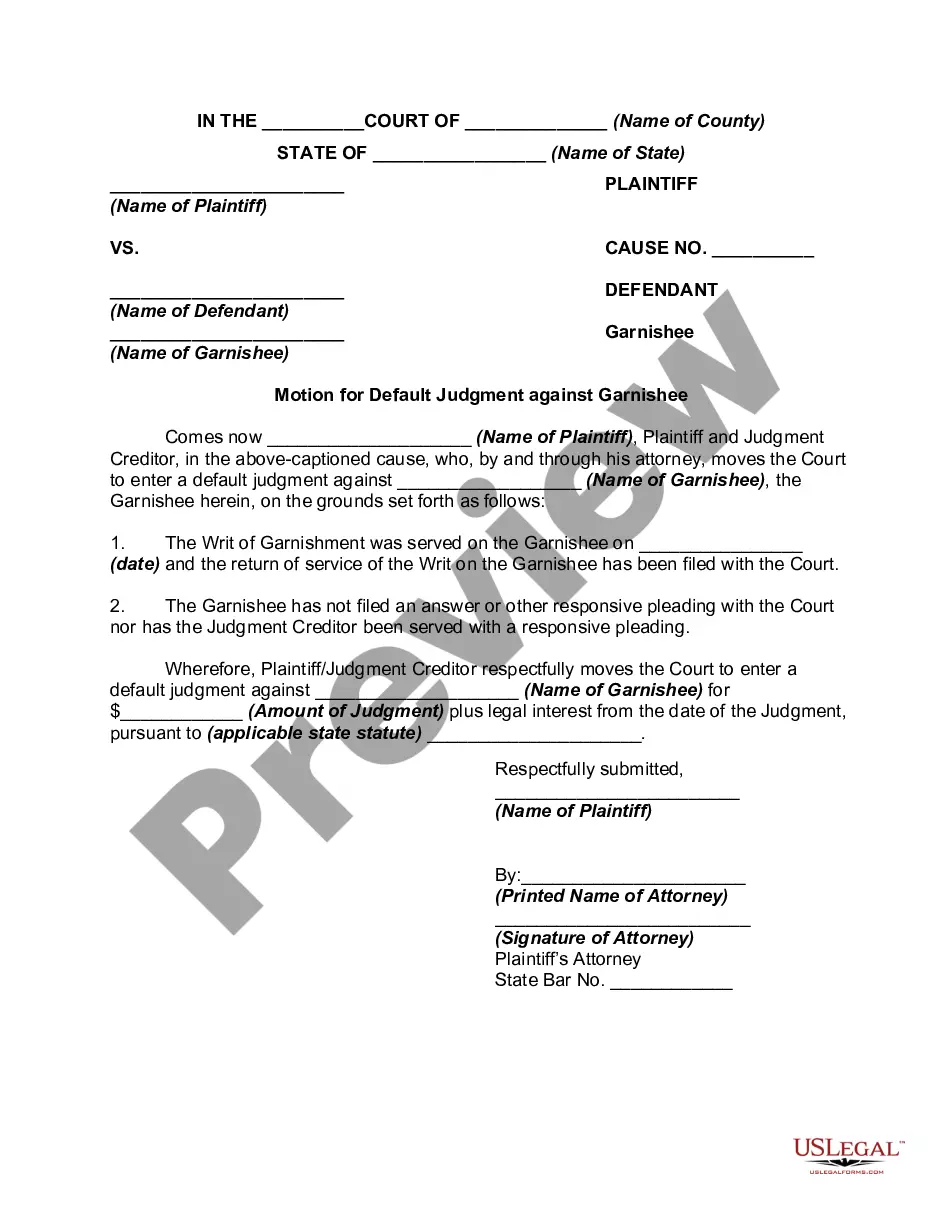
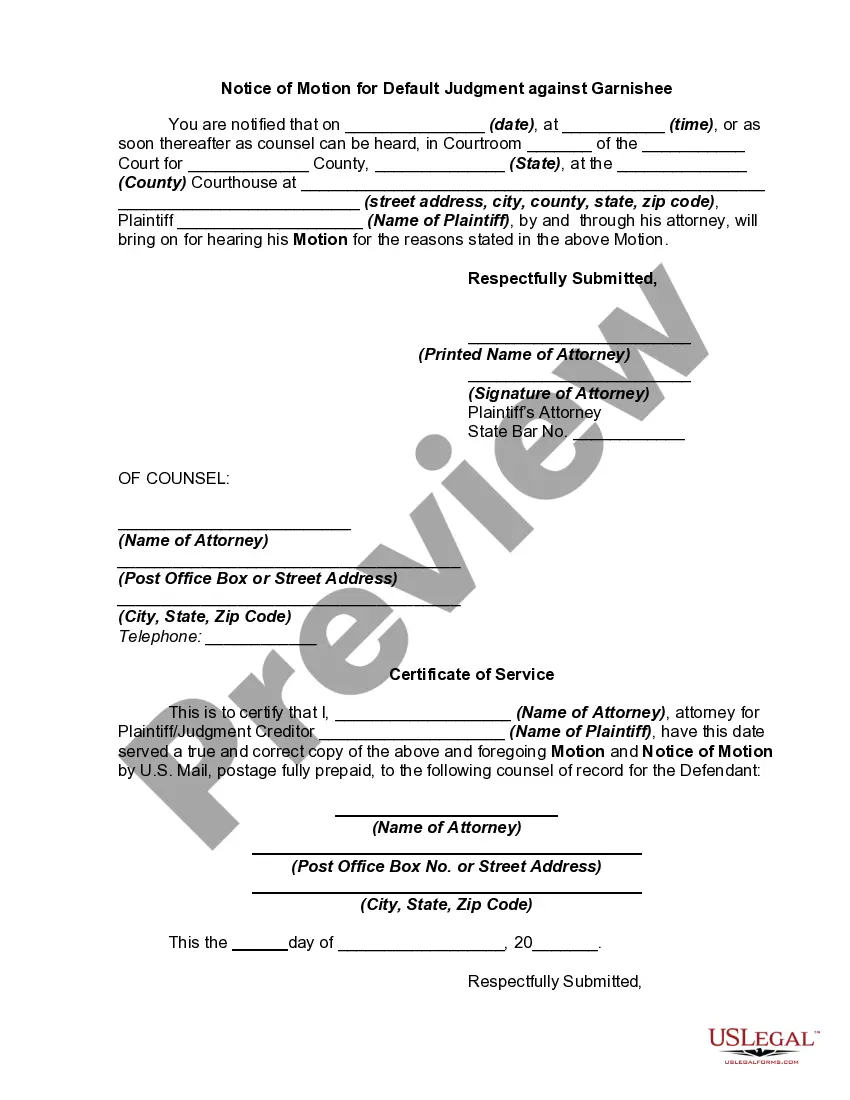
Default Judgment Motion Without Notice
Description
Get your form ready online
Our built-in tools help you complete, sign, share, and store your documents in one place.
Make edits, fill in missing information, and update formatting in US Legal Forms—just like you would in MS Word.
Download a copy, print it, send it by email, or mail it via USPS—whatever works best for your next step.
Sign and collect signatures with our SignNow integration. Send to multiple recipients, set reminders, and more. Go Premium to unlock E-Sign.
If this form requires notarization, complete it online through a secure video call—no need to meet a notary in person or wait for an appointment.
We protect your documents and personal data by following strict security and privacy standards.

Make edits, fill in missing information, and update formatting in US Legal Forms—just like you would in MS Word.

Download a copy, print it, send it by email, or mail it via USPS—whatever works best for your next step.

Sign and collect signatures with our SignNow integration. Send to multiple recipients, set reminders, and more. Go Premium to unlock E-Sign.

If this form requires notarization, complete it online through a secure video call—no need to meet a notary in person or wait for an appointment.

We protect your documents and personal data by following strict security and privacy standards.
Looking for another form?


Form popularity
FAQ
Filing a motion to vacate a default judgment in New Jersey involves preparing a comprehensive motion that states your reasons for vacating the judgment. You will need to include supporting documentation, a notice of motion, and an affidavit detailing your circumstances. Ensure that you file it within the requisite time frame and serve copies to other involved parties. For streamlined access to necessary forms and instructions, consider checking out US Legal Forms.
Valid reasons to vacate a default judgment in New Jersey may include proving that you did not receive proper notice of the lawsuit, demonstrating a reasonable excuse for your failure to respond, or showing new evidence that could influence the case outcome. Additionally, if the judgment was obtained through fraud or misconduct, this could also be grounds for vacating it. For assistance in understanding these reasons further, refer to resources provided by US Legal Forms.
To oppose a motion to set aside a default judgment, you should file a written opposition statement with the court where the judgment was issued. This statement must clearly articulate your arguments and include any relevant documents that support your position. Be sure to demonstrate how the judgment was justified and why it should remain in place. Utilizing US Legal Forms can help you draft a compelling opposition.
A motion to enter default judgment in New Jersey is a formal request to the court to grant a judgment in favor of a party due to the other party's failure to respond or appear. This motion typically occurs after the time for responding has passed. Filing this motion allows you to obtain a decision based on the evidence presented, even without the other party's participation. When needed, US Legal Forms can equip you with essential documents for this process.
To file a motion to vacate a default judgment in New Jersey, you need to prepare a motion application with supporting documents that outline your reasons. You must include a notice of motion indicating when and where the hearing will take place. It's also crucial to submit an affidavit explaining the circumstances and include evidence that supports your case. If navigating this process feels complex, consider using US Legal Forms for templates and guidance.
Removing a default judgment involves filing a motion to set it aside, commonly done by submitting a default judgment motion without notice. You will need to provide a valid reason, such as a lack of proper notice or a reasonable defense. Consider using platforms like US Legal Forms for guidance and assistance in navigating the process effectively.
After a default judgment is issued in the UK, the creditor may take steps to enforce the ruling. This can include obtaining an enforcement order or pursuing the debtor's assets. It is crucial to understand your rights, as you may still have options to challenge the default if you act promptly, possibly using a default judgment motion without notice to help your case.
Yes, you can appeal a default judgment if you believe it was entered unfairly or in error. You will typically need to file a motion for a default judgment without notice. The appeals process allows you to present your case and explain why the default should be overturned, helping you regain control over the outcome.
After filing a motion for default in a Florida eviction case, the court will review the motion to determine if it meets legal criteria. If approved, the court may grant a default judgment in favor of the landlord. Navigating this process can be complex, but using resources like uslegalforms can provide essential guidance and documentation support to assist you with a default judgment motion without notice.
To lose by default means that a party has failed to contest a legal action, leading to an automatic loss of their case. The court may issue a ruling in favor of the opposing party as a result of this inaction. In cases involving a default judgment motion without notice, understanding the implications of losing by default is vital for anyone involved in the litigation process.
