Vacate Judgment Form For Landlord
Description
Get your form ready online
Our built-in tools help you complete, sign, share, and store your documents in one place.
Make edits, fill in missing information, and update formatting in US Legal Forms—just like you would in MS Word.
Download a copy, print it, send it by email, or mail it via USPS—whatever works best for your next step.
Sign and collect signatures with our SignNow integration. Send to multiple recipients, set reminders, and more. Go Premium to unlock E-Sign.
If this form requires notarization, complete it online through a secure video call—no need to meet a notary in person or wait for an appointment.
We protect your documents and personal data by following strict security and privacy standards.

Make edits, fill in missing information, and update formatting in US Legal Forms—just like you would in MS Word.

Download a copy, print it, send it by email, or mail it via USPS—whatever works best for your next step.

Sign and collect signatures with our SignNow integration. Send to multiple recipients, set reminders, and more. Go Premium to unlock E-Sign.

If this form requires notarization, complete it online through a secure video call—no need to meet a notary in person or wait for an appointment.

We protect your documents and personal data by following strict security and privacy standards.
Looking for another form?








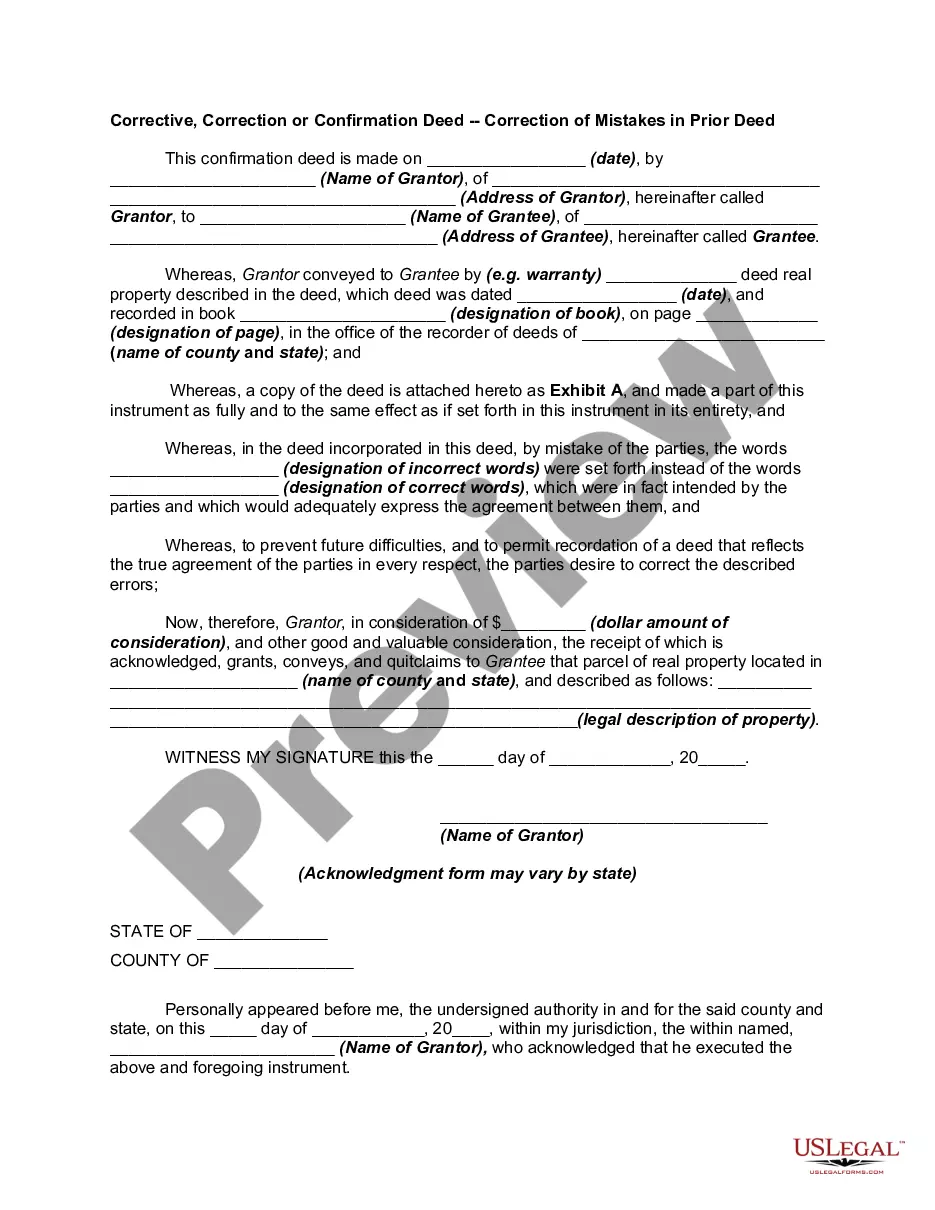
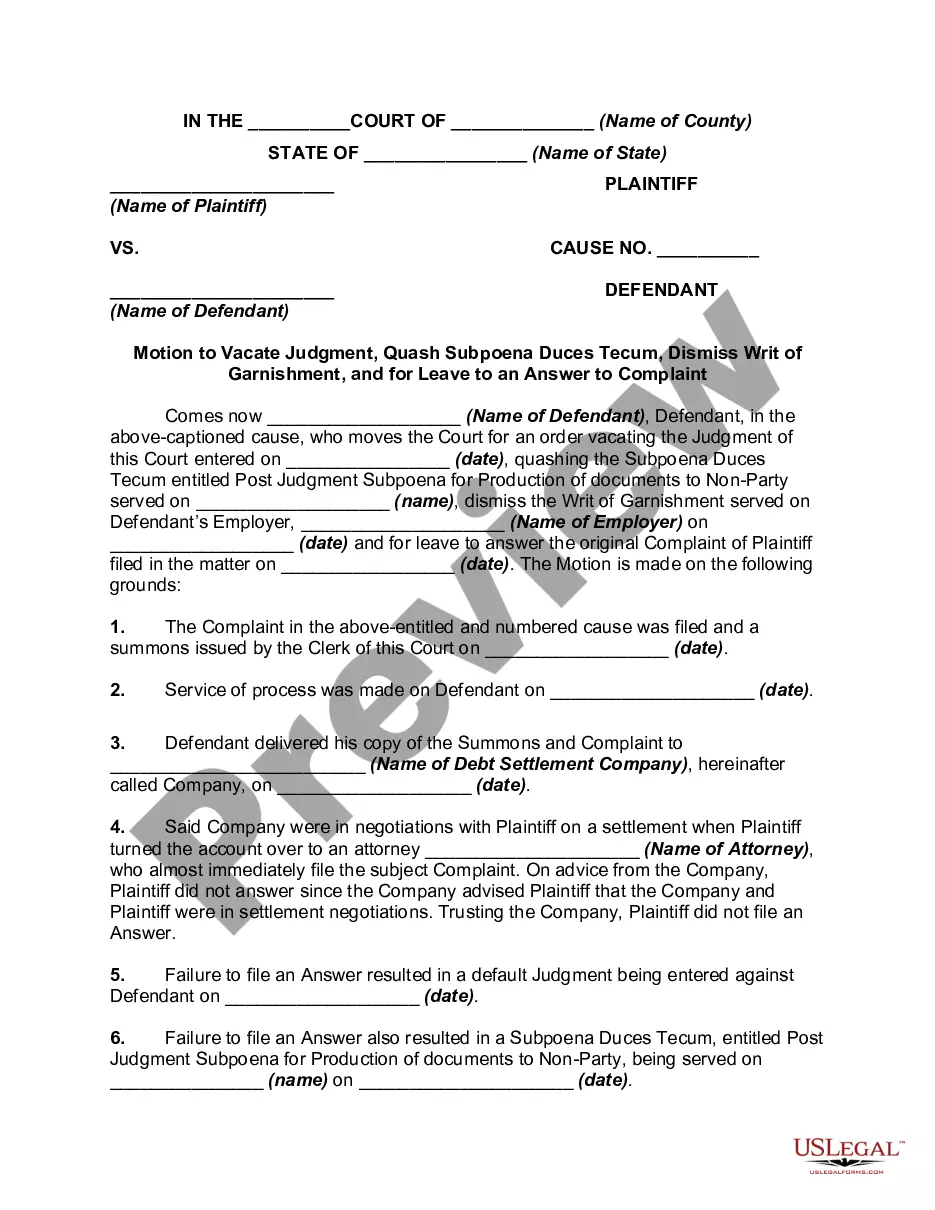
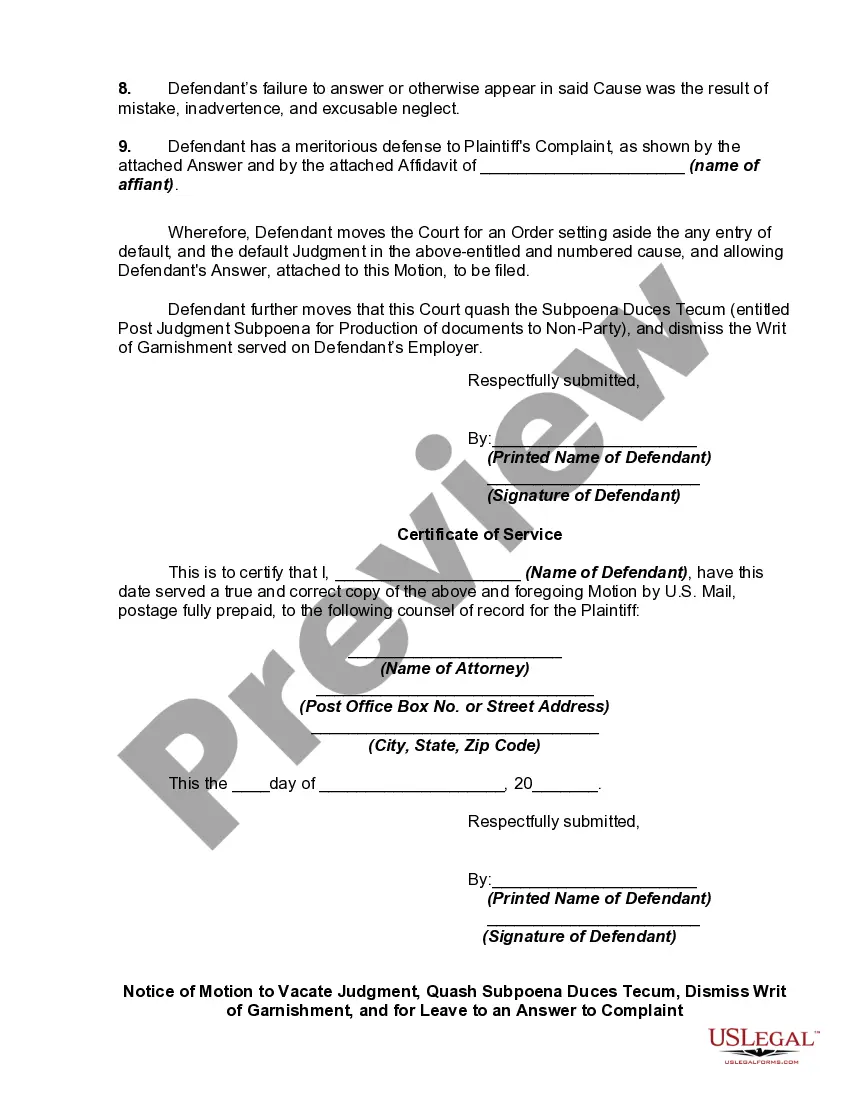
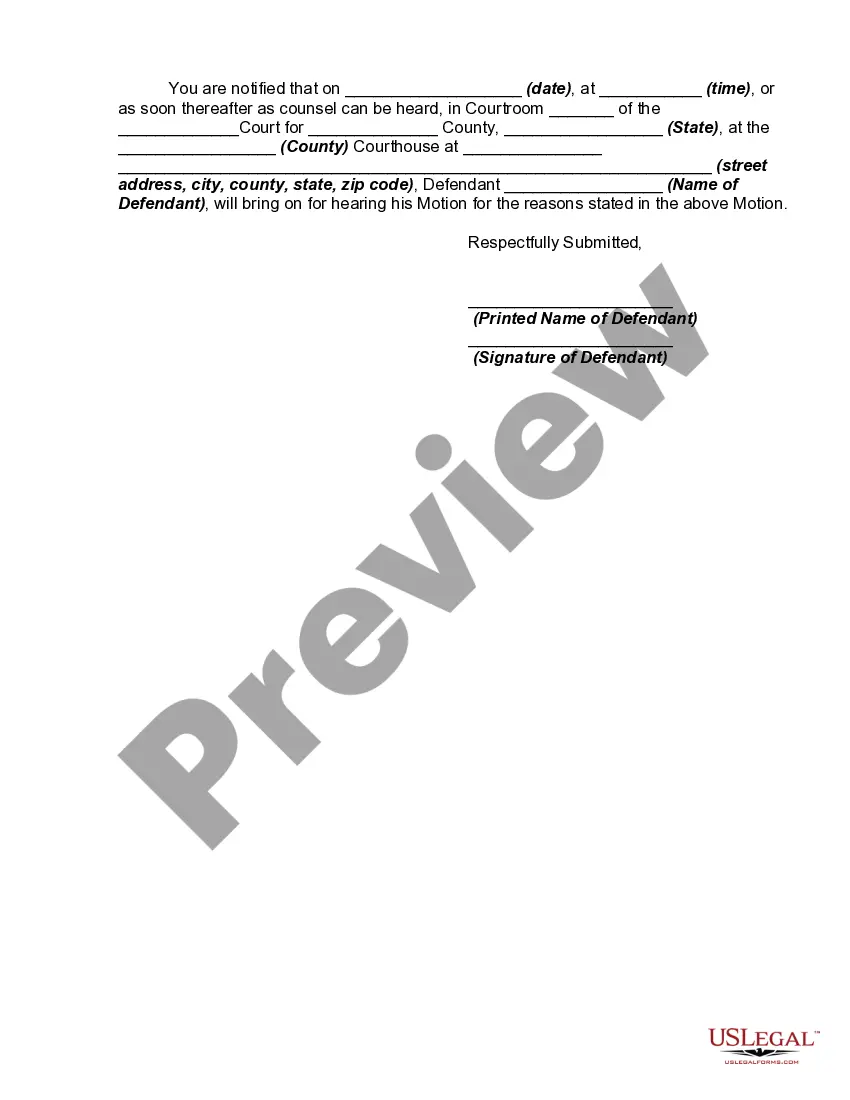
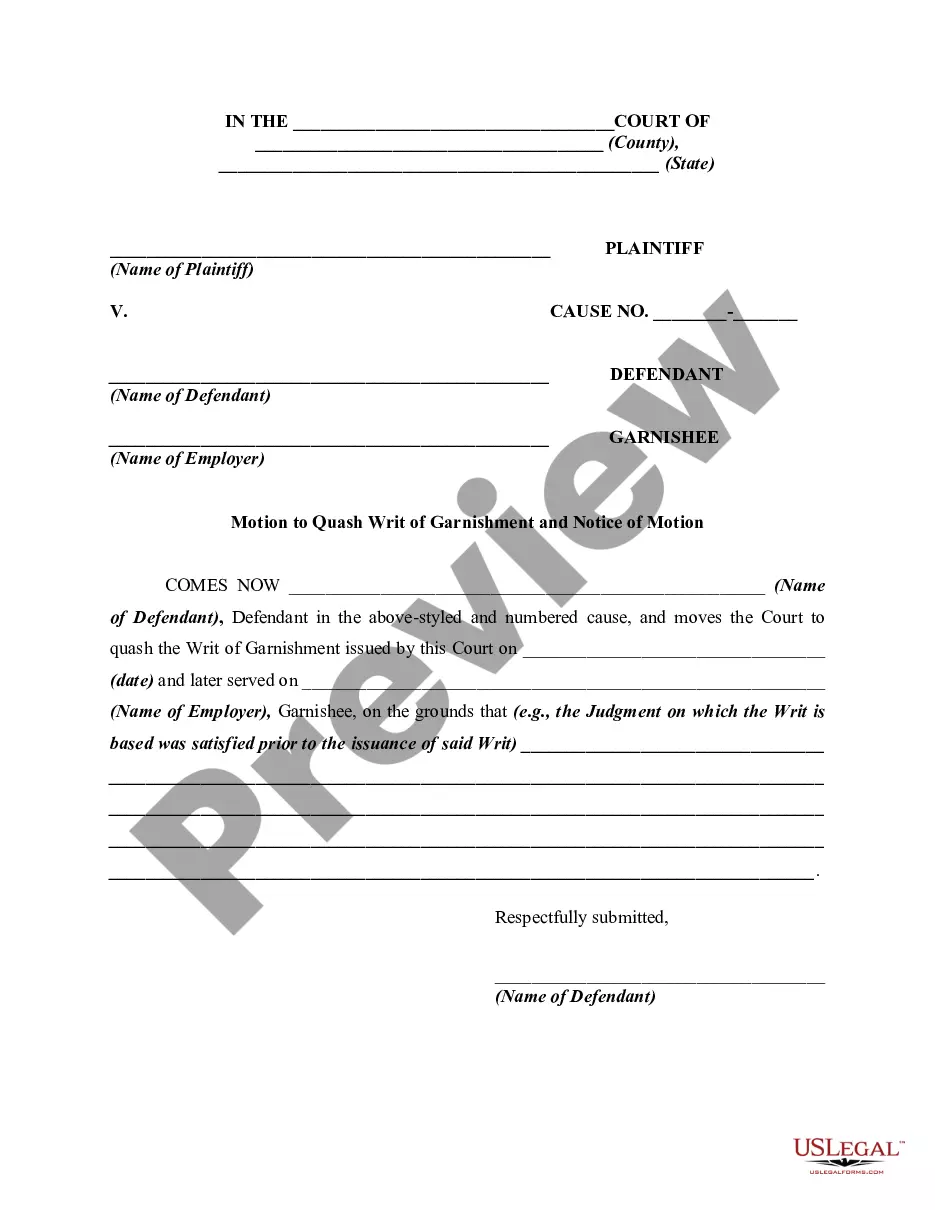
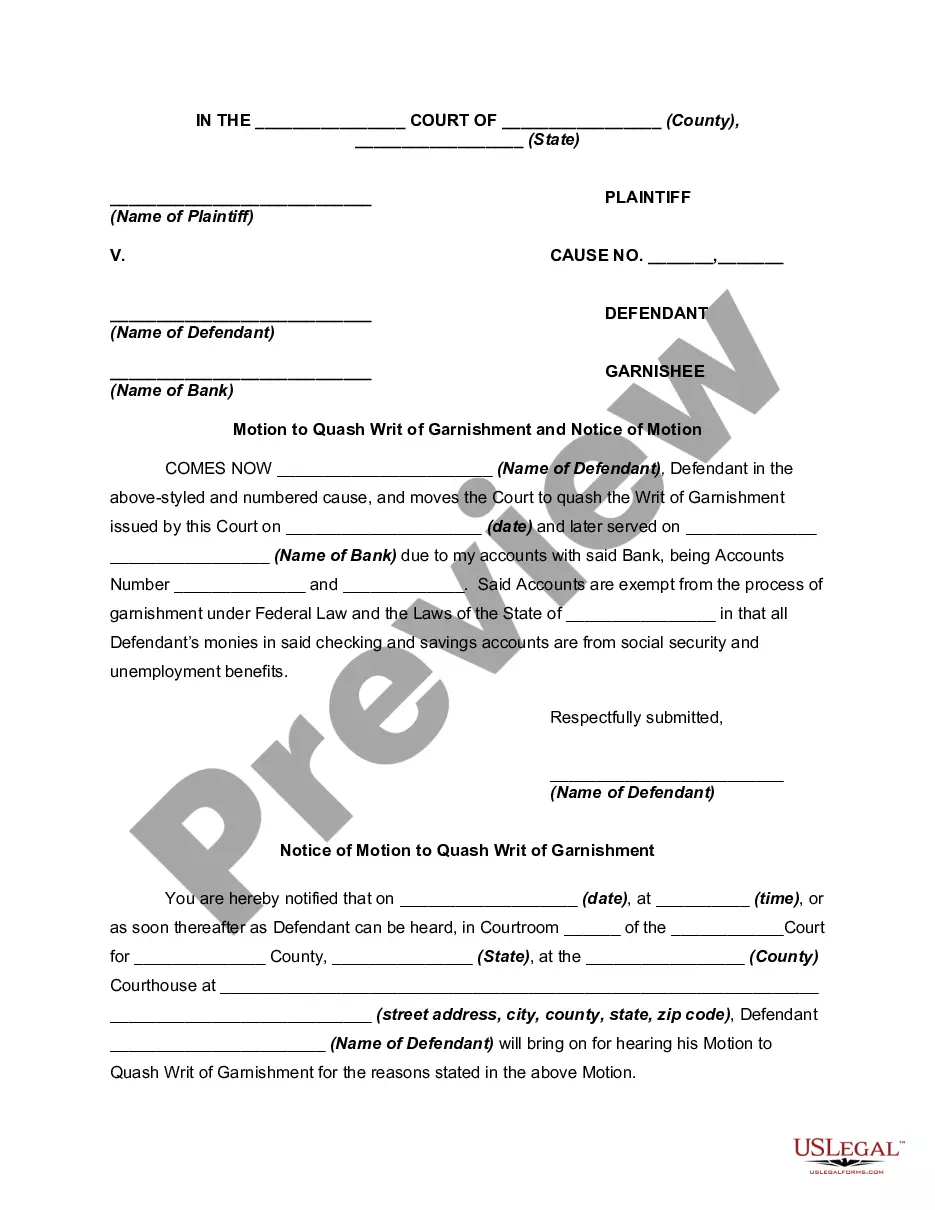
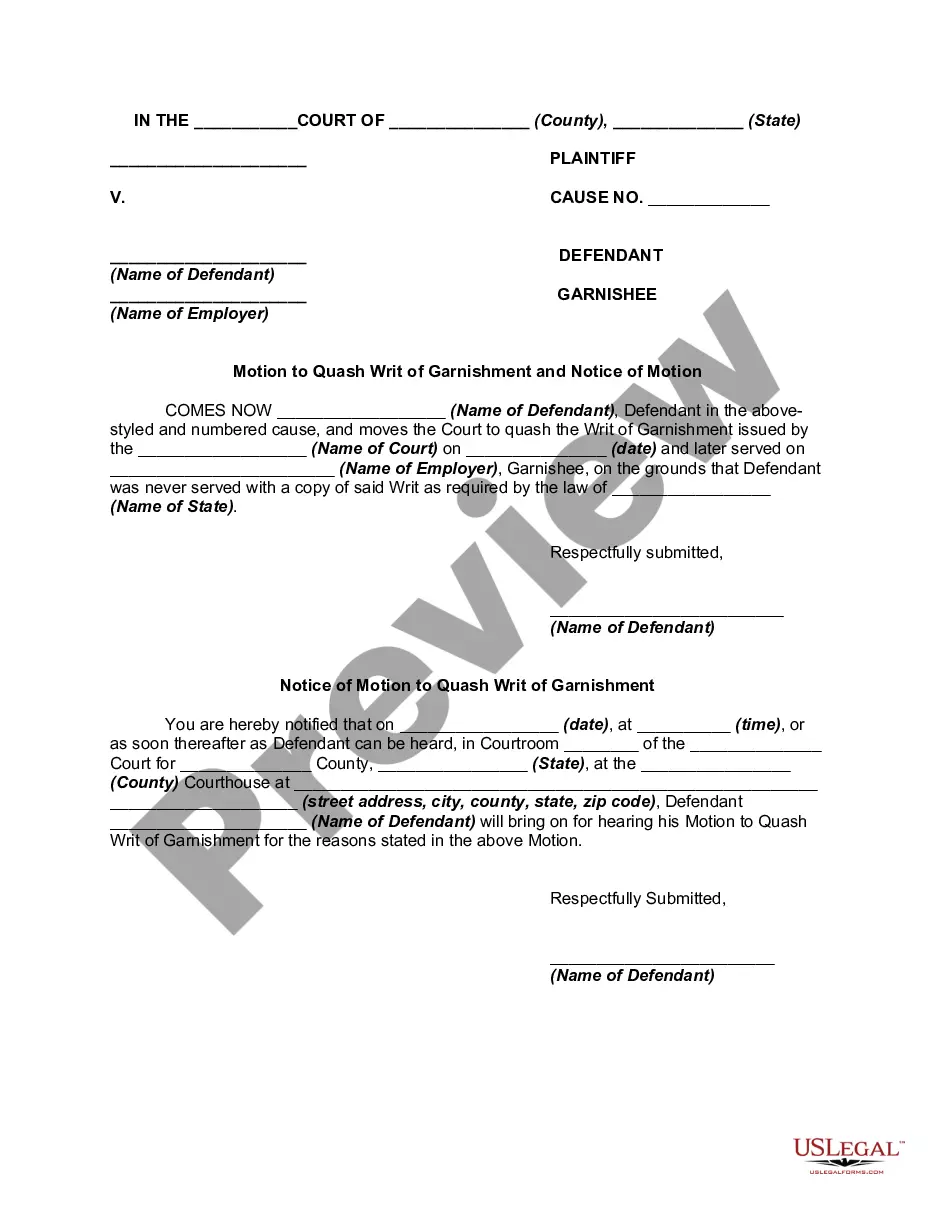
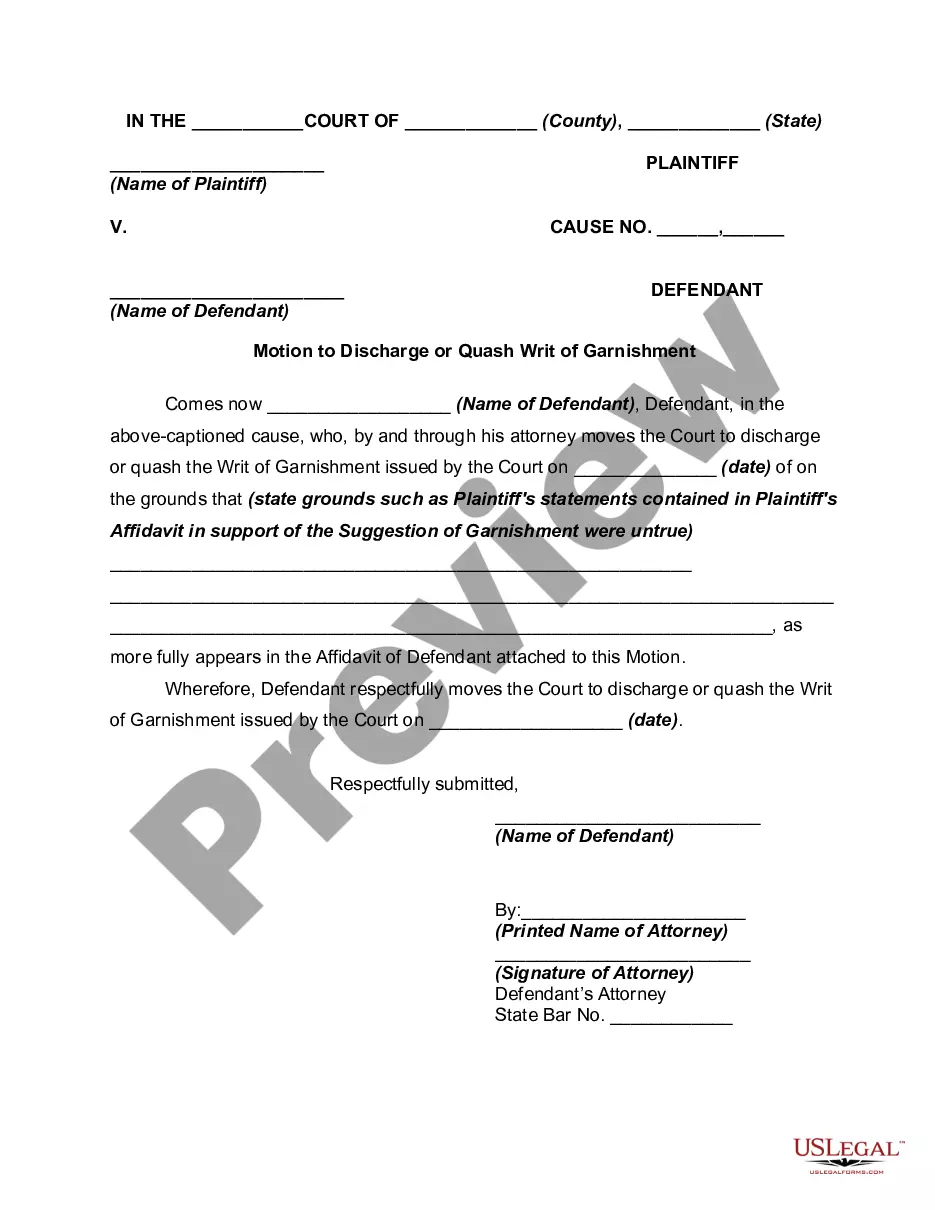
How to fill out Motion To Vacate Judgment, Quash Subpoena Duces Tecum, Dismiss Writ Of Garnishment, And For Leave To File An Answer To Complaint?
Creating legal documents from the ground up can occasionally be quite daunting.
Certain situations may require extensive research and substantial financial investment.
If you’re looking for a simpler and more cost-effective method of producing a Vacate Judgment Form For Landlord or any other forms without unnecessary complications, US Legal Forms is readily available at your convenience.
Our digital library of over 85,000 current legal documents covers nearly every facet of your financial, legal, and personal affairs.
Before hastily downloading the Vacate Judgment Form For Landlord, consider these tips: Check the form preview and descriptions to ensure it’s the document you need. Verify that the template you choose meets the criteria of your state and county. Select the most appropriate subscription plan to obtain the Vacate Judgment Form For Landlord. Download the form, then complete it, sign it, and print it out. US Legal Forms boasts an impeccable reputation and more than 25 years of expertise. Join us today and transform document execution into a seamless and efficient process!
- With just a few clicks, you can swiftly access templates that comply with state and county regulations, meticulously prepared by our legal experts.
- Utilize our platform whenever you require trusted and dependable services to effortlessly locate and download the Vacate Judgment Form For Landlord.
- If you’re already familiar with our services and have previously set up an account with us, simply Log In to your account, find the form and download it, or re-download it anytime later in the My documents section.
- Don't have an account? No problem. Registering is a quick process, allowing you to browse the catalog.
Form popularity
FAQ
To vacate a judgment in New York, you must file a motion with the court that issued the judgment, along with appropriate documentation that supports your case. It is essential to clearly outline why the judgment should be vacated, such as new evidence or procedural errors. Using a Vacate judgment form for landlord can simplify this process and ensure you include all necessary information.
In New York, a judgment can be removed by filing a motion to vacate the judgment in the court where it was issued. This process typically requires showing valid reasons, such as improper service or other legal defenses. Utilizing a Vacate judgment form for landlord may streamline this process, providing a structured approach to fighting an unjust judgment.
In New York, vacating a judgment requires filing a motion in court where the original judgment was issued. You will need to provide valid reasons such as improper service or a change in circumstances. To facilitate this process, utilizing a vacate judgment form for landlords can offer a clear structure for presenting your case to the court.
Removing a judgment from your rental history involves filing a vacate judgment form for landlord concerns. This form helps you request the court to eliminate any unfavorable rulings that may impact your ability to rent. By following the correct procedures, you can improve your rental prospects.
To vacate a judgment means to nullify or cancel a decision made by a court. This action removes the legal consequences of the judgment, allowing you to start fresh. You can use a vacate judgment form for landlord cases to initiate this process and clear your record.
You can tell the clerk that you want to file an order to show cause (?OSC?). On the OSC form you can tell the court why they should vacate this judgment based on either excusable default, lack of personal jurisdiction, or both. The OSC should include 1) a reasonable excuse and 2) a good defense.
In Texas, this must be filed within 14 days of the judgment. Essentially, in a motion to vacate, you would be giving the Court a reason to set aside the judgment and keep the lawsuit active. If the Court thinks the reason you have given is a good one, the judgment will be vacated.
If it has been 30 days or less, you can get rid of ("vacate") a default judgment by filing a motion. This is a written request to the judge asking them to throw out the judgment. You will have to send a copy of the motion to the other party in the case, and then show up in court for a hearing.
In Texas, this must be filed within 14 days of the judgment. Essentially, in a motion to vacate, you would be giving the Court a reason to set aside the judgment and keep the lawsuit active. If the Court thinks the reason you have given is a good one, the judgment will be vacated.
Get the form SC-135: Notice of Motion to Vacate Judgment. You must explain on the form why you did not come to court. File the form with the Small Claims Court Clerk's Office at the court where your case was heard. Pay the filing fee.