Motion For Summary Judgment When To File
Description

Get your form ready online
Our built-in tools help you complete, sign, share, and store your documents in one place.
Make edits, fill in missing information, and update formatting in US Legal Forms—just like you would in MS Word.
Download a copy, print it, send it by email, or mail it via USPS—whatever works best for your next step.
Sign and collect signatures with our SignNow integration. Send to multiple recipients, set reminders, and more. Go Premium to unlock E-Sign.
If this form requires notarization, complete it online through a secure video call—no need to meet a notary in person or wait for an appointment.
We protect your documents and personal data by following strict security and privacy standards.

Make edits, fill in missing information, and update formatting in US Legal Forms—just like you would in MS Word.

Download a copy, print it, send it by email, or mail it via USPS—whatever works best for your next step.

Sign and collect signatures with our SignNow integration. Send to multiple recipients, set reminders, and more. Go Premium to unlock E-Sign.

If this form requires notarization, complete it online through a secure video call—no need to meet a notary in person or wait for an appointment.

We protect your documents and personal data by following strict security and privacy standards.
Looking for another form?






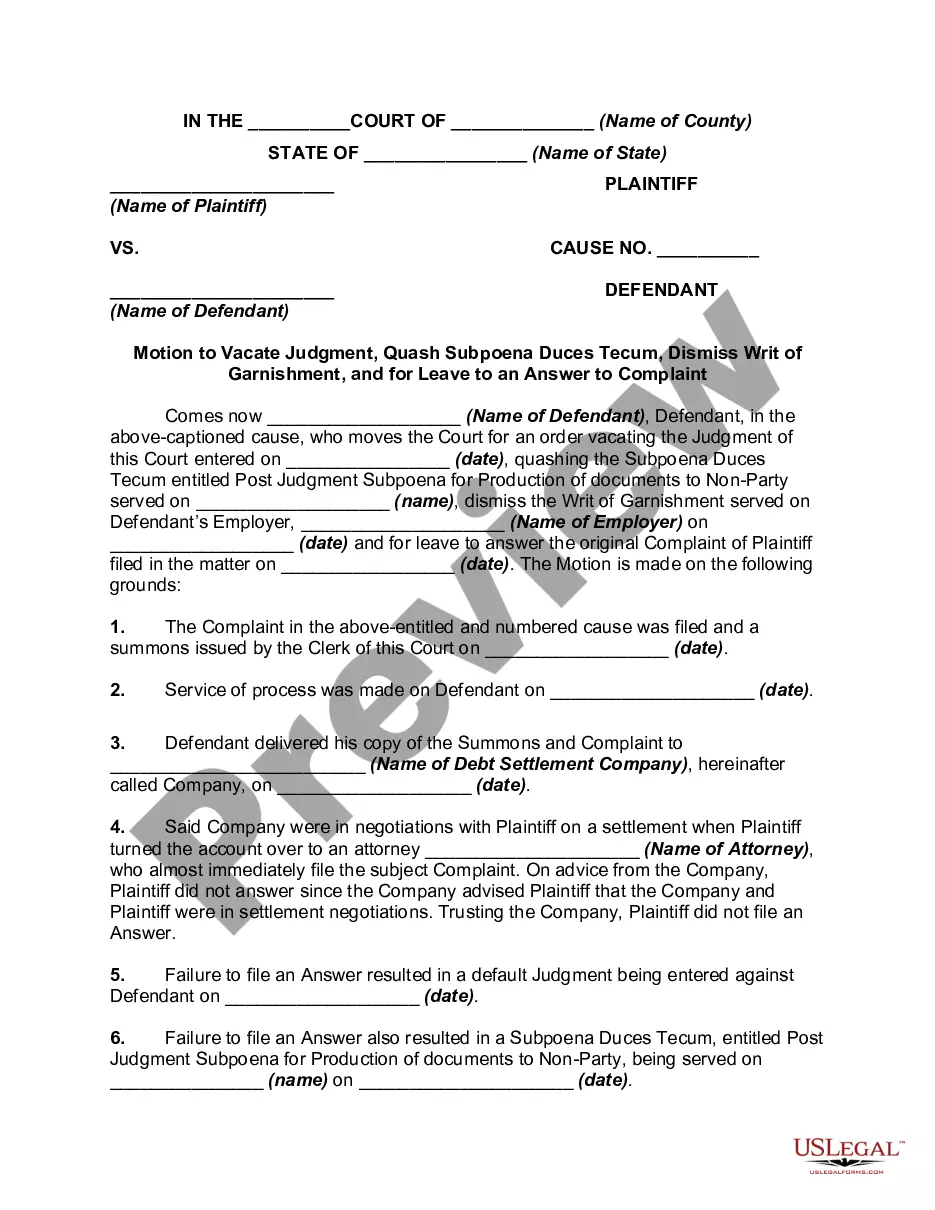
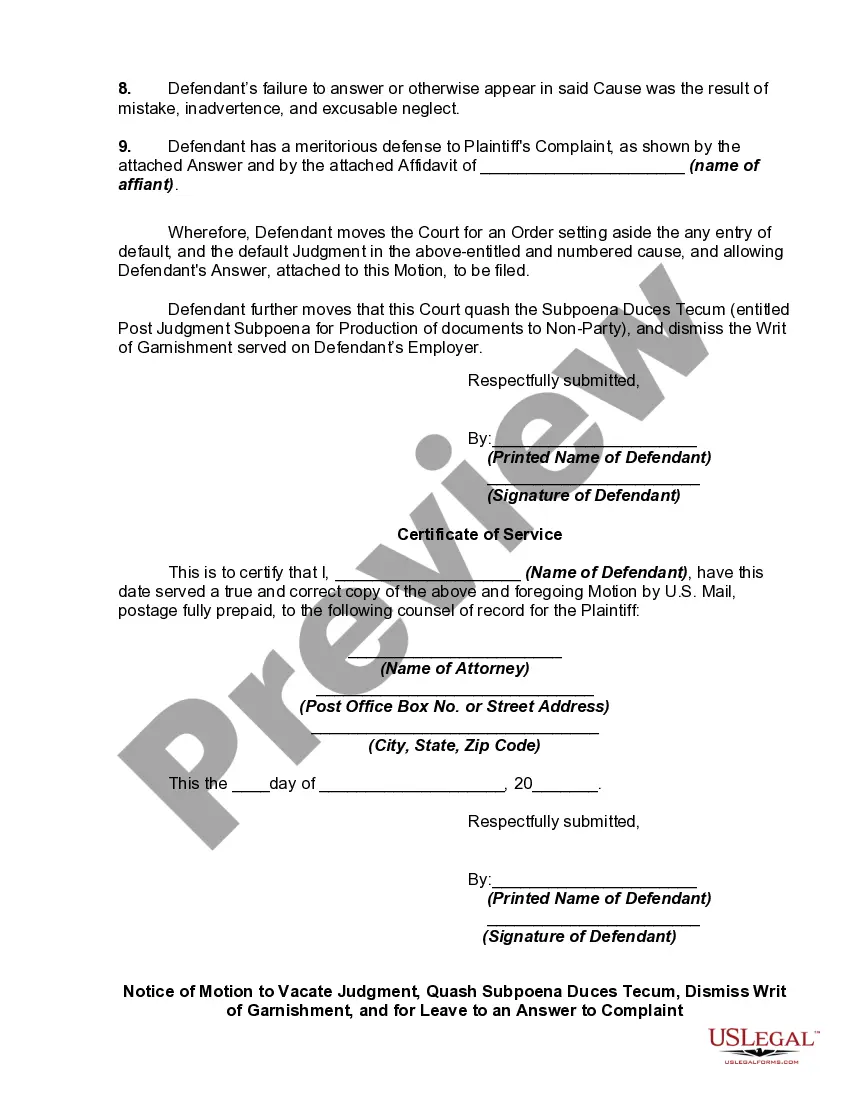
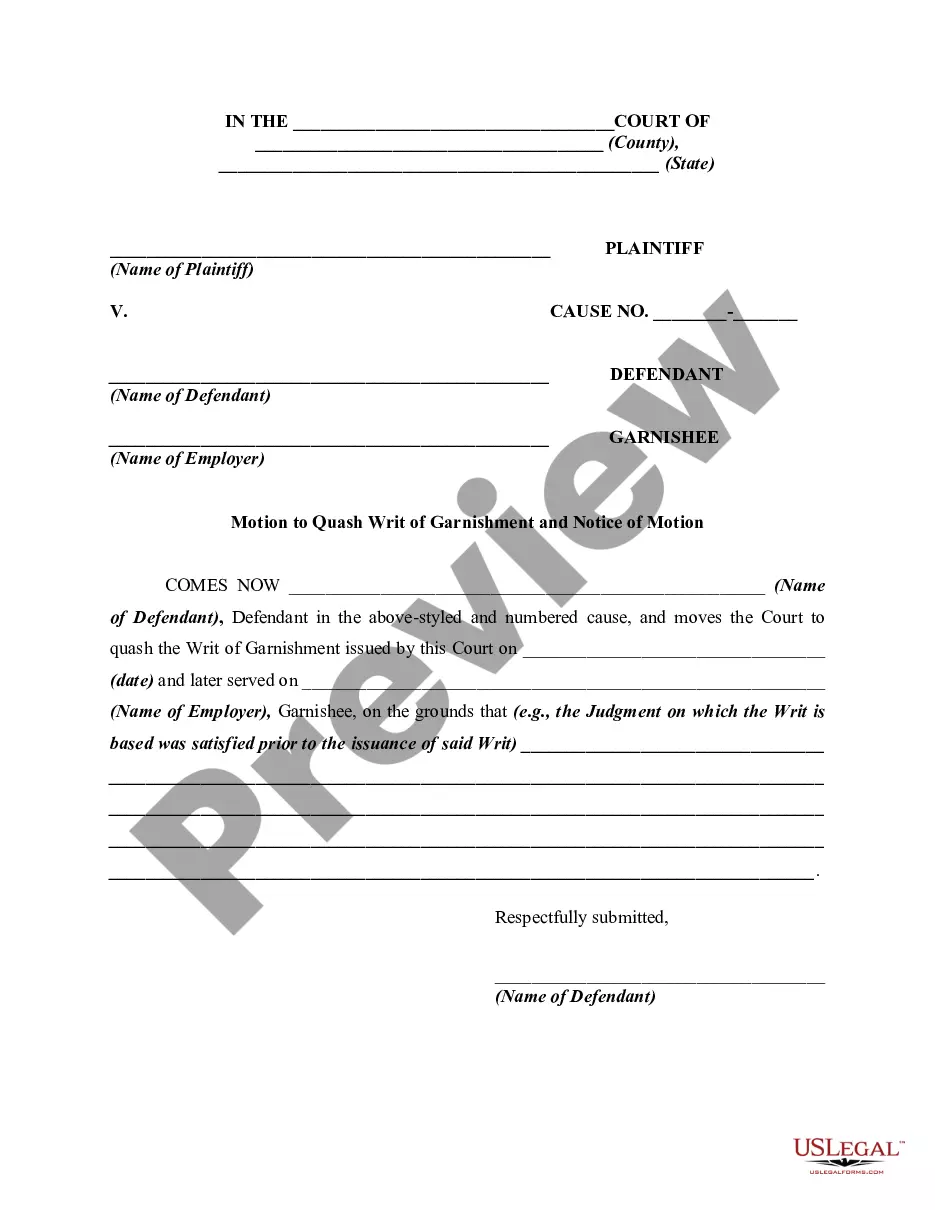
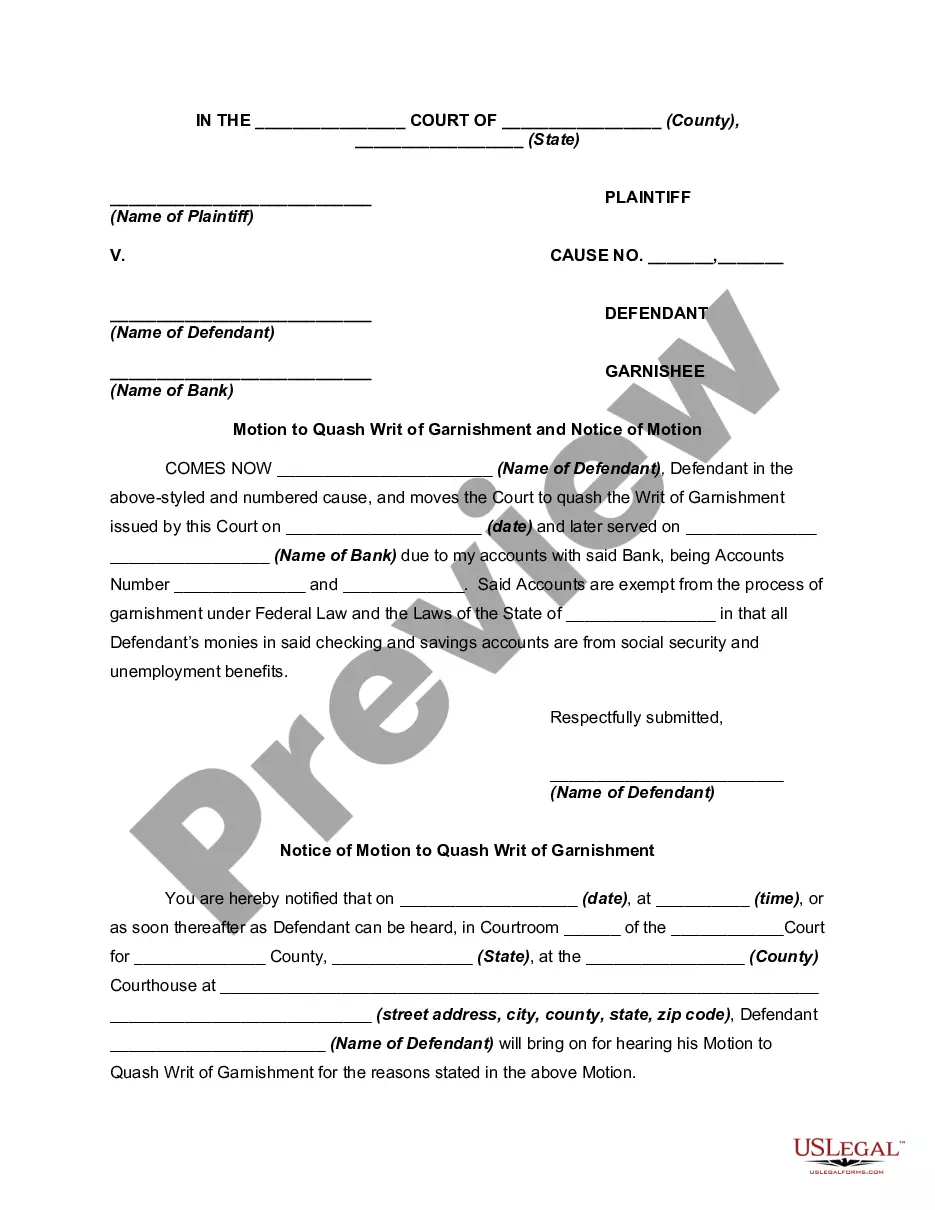
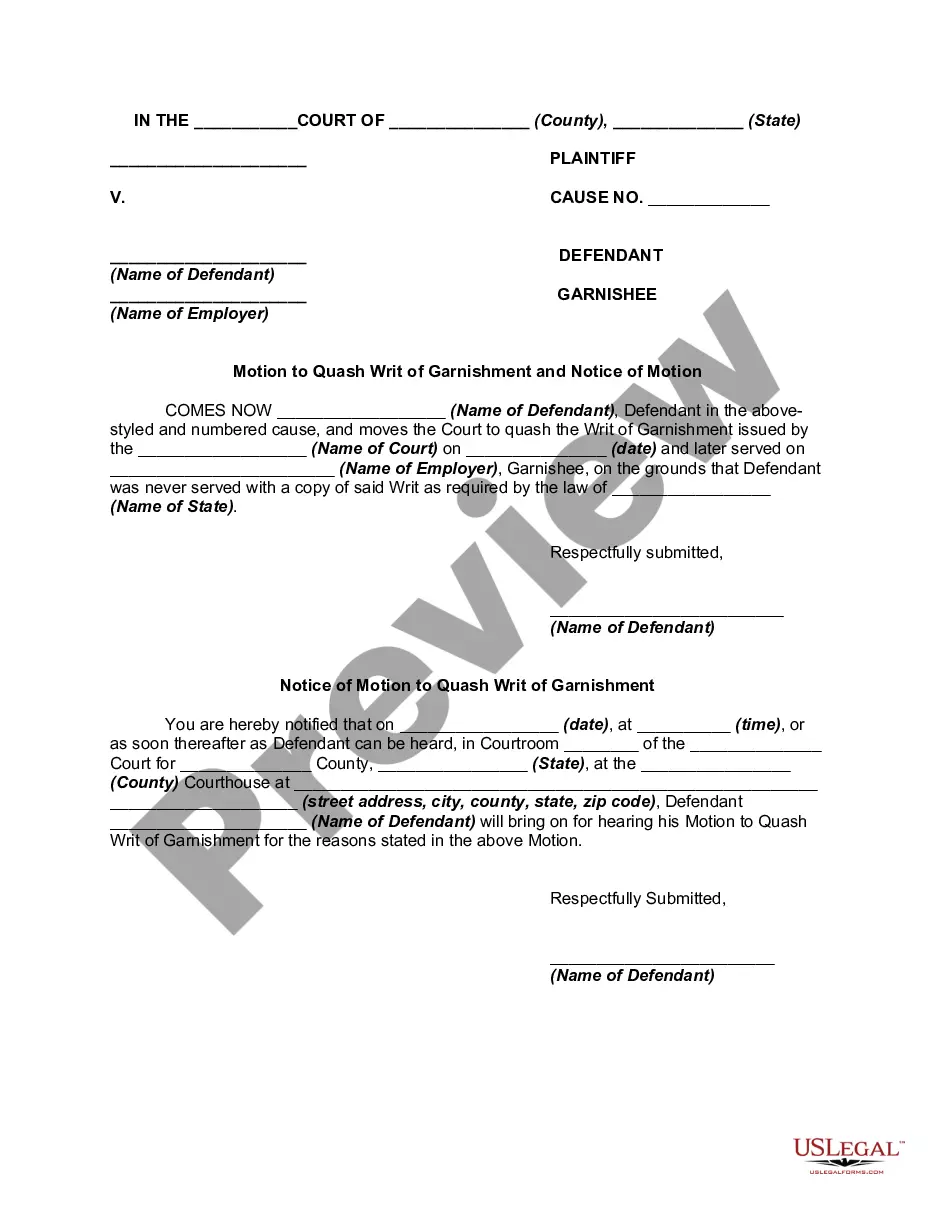
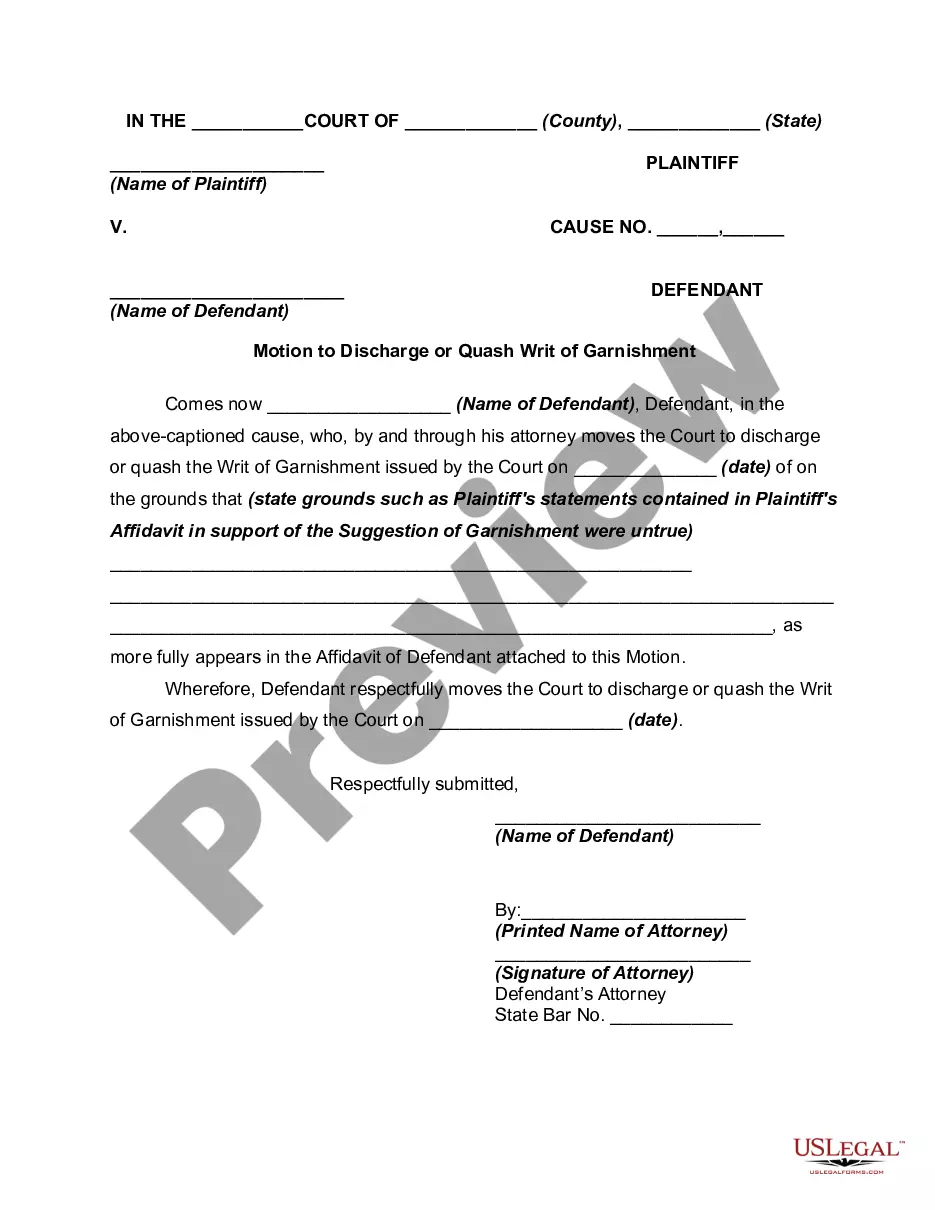
How to fill out Motion To Vacate Judgment, Quash Subpoena Duces Tecum, Dismiss Writ Of Garnishment, And For Leave To File An Answer To Complaint?
Securing a reliable location to obtain the latest and suitable legal templates is a significant part of navigating bureaucracy. Identifying the appropriate legal documents necessitates accuracy and diligence, which is why it is essential to source Motion For Summary Judgment When To File samples exclusively from reputable providers, such as US Legal Forms. An incorrect template will squander your time and hinder the situation you are facing. With US Legal Forms, you have minimal concerns. You can access and review all the details regarding the document’s application and significance for your circumstances and in your state or county.
Follow these steps to complete your Motion For Summary Judgment When To File.
Eliminate the hassle associated with your legal paperwork. Explore the comprehensive US Legal Forms library to discover legal templates, assess their relevance to your situation, and download them instantly.
- Utilize the library navigation or search bar to find your template.
- Examine the form’s information to determine if it meets the standards of your state and area.
- Review the form preview, if available, to ensure it is the correct form you need.
- Return to the search to locate the correct document if the Motion For Summary Judgment When To File does not satisfy your criteria.
- If you are confident about the form’s applicability, download it.
- As an authorized user, click Log in to verify and access your chosen templates in My documents.
- If you do not possess an account yet, click Buy now to acquire the template.
- Select the pricing option that suits your needs.
- Proceed to the registration to finalize your purchase.
- Complete your purchase by choosing a payment method (credit card or PayPal).
- Select the file format for downloading Motion For Summary Judgment When To File.
- Once you have the form on your device, you can modify it using the editor or print it and fill it out manually.
Form popularity
FAQ
Summary judgment can be applied for when one party believes that there is sufficient evidence to prove their case without a trial. This usually happens after both parties have exchanged evidence during the discovery phase. It is important to file this application before the trial begins, as the court needs to assess whether there are any genuine disputes about material facts. Leveraging platforms like USLegalForms can help you navigate the process and ensure you file for summary judgment at the appropriate time.
A summary suit can be filed when a party seeks to resolve a legal dispute efficiently without going through a lengthy trial process. Typically, this occurs when the facts are clear, and there is ample evidence to support your claims or defenses. It is essential to ensure that all relevant documents and evidence are gathered before filing. If you're unsure about the process, USLegalForms provides resources and templates to assist you in filing your summary suit correctly.
You should file a motion for summary judgment when you believe there are no genuine disputes of material fact in your case. This motion can streamline your legal proceedings by allowing the court to rule based on the evidence presented without the need for a full trial. Timing is crucial, so it’s important to file this motion after the discovery phase but before the trial begins. Understanding when to file a motion for summary judgment can significantly impact your case's outcome.
You should ask for a summary judgment when you believe that the facts of your case are clear and support your argument without the need for a trial. This request is usually made after you have collected all relevant evidence and completed discovery. Courts favor summary judgments to streamline cases that lack factual disputes, saving time and resources. Consider using the US Legal Forms platform to access helpful tools and templates for making your request.
Filing a motion for summary judgment is appropriate once the discovery phase of your case is complete and you have gathered sufficient evidence. Generally, you should file this motion before the trial date, as courts often have specific deadlines for such submissions. Timing is crucial, so make sure to adhere to local rules regarding motion filing. For guidance, the US Legal Forms platform offers templates and resources tailored to your needs.
You should consider bringing a motion for summary judgment when you believe there are no genuine disputes of material fact in your case. This means that the evidence strongly supports your position, making it unlikely for a reasonable jury to rule against you. Additionally, it's important to file this motion before the trial begins, as courts typically require it to be submitted within a specified timeframe. Utilizing the US Legal Forms platform can help you navigate the process effectively.
Hear this out loud PauseRule 56 of the Federal Rules of Civil Procedure governs summary judgment for federal courts. Under Rule 56, in order to succeed in a motion for summary judgment, a movant must show 1) that there is no genuine dispute as to any material fact, and 2) that the movant is entitled to judgment as a matter of law.
Hear this out loud PauseFurther, a motion for summary judgment in California must be heard no later than 30 days before the date of trial (unless the court orders otherwise for good cause shown).
Hear this out loud PauseThe chance of success in these cases is less than 10% [1]. Another study found that summary judgment is mostly granted in Title VII cases, for example, cases involving equal pay or employment discrimination [2]. When it comes to federal cases, summary judgments are filed in 17% of total cases.
In this case, you must be able to prove the amount you are owed. If you are the defendant, you can apply for summary judgment on the ground that there is no merit to all or part of the claim that the plaintiff is making against you.