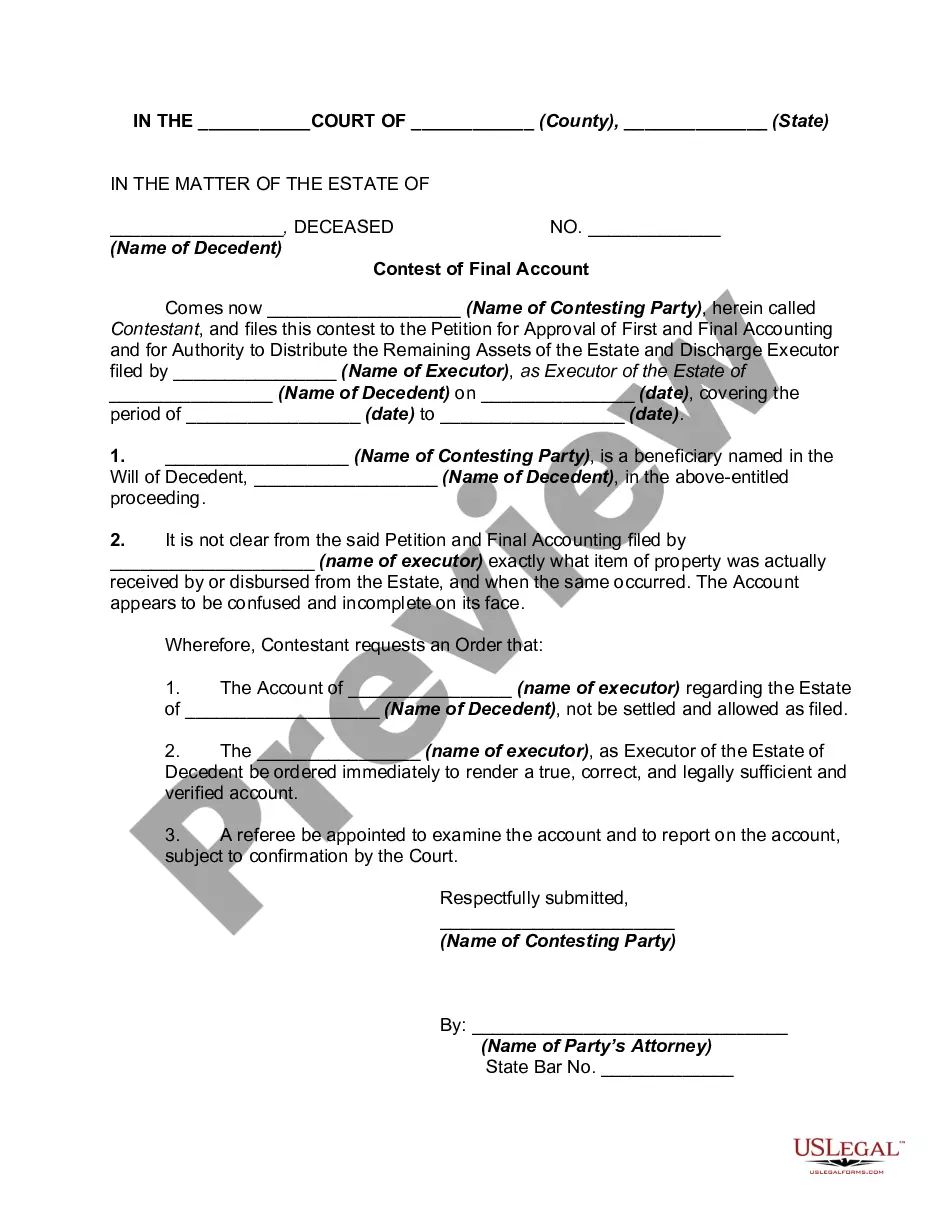
Final Account Distributions Estate Without Probate
Description
Get your form ready online
Our built-in tools help you complete, sign, share, and store your documents in one place.
Make edits, fill in missing information, and update formatting in US Legal Forms—just like you would in MS Word.
Download a copy, print it, send it by email, or mail it via USPS—whatever works best for your next step.
Sign and collect signatures with our SignNow integration. Send to multiple recipients, set reminders, and more. Go Premium to unlock E-Sign.
If this form requires notarization, complete it online through a secure video call—no need to meet a notary in person or wait for an appointment.
We protect your documents and personal data by following strict security and privacy standards.

Make edits, fill in missing information, and update formatting in US Legal Forms—just like you would in MS Word.

Download a copy, print it, send it by email, or mail it via USPS—whatever works best for your next step.

Sign and collect signatures with our SignNow integration. Send to multiple recipients, set reminders, and more. Go Premium to unlock E-Sign.

If this form requires notarization, complete it online through a secure video call—no need to meet a notary in person or wait for an appointment.

We protect your documents and personal data by following strict security and privacy standards.
Looking for another form?








How to fill out Contest Of Final Account And Proposed Distributions In A Probate Estate?
Creating legal documents from the ground up can occasionally be daunting.
Certain situations may require extensive research and significant financial investment.
If you’re looking for a simpler and more economical method of generating Final Account Distributions Estate Without Probate or any other documentation without unnecessary complications, US Legal Forms is readily available for you.
Our online collection of over 85,000 current legal forms covers nearly every area of your financial, legal, and personal concerns.
- With a few simple clicks, you can swiftly obtain state- and county-compliant templates meticulously prepared by our legal professionals.
- Utilize our platform whenever you require a dependable and trustworthy service through which you can effortlessly locate and download the Final Account Distributions Estate Without Probate.
- If you are already familiar with our services and have an existing account, just Log In to your account, choose the template, and download it or re-download it anytime from the My documents section.
- No account? Not an issue. Setting one up takes minimal time and allows you to navigate the catalog easily.
Form popularity
FAQ
To report distributions from an estate, you will need to prepare a final accounting that details all income, expenses, and distributions made to beneficiaries. It is crucial to maintain clear records to ensure compliance with tax regulations. If you wish to simplify this process, consider using platforms like uslegalforms to help you navigate the requirements for final account distributions estate without probate.
To close a deceased person's bank account without probate, you typically need to provide the bank with the death certificate and any necessary documentation showing your authority to act on behalf of the deceased. Some banks may have specific policies allowing for final account distributions estate without probate. Always check with the bank for their requirements to ensure a smooth process.
In Alabama, not all estates must go through probate. If the estate's value is below a certain threshold or if the assets are non-probate assets, you can distribute them without the lengthy probate process. This means that final account distributions estate without probate can be achieved more efficiently in many cases.
An estate can be settled without probate in certain situations, such as when all assets are held in a trust or when they pass to a surviving spouse. This approach streamlines the process and allows for final account distributions estate without probate. You may find that working with a legal service, like uslegalforms, can help guide you through the specific requirements.
Yes, an estate can often be distributed without probate if it qualifies as a small estate or if assets pass directly to beneficiaries. This process simplifies final account distributions estate without probate and allows for quicker access to funds. Utilizing estate planning tools, such as living trusts, can also facilitate this distribution.
You may not need probate if the deceased left behind a small estate, or if the assets were held in joint ownership. Additionally, assets that have designated beneficiaries, such as life insurance policies or retirement accounts, can bypass probate. Thus, final account distributions estate without probate can occur under specific conditions.
To claim deceased bank accounts without probate, you can start by contacting the bank where the account is held. Each bank has its own policy regarding final account distributions for estates without probate. Typically, you'll need to provide a death certificate and proof of your relationship to the deceased. For a streamlined process, consider using the US Legal Forms platform, which offers templates and guidance to help you navigate these situations effectively.
To settle an estate without probate, first, check if the estate qualifies as a small estate under state law. Heirs can then proceed with the final account distributions estate without probate by preparing the necessary documentation, which may include an affidavit or a declaration of heirs. Consulting a reliable resource like US Legal Forms can guide you through the required steps and help you complete the necessary forms efficiently.
An executor typically must go through probate to distribute assets. However, in some cases, the final account distributions estate without probate are possible if the estate meets specific criteria. For example, small estates or those with payable-on-death accounts can often avoid the probate process. You can explore resources on US Legal Forms to understand the requirements and documentation involved.